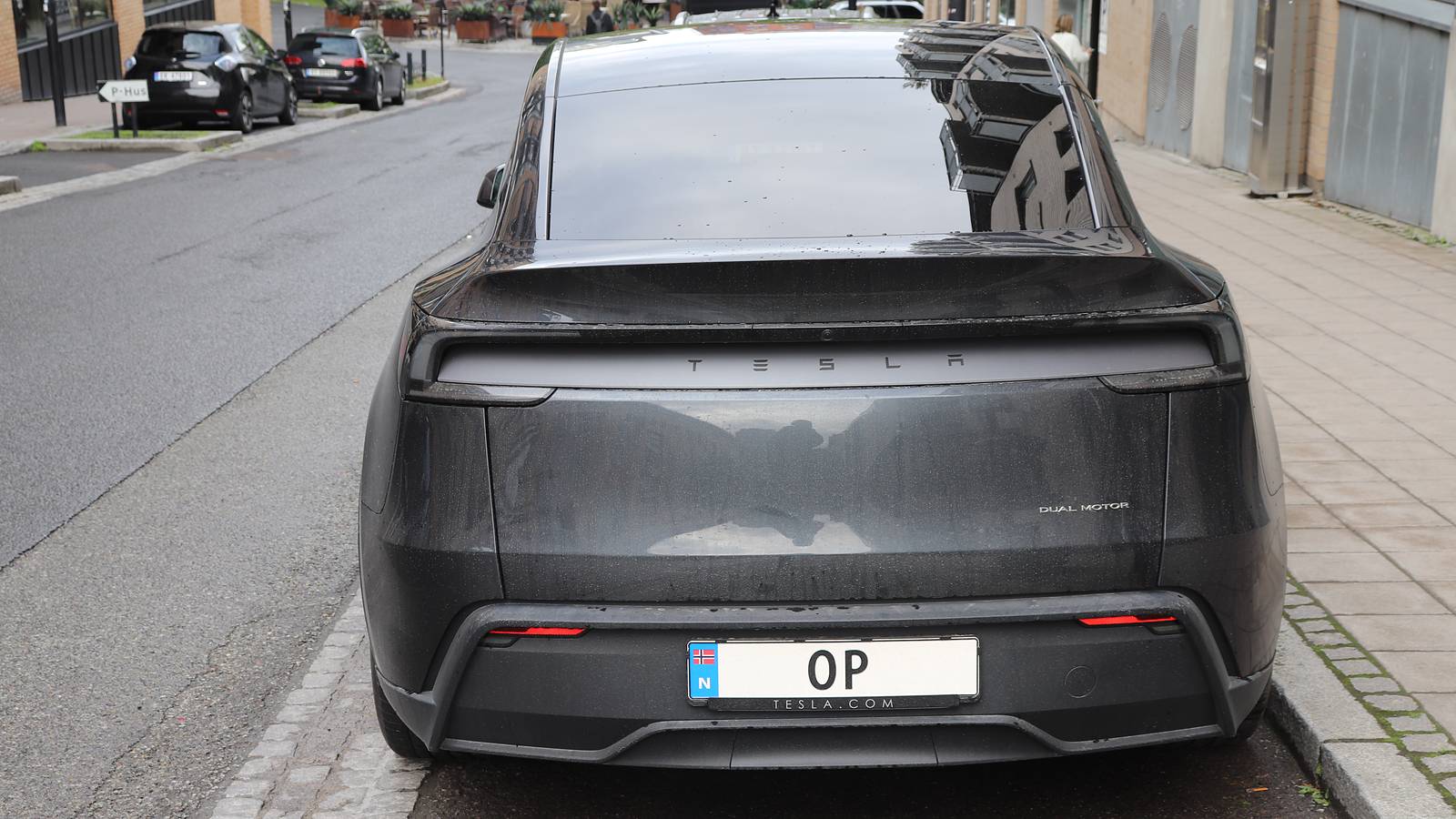

Tesla's new-car registrations rose across a string of European markets in September, keeping its comeback in the region going after two years of falling sales. Reuters reported on Thursday 1 October that Tesla registrations were up 128.3% in Portugal, 61.9% in France, 38.4% in Sweden and 24.8% in Spain on September 2025.
Norway and Denmark, two of Europe's most electric car markets, edged up too, by 2.2% and 2.9%. In Norway, the Model Y alone took about a quarter of all new passenger car sales, and Tesla was the country's biggest car brand again for the first time since June.
Where the numbers come from
Registrations are the closest thing Europe has to a monthly sales count, because Tesla doesn't publish deliveries country by country. The figures come from each country's industry body. Reuters cited Portugal's ACAP, France's car industry group PFA, Mobility Sweden and Spain's ANFAC, plus Norway's road traffic information council OFV and the Danish data site bilstatistik.dk.
For Portugal, France, Sweden, Spain and Denmark, all we've got is the percentage change. There are no unit totals for those five. The only two countries here with actual car counts are Norway, where OFV publishes the full model table every month, and the Netherlands.
Norway: Model Y back on top
Tesla registered 4,935 new cars in Norway in September, according to OFV data reported by electrive. That's a 26.3% share of the market, and it put Tesla back at number one after Toyota led in July and Volkswagen in August.
The Model Y did almost all the heavy lifting. It took 4,810 registrations, or 25.68% of the market, which makes it more than eight times as popular as the next car down. That was the Volvo EX30, on 576. The Mercedes-Benz GLC came third with 568, just ahead of the Toyota bZ4X on 567.
The whole Norwegian market grew fast. There were 18,733 new passenger cars registered in September, up 31% on a year earlier, and 18,511 of them were battery electric. That's an electric share of 98.8%. Only 77 new diesel cars and 14 petrol cars were registered in the entire country.
There's a catch in Tesla's numbers, though, and OFV points it out. Tesla's volume rose 2.2%, but its market share fell from 33.7% a year earlier to 26.3%, because everyone else grew faster. OFV managing director Geir Inge Stokke said many brands were growing "and the largest brand now holds less than a third of the market". He added: "Competition has become more balanced, which benefits car buyers."
Chinese brands are a big part of that. OFV said XPeng and BYD together hit a 7.1% share in September, more than double the 3.5% of a year earlier.
Norway passed a fleet milestone too. As of 30 September, 1,043,983 electric passenger cars were registered there, or 35.3% of all passenger cars on the road. Electric cars are now the biggest single group in the country's fleet, ahead of diesel on 29.4% and petrol on 22.9%.
France, Spain, Portugal and Sweden
The biggest percentage jumps came further south and west. Portugal's 128.3% was the largest in the Reuters round-up, then France at 61.9%. Sweden rose 38.4% and Spain 24.8%.
Those are big rises, but they're coming off a low base. Reuters said Tesla's rebound has been helped by easier comparisons with a year ago, higher fuel prices, government incentives and growing interest in electric cars. September 2025 was a weak month for Tesla in much of Europe, so even a modest gain shows up as a big percentage.
Denmark's 2.9% rise and Norway's 2.2% were the smallest. ING Research senior economist Rico Luman told Reuters that battery-electric markets in both countries are starting to slow because they're already so saturated. When nearly every new car's electric, there's not much room left to grow by winning over petrol buyers.
The Netherlands: Model Y the best seller
The Dutch numbers came out on 1 October. They weren't in the Reuters round-up, but they point the same way. The Model Y was the Netherlands' most registered car in September with 2,078, up 43.6% on a year earlier, according to AutoReview. The Model 3 came second on 1,087, up 87.1%. Chinese brands grew there as well. AutoReview said BYD, Leapmotor, Jaecoo and Omoda lifted their combined share from 1.9% to 7.0%, much like what OFV saw in Norway.
That made Tesla the country's second-biggest brand for the month, behind only Toyota. AutoReview said the brand grew 56%, which made up about 28% of the Dutch market's total growth in September. The wider market rose 12.6%.
The bigger European picture
September adds to a strong run. According to the European Automobile Manufacturers' Association, ACEA, Tesla registrations across the European Union, Britain and the European Free Trade Association rose 43.3% between January and August. That beat the wider battery-electric market, which grew 38.8% over the same stretch, Reuters reported.
Not everyone thinks the pace will last. Matthias Schmidt, a European car market analyst at Schmidt Automotive, told Reuters that Tesla's growth will probably slow to be more in line with the total market in 2027 as competition gets tougher.
The model range is the big question. Joern Buss, a partner at consultancy Arthur D. Little, told Reuters that Tesla still leans heavily on the Model 3 and Model Y, while buyers now have more choice from Chinese rivals and new European models. Industry analyst Felipe Munoz said non-Chinese brands had revealed 27 all-new battery-electric models in Europe this year through September, and Tesla had shown nothing new.
Tesla's next new product in Europe isn't a car. The Semi Standard Range is due for European customers in 2027, as we reported last month. And on the software side, Croatia has just become the eighth European country to approve FSD Supervised.
What to watch
Tesla was due to put out its global third-quarter production and delivery numbers on Friday 2 October US time. It doesn't break those down by country, so national registration data is still the best guide to how Europe's going.
Germany, Britain and Italy publish their September numbers in the first days of October, and ACEA's EU-wide September total follows later in the month. They'll show whether the rebound in Portugal, France, Sweden and Spain holds across Tesla's biggest European markets.


The paper
Comments
No notes on this story yet.
Sign in to comment