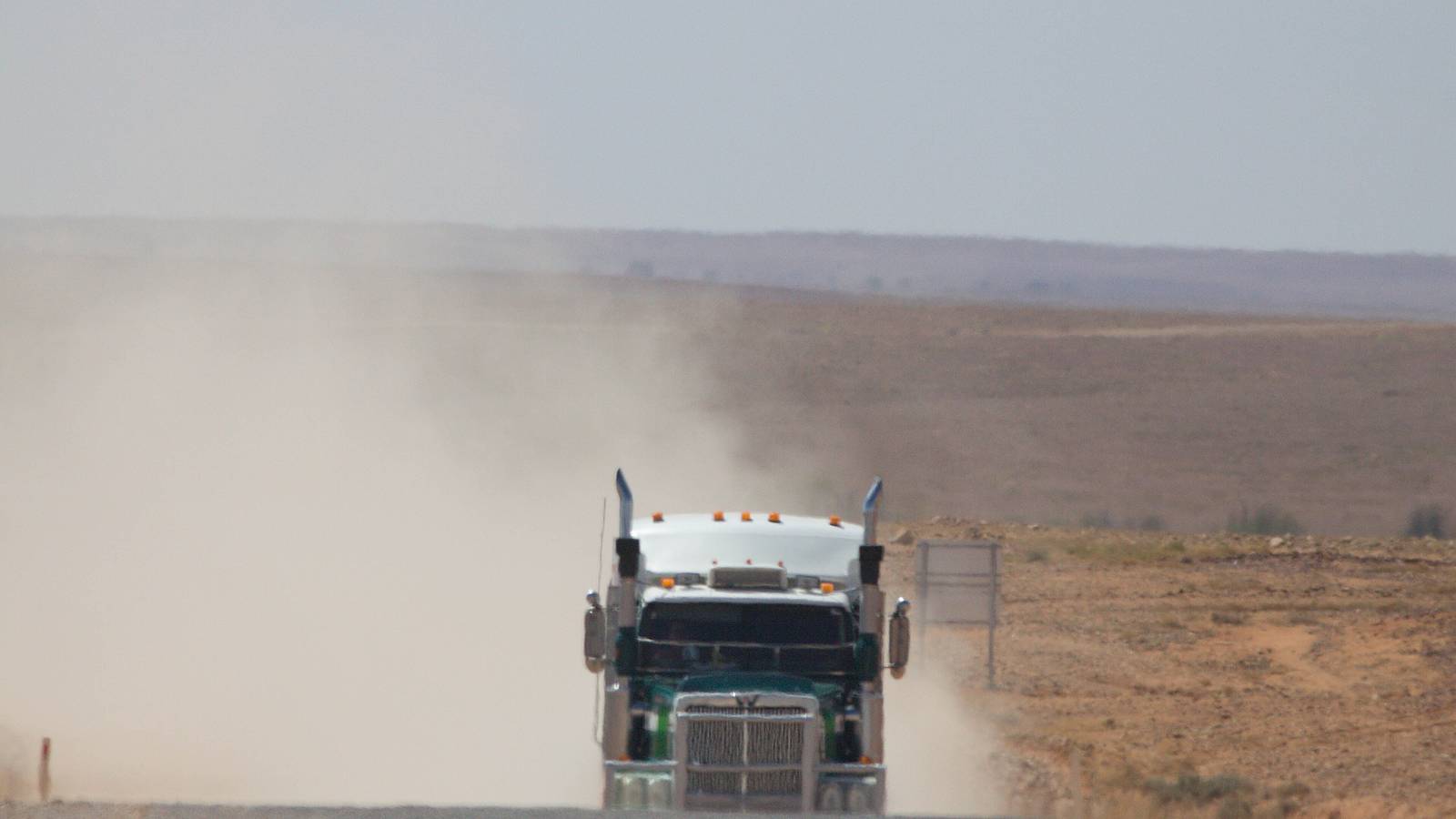

The Strzelecki Track is about to pass the halfway mark. The federal and South Australian governments said on Monday 28 September that pavement rehabilitation and sealing have started on a 67-kilometre stretch between Mount Hopeless and the Dog Fence. It's the next stage of the $215 million Strzelecki Track Upgrade and Sealing Project.
So far 225 of the track's 472 kilometres have been sealed. When it's all done, there'll be one continuous sealed road from Lyndhurst to Innamincka, the run that carries fuel, freight, cattle and tourists into the state's far north-east.
What's being built between Mount Hopeless and the Dog Fence
This stage is a lot more than a coat of bitumen. The joint release from federal Infrastructure Minister Catherine King and SA Infrastructure and Transport Minister Joe Szakacs says crews will rebuild shoulders, improve the existing overtaking lanes, seal water crossings and minor floodways, upgrade drainage and resurface the road. Then come pavement marking, new signs, guideposts and delineators. They're small things, but they're what make a remote road readable at night or in dust.
The contractor is Ceduna Bulk Hauliers & Earthmoving, a South Australian company. It's also working on the 33-kilometre section between the Art Baker Lookout and Mount Hopeless, which Fully Loaded reported in July had moved into drainage, pavement rehabilitation and bituminous sealing. Put the two contracts together and one South Australian outfit is working on 100 kilometres of track.
The new stage also follows finished work further along. Floodway upgrades on the 27-kilometre section from the Dog Fence to Yeralina Creek were completed in July 2026, the release says. And Fully Loaded reported in July that a 40-kilometre stretch, from Dillon's Highway to the Della Road junction, was finished in September 2025, with the pavement stabilised, sealed and drained.
You can see the progress in the sealed-kilometre count. In July the project had sealed 214 kilometres. By the end of September it was 225. It's not fast. But on a road that keeps getting cut by water, it's steady.
Why the seal matters out here
The case for sealing the Strzelecki is in the closure figures. Between September 2020 and September 2026, the release says, 67 weather events hit the track. They closed it to all traffic for 248 days and put restrictions on it for another 595 days.
Add those up and the track was shut or restricted for 843 days out of roughly six years. That's more than a third of the time.
Those numbers jumped in just the past two months. In July, the department's figures counted 64 weather events, 229 days of full closure and 585 days of restrictions. By late September it was 67 events, 248 days and 595 days. Szakacs said "above-average rainfall last month saw further flooding at a number of locations along the track, with crews working hard to get the road reopened to progress construction and restore access for all road users."
A sealed road with proper drainage and sealed floodways doesn't stop the rain. What it does, according to the release, is let the road "remain open or be reopened sooner after inclement weather and flood events." Unsealed sections need regular grading. When it's dry they get bulldust holes and sand drifts, and when it's wet they flood.
Traffic out here is light, but it matters. Fully Loaded reported in July that about 50 vehicles a day passed through the Art Baker Lookout to Mount Hopeless work area, and roughly half of them were commercial or heavy vehicles. When one of those trucks is carrying supplies to a station or gear to a gas field, a week-long closure isn't an inconvenience. It's a supply problem.
Who uses the Strzelecki
Szakacs called the track "a key supply line for major oil and gas facilities, pastoralists and tourists." The oil and gas side is the Cooper Basin, and Fully Loaded describes the track as a vital supply line for its facilities. Pastoral stations use it to move stock and supplies. Tourists use it to get to Innamincka and the Cooper Creek country.
King made the case in safety terms. "Sealing the Strzelecki Track is an exciting and ambitious project which will significantly improve flood resilience, safety and freight reliability across South Australia's far north-east," she said. "Unsealed roads are often inaccessible during wet weather and flood events, compromising safety and important links between communities."
Geoff Brock, the state member for Stuart, pointed to the damage from the recent wet. "Damage caused by recent rains and floodwaters has not only negatively impacted the local economy, but also caused significant concern for those living in the region," he said. "These works will also allow more tourists to visit the area, benefitting local businesses."
South Australian Senator Karen Grogan said the track was "an essential corridor for outback communities and tourism, and these upgrades will improve road safety and network reliability."
The Strzelecki sits alongside the other long outback corridors we've been following this year. Most of that coverage has been about electric cars, from the Stuart Highway's long charging gap to the Nullarbor's shrinking one. The Strzelecki is a more basic story. For a lot of the year, the question isn't where to charge. It's whether the road's open at all.
Where the money and the jobs come from
The $215 million is split $164 million from the Australian Government and $51 million from South Australia. That lines up with the July update, which described $205 million funded on an 80:20 basis plus an extra $10 million from the state. Eighty per cent of $205 million is $164 million. The state's 20 per cent share is $41 million, and with its extra $10 million that comes to $51 million.
The project is supporting about 225 full-time-equivalent jobs over construction. Close to 186,800 construction hours have been worked, and more than 48,269 of them by Aboriginal people. That's about a quarter of all the hours on the job, up from more than 46,200 hours in July.
The release doesn't give a finish date for the whole Lyndhurst to Innamincka seal. What it does give is a direction. With 225 kilometres sealed and another 100 kilometres under contract between the Art Baker Lookout and the Dog Fence, the project is, in Szakacs's words, heading "past the halfway point."
What drivers should expect
If you're heading up the track in the next few months, plan for roadworks. There'll be speed and lane restrictions while crews work. The governments are asking drivers to check local weather, road warnings and closures before they leave, and to drive to conditions.
That's worth taking seriously, because some sections can still become impassable after rain. The sealing is meant to shrink that problem over time. It won't make it disappear overnight.
For the people who rely on the Strzelecki, though, the direction is the point. Every kilometre of seal and every sealed floodway is a stretch that should reopen faster after the next downpour. With the project now crossing the halfway line, more of the track from Lyndhurst to Innamincka is moving out of the grader's queue and onto bitumen.
The paper
Comments
No notes on this story yet.
Sign in to comment