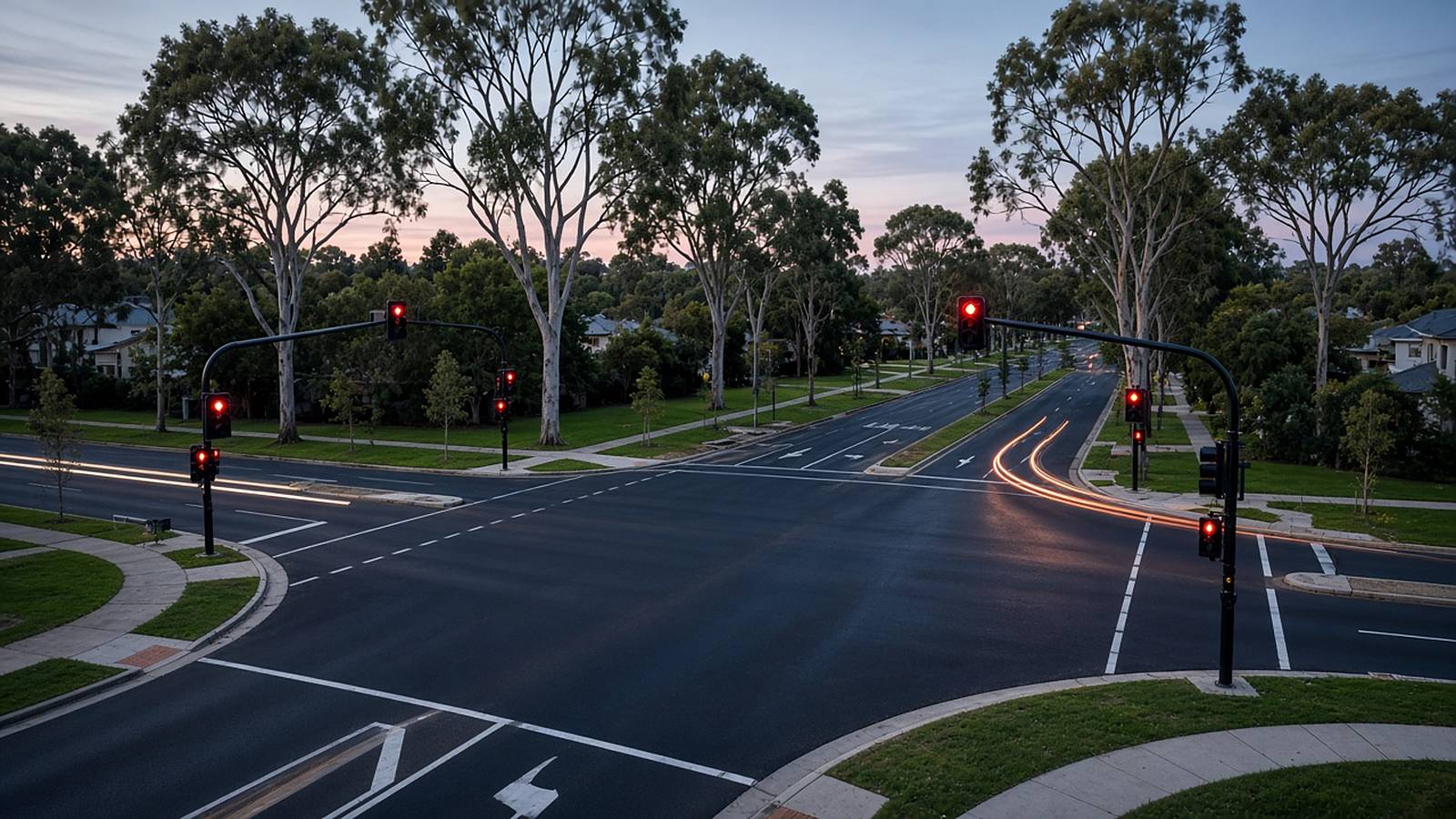

The roundabout at Thompsons Road and Berwick-Cranbourne Road in Clyde North is gone. The federal and Victorian governments said on Monday 28 September that the $83.5 million intersection upgrade is open to traffic, seven months ahead of schedule. Traffic lights and extra lanes have replaced one of the south-east's worst bottlenecks.
About 47,000 vehicles use the intersection every day. The upgrade also brings new approach lanes, better bus infrastructure and safer options for people on foot and on bikes.
What's changed at the intersection
The main change is simple. The old roundabout is now a set of traffic lights, according to the joint release from federal Infrastructure Minister Catherine King and Victorian Roads and Road Safety Minister Paul Hamer. Extra approach lanes have gone in, and the bus infrastructure has been upgraded.
As a general rule, roundabouts cope best when traffic is lighter. Traffic lights give a busy junction more control, because each direction gets its own turn to go.
The release says the result is better traffic flow for those 47,000 motorists and safer travel options for pedestrians and cyclists. It doesn't publish before-and-after travel times, though. So the real-world gain will only become clear once the new layout has run through a few weeks of school-run and commuter peaks.
The project supported more than 120 direct jobs and 297 indirect jobs during construction, the release says. The $83.5 million cost is split equally between the Albanese and Carroll governments.
Seven months early, and a local fight won
Finishing seven months early is the headline the governments have picked, and it's a real one. Big road jobs don't often come in ahead of time, especially when traffic has to keep moving while the road under it gets rebuilt.
"The congested old roundabout is now a thing of the past," King said. "This upgrade, completed seven months ahead of schedule, will make a huge difference to everyday journeys for local families and commuters."
Hamer kept it short. "This upgrade means local families will spend less time waiting in traffic and more time at the places that matter to them," he said.
The City of Casey has been pushing for this one for a while. In a statement on 30 September, the council said it had lobbied for improvements at the intersection for several years before the Australian Government committed funding during the 2025 federal election campaign.
"This upgrade is a fantastic outcome for our community and one that residents have been calling for over many years," Casey Mayor Michelle Crowther said. "As Casey continues to grow, it's critical that investment in our transport network keeps pace so people can get to work, school, appointments and local activities safely and efficiently."
Cassandra Fernando, the federal member for Holt, said she'd heard about it constantly. "During my first term, I heard from families every day about the frustration caused by this roundabout," she said.
Pauline Richards, the state member for Cranbourne, said the upgrade "has transformed a frustrating bottleneck into a safer, more efficient intersection." Gary Maas, the state member for Narre Warren South, said it was "making everyday journeys easier by reducing congestion and improving safety."
The next job nearby
Clyde North isn't the only project in the area running ahead of time. The release says the nearby Clyde Road Upgrade is also on track to finish seven months early.
That one's bigger in a different way. It'll widen the Clyde Road overpass across the Princes Freeway from six lanes to 10, easing travel for the 30,000 vehicles that use the road each day. A road can be widened on either side of a freeway bridge, but it still has to squeeze down to the width of the bridge itself, which is why overpasses so often end up as pinch points.
The governments also listed a run of finished projects across Melbourne's south-east, including O'Shea Road, Thompsons Road, Narre Warren-Cranbourne Road, Hall Road and the Western Port Highway. Put together, they add up to a steady rebuild of the main roads that carry Casey's commuters toward the freeways and the city.
The rail side of the south-east
The road upgrades have landed alongside a big milestone on the rail lines that serve the same suburbs. On Tuesday 22 September, the Victorian Government opened a new road underpass near Webster Street in Dandenong, removing what it called the last level crossing on the Pakenham, Cranbourne and Sunbury lines.
That means 100 kilometres of track on those lines is now free of level crossings, according to the Premier's release. Cranbourne station, at the end of the Cranbourne line, is a short drive from the Clyde North intersection.
The Webster Street underpass is 450 metres long and links the Princes Highway at Lonsdale Street to Cheltenham and Hammond roads. Boom gates there had been down for more than half the morning peak, the release said, holding up drivers and pedestrians by over an hour. Deputy Premier and Member for Dandenong Gabrielle Williams said it opened two years ahead of schedule.
The government says it has now removed 96 level crossings across Melbourne. Transport Minister Vicki Ward said "safety data shows the level crossing removal project has prevented an average of 121 crashes and near misses each year for the past 10 years across Melbourne."
What it means for drivers
If you drive through Clyde North, the change is immediate. There's no more waiting for a gap at the roundabout, and there are more lanes on the approaches. Bus users get upgraded infrastructure, and people walking and riding get what the governments call safer travel options.
Victoria's long highways, like the Hume, get most of the attention in road coverage. In outer suburbs like Clyde North, though, it's the local main roads and intersections that decide whether a 20-minute trip takes 20 minutes or 40.
The real test comes over the next few weeks of commuter peaks, as drivers get used to the new layout. On paper, it's one less roundabout, more lanes and a set of traffic lights for 47,000 vehicles a day, delivered more than half a year early.
The paper
Comments
No notes on this story yet.
Sign in to comment