
Tesla has put European numbers on its Semi electric truck. It's showing the truck with European specs at IAA Transportation in Hanover, which runs from 15 to 20 September 2026, with a press day on the 14th. The main version for Europe is the Standard Range, rated at about 550 kilometres at 40 tonnes gross combination weight, or GCW.
That isn't a US range figure with a metric label slapped on. It's a European rating that Tesla and the trade press have been sharing in the run-up to the show. The truck is fully loaded to 40 tonnes, held at 80 km/h, at 20°C, with an aero kit and a dry-van style trailer, in the test wording Tesla uses. Energy use is listed at 1 kilowatt-hour per kilometre. Deliveries are planned from 2027. What Europe doesn't get yet, in anything published so far, is a euro price or a Long Range version on the national websites.
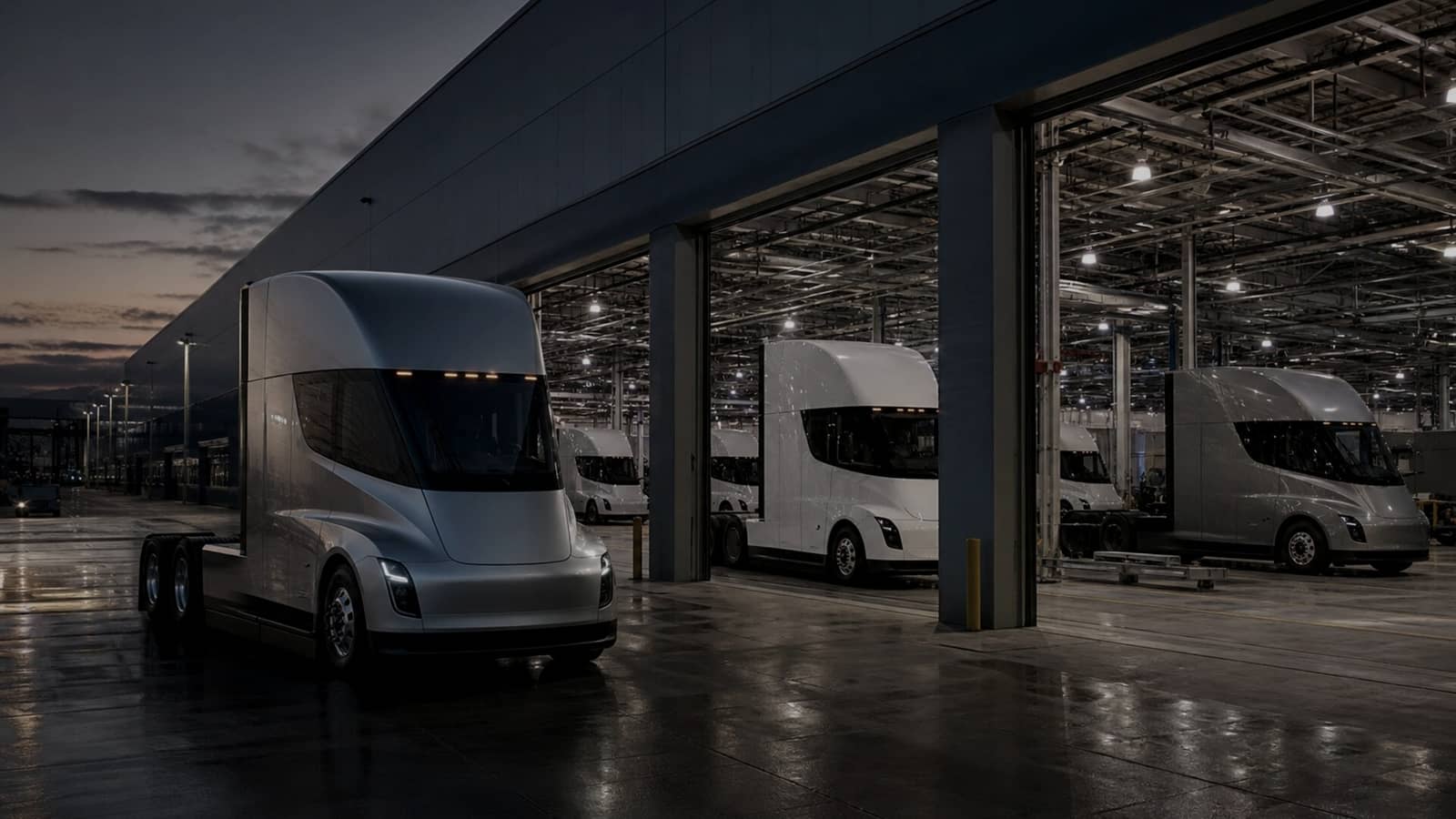
If you've been following the Semi news out of Nevada, this is a different story. The high-volume plant at Sparks holds its rollout on 24 September, and we've covered that already. This is the European version of the truck. The Semi on the floor in Hanover is from the same family built next to Gigafactory Nevada, but the numbers Europe's being asked to buy on are different.
What's on in Hanover this week
IAA Transportation is Europe's big commercial vehicle show. It runs from 15 to 20 September 2026 in Hanover, with a press day on 14 September, according to EVTrader's calendar. Tesla's showing the Semi and giving demo rides, trans.info reports. IAA's press office said in a 25 August 2026 note that Tesla was coming back with the Semi, that European specs and launch details would come out during the show, and that the truck on display is built in a dedicated plant next to Gigafactory Nevada that's designed to make around 50,000 trucks a year.
That same IAA note gave the US version's details too. It has three motors making up to 800 kW, battery packs of 822 or 548 kWh, and megawatt charging up to 1.2 MW. Those are US numbers. The European Megacharger figure in this month's trade coverage is up to 800 kW, not 1.2 MW, so the two markets have different charger numbers.
On 20 August 2026, Fred Lambert at Electrek reported that the Tesla Semi account had posted that European specs and launch details would be unveiled at IAA, with the truck on display. That shows the European reveal was always tied to Hanover week, not just a quiet website update.
The European numbers Tesla posted
On 11 September 2026, Electrek reported that Tesla Europe had posted the European Semi numbers on X. It goes up to 550 km at 40 tonnes fully loaded and uses 1 kWh per kilometre. The Megacharger delivers up to 800 kW, for about 60 percent charge in 30 minutes. Electric power take-off, or ePTO, goes up to 25 kW. GCW is 40 tonnes and the empty truck weighs 9,100 kg. The post pointed to the German Semi website. Electrek's story didn't include an EU price or a firm on-sale date.
InsideEVs, in a 14 September 2026 story by Iulian Dnistran, said the Euro-spec Semi debuts at IAA, with deliveries next year and about 550 km of range. It translated 1 kWh per kilometre into roughly 1.6 kWh per mile for readers used to US units. InsideEVs thinks Europe probably gets the same 548 kWh pack and three-motor layout as the US Standard. It gives the EU rating conditions as 40 tonnes, 80 km/h, which is about 50 mph, and 20°C. Tesla itself says tyres, fairings and the trailer all affect energy use. So 1 kWh per kilometre is a rating under set conditions, not a promise that every refrigerated run in January will match it.
EVTrader, also on 11 September 2026, checked the national EU Semi websites. It found only the Standard Range listed, deliveries from 2027, and a contact form instead of an order button. That matters for fleet buyers who want to configure a truck and buy it. In Europe, those pages are still saying "talk to us," with no public euro price and no deposit box.
Weight, payload and who did the maths
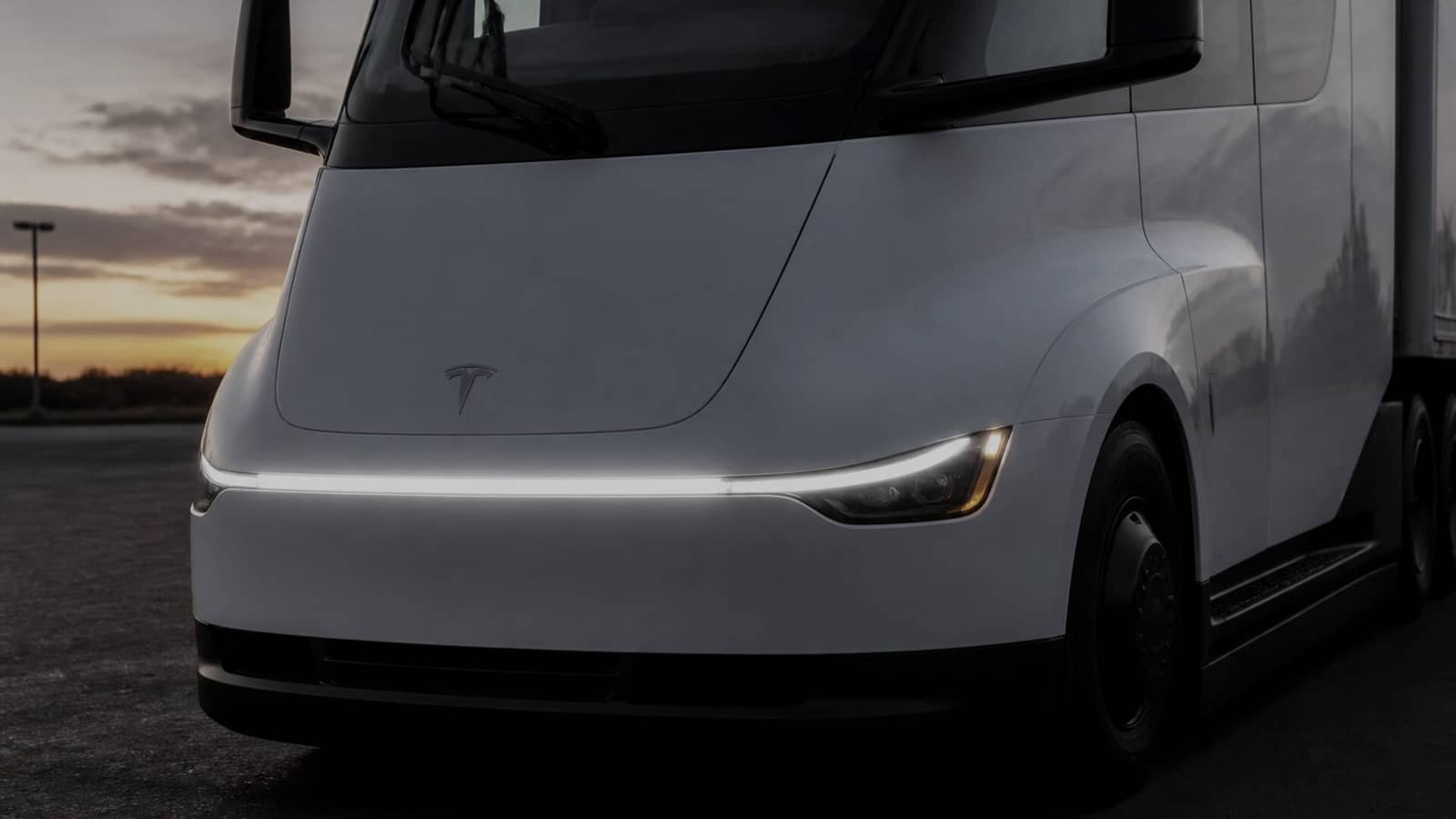
The empty weight, or kerb weight, is 9,100 kilograms or a bit under, depending on which report you read. Tesla Europe's post, as Electrek reported it, says 9,100 kg. Trans.info, reading European press material through Electrive on 14 September 2026, says under 9,100 kg. Either way, for a fleet, this Standard Range truck is a Class 8 electric tractor that weighs just over nine tonnes empty.
EVTrader does the 40-tonne maths. A kerb weight of 9,100 kg leaves about 30,900 kg for the trailer and the load. That's simple subtraction from the published GCW and kerb weight. It isn't a separate payload figure from Tesla.
Trans.info carries Electrive's payload estimate of roughly 24.6 to 26.6 tonnes, depending on the extra weight allowance for zero-emission vehicles. That's Electrive's figure, not a payload Tesla guarantees. InsideEVs compared the Semi with Volvo's truck and said the Semi Standard's claimed usable payload is about five tonnes more than the Volvo FH Electric Extended Range, under Germany's 42-tonne maximum. In that comparison Volvo's usable payload is close to 22 tonnes. Again, that's InsideEVs' comparison, not a reading off a weighbridge.
InsideEVs also notes the Semi comes only as a 6x4 in the European material it saw. Volvo and other makers sell more axle layouts. If your business needs a different setup, that rules the Semi out before range even comes into it.
Range conditions: read the fine print
The 550 km figure only holds under certain conditions. Electrek, InsideEVs and the show notes all repeat the same ones.
It's 40 tonnes GCW, 80 kilometres an hour and 20 degrees Celsius, with an aero kit and a CARB-style dry van trailer in Tesla's test wording, according to trans.info's read of Electrive's report on European press material.
Change any of those and the range changes. A refrigerated trailer drawing on the ePTO, a headwind on an autobahn at more than 80, winter tyres or a heavier trailer won't keep you at the brochure figure. Tesla's own warning that tyres, fairings and trailers affect energy use is the fair way to put it.
In the US, Electrek and IAA's notes put the Long Range at around 500 miles on an 822 kWh pack. Europe's Standard is rated at 550 km, roughly 342 miles, on what InsideEVs thinks is the smaller pack of about 548 kWh. It's a different rating method, a different market and a different list of versions. In InsideEVs' US comparison, the US Standard is still around 325 miles and about 1.7 kWh per mile. So European buyers aren't getting the US Long Range with a metric label. EVTrader says the national EU sites list only the Standard Range.
Charging: 800 kW Megachargers, Basechargers and Europe's missing network
Tesla's September posts for Europe say the Megacharger delivers up to 800 kW, for about 60 percent in 30 minutes. InsideEVs also lists the Basecharger at up to 120 kW, for about 60 percent in four hours. That's the depot number for overnight or long stops, not a quick top-up on the motorway.
IAA's notes on the US version still show megawatt charging up to 1.2 MW. Europe's public figure for now is 800 kW. The September posts don't say whether Europe will later get the higher US figure.
InsideEVs adds an important catch. As far as it knows, there aren't any Megachargers in Europe yet. Tesla's answer in that coverage is that the network will grow once trucks are delivered to customers. Trans.info's read of European press material adds plans for a European Megacharger network, Semi Service Centres, mobile service, certified workshops and a fleet platform. But plans aren't chargers in the ground. A fleet tender that assumes a dense network of megawatt chargers on day one of 2027 deliveries is getting ahead of the evidence.
The European notes say the truck uses MCS, the megawatt charging system, at up to 800 kW. In InsideEVs' comparison, the Volvo FH Electric Extended Range goes up to about 700 km on a 725 kWh pack, with MCS charging up to 700 kW. So Tesla isn't walking into an empty field. Volvo, Mercedes, MAN, Scania, DAF and Renault are already selling electric trucks in Europe.
ePTO, refrigerated trailers and driving-time maths
Electric power take-off of up to 25 kW is on the European spec list. EVTrader points out that's the figure for refrigerated trailers. It's enough steady power to run the fridge without a small diesel engine, which is how those sites pitch it. Whether 25 kW covers every multi-temperature trailer is a question for a fleet's engineers. The published limit is 25 kW.
EVTrader also checks the 550 km figure against the EU's driving-time rules in Regulation 561/2006. That means 4.5 hours of driving, then a 45-minute break, inside a nine-hour day. That's EVTrader's maths, not a Tesla claim. It asks whether 550 km at the rated speed fits a legal day for one driver.
EVTrader's pack estimate of around 550 kWh is also its own, worked out from the 1 kWh per kilometre and 550 km figures. Tesla hasn't published it. InsideEVs' view that it's "likely" the same 548 kWh pack, based on the US Standard, lands in the same place. Until Tesla puts a European kWh number on the EU sites, like the 548 and 822 figures in US coverage, the pack size is an educated guess, not an official figure.
The cab, according to InsideEVs
InsideEVs' story from IAA week lists a central driving position, a heated and ventilated seat, and acoustic glass on the European Semi. Those comfort and visibility features come from the show coverage. We haven't tested the cab. The central seat is the Semi's trademark layout from the US. In the material reviewed, Europe gets that same layout, not a regular cab with the driver on the left or right.
InsideEVs saw no mention of a Long Range for Europe, and pricing is being kept quiet. That matches EVTrader's finding of a contact form instead of an order button, and Electrek's note that the 11 September X post had no EU price.
US prices, in US dollars only
If you want a rough dollar figure, Electrek's US coverage has put the Standard at around US$260,000 and the Long Range at around US$290,000. Those are US prices. They don't tell you what the German site will charge.
A crowded European electric truck market
The Mercedes eActros 600 gets around 500 km from a pack of about 600 kWh, in the comparisons used by Electrek and the trade press. Volvo, MAN, Scania, DAF and Renault are already selling. InsideEVs says the Volvo FH Electric Extended Range stretches to about 700 km on 725 kWh, with MCS up to 700 kW, and comes in more axle layouts than the Semi's 6x4-only European version.
So this isn't a story about an electric truck turning up where there aren't any. Tesla is publishing a Standard Range truck into a market that already has electric trucks on the road. The real questions are payload under local weight rules, real energy use on your routes, access to chargers, service coverage and resale value. Europe has certainly heard of battery trucks.
Tesla wants its efficiency figure of 1 kWh per kilometre on the rated cycle sitting next to those rivals. They'll answer with their own figures. We're not picking a winner on the Monday of the show. We're just putting Tesla's European numbers next to the trucks already in the hall.
Where the trucks are built: Nevada now, Berlin still unclear
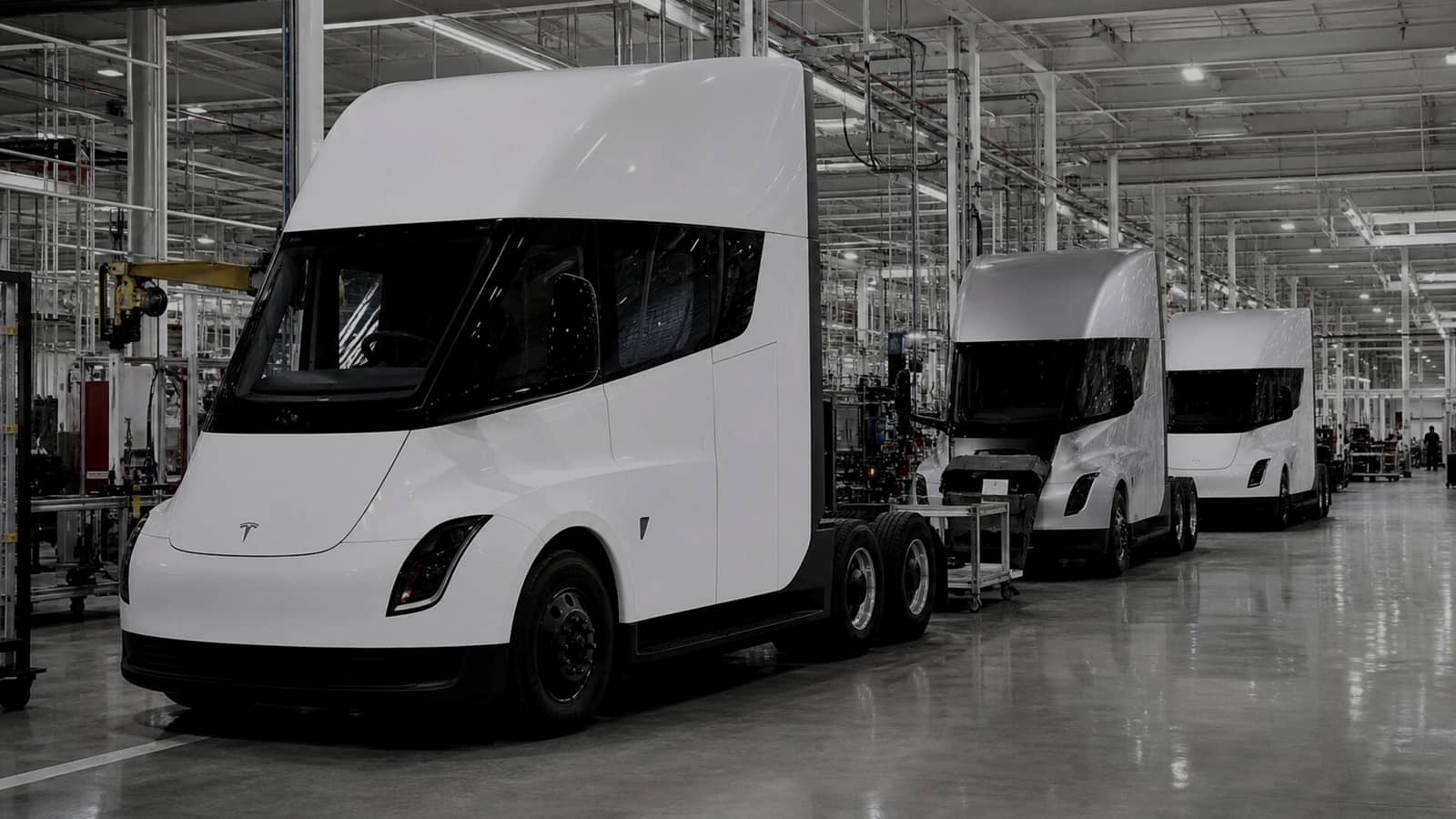
IAA's 25 August note says the truck comes from a dedicated plant next to Gigafactory Nevada, designed to build about 50,000 a year. That's the high-volume line the US Semi program has been working toward. Not a Tesla App covered the Semi rollout at Sparks on 25 August 2026. It reported a 1.7 million square foot plant designed for 50,000 a year, with the first high-volume Semi line mentioned around 29 April. It also listed production changes like electric steering assist, a 48V system, 4680 cells and a light bar. We've already covered the Sparks rollout on 24 September, later this month, so this is just background.
Musk has said before that the Semi could be built in Berlin. Electrek's European coverage still treats that as an open question, while high-volume production happens at the Nevada plant. For European buyers, the September material supports "built in Nevada, delivered from 2027."
What the national websites do and don't do
EVTrader's website check is the most useful part for buyers. The national EU Semi pages list the Standard Range and deliveries from 2027. They offer a contact form, not a one-click order. That fits a launch that wants to talk to fleets about their routes, depot power, Megacharger timing and service contracts before it gives a price.
If you're a fleet manager, here's the takeaway. In Europe it's the Standard Range, with 550 km at 40 tonnes and 1 kWh per kilometre. You buy through a contact form. Deliveries are due in 2027. The trucks come from Nevada's high-volume Semi plant. And in Europe, charging is still mostly plans plus Basecharger maths, until customer trucks push Tesla to build the network.
Service and the fleet platform
Trans.info's read of European press material, through Electrive, lists Semi Service Centres, mobile service, certified workshops and a fleet platform, along with plans for a Megacharger network. European buyers need to hear that, because an electric Class 8 truck fails in the real world when the nearest certified workshop is a country away. These are plans from the press material, though, not a map of service centres open today.
For early fleets, mobile service and certified workshops matter as much as peak charging power. A truck that can take 800 kW in theory still needs someone to clear a fault code on a Saturday night outside Munich. The European material says Tesla's planning for that. We'll only know how widespread it is after deliveries start.
How Europe compares with the US Semi program
In the US, the Semi spent years as a limited-production truck run with pilot customers while the Sparks plant grew. Europe's being invited in just as the Nevada line is meant to be ready for volume. The IAA note gives a design capacity of about 50,000 a year, and the Nevada rollout on 24 September is already covered. Europe's list of versions is shorter for now. There's only the Standard Range on the national sites, no mention of a Long Range in what InsideEVs and EVTrader saw, and no euro price.
The published charging numbers really do differ. The US version goes up to 1.2 MW, Europe's Megacharger posts say up to 800 kW, and InsideEVs says no European Megachargers are installed yet. The efficiency figures differ too. Europe's 1 kWh per kilometre is rated at 40 tonnes, 80 km/h and 20°C, while the US Standard sits around 1.7 kWh per mile in InsideEVs' comparison. They're different tests in different markets, but it's the same family of trucks.
The key points
IAA Transportation in Hanover runs from 15 to 20 September 2026, with a press day on 14 September. Tesla has the Semi on the floor, with European launch details timed to the show and demo rides, according to trans.info.
So far the national sites list only the Standard Range. It's rated at about 550 km at 40 tonnes GCW and 1 kWh per kilometre. Deliveries start in 2027. EVTrader found a contact form, not an order button.
The rating conditions are 40 tonnes, 80 km/h, 20°C, an aero kit and a dry-van style trailer. Tyres, fairings and the trailer change the result.
The empty truck weighs 9,100 kg or a bit less. GCW is 40 tonnes. ePTO goes up to 25 kW for refrigerated loads. The payload maths comes from EVTrader, and from Electrive via trans.info.
The Megacharger delivers up to 800 kW, for about 60 percent in 30 minutes. The Basecharger delivers up to 120 kW, for about 60 percent in four hours, according to InsideEVs. As far as InsideEVs knows, there's no Megacharger network in Europe yet, and Tesla says it'll build one as customer trucks are delivered. The European press material mentions plans for a network, service centres, mobile service, workshops and a fleet platform.
InsideEVs thinks the European truck likely uses the same pack of about 548 kWh and three motors as the US Standard. EVTrader estimates about 550 kWh from the published figures.
There's no EU price, and no European Long Range is listed. The US prices of about US$260,000 for the Standard and US$290,000 for the Long Range apply only in the US.
The trucks are built at the dedicated plant next to Gigafactory Nevada, designed for about 50,000 a year. Building them in Berlin is something Musk has mentioned in the past, not current fact. We've already covered the 24 September rollout at Sparks.
The market's crowded. The Mercedes eActros 600 gets about 500 km from about 600 kWh. The Volvo FH Electric Extended Range gets up to about 700 km from 725 kWh, with MCS charging around 700 kW. MAN, Scania, DAF and Renault are already selling. The European Semi comes only as a 6x4.
Why Europe gets the Standard Range first
Tesla could have led in Europe with the longer-range US version. Instead, the national sites and the X post Electrek covered lead with the Standard Range and an efficiency story of 550 km at 40 tonnes. That fits a market where legal weights, driving-time rules and depot charging matter as much as top range, and where rivals already offer electric tractors that go more than 500 kilometres.
Whether 550 km on the rated cycle is enough depends on your routes. Whether 800 kW Megachargers matter before they exist depends on when the network arrives. Whether 2027 is soon enough, when you can buy a Volvo or Mercedes this year, depends on when you're replacing trucks. We can give you Tesla's European numbers. We can't answer those questions for you.
The bigger picture
The Semi on that floor is the European truck in the metal. The Hanover photos and Tesla's site copy show the European specs.
Australia isn't a launch market in any of these reports. What's useful here is the bigger picture of the Semi program. That's volume production in Nevada, the European version and its timing, US prices that only apply in the US, and charging limits that differ from region to region.
Using the 550 km figure honestly
Fleet planners don't buy brochure kilometres. They plan routes. The honest way to use Tesla's Standard Range figure is to treat 550 km as the most you'll get under the published conditions, then knock some off for your real work.
If your long runs stay at or under 80 km/h, with a dry van near 40 tonnes on mild days, you're close to the test conditions. If you do stop-start city deliveries, refrigerated work in winter that draws on the ePTO, or long stretches above the test speed, you're further away. Tesla's own note that tyres, fairings and trailers affect energy use is your reason to build in a margin. InsideEVs' conversion of 1 kWh per kilometre to about 1.6 kWh per mile helps teams that still think in US units. EVTrader's estimate of a pack around 550 kWh is a rough planning guide, not a figure from a Tesla EU data sheet.
EVTrader's check against Regulation 561/2006, with 4.5 hours of driving, a 45-minute break and a nine-hour day, is one way to ask whether the rated range covers a legal day for one driver at the test speed. That's EVTrader's check. Tesla isn't promising every driver finishes every day with charge to spare. It's trade-press maths using the number Tesla did publish.
The other question is whether you charge at the depot or on the road. The Basecharger, at up to 120 kW with about 60 percent in four hours according to InsideEVs, is for the depot. You plug in while loading or overnight. The Megacharger, at up to 800 kW with about 60 percent in 30 minutes, is for a quick charge on the road or at the end of a shift, if there's one there. InsideEVs says Europe doesn't have Megachargers yet, so early European Semis may rely more on Basechargers and depot power upgrades than on a motorway charging map.
Payload under German and EU weight rules
Payload is where arguments about electric trucks get heated, because batteries are heavy. Tesla's European figures give a kerb weight of 9,100 kg or a bit less, and a GCW of 40 tonnes. Everything in between is trailer plus cargo, minus whatever extra allowance local rules give zero-emission trucks.
EVTrader's subtraction is the cleanest maths from the two published figures. Take 40,000, minus 9,100, and you've got about 30,900 kg for the trailer and load. Electrive's usable payload range of 24.6 to 26.6 tonnes, carried by trans.info, adds different zero-emission weight allowances on top. InsideEVs' comparison says the Semi Standard's claimed usable payload is about five tonnes more than the roughly 22 tonnes of the Volvo FH Electric Extended Range, under Germany's 42-tonne maximum. That's three different sets of maths from three different sources. None of them is ours.
For buyers, the best approach is to take Tesla's kerb weight and GCW, apply your country's zero-emission allowance if there is one, take off your actual trailer weight, and see how many tonnes of cargo you're left with. Then do the same for the eActros 600, the Volvo FH Electric Extended Range and anyone else you're getting quotes from, using their published weights. Don't let a percentage from the show floor replace that spreadsheet.
Why 800 kW against 1.2 MW matters
Charging power isn't trivia when you're planning a driver's break. Thirty minutes at 800 kW adds less energy than thirty minutes at 1.2 MW, all else being equal. Tesla's September posts for Europe say the Megacharger goes up to 800 kW. IAA's notes on the US version still say up to 1.2 MW. InsideEVs adds that, as far as it knows, Europe doesn't have Megachargers yet, and Tesla says it'll build the network as customer trucks are delivered.
So a European fleet that bases a 2027 business case on US charging speeds is planning for another continent's chargers. Going by the published European material, the safer plan looks like this. Depot charging at Basecharger speeds will do most of the work at first. The Megacharger network is a plan that grows after the trucks arrive. And 800 kW is the peak figure Tesla's giving Europe for now.
In InsideEVs' comparison, Volvo's FH Electric Extended Range already charges at up to 700 kW using MCS. So rivals are already using megawatt-class plugs. Tesla isn't bringing MCS to Europe. It's joining a standard European makers already use, and it still has to build the chargers.
Why there's a contact form and not an order button
Buying a Tesla car has taught people to expect a price, a colour picker and a checkout. The European Semi sites aren't like that, EVTrader says. The Standard Range is listed and deliveries from 2027 are listed. The only button is to get in touch.
That usually means Tesla wants to know about a fleet's routes, depot power, trailers and service locations before it gives a price. It could also mean prices are still being worked out during Hanover week and while Nevada ramps up. Either way, the pages collect enquiries. They don't take euro orders.
Electrek's US prices, about US$260,000 for the Standard and about US$290,000 for the Long Range, are only useful as US list prices. Converting them into euros when Tesla hasn't set an EU price would just be a guess, so we won't.
The central seat and European drivers
InsideEVs mentions the central driving position, a heated and ventilated seat and acoustic glass. The central seat is familiar from US Semi coverage, but it's foreign to most European truck drivers. Training, mirror habits, pulling up close to the kerb and getting used to driving on the left or right are real costs that never show up in an energy figure.
So all we can say is that Europe's being shown the Semi's centre-seat layout with the comfort features InsideEVs listed. Whether drivers like it is something 2027's trial runs will answer.
Berlin or Nevada: getting the tense right
Elon Musk has said before that the Semi could be built in Berlin. Electrek's European coverage still treats European production as an open question, while high-volume production is in Nevada. IAA's August note says the display truck comes from the dedicated factory next to Gigafactory Nevada, designed for about 50,000 a year. Not a Tesla App's background on the Sparks rollout fills in what that plant looks like as it opens later this month, with its floor space, volume target, April high-volume line, 4680 cells, 48V system, electric steering assist and light bar.
For a European fleet tender written in September 2026, the sources support "supplied from Nevada, deliveries from 2027." They don't confirm "built at Giga Berlin." If Tesla announces European production later, that'll be news in its own right.
The European Semi in short
Europe gets the Standard Range, and Hanover has the truck. The published European figures are about 550 kilometres at 40 tonnes, one kilowatt-hour per kilometre, Megacharger charging up to 800 kW, ePTO up to 25 kW, a kerb weight of around 9,100 kg and deliveries from 2027. The coverage shows no euro price and no Long Range on the national sites. Nevada builds it, and we've already covered the Sparks rollout later in September.
If you remember one thing, make it the European figures and their catches. The range depends on the rated conditions. The charger network still lags behind the trucks. You enquire instead of ordering. And every other maker at IAA already has electric trucks in the aisle.
For more, read about the opening of the Semi plant at Sparks on 24 September, why Australian electric trucks need megawatt chargers and the Nevada Semi ceremony.
Sources
Video: Tesla Semi Delivery Event (Tesla): https://www.youtube.com/watch?v=LtOqU2o81iI.
IAA Transportation press office, Tesla returning with the Semi (25 August 2026). European specs and launch details due during the show, the truck on display, the dedicated plant next to Gigafactory Nevada at about 50,000 a year, and the US version's three motors up to 800 kW, 822 or 548 kWh packs and US megawatt charging up to 1.2 MW.
Electrek, Fred Lambert (20 August 2026). The Tesla Semi account's post about the European IAA unveil, the truck on display, the US Standard at about 325 miles and Long Range at about 500 miles, and US prices of about $260,000 and $290,000.
Electrek (11 September 2026). Tesla Europe's X post with up to 550 km at 40 tonnes, 1 kWh per km, Megacharger up to 800 kW for about 60% in 30 minutes, ePTO up to 25 kW, 40 tonnes GCW, 9,100 kg kerb weight and the German Semi site. No EU price or on-sale date. Berlin production still an open question next to the Nevada plant.
InsideEVs, Iulian Dnistran (14 September 2026). The Euro-spec Semi at IAA, deliveries next year, about 550 km, 1 kWh per km or about 1.6 kWh per mile, the US Standard at about 325 miles and 1.7 kWh per mile, the likely 548 kWh pack and three motors, the EU rating at 40 tonnes, 80 km/h and 20°C, Megacharger 800 kW for 60% in 30 minutes, Basecharger 120 kW for 60% in four hours, no Megachargers in Europe yet as far as it knows, the Volvo FH Electric Extended Range comparison, 6x4 only, the central seat, heated and ventilated seat and acoustic glass, no Long Range and no price.
EVTrader (11 September 2026). National EU sites list only the Standard Range, deliveries from 2027 and a contact form instead of an order button. A 9,100 kg kerb weight leaves about 30,900 kg for trailer and load at 40 tonnes. ePTO 25 kW. Its own maths on the EU 561/2006 driving-time rules and its own estimate of a pack around 550 kWh.
trans.info (14 September 2026). 2027 deliveries, from European press material read by Electrive. Kerb weight under 9,100 kg. Electrive's payload estimate of about 24.6 to 26.6 tonnes depending on the zero-emission allowance, the range conditions, MCS up to 800 kW, plans for a European Megacharger network, service and fleet platform, and demo rides at IAA.
Not a Tesla App (25 August 2026). Background on the 24 September Semi rollout at Sparks, the 1.7 million square foot plant, 50,000 a year, the high-volume line and production changes.


The paper
Comments
No notes on this story yet.
Sign in to comment