
Starlink Mobile, SpaceX's satellite-to-phone service, is now live in Kazakhstan. VEON, the parent company of Beeline Kazakhstan, announced on 29 September that customers can use apps and messaging on ordinary smartphones in places with no mobile coverage. It's free to try during the first stretch.
Kazakhstan's government followed on 1 October with its own launch statement, alongside Beeline. That makes Kazakhstan the first country in Central Asia to take the service from testing to real customers.
How it works for Beeline customers
You don't need a satellite phone, an antenna or an extra box. Starlink Mobile connects a compatible smartphone straight to Starlink satellites overhead, which act a bit like a mobile tower in space. VEON says it "works best with a clear line of sight to the sky" and can be used in the mountains, in remote areas and on highways outside cities.
Customers switch it on and manage it through Janymda, Beeline Kazakhstan's main app, which also walks them through it step by step. The joint statement from the government and Beeline says users will be able to send and receive messages and use selected apps beyond the reach of ground networks, and that it'll be free for Beeline customers during the promotional period. Neither release gives a price for after that. VEON says putting Starlink Mobile inside Janymda gives customers "a single, familiar place to manage their connectivity alongside the everyday digital services they already use", so there's no separate sign-up with SpaceX.
VEON itself is a big player here. It says it serves more than 150 million connectivity users across five countries, and its release describes the Kazakhstan launch as part of a wider direct-to-cell plan for the group.
Beeline Kazakhstan has 11.8 million mobile customers, according to VEON. That's a big base to switch on at once, though how many actually use the service will depend on who has a compatible phone and who spends time out of range.
Why a country this size needs it
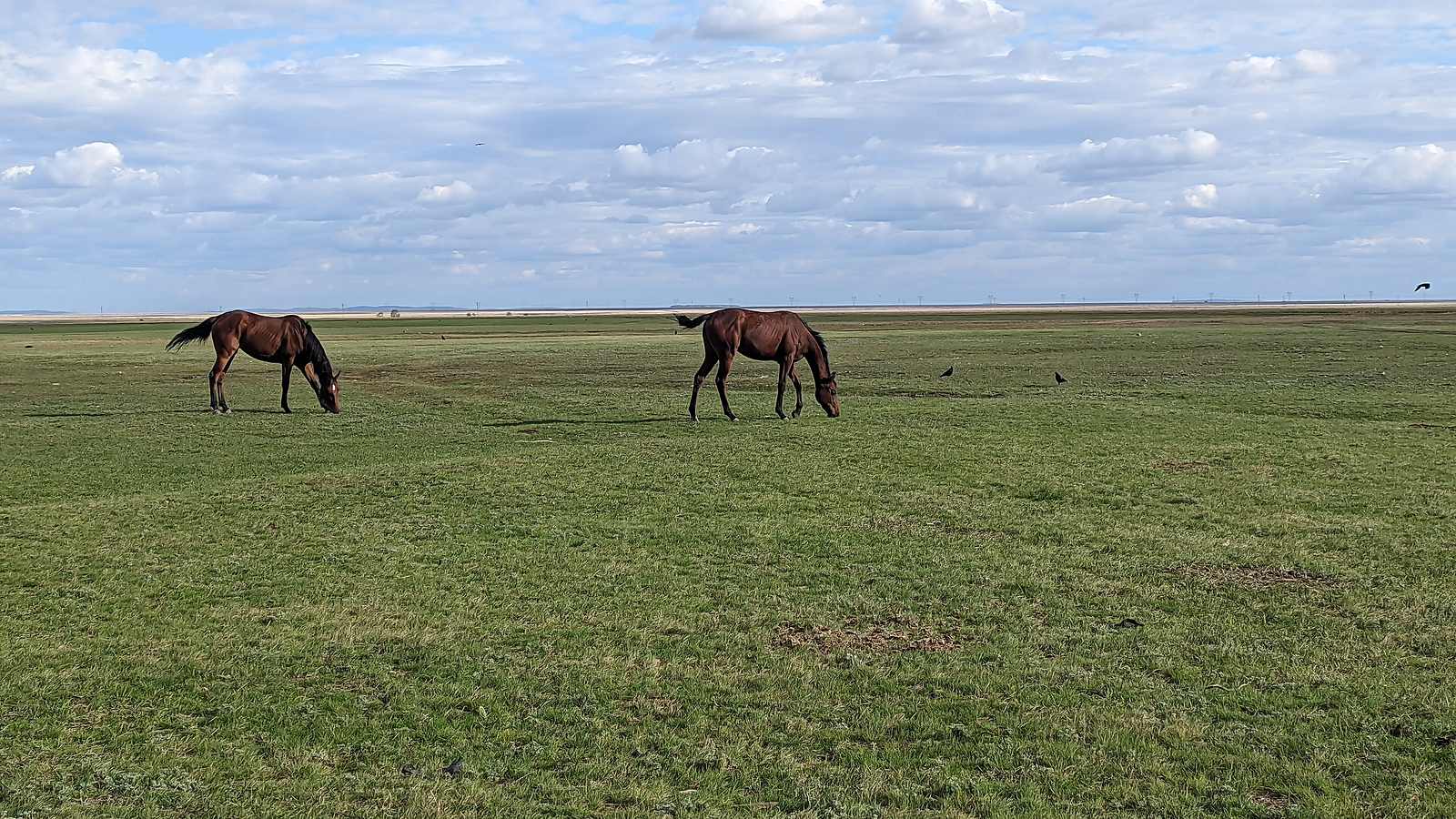
Kazakhstan is the ninth-largest country in the world by land area. That's about 2.7 million square kilometres of steppe, desert and mountains, much of it thinly populated. Building towers to cover all of that is slow and costly, and some places will never justify one.
The government statement said satellite mobile connectivity is "of particular importance" for that reason, and for areas where ground infrastructure has been damaged. VEON listed the people it expects to benefit, from emergency and rescue services and road and utility crews to tourists, mountaineers and people working at remote sites.
VEON Group chief executive Kaan Terzioglu put it simply: "For someone stranded on a remote road or lost in the mountains, this could mean the difference between isolation and getting help."
Zhaslan Madiyev, Kazakhstan's Deputy Prime Minister and Minister of Artificial Intelligence and Digital Development, linked it to a deal made during President Kassym-Jomart Tokayev's official visit to the United States in 2025. "Today, we are seeing this agreement become a reality," he said. "Kazakhstan has become the first country in Central Asia where Direct to Cell has undergone practical testing and is now moving to the user service stage."
Under a year from deal to service
It moved fairly fast. VEON says Beeline Kazakhstan and the ministry signed a memorandum of cooperation with Starlink in November 2025 and ran the first practical trials in December. Ten months later the service is in customers' hands.
Beeline Kazakhstan's chief executive, Jabbor Kayumov, said it took "a real team effort and close collaboration with the Ministry of Artificial Intelligence and Digital Development and with Starlink Mobile to get the technology right for our market."
Bulat Utemuratov, a Kazakh businessman and investor with the Verny Capital Group, also spoke in the government statement. "Kazakhstan is one of the largest countries in the world by territory, and distance should not become a barrier to people's access to modern technologies," he said.
One of three launches in a week
Kazakhstan wasn't the only country to switch on in the last week of September. Starlink posted on 29 September that Starlink Mobile was also live in Ecuador with the state-owned carrier CNT, TeslaNorth reported. Starlink's post said: "From the coastline to mountains and forests, customers can access apps and messaging on compatible phones in cellular dead zones."
TeslaNorth noted that Costa Rica had joined in late August using the same carrier model, so Ecuador makes two Latin American launches about a month apart. In North America, the same satellites already back T-Mobile's T-Satellite service in the United States and Rogers Satellite in Canada.
Five days earlier, on 24 September, Airtel Africa launched the service in Uganda, Space in Africa reported. It's Airtel's second African market, after the Democratic Republic of the Congo on 14 August and a pilot in Kenya in March. Airtel Uganda is offering a free 30-day trial through its app, followed by access through eligible data bundles. Airtel and SpaceX have said they plan to roll the service out across 14 of Airtel's markets.
Nyombi Thembo, executive director of the Uganda Communications Commission, explained why regulators like it. Ugandan operators must cover at least 90% of the country's land area, including islands, mountains and forests. "What matters now is that Ugandans, wherever they are located, have access to communication services," he said.
The pattern's the same each time. Starlink doesn't sell the phone service directly. It teams up with a local carrier, which brings the customers, the spectrum and the billing, while Starlink's satellites fill the gaps the carrier's towers don't reach.
The network behind it
VEON's release describes Starlink Mobile as a constellation of 650 launched satellites in low Earth orbit, working with existing LTE phones "wherever you can see the sky", and calls Starlink the world's largest 4G coverage provider. The Gold Standard covered the service's renaming earlier this year, when SpaceX said it spanned about 650 satellites and 22 countries.
In Kazakhstan, it's messages and selected apps for now, and it needs a clear view of the sky to work. But for a herder on the steppe, a driver on a long highway between cities, or a climber in the Tien Shan, a text that gets through is the point. Beeline customers in Kazakhstan can now try it without paying anything, at least until the launch period ends.
The paper
Comments
No notes on this story yet.
Sign in to comment