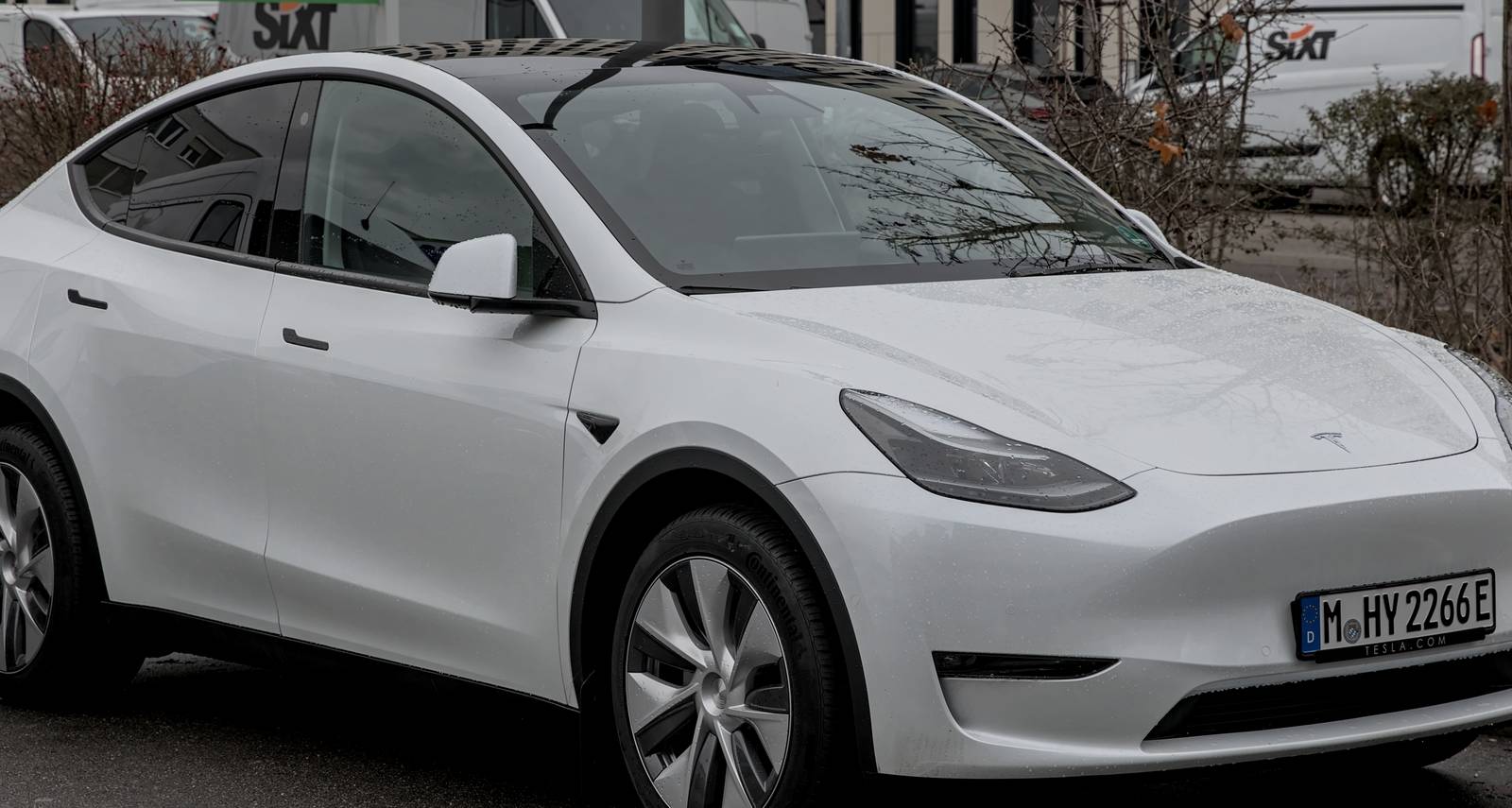
Zurich Australian Insurance Limited is the first insurer in Australia to treat Tesla Full Self-Driving (Supervised) as a risk-rating factor on InsureMyTesla. The company said so in a media release on 14 September 2026. Eligible customers with FSD get more affordable premiums that, on Zurich’s telling, reflect lower risk — and Zurich claims it’s only the second insurer globally to lean this way. The exact dollar discount isn’t named in the release.
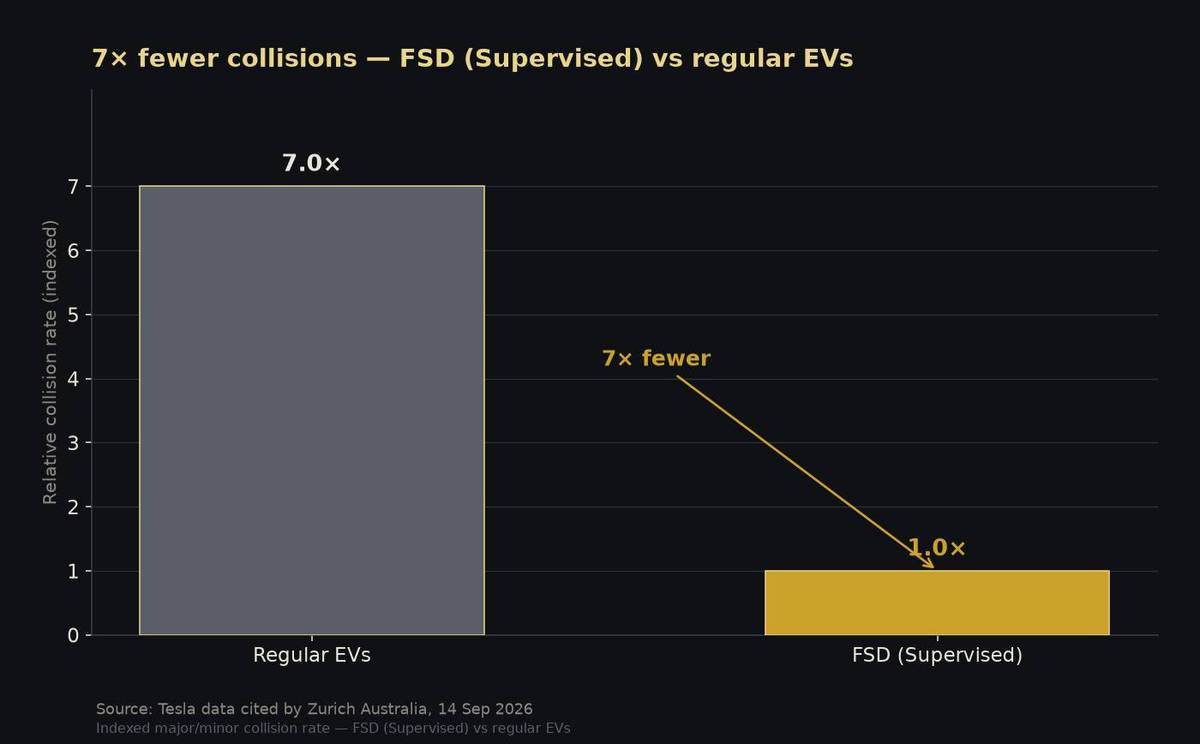
Zurich is citing Tesla data that vehicles using FSD have about seven times fewer major or minor collisions than regular electric vehicles, drawn from local and international Tesla figures plus Zurich’s own underwriting. Stephanie Coombes at news.com.au reported the same day, and the safety footnote Zurich points to is Tesla Australia’s Full Self-Driving (Supervised) Vehicle Safety Report.
David Toma, Zurich product manager, called it a milestone worth naming out loud. “This is a really exciting milestone – both for Tesla owners who are rapidly adopting this FSD (Supervised) technology, and for Zurich as the first insurer in Australia to actively lean into this space.” he said in the 14 September release. And he tied the price move to the collision numbers, not to a marketing slogan: “The data shows that drivers using this technology are involved in far fewer accidents, so it’s important they can access insurance that reflects this lower risk.”
Alex Morgan, Zurich head of general insurance, framed the same change as underwriting catching up with the cars. “As vehicle technology and driver behaviour continues to evolve at an extraordinary pace, it is critical that we continue to innovate alongside this change.” Morgan said. “By combining Tesla’s fine-grained data with Zurich’s sophisticated underwriting technology and motor expertise, this expanded proposition offers the same high-quality insurance at a more affordable cost due to the reduced risk associated with supervised self-driving.”
Thom Drew, Tesla Australia and New Zealand country director, welcomed the industry move in the Zurich release version of his quote. “We’re pleased to see the insurance industry recognising the safety and value of FSD (Supervised).” Drew said. “The data is clear – FSD (Supervised) is making driving significantly safer, and it’s encouraging to see InsureMyTesla by Zurich pioneering this benefit and reflecting the reduced risk for Tesla owners.” Those are the lines as Zurich printed them. The partnership language on both sides is about recognising measured risk, not about promising unsupervised city driving tomorrow.
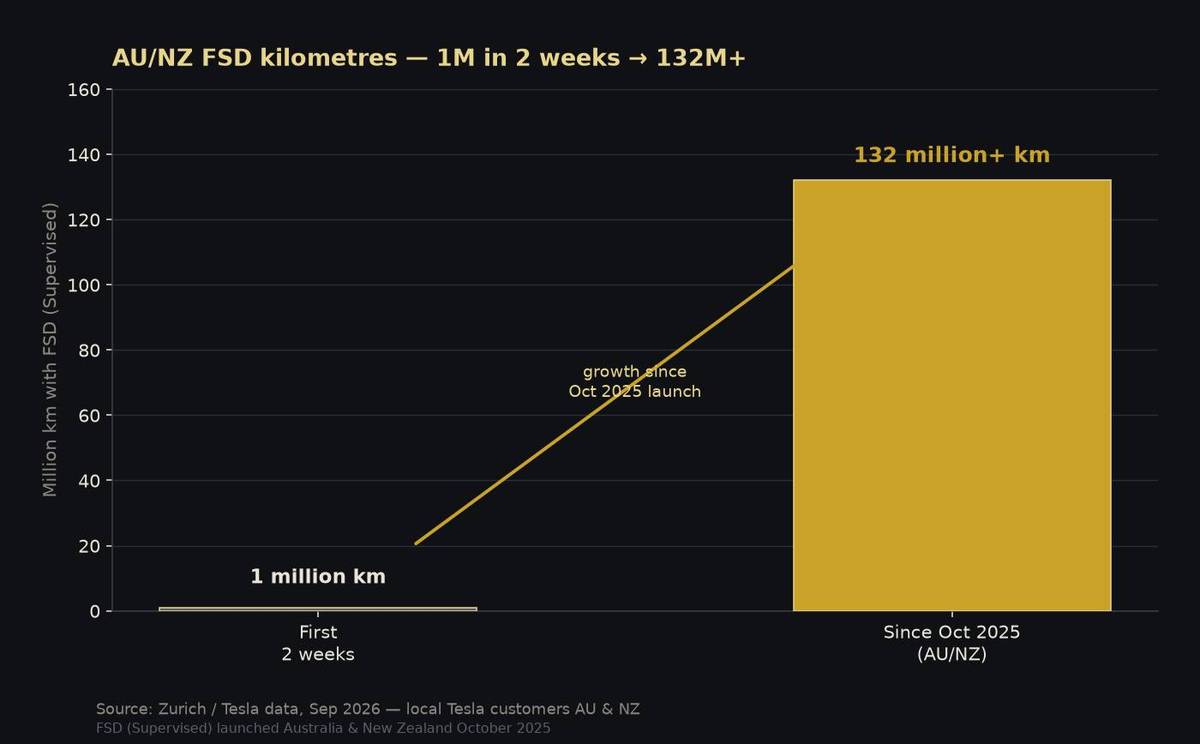
FSD (Supervised) launched in Australia and New Zealand in October 2025. Tesla, via Zurich’s briefing, says the software covered one million kilometres in the first two weeks and more than 132 million kilometres since. Zurich also says average daily use has risen five-fold since that launch — the kind of adoption curve that makes an underwriter sit up and re-price a book. This is still supervised driving. The system uses eight external cameras for a 360-degree view and, on Zurich’s description, processes more than one million pixels every millisecond. The driver has to stay attentive. It isn’t fully autonomous. Under Australian rules it sits as Level 2 driver assistance, as Insurance Business has noted in coverage of the same product change.
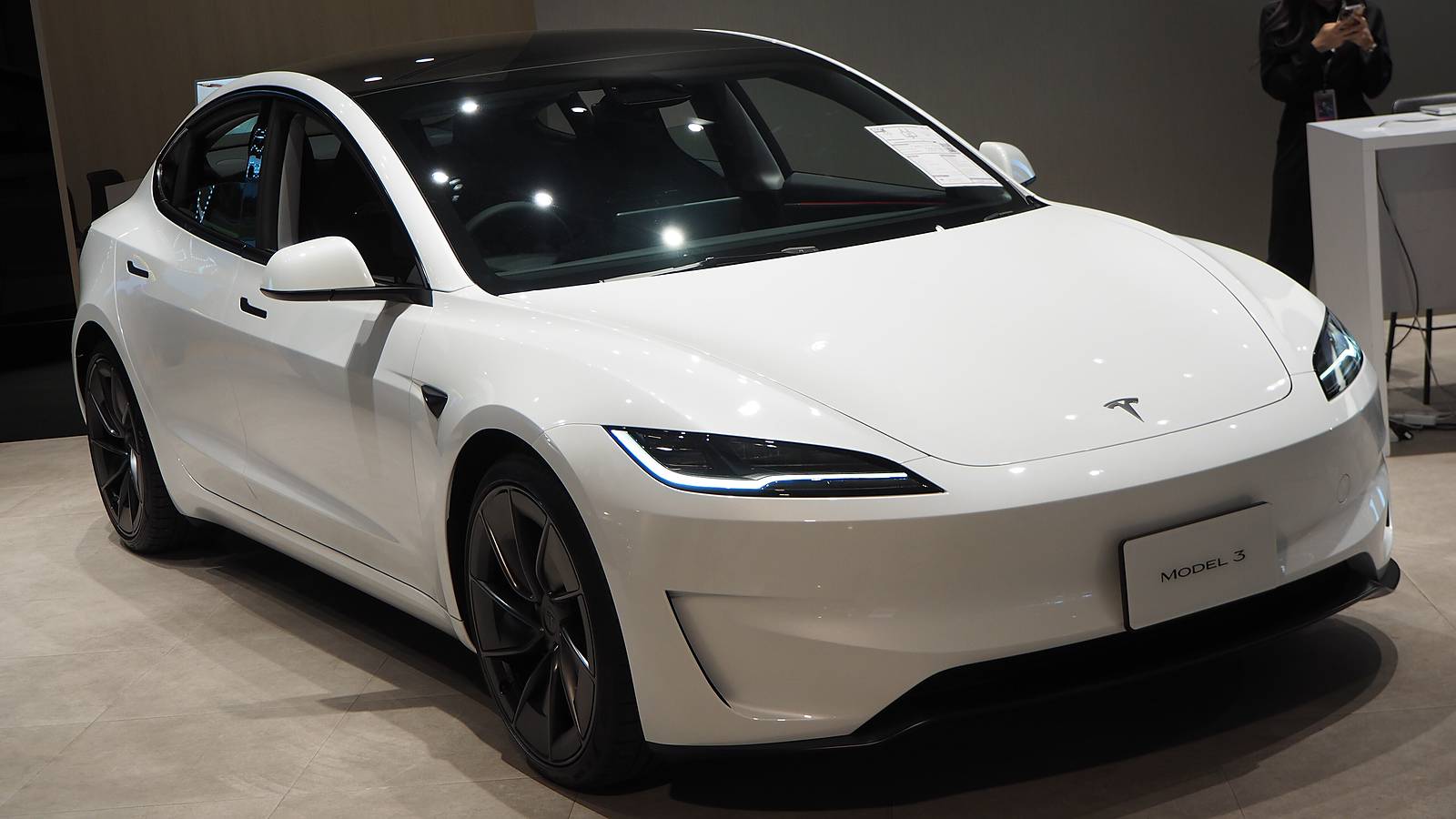
Eligibility, per Insurance Business and CarExpert reporting on the Zurich offer, covers Model 3 and Model Y vehicles running FSD. Customers declare active FSD when they seek a quote. CarExpert also places the Australian step in a global frame: this is the first FSD-linked insurance pricing outside the United States, where Tesla Insurance and Lemonade already factor FSD into how they rate risk. Zurich has been the preferred Tesla insurer in Australia since 2024, and the Zurich Group’s partnership with Tesla in Switzerland goes back to 2016 — so the relationship isn’t new. What’s new is the FSD rating factor on the local InsureMyTesla book. You say you’ve got active FSD when you quote. Zurich then prices the risk as if that supervised stack is part of how you drive.
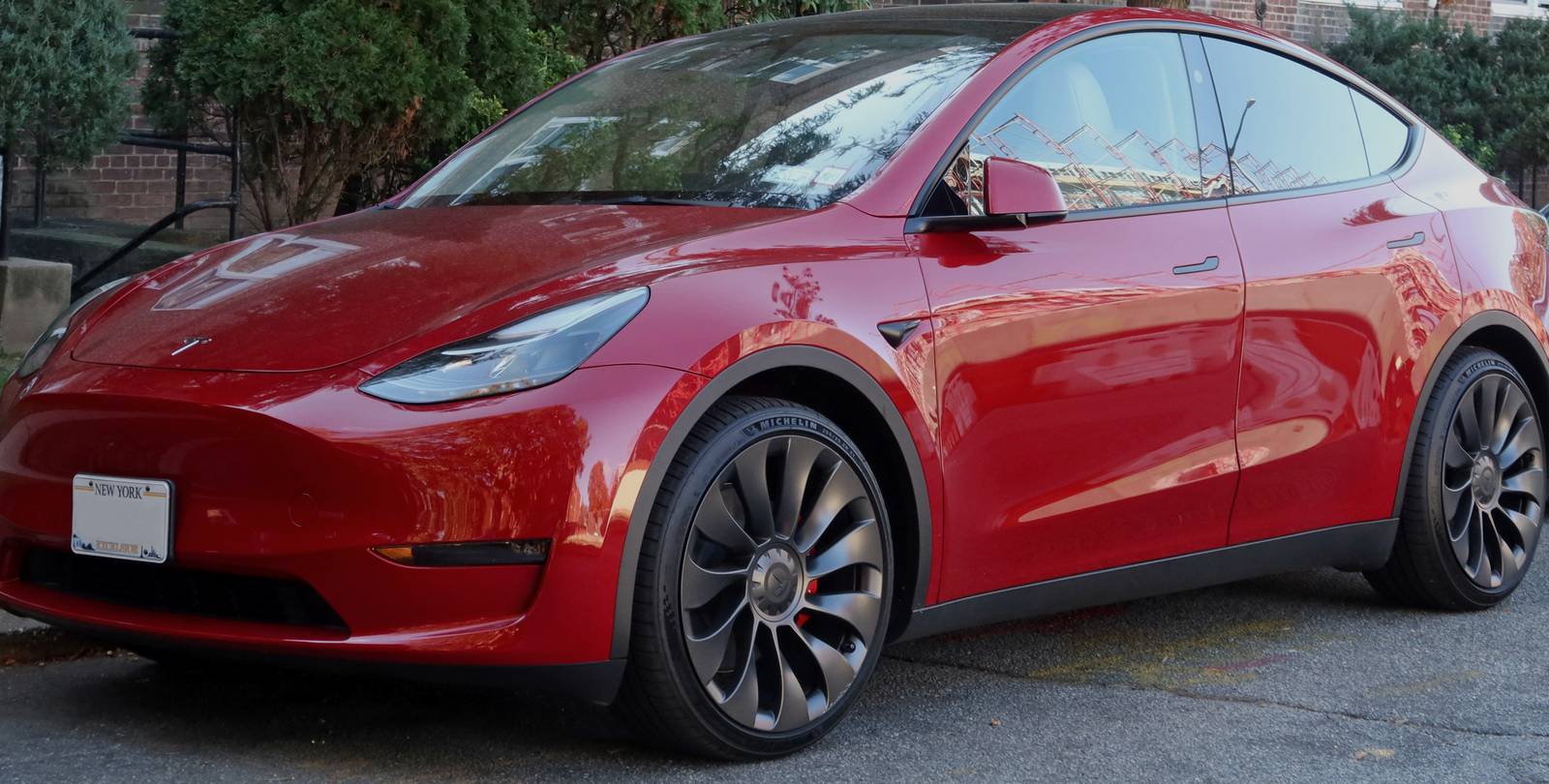
Zurich itself didn’t publish an exact dollar saving, and we aren’t inventing one. Drive, via Autotalk, obtained sample quotes that put the premium effect in concrete dollars for one profile — and those numbers should be read as Drive-obtained examples for one driver profile on one day, not as Zurich’s official discount percentage. For a Model 3 Long Range rear-wheel-drive, quoted for a 35-year-old man in Chatswood, New South Wales, Drive’s samples ran A$2,357 a year without FSD, then A$2,239 with a monthly FSD subscription — a cut of A$118 a year — and A$2,329 if FSD had been bought outright, a smaller A$28 a year reduction. Autotalk notes the FSD subscription itself at A$149 a month. Those quote deltas sit around a mid-single-digit percentage range on that sample only. Don’t treat that band as Zurich’s named official figure. Autotalk also flags a provenance point that matters for Australian readers: Tesla’s roughly seven-times-fewer-collisions claim is versus an estimated United States average, not Australian claims experience.
InsureMyTesla keeps the glass and charging-equipment repair benefits that owners already know on the policy. The product change is the risk factor, not a strip-down of the extras. news.com.au’s Stephanie Coombes, reporting 14 September 2026, also noted the software’s own pep-talk layer — consecutive days and longest distance without a disengage, complete with confetti milestones — which is how owners experience the supervised stack day to day. That colour sits next to the underwriting story, not instead of it, and it doesn’t change the attentiveness rule behind the wheel.
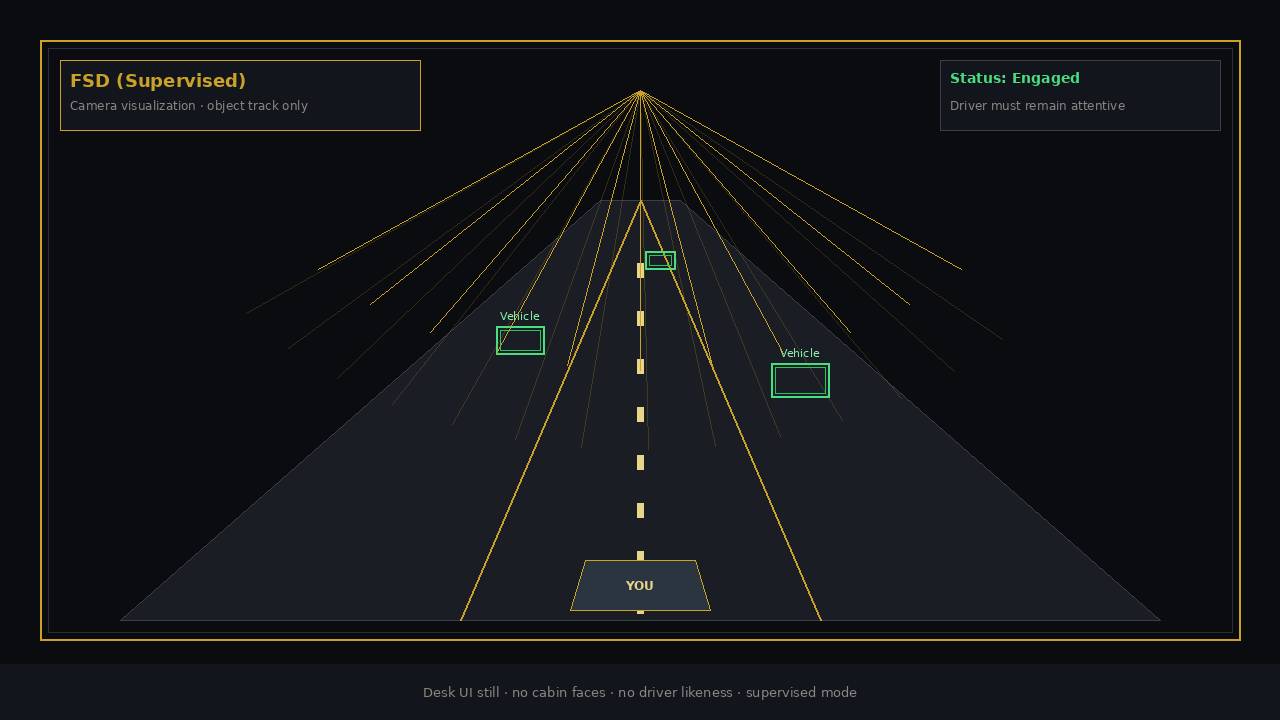
The supervised caveat stays honest. Queensland University of Technology’s Dr David Rodwell put the monitoring duty in plain language for news.com.au: “At the level of automation that we have at this time, the requirement to be monitoring and engaged even while your car is in self-drive mode is paramount.” That isn’t a smear on the Zurich move. It’s the same Level 2 reality the insurer is pricing — lower collision rates on Tesla’s published data path, with a human still in the loop. Zurich’s 14 September media release and the Tesla Australia safety report are the primary sources for the seven-times claim. The Drive samples are secondary colour on what a quote can look like for one New South Wales profile on one day.
One more Australian still on the same model line, short and not the lede: Model Y took ANCAP’s safest-car title for 2025, news.com.au reported, with scores of 91 percent adult occupant, 95 percent child occupant, 86 percent vulnerable road user, and 92 percent safety assist. It was also Australia’s best-selling car across all powertrains, and the second time Model Y has taken ANCAP’s top mark after the pre-facelift win in 2022. Hardware safety ratings and a supervised-software insurance factor are different things. Both now sit in the same Australian Tesla brief for readers who want the chassis and the policy together.
So the published facts, as of 14 September 2026, are these. Zurich Australian Insurance Limited rates FSD (Supervised) on InsureMyTesla. It says it’s first in Australia and second globally. It cites Tesla data of about seven times fewer major or minor collisions versus regular EVs, with the Autotalk caveat that the comparison is to an estimated US average. Exact dollars aren’t in Zurich’s release. Drive’s Chatswood samples show a smaller premium with FSD on that one Model 3 profile, larger with the monthly subscription path than with outright purchase on those figures. Model 3 and Model Y owners with active FSD can declare it at quote time. Glass and charging repair benefits stay. Drivers still have to watch the road. That’s the Australian first. The quotes stay intact. The discount stays unnamed where Zurich left it unnamed. If you’re shopping a Model 3 or Model Y with FSD already on, the practical next step is still the same: get a quote, declare the software, and read the number Zurich actually shows you — not a headline percentage that was never printed.
The paper
Comments
No notes on this story yet.
Sign in to comment