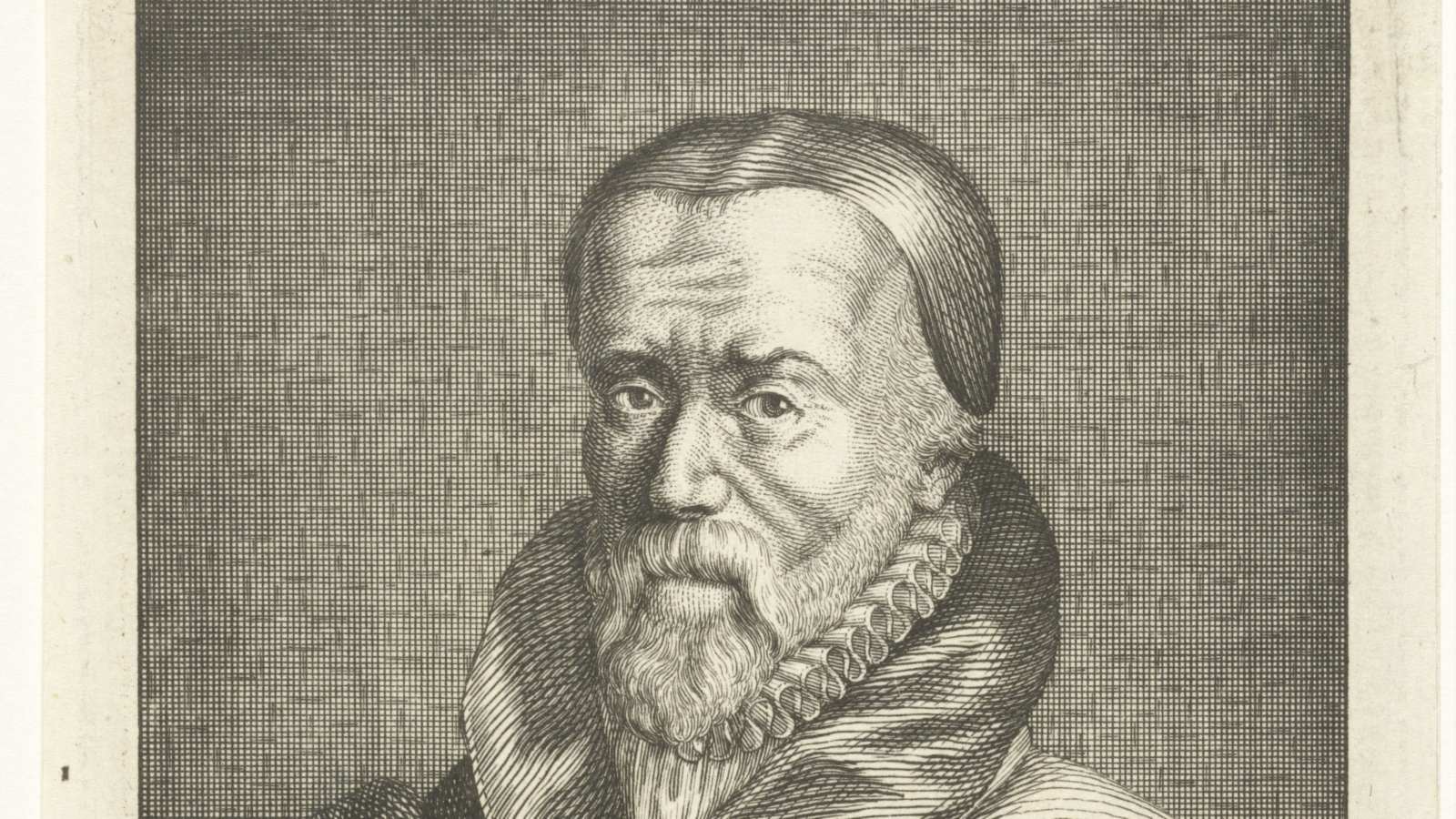

Five hundred years ago, a small book printed in a German city put the New Testament into plain English for the first time. On Reformation Day last Saturday, the anniversary of William Tyndale's translation got a mention from the White House, and the only complete surviving copy is on show in the city where it was made.
In a presidential message for Reformation Day, issued on 31 October, President Trump marked the moment. The message says that five hundred years ago Tyndale, "inspired by the work of Martin Luther," advanced "the Protestant Reformation's devotion to Holy Scripture through the publication of the first New Testament printed in English." It credits that work with "shaping the language of the Bibles that would fortify the faith and resolve of America's founding generation."
Why 31 October
Reformation Day remembers 31 October 1517, the day Martin Luther is said to have nailed his Ninety-five Theses to the door of the Castle Church in Wittenberg. His challenge to the sale of indulgences grew into the Protestant Reformation, and one of its central convictions was that ordinary people should be able to read the Bible in their own language.
Luther put that into practice with his German New Testament in 1522. Tyndale, an English scholar and priest, set out to do the same for English speakers. There was one problem. In England at the time, translating the Bible into English without church approval was banned.
A book made in exile
So Tyndale left England. He began printing his New Testament in Cologne in 1525, but the work was discovered and raided, and he fled. He finished it in Worms, a city on the Rhine, where the printer Peter Schöffer the Younger produced it in 1526.
What made Tyndale's work different was where he started. He didn't translate from the Latin Bible the church used. He went back to the Greek original. That's why the exhibition in Worms describes it as the first printed English New Testament translated from the Greek, and why scholars treat it as a turning point.
The books were smuggled into England, often hidden in bales of cloth. Church authorities bought up and burned as many as they could find. That's one reason so few survive. A review in Evangelicals Now of this year's British Library exhibition puts the first print run at around 3,000 copies. Only three are known to exist today.
A copy goes home to Worms
The organisers say the only complete copy is now back in the city where it was printed. An exhibition called Made in Worms is showing it at the city's museum in the Andreasstift, a former church foundation, from 26 September 2026 until 10 January 2027. There's a lecture series alongside it, with talks scheduled for 13 and 19 November.
Earlier this year the British Library in London held its own exhibition for the anniversary, which ran from 28 February to 29 June, according to the Tyndale Society.
The ploughboy
There's a line Tyndale is remembered for, recorded by the 16th century writer John Foxe. Arguing with a clergyman who'd said people were better off without God's law than without the Pope's, Tyndale is said to have answered that if God spared his life, he would make a boy who drives the plough know more of the Scripture than the clergyman did.
That was the whole point of his work. He wanted a farmhand to be able to hear the Gospel in words he understood, without needing a priest to translate the Latin for him.
Words we still use
If you've ever said "the salt of the earth," "the signs of the times" or "the powers that be," you've quoted Tyndale. His phrases run all through the English language, mostly because the translators of the King James Bible in 1611 borrowed so heavily from his work. Scholars have long estimated that the great bulk of the King James New Testament follows Tyndale's wording.
The White House message makes the same link. It says the Scriptures "helped form the religious convictions that formed our young Nation's founding ideals of God-given rights and individual liberty."
What it cost him
Tyndale didn't live to see his work accepted. He was betrayed in Antwerp in 1535, imprisoned near Brussels, and executed in 1536. According to Foxe, his last words were a prayer: "Lord, open the King of England's eyes."
Within a few years, England had an authorised English Bible in its churches, built in large part on his translation. The prayer, in its way, was answered.
Why it matters in Australia
Tyndale's story isn't just American or English history. It's ours too.
Australia inherited the English Bible along with the English language and the common law. Generations of Australians learned to read from it, swore oaths on it and heard it read in church, school and parliament. When the Constitution's preamble describes the people of the colonies "humbly relying on the blessing of Almighty God," it's speaking in a language shaped by those translations.
That heritage is worth knowing and worth defending. The idea that every person has dignity before God, that the law applies to rulers as well as subjects, and that ordinary people have a right to read and judge the Scriptures for themselves, didn't appear from nowhere. Tyndale was one of the people who paid for it.
The work goes on
Tyndale's aim, the Bible in the language of the person reading it, is still being pursued around the world. Wycliffe reported in September that the full Bible is now available in 807 languages. Groups such as MegaVoice are taking audio Bibles to places like Nepal, so people can hear Scripture even where reading it is hard.
The ploughboy has plenty of company now. Five centuries after a printer in Worms set Tyndale's type, there are still people waiting to read the Gospel in their own words for the first time.
If you're in Germany before January, the Worms exhibition is the one chance to see that original book. And if you're not, there's a simpler way to mark the anniversary. Open an English Bible and read a few lines of the New Testament. Much of what you'll be reading is Tyndale.
If this story helped, you can help keep the paper going: Support the paper.

The paper
Comments
No notes on this story yet.
Sign in to comment