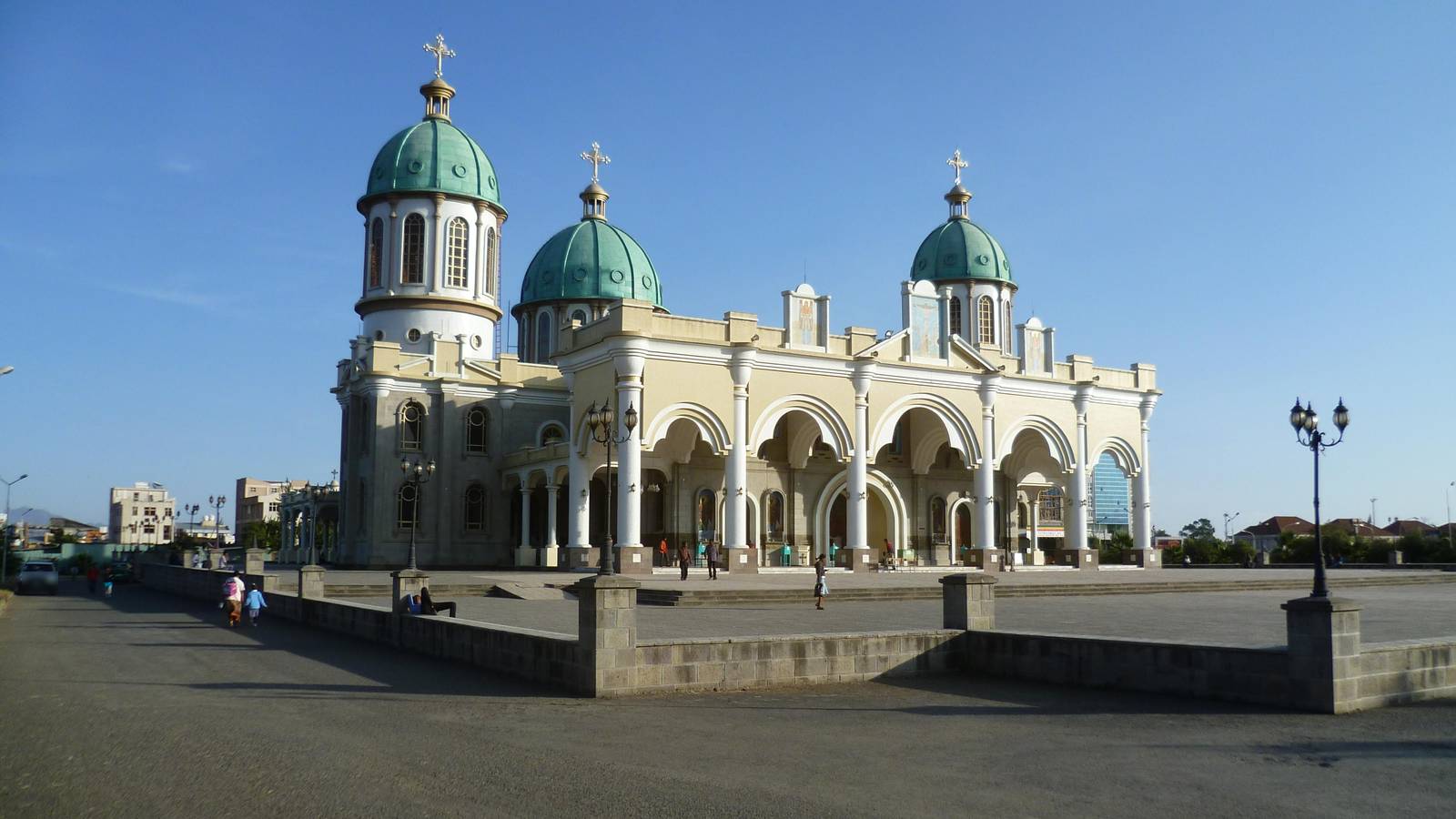

At least 60 Orthodox Christians have been killed in two attacks on villages in Ethiopia's Oromia region, their church says, and witnesses say five of the dead were children. On Tuesday 27 October, Ethiopian Orthodox churches and monasteries around the world were asked to hold memorial prayers for them.
The Holy Synod of the Ethiopian Orthodox Tewahedo Church set out the toll in a statement on Monday 26 October. It called the killings "extremely tragic cruelty and suffering inflicted on our citizens," according to Al Jazeera, and asked the government to protect its faithful and bring the killers to justice.
What the church says happened
There were two attacks, four days apart, both in the Arsi Zone of central Oromia. According to the Synod, 14 people were killed on 20 October at a place called Gora Silingo, in Angada Kebele in Merti district. Then on 24 October, another 46 were killed in the villages of Tereta, Chole and Birbo in Shirka district.
The Synod also said the homes of 20 families were burned to the ground and more than 20 people were seriously hurt and are being treated in hospital, ACI Africa reports.
Vatican News put Shirka district about 270 kilometres south of Addis Ababa. It said witnesses described the attackers going from house to house, killing people with guns and knives, and that elderly people and children were among the victims. One church was reportedly damaged, while churches in neighbouring villages took in people fleeing. Vatican News described the death toll as provisional.
In their own words
Survivors are still trying to make sense of it. One resident, whose 75 year old father was killed, told BBC Amharic it was an ambush. "We were completely unprepared and had no prior knowledge. They surrounded us from all four directions," he said.
Eyewitnesses told the BBC that five of those killed were children. A church official called the attacks on three areas in Shirka a "massacre" and said security forces reached the scene but couldn't stop the assault. Many residents have since fled.
The Synod's language was raw. "The horrific and appalling massacres, forced displacements, and physical and property damage inflicted upon our innocent Orthodox Christian faithful in the Arsi Eparchy and in various other parts of our country have continued unabated and have been worsening over time," it said, in the English text carried by ACI Africa.
It said the attacks are "entirely unacceptable under the teachings of any religion and are incompatible with the human rights of all people," and that they "violate the constitutional rights to religious freedom and to life."
The church also prayed for the dead. "We pray that God Almighty will grant rest to the souls of our brothers and sisters who lost their lives unjustly and bestow upon them the honor of martyrdom," it said. "The Holy Church continues to pray for them and wishes comfort and consolation to all those who mourn."
The church says it warned the authorities
The Synod says this didn't come out of nowhere. In a Facebook statement quoted by the BBC, it said it had repeatedly raised concerns about insecurity with authorities at different levels of government, but that "so far there has been no solution."
It asked government institutions to publicly condemn the attacks, uphold the rights to life and freedom of worship, and give affected communities extra protection. "We call upon the government to provide the necessary protection to our faithful wherever they may be, so that they are not subjected to similar attacks," it said. It also wants a meeting with senior government officials to look for a lasting solution.
The Oromia regional government has pledged to pursue those responsible.
Who's being blamed
Nobody has claimed responsibility. The Synod didn't name anyone.
A local official told the BBC a newly formed rebel coalition, the Alliance for Survival, was behind it, and said the coalition includes the Oromo Liberation Army, or OLA. Vatican News, citing Ethiopian authorities, reported that a coalition called "Tsimido" operates in the area and includes the Tigray People's Liberation Front, Amhara Fano militias and the OLA, which the government in Addis Ababa classifies as a terrorist organisation.
The OLA hasn't commented on these killings. It has denied carrying out earlier attacks on civilians. The group says it fights for greater rights for the Oromo people, and Prime Minister Abiy Ahmed has previously said violence against civilians and religious institutions is part of a plan to destabilise the country.
A pattern in Arsi
This is one of the deadliest attacks in a long run of violence in the same area. The Ethiopian Human Rights Council, a non-government group, reported in July that 458 people had been killed in attacks there over the previous four years, the BBC says. That report said armed groups had repeatedly targeted local communities, particularly followers of the Orthodox Church, in what it described as religiously motivated attacks.
The picture isn't simple, though. Vatican News notes the area is home to Muslims, Protestants and Orthodox Christians, and the BBC says earlier reports have also documented attacks on Muslims there. Residents who've spoken to the BBC describe the violence as both ethnic and religious.
Oromia is Ethiopia's largest regional state, with some 40 million people, and government forces have been fighting armed groups there for years. About two thirds of Ethiopians are Christian, mostly Orthodox, and about a third are Muslim.
The wider country is unsettled too. ACI Africa reports renewed fighting nearly four years after the 2022 Pretoria peace agreement that ended the Tigray war, and says the Tigray People's Liberation Front joined six other armed groups in September in an alliance reportedly seeking to remove Abiy's government.
Churches respond
The World Council of Churches has backed the Ethiopian church's call. "The first duty of any government is to protect its people, regardless of race, ethnicity, religion or other characteristic," general secretary Rev. Prof. Dr Jerry Pillay said in a WCC statement. He asked member churches to join in prayer for the victims and in solidarity with the communities affected.
Ethiopia's Catholic bishops had pleaded for peace only weeks earlier. In a 1 October statement reported by ACI Africa, they urged everyone fighting across the country to stop and choose dialogue, forgiveness and reconciliation. "Rather than resolving differences, war serves only to deepen divisions and multiplies suffering," they said. That followed Pope Leo XIV's appeal for dialogue on 30 September, as fighting flared in Tigray and the neighbouring Afar and Amhara regions.
For the Orthodox faithful, Tuesday was a day of mourning. The Synod directed that memorial services be held after the Divine Liturgy in every church and monastery of the Ethiopian Orthodox Tewahedo Church worldwide. The families in Arsi are still waiting to hear who will answer for the dead, and whether anyone will stop it happening again.
The paper
Comments
No notes on this story yet.
Sign in to comment