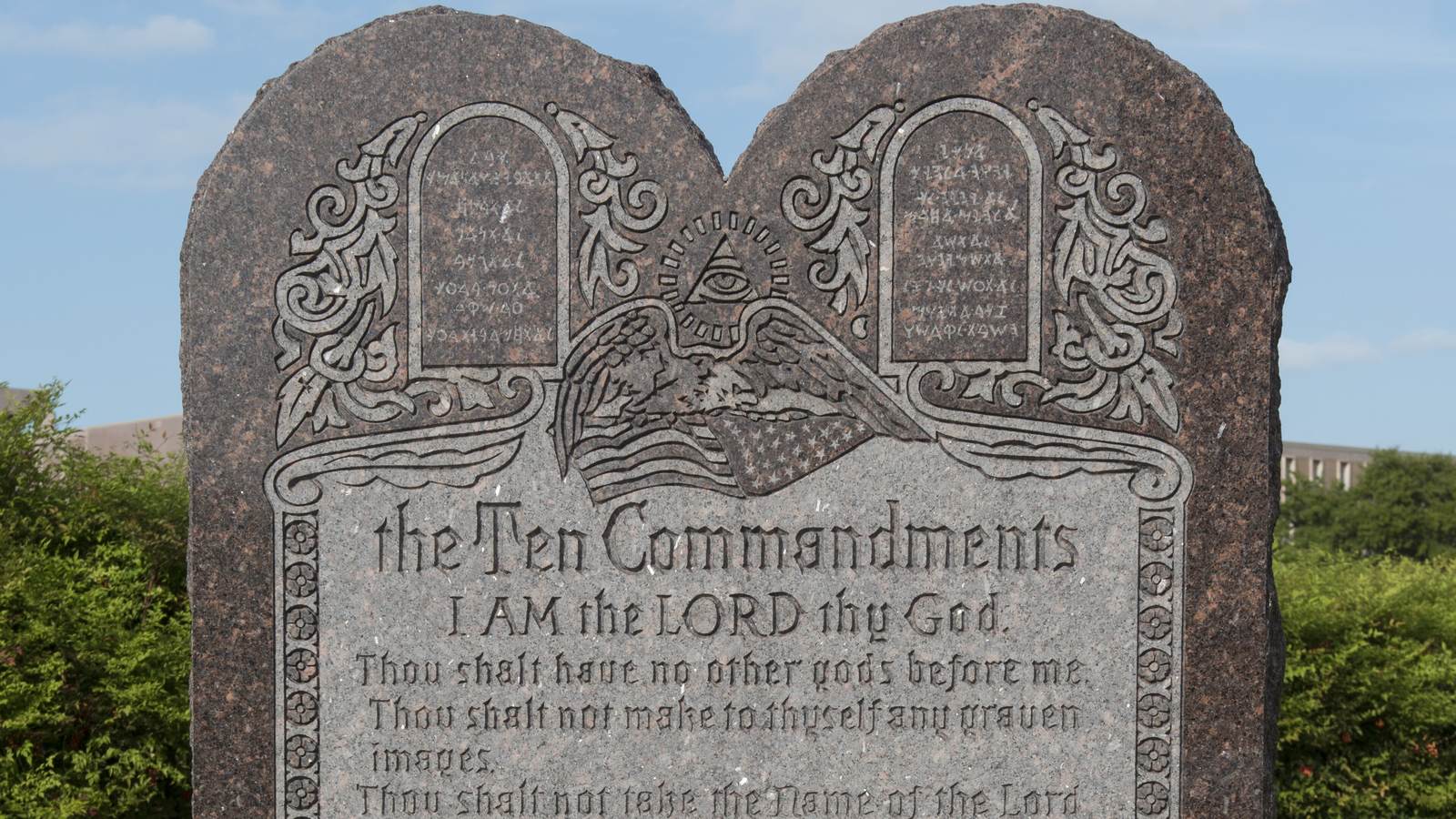

The Ten Commandments are going back up on classroom walls across Texas, one district at a time. A state law says every public school classroom must have them, and the fight now is over who's complying, who isn't, and whether the US Supreme Court will step in.
"Nearly 50 years after the Supreme Court said it was unconstitutional to require schools to post the Ten Commandments, Texas has become a 21st-century experiment in mandating Scripture in the classroom," Michelle Boorstein wrote in The Washington Post on Monday 2 November US time. Her report describes a Christian group tracking which schools have put the posters up, and other groups donating alternative posters of their own.
What the law says
The law is Senate Bill 10, passed by the Texas Legislature in 2025. It requires a copy of the Ten Commandments in every public elementary and secondary classroom, to specifications set out in the Texas Education Code. Districts also have to accept qualifying donated posters or framed copies for classrooms that don't have one, according to the Texas Gazette, citing the group Texas Values.
The supporters' case is simple. "The Ten Commandments helped shape the legal and moral foundations of our nation, and students deserve to understand that heritage," said Jonathan Covey, policy director for Texas Values. "School districts should move quickly to comply with Texas law by displaying these enduring principles in every classroom."
That's an argument with real history behind it. The Commandments sit behind centuries of Western law on murder, theft, perjury and the protection of the family, and the Texas Capitol itself has a granite Ten Commandments monument on its grounds.
How the courts got here
The big turning point came on 21 April this year. The full US Court of Appeals for the Fifth Circuit upheld SB 10 in Nathan v. Alamo Heights Independent School District, rejecting challenges under the First Amendment's Establishment and Free Exercise Clauses, according to a statement from Conroe ISD.
It was close. The court split 9 to 8, Hoodline reports, citing The Daily News of Galveston. The majority found the displays were passive postings that didn't establish religion or coerce students, and it set aside the old Lemon test in favour of an approach based on history. The US Supreme Court had already moved away from Lemon in its 2022 ruling for a public school football coach who prayed on the field after games.
The decision Texas is pushing against dates from 1980. In Stone v. Graham, the Supreme Court struck down a Kentucky law requiring the Ten Commandments in classrooms. That's the "nearly 50 years" in the Post's opening line.
The Supreme Court petition
The families challenging the law haven't given up. Rabbi Mara Nathan and other parents, who argue the law breaches the First Amendment, filed a petition with the Supreme Court in August. The Supreme Court docket for case No. 26-257 shows the petition was filed on 17 August. Texas asked twice for more time to respond. The second time, on 20 October, the clerk granted the request in part and set the deadline at 10 November.
So the state's answer is due next week. After that, the justices will decide whether to take the case at all. Until they do, the Fifth Circuit ruling stands, and Texas Values argues that a pending request for review "does not, by itself, suspend the law."
Districts putting them up
Some districts are now moving. Conroe ISD, north of Houston, announced on 26 October that it would install the displays in classrooms after the Texas Attorney General's office told it the injunctions had been vacated. Conroe had put displays up before and taken them down under a court order in separate litigation.
"Conroe ISD has followed state law and court orders throughout this process," said Misty Odenweller, president of the district's board of trustees. "We will continue to fulfill those responsibilities as we move forward under the updated guidance."
Superintendent David Vinson said staff would coordinate the work "to ensure the displays meet the requirements of Senate Bill 10." The district expects to finish within weeks.
On 28 October, Texas Values donated 110 posters to Bloomington ISD, near Victoria on the Gulf Coast, the Texas Gazette reports. Covey called it "a practical example" of the group's commitment and said there are still "plenty of classrooms and school districts that need to comply."
In Galveston, the courts forced the issue. In a ruling reported on 1 October, state district Judge Jeth Jones granted the Attorney General's request for a temporary injunction and ordered Galveston ISD to put up donated posters within 10 days, Hoodline reports. The posters had been donated by state Senator Mayes Middleton. "I donated 10 Commandments posters to GISD and they must display them," he said at the time.
Half aren't there yet
How widespread is compliance? Covey told News Radio 1200 WOAI that Texas Values has launched a tracker, and that preliminary numbers show about 27% of districts fully complying, 23% partially complying and 50% not complying. The Texas Gazette notes the group hasn't published how it gathers those figures and that it hasn't checked them independently.
Covey says some boards are dragging their feet. They can review donated posters for legal compliance, "which is fine, but that shouldn't take long," he said. "A school board can't simply vote this away. This is Senate Bill 10 and it's codified, so it has to be complied with."
Not every district is free to act. Federal judges have blocked the law in some districts where plaintiffs live, Hoodline reports, which has left Texas with a patchwork of classrooms where the posters are required, blocked or still in limbo. Outside Texas, a federal appeals court blocked Louisiana's similar law and a judge barred four Arkansas districts from putting the posters up.
Why it matters beyond Texas
For Christians, and for anyone who believes a nation's laws grow out of its moral inheritance, this is a live test of whether that inheritance can be named in a public classroom. For opponents, it's a test of the line between church and state. The Supreme Court may soon decide which view the US Constitution allows.
Australian readers will recognise the shape of the debate. It's the same argument about faith in public schools that comes up here over chaplaincy and religious instruction, though no Australian state has gone anywhere near requiring Scripture on classroom walls.
What happens next is set by the calendar. Texas files its response by 10 November, the justices decide whether to hear the case, and in the meantime more classrooms put the posters up.
If this story helped, you can help keep the paper going: Support the paper.


The paper
Comments
No notes on this story yet.
Sign in to comment