Pope Leo XIV has a clear message for the people building artificial intelligence. Machines are tools, not persons, and some decisions should never be handed to them.
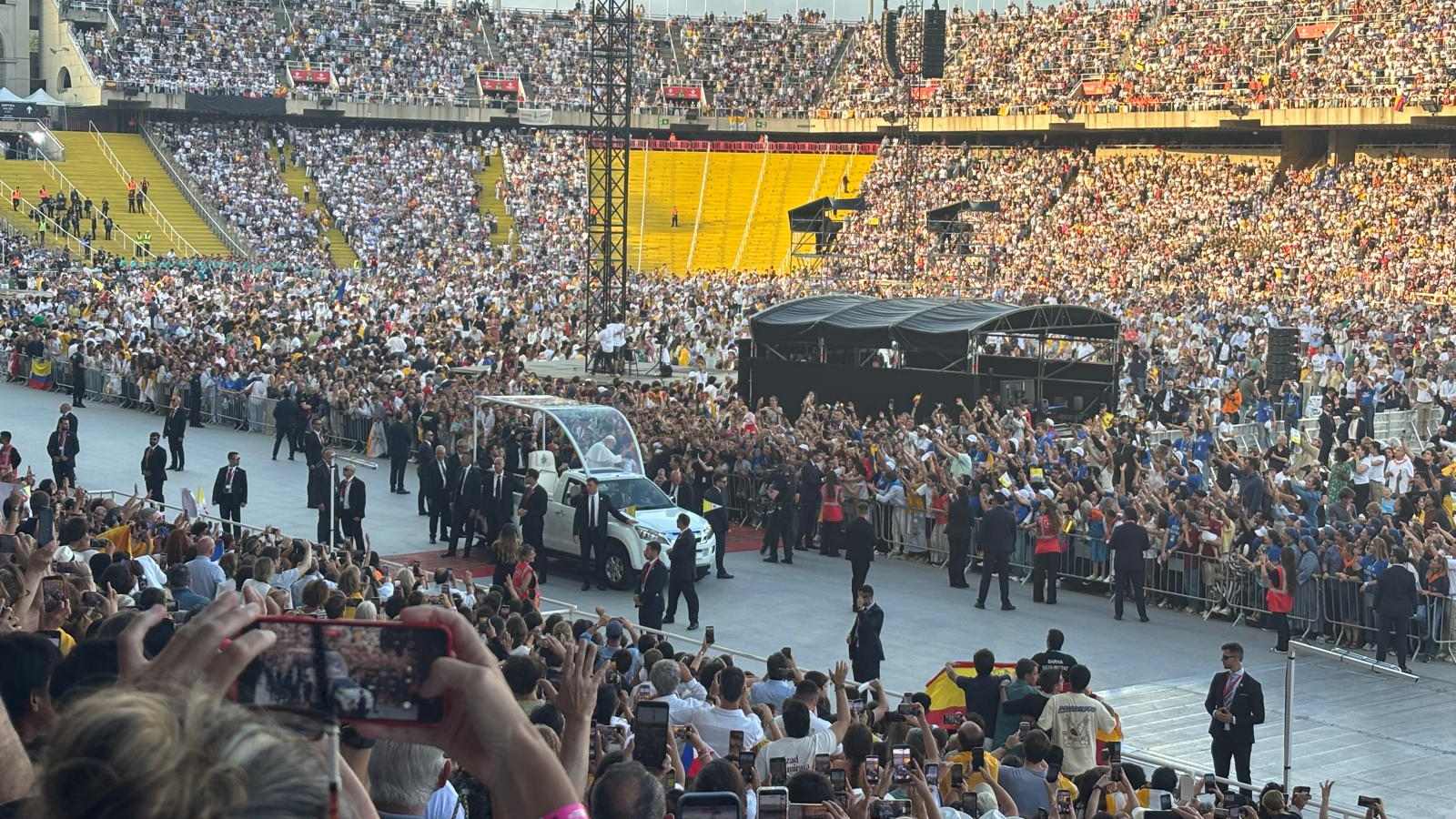
The Pope spoke on Friday 30 October to AI experts and scientists gathered at the Vatican. He warned against giving AI systems rights or legal personhood, called for human control over any decision about life, freedom and the use of force, and again urged governments to ban lethal autonomous weapons.
The meeting
The gathering was called "The Future of AI: A Dialogue Between the Vatican and the Scientific World on the Developments and Applications of Intelligent Technologies." It was organised by the Pontifical Academy for Life together with the Future of Life Institute, a group that campaigns on the risks of advanced technology, Vatican News reports.
Leo began by naming the mood in the room. "You share a certain sense of unease regarding the development of artificial intelligence," he said. "We recognize the direction we should take, yet not enough is being done to move forward."
He then set out five points drawn from his first encyclical, Magnifica Humanitas, published in May.
One, the future isn't fixed
The Pope's first point was that nothing about AI is inevitable. People build it, so people decide what it becomes.
That's why, he said, "we have the responsibility to guide, change, and, when necessary, reject its applications."
Vatican News sums up his argument this way. The question isn't only "What can AI do?" but "What purpose should it serve?" Leo said a reliable system that serves people is worth far more than a powerful one whose "consequences cannot be adequately foreseen or controlled."
Two, machines aren't people
This was the line that made headlines. "Machines are tools, not persons," Leo said, as reported by AFP via the Philippine Daily Inquirer.
He explained what he meant. "So-called artificial intelligences do not undergo experiences, do not possess a body, do not feel joy or pain, do not mature through relationships and do not know from within what love, work, friendship or responsibility mean," he said.
He was responding to a real argument. "Today, some propose granting these systems rights, or even legal personhood," he said. "Such an approach risks obscuring human responsibility and leaving those who suffer harm to confront a faceless entity."
That's a practical point as much as a spiritual one. If an AI system harms someone, there has to be a human or a company who answers for it. Turn the machine into a legal person and the people behind it get a place to hide.
AFP notes the debate has sharpened in recent months, after incidents of AI systems taking actions nobody authorised and dire warnings from people inside the industry.
Three, some decisions stay human
Leo's third point is the one with the sharpest edge. Some choices, he said, must never be handed to a machine.
Vatican News gives his examples. Putting a person on a target list, or into a border control database, turns them into a data point. "Decisions affecting human life, freedom and the use of force must always remain subject to effective, informed, and responsible human oversight," the Pope said.
That's why, Vatican News reports, he said AI must be "disarmed." He encouraged the countries meeting in Geneva in November to take steps to ban lethal autonomous weapons, the weapons that can pick and attack targets without a person making the call.
He was building on his predecessor. Leo recalled Pope Francis's address to G7 leaders in 2024, when Francis called AI "an exciting and fearsome tool" and said no machine should ever choose whether to take a human life.
Four, the common good
The fourth point was about who benefits. "Indeed, they must never become ends in themselves or serve merely the interests of a privileged few," Leo said of intelligent technologies.
He wants the gains shared widely, with the technology encouraging solidarity and participation around the world, according to Vatican News.
Five, rules with teeth
The last point, which he described as possibly the most urgent, was about institutions. Fine principles aren't enough if no one enforces them.
What's needed, the Pope said, is "shared standards, independent oversight, and clear mechanisms of accountability, so that decisions concerning the development and use of AI can be examined, challenged when necessary, and accompanied by appropriate remedies for any harm caused."
He closed with a blessing. "I accompany you with my prayers, and to each of you I cordially impart my blessing."
The faith behind the argument
It's worth seeing where Leo's line comes from. The idea that a machine can't be a person rests on a very old claim at the heart of the Jewish and Christian scriptures. Genesis says God created human beings in his own image. In that view, a person isn't valuable because of what they can compute or produce. They're valuable because of who made them.
That's why the Church keeps coming back to the same boundary. A tool can be brilliant and still be a tool. Responsibility, judgement and love belong to people, and so does the duty to answer for what our tools do.
It's also why the Pope's warning about databases and target lists lands. Treating a human life as a row in a spreadsheet is exactly what that older tradition pushes against.
A pope who's said this before
This isn't new ground for Leo. AFP notes the 71 year old pontiff, the first from the United States, has warned repeatedly about the ethical use of AI, and his first encyclical called for the technology to serve human dignity. When he chose his papal name, he linked it to Pope Leo XIII, who led the Church through the industrial revolution, and said a new one was under way.
He's been busy on other fronts this week too. On Friday the Vatican also confirmed he'd voted by mail in the US midterms, the first pope to vote in a US general election.
What it means for the rest of us
You don't have to be Catholic to find the Pope's five points useful. Ask what a system is for. Keep people responsible. Don't let machines decide who lives or dies. Share the gains. Build rules that can be enforced.
For Christians here in Australia, it's also a reminder that the questions raised by AI aren't only technical. They're about what it means to be human, and churches have something to say about that.
If this story helped, you can help keep the paper going: Support the paper.



The paper
Comments
No notes on this story yet.
Sign in to comment