
Queensland's rating is on the brink. As of Friday morning, 11 September 2026, Adelaide time, S&P has not publicly announced a cut — but Thursday's reporting from Canberra and Brisbane put the state on the edge of losing AA+, with a move to AA expected as early as today.
Brink means brink. Not done. Not announced. Expected.
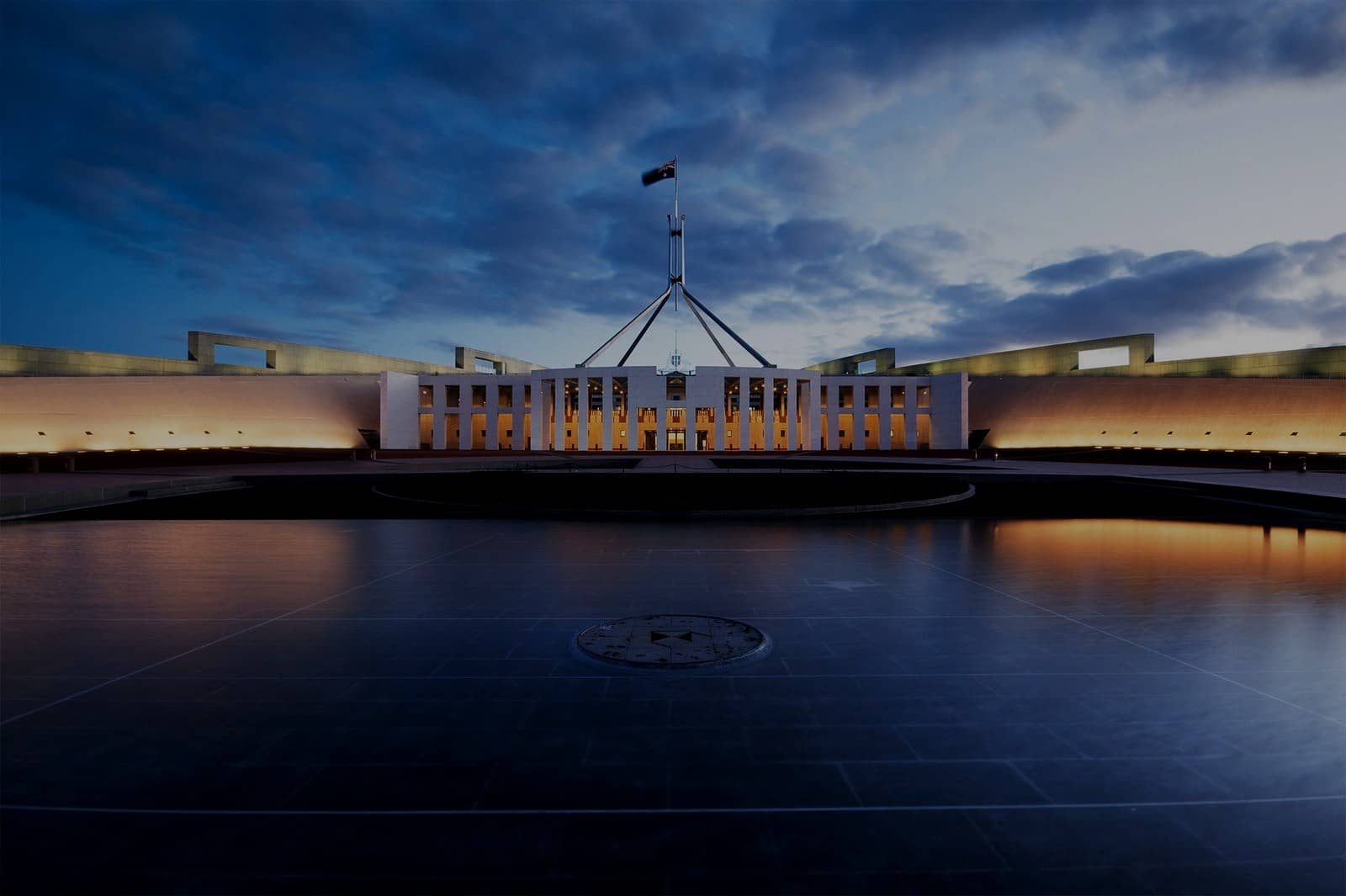
ABC's Thursday story, published about 3:49pm on 10 September 2026, says the ABC understands a downgrade is imminent. Brisbane Times, James Hall, at 6:45pm the same day, says S&P is expected to announce a downgrade from AA+ to AA as early as Friday, according to sources with knowledge of the move who were not authorised to speak publicly. S&P, asked on the record, would not comment on any announcement or decision.
So the wires agree on the direction and disagree on nothing that matters for Friday breakfast: the agency has not spoken yet, and people who track these things think it might speak today.
Why does a letter grade matter if you do not trade bonds? Because a state that borrows more than two hundred billion dollars pays interest every year. A weaker rating can mean a higher coupon on that debt. AMP chief economist Shane Oliver told ABC a knock to Queensland's AA+ rating would increase the cost of maintaining ballooning debt. His line, verbatim: "That means you've got less money left over to spend on other services or alternatively you've got to raise taxes or alternatively it just leads to a bigger budget deficit."
That is the practical spine. Less for hospitals and schools. Or higher taxes. Or a bigger hole in the budget. The politics is the rest of Thursday.
What Chalmers said in Question Time
Federal Treasurer Jim Chalmers, in federal parliament on Thursday, called the risk of a downgrade "very troubling." ABC also carries his longer line as a Queenslander watching the state's books: "As a Queenslander, I am concerned that despite substantial and increased Commonwealth support for Queensland, the Queensland government's fiscal position has experienced a sharp deterioration."
Brisbane Times adds framing Chalmers used on the floor: he flagged that "sharp deterioration" despite warnings from S&P in October last year and again in February this year. Those warning dates are what Brisbane Times says Chalmers put on the record. They are not a substitute for S&P's own press release. As of Friday morning, that release still has not landed as a public downgrade announcement.
The video for this story is the Australian Parliament House Streaming Portal cut of House Question Time on 10 September 2026 — YouTube id j9nyvvJ6DIw. Chalmers' Queensland comments landed in that sitting. Watch the treasurer's words in the chamber tape rather than trusting a paraphrase chain.
Why plant a federal Question Time tape on a state rating story? Because Thursday's fight was not only about Brisbane's ledger. It was about who owns the deterioration — a federal Labor treasurer born in Queensland, or a state LNP treasurer who has been saying a downgrade was likely since the Crisafulli government took office in 2024.
What Janetzki would and would not say
Queensland treasurer David Janetzki would not comment on any movement in the rating. That refusal is in the ABC's reporting. He blamed the former Labor state government and the latest federal budget.
His statement, as carried by ABC, starts here: "After a decade of fiscal vandalism under the former state Labor government which left Queensland on track for a credit rating downgrade, Queenslanders are now also paying the price for Jim Chalmers' budget decisions."
And continues: "Jim Chalmers confirmed on the floor of Parliament today what we have long been saying; that Canberra's continued cost-shifting onto the states has had a material impact on state budgets."
Brisbane Times puts more of Janetzki's attack in the same afternoon: he blamed an Albanese "budget of broken promises," property reforms that he says feed into lower house prices and lower transfer duty revenue, and a GST carve-up clash. Those are Janetzki's arguments as reported. They are not a verdict on stamp duty maths.
Hear the clash in one plain line. Chalmers says Commonwealth support went up and the state's position still deteriorated sharply. Janetzki says Labor left a vandalised track, and that federal budget choices and cost-shifting are now part of the bill. Both men are talking to the same expected rating action. Neither is S&P.
The debt path both papers are using
ABC: total debt is forecast to exceed more than A$216 billion by 2029-30, an increase of 52 per cent over the next four years. Janetzki's July budget expected the books back in black by 2029-30; a downgrade would cast doubt on that path, ABC reports.
Brisbane Times: the Crisafulli government's June budget forecast deficits in each of the three coming financial years, sending debt from more than A$142 billion to almost A$216.5 billion by mid-2030. NSW net debt, for context only in that piece, is forecast around A$219.4 billion by the same year. That comparison is a scale check, not a race.
Those debt ceilings rhyme. A$216 billion-plus and almost A$216.5 billion are the same neighbourhood with different rounding and year labels. Nobody needs a third invented figure called the official one.
Interest is where the two outlets diverge, and you have to keep them labelled.
ABC's interest path: current financial year interest expenses expected at A$6.83 billion; almost A$11 billion by 2029-30. That interest path, ABC notes, exceeds the entire funding envelope for 2032 Olympic and Paralympic Games infrastructure of A$7.1 billion.
Brisbane Times' interest framing: Queensland was expected to be paying A$7.7 billion each year by 2030 just to cover the cost of the debt, and that that figure would climb further after a credit downgrade increases interest costs.
A$6.83 billion now and almost A$11 billion by 2029-30 is ABC. A$7.7 billion a year by 2030 is Brisbane Times. Do not merge them into one invented coupon. Attribute each. If a later S&P note or a Queensland Treasury release reconciles the paths, that comes later.
Why does the Olympic envelope sit next to interest in ABC's telling? Because A$7.1 billion for Games infrastructure is a number you can picture as stadiums, villages, and transport. Interest climbing past that envelope is ABC's way of saying debt service can crowd the same fiscal stage as the Games build. It is not a claim that Olympics spending alone equals the rating decision.
What Brisbane Times says will trigger the cut
Hall's Thursday evening piece is blunt about mechanism: Queensland's Olympic infrastructure pipeline and a refusal to rein in public sector spending will trigger the downgrade and plunge the state further into debt. That is Brisbane Times' causal sentence, sourced to the same "sources with knowledge" cluster that expects AA+ to AA as early as Friday.
The same piece notes Crisafulli has kept costly policies including blanket 50 cent transport fares, and an election promise not to introduce new taxes or cut significantly from the public sector. Those are constraints a ratings committee can read as limited room to repair the outlook quickly.
Shane Oliver, again in Brisbane Times' telling, says the pending downgrade is due to the budgetary position failing to improve since the LNP took office; stamp duty hit; bond yields. His line on action: "There hasn't been a lot of action to correct the outlook just yet by the government, which could have headed off a move by the ratings agency." Brisbane Times also frames him as speaking about a government halfway through an election term. Former Labor's spending agenda ahead of the 2024 election is acknowledged by Oliver, in that reporting, as part of the kickoff — not as the only chapter.
ABC's Oliver quote stays the services-taxes-deficit triangle above. Brisbane Times' Oliver material adds the "not a lot of action" judgment and the stamp-duty and yields texture. Same economist, two outlets, overlapping but not identical cuts of the interview. Keep them labelled.
Bond markets, Iran, inflation — attributed context only
Brisbane Times places the expected downgrade against a backdrop where interest rates on federal and state government debt climbed recently due to volatility in global bond markets caused by the ongoing war in Iran and rising inflation. That geopolitics and inflation line is Brisbane Times' printed context for higher government debt yields. No extra fronts, casualty counts, or oil-price scenes belong here. The yield weather is what Brisbane Times named, and that is all.
Why mention yields at all on a rating morning? Because a downgrade and a rising market yield can stack. Oliver's ABC warning is about the cost of maintaining debt after a weaker rating. Brisbane Times' market paragraph is about the cost of debt already moving before any S&P press release. Two pressures. One borrower.

AA+, negative outlook, and the "first in years" framing
Secondary writeups have been floating a first-downgrade-in-roughly-fifteen-to-twenty-years frame, and the February move of S&P's outlook on Queensland from AA+ stable to AA+ negative. Prefer ABC and Brisbane Times for the numbers you take to the bank. Treat the "first in years" line as secondary colour only, and do not let it outrun the primary debt and interest tables. The February negative outlook is useful chronology — it matches Chalmers' warning dates as Brisbane Times attributes them — but it is still not Friday's announcement.
What does AA+ to AA mean in plain English? It is one notch down on S&P's long-term scale for that issuer. It is not junk. It is not a default. It is a signal that, in the agency's published methodology, the credit is a little weaker than the plus version of AA. Markets price notches. Households feel notches as interest and as arguments about services and tax. Oliver already drew that triangle.
Olympics, fares, and the public sector promise
Put the Crisafulli-era policy stack in one place without inventing cabinet minutes.
Olympic and Paralympic infrastructure for 2032 sits in ABC as a A$7.1 billion funding envelope that interest is on track to outrun. Brisbane Times treats the Olympic infrastructure pipeline as one of two triggers, alongside public sector spending the government has not reined in. Fifty cent fares stay. No significant public-sector cuts, per the election promise Brisbane Times reports. No new taxes in that promise set. Deficits across the three coming years in the June budget Brisbane Times cites. Debt climbing from more than A$142 billion toward the mid-A$216 billion zone by mid-2030.
Is that a morality play about cheap trains? No. It is a rating story about cash flows and political constraints. A fare promise is popular. A ratings committee does not vote in Queensland. Both facts can sit on the same page.
Janetzki's July budget, in ABC's telling, still pointed at a return to black by 2029-30. A downgrade casting doubt on that forecast is ABC's consequence sentence, not a new Treasury model built for this story.
The Thursday blame game in order
One. ABC understands a downgrade is imminent. Brisbane Times' sources expect AA+ to AA as early as Friday. S&P will not comment on announcement or decision.
Two. Chalmers in Question Time: risk "very troubling"; as a Queenslander, sharp deterioration despite substantial and increased Commonwealth support. Brisbane Times adds his citation of S&P warnings in October last year and February this year.
Three. Janetzki will not comment on rating movement. Statement: decade of fiscal vandalism under former state Labor; Queenslanders paying the price for Chalmers' budget decisions; Chalmers on the floor confirmed cost-shifting's material impact on state budgets. Brisbane Times adds broken-promises, property, and GST attack lines.
Four. Debt: more than A$216 billion by 2029-30 and up 52 per cent over four years (ABC); from more than A$142 billion to almost A$216.5 billion by mid-2030 with three years of deficits (Brisbane Times). NSW about A$219.4 billion net debt same-year comparison in Brisbane Times only.
Five. Interest: A$6.83 billion this financial year toward almost A$11 billion by 2029-30, outrunning a A$7.1 billion Olympic infrastructure envelope (ABC). A$7.7 billion a year by 2030 in Brisbane Times' framing, set to climb further after a downgrade.
Six. Oliver: higher debt-service cost means less for services, or higher taxes, or a bigger deficit (ABC). Pending downgrade tied to outlook not improving under LNP, plus stamp duty and yields, and not a lot of action yet that could have headed the agency off (Brisbane Times). Former Labor pre-2024 spend as kickoff acknowledged in Brisbane Times' Oliver cut.
Seven. Video: j9nyvvJ6DIw — Australian Parliament House Streaming Portal, House Question Time, 10 September 2026.
That is the Thursday spine. Friday morning does not get to rewrite it into "S&P announced" unless S&P has announced.
What you should not confuse
Do not confuse an expected Friday announcement with a completed one. Shorter headlines love the shorter verb. Keep the longer tense until the agency speaks.
Do not confuse ABC's interest path with Brisbane Times' A$7.7 billion-by-2030 line. Different outlets, different year labels, different published figures. Both can be useful. Neither authorises a merged invention.
Do not confuse Chalmers' "very troubling" and "sharp deterioration" with a ratings action. A federal treasurer can worry in public. Only S&P — or another agency on its own clock — changes the letter.
Do not confuse Janetzki's refusal to comment on rating movement with a denial that pressure exists. He has, ABC notes, consistently said a downgrade was likely since coming to government in 2024. Refusal to comment on movement is not the same as claiming AA+ is safe.
Do not confuse NSW's net debt comparison with a claim that Queensland is fine because a neighbour is larger. Brisbane Times offers the comparison as scale. Credit ratings are issuer-specific.
Do not confuse Olympic infrastructure with the whole budget. Pipeline and public-sector spending sit together in Brisbane Times' trigger sentence. Interest versus the A$7.1 billion envelope sits in ABC as a crowding illustration. Both are about fiscal room. Neither is a sports review.
How households feel a notch without owning a bond
Oliver's ABC triangle is the household translation. Less money for services. Or higher taxes. Or a bigger deficit. Those are the political choices that follow a dearer debt stock. The mechanism is not mystical. If new borrowing or refinanced borrowing prices wider after a weaker rating, the interest line in the budget grows faster than it would have. That growth competes with hospitals, schools, police, and the Games build for the same dollar.
Brisbane Times' note that interest costs climb further after a downgrade is the same mechanism in a shorter sentence. The A$7.7 billion-by-2030 figure in that piece is the pre-downgrade expectation in Brisbane Times' framing; the climb is the post-downgrade warning. ABC's almost-A$11-billion-by-2029-30 path is already steep before you add any extra post-cut premium. Keep the two paths labelled. Share the household meaning.
Fifty cent fares are a visible service. A ratings notch is an invisible price on the state's name in credit markets. Thursday's argument is partly about whether Brisbane can keep the visible promise while the invisible price moves.
Think about it this way. You do not need to own a Queensland Treasury bond to feel the politics of a dearer one. You feel it when the next budget fight is about which service gets squeezed, or which tax gets raised, or how big the deficit is allowed to run. That is Oliver's triangle in kitchen language.
Federal support versus state deterioration
Chalmers' verbatim concern hinges on a contrast: substantial and increased Commonwealth support, and still a sharp deterioration in the Queensland government's fiscal position. That is a political claim with a budget spreadsheet behind it. The line items of that Commonwealth support are not spelled out in Thursday's primary reporting used here. Keep his words intact. Note that Janetzki's rebuttal is cost-shifting and federal budget decisions — not a spreadsheet duel published in either primary on Thursday afternoon.
If you want the GST carve-up and property-reform revenue arguments in more depth, Brisbane Times is the longer political cut. If you want the imminent-downgrade understanding and the interest-versus-Olympics envelope, ABC is the cleaner numeric cut. Read both. This story is the merge with attribution, not a third set of invented Treasury tables.
What S&P's silence means on Friday morning
Agencies speak when they speak. "Would not comment on any announcement or decision" is a refusal, not a confirmation, and not a denial. Journalists with sources can report expectations. A careful paper waits for the release before it writes "S&P cut Queensland to AA."
If the announcement lands later today, the next story updates the verb and the notch. If it slips, the brink story still holds: debt path, interest path, Question Time tape, and the blame game are already on the record from Thursday. Rating calendars are not train timetables. "As early as Friday" is a window, not a guarantee stamped on the agency's letterhead.
February's negative outlook, in the secondary chronology and in Chalmers' warning list as Brisbane Times attributes it, was the yellow light. Thursday's reporting says the red light may be hours away. Yellow is not red. Hours away is not already done.
The two interest paths again, slower
ABC path:
Current financial year interest expected: A$6.83 billion.
By 2029-30: almost A$11 billion.
Olympic and Paralympic Games infrastructure funding envelope: A$7.1 billion.
Claimed relation: the interest path exceeds that envelope.
Brisbane Times path:
By 2030: A$7.7 billion a year expected to cover the cost of the debt.
After a downgrade: that cost climbs further.
Debt stock in the same piece: more than A$142 billion toward almost A$216.5 billion by mid-2030.
If you paste A$7.7 and A$11 into one sentence without labels, the facts break. If you paste A$6.83 and A$7.7 as if they were the same year, the facts break. Years and outlets are part of the fact.
Why two paths at all? Because Thursday's reporting did not publish one reconciled interest table. ABC went to the budget interest line and the Olympic envelope. Brisbane Times went to a by-2030 annual debt-service figure and a post-cut climb warning. Both are useful. Neither is a licence to invent a third number and call it official.
Labor's shadow and the LNP's half-term
Janetzki's "decade of fiscal vandalism" is aimed at the former state Labor government. Oliver, in Brisbane Times, acknowledges former Labor's spending agenda ahead of the 2024 election as a kickoff. ABC notes Janetzki has said a downgrade was likely since the LNP took office. Brisbane Times' Oliver cut says the budgetary position has failed to improve since then, and that there has not been a lot of action to correct the outlook that might have headed the agency off, with a halfway-through-the-term frame.
So the political story is not a single villain panel. It is a relay. Pre-2024 spend sets a track. Post-2024 choices — fares, public sector, Olympics pipeline, tax promises — keep or fail to correct the outlook. Federal budget and GST and property settings sit in Janetzki's counter-brief. Chalmers' reply is Commonwealth support up, state position still worse, warnings already issued twice.
A ratings agency is not obliged to pick a party room. It picks a credit view. The party rooms will still campaign on the letter.
That relay matters for ordinary voters who want a simple culprit. Thursday did not give you one. It gave you a federal treasurer born in Queensland saying the state's books have deteriorated sharply despite more Commonwealth money, and a state treasurer saying former Labor wrecked the track and Canberra is still shifting costs. S&P sits outside that fight. S&P has not spoken yet.
Why Friday morning matters
Thursday put the brink on the national and Queensland wires before Adelaide's Friday breakfast. The expected announcement window includes today. The Question Time tape is already public under j9nyvvJ6DIw. Debt above A$216 billion and interest paths that either approach A$7.7 billion a year by 2030 or climb toward almost A$11 billion by 2029-30 are not niche bond-desk trivia when they sit next to services and Games infrastructure.
If you only carry one cluster out of the house, carry the tense and the two labelled interest paths. Brink, not done. ABC interest path and Brisbane Times interest path, kept apart. Everything else on this page is how those facts sit next to Question Time and a state treasurer's refusal to tip the agency's hand before the agency speaks.
Primary sources
ABC News, 10 September 2026 — Queensland set for credit rating downgrade, sparking blame game between Canberra and LNP state government: https://www.abc.net.au/news/2026-09-10/qld-credit-rating-downgrade/107139976
Brisbane Times, James Hall, 10 September 2026 — Queensland poised for dreaded rating downgrade amid spiralling debt: https://www.brisbanetimes.com.au/national/queensland/queensland-poised-for-dreaded-rating-downgrade-amid-spiralling-debt-20260910-p60wb4.html
YouTube — Australian Parliament House Streaming Portal / House Question Time | 10th September 2026 (article youtubeId): https://www.youtube.com/watch?v=j9nyvvJ6DIw (j9nyvvJ6DIw)
ABC published about 3:49pm on 10 September 2026. Brisbane Times, James Hall, at 6:45pm the same day. Video lock: Australian Parliament House Streaming Portal, House Question Time, 10 September 2026 — youtubeId j9nyvvJ6DIw. Secondary only if clearly labelled: first-downgrade-in-roughly-fifteen-to-twenty-years framing; February AA+ stable to AA+ negative outlook revision.
Gaps left honest: S&P has not, as of this Friday morning, published the downgrade announcement this story is writing toward. Exact post-cut basis-point move on Queensland spreads is not quantified in the primaries used. Commonwealth support line items behind Chalmers' claim are not itemised here. GST carve-up maths is not re-litigated from primary budget papers in this pass.
Closing
Friday 11 September 2026, Adelaide. Queensland's rating is on the brink. AA+ toward AA, expected as early as today in Thursday's sourcing, not yet announced as of this draft. Chalmers called the risk very troubling and spoke of sharp deterioration despite increased Commonwealth support. Janetzki would not comment on movement, blamed former state Labor and federal budget cost-shifting, and put those charges in a written statement. Debt marches toward the mid-A$216 billion zone. Interest, depending on which outlet you open, is either on a A$6.83 billion to almost-A$11 billion path that outruns a A$7.1 billion Olympic envelope, or already pointed at A$7.7 billion a year by 2030 before any post-cut climb. Oliver says a knock to AA+ means less for services, or higher taxes, or a bigger deficit. The chamber tape is j9nyvvJ6DIw.
Brink, not done. Two interest paths, labelled. Question Time on the record. A state treasurer who will not tip the agency's hand before the agency speaks. That is the Friday morning story.
The paper
Comments
No notes on this story yet.
Sign in to comment