Amplified · Christian heavy
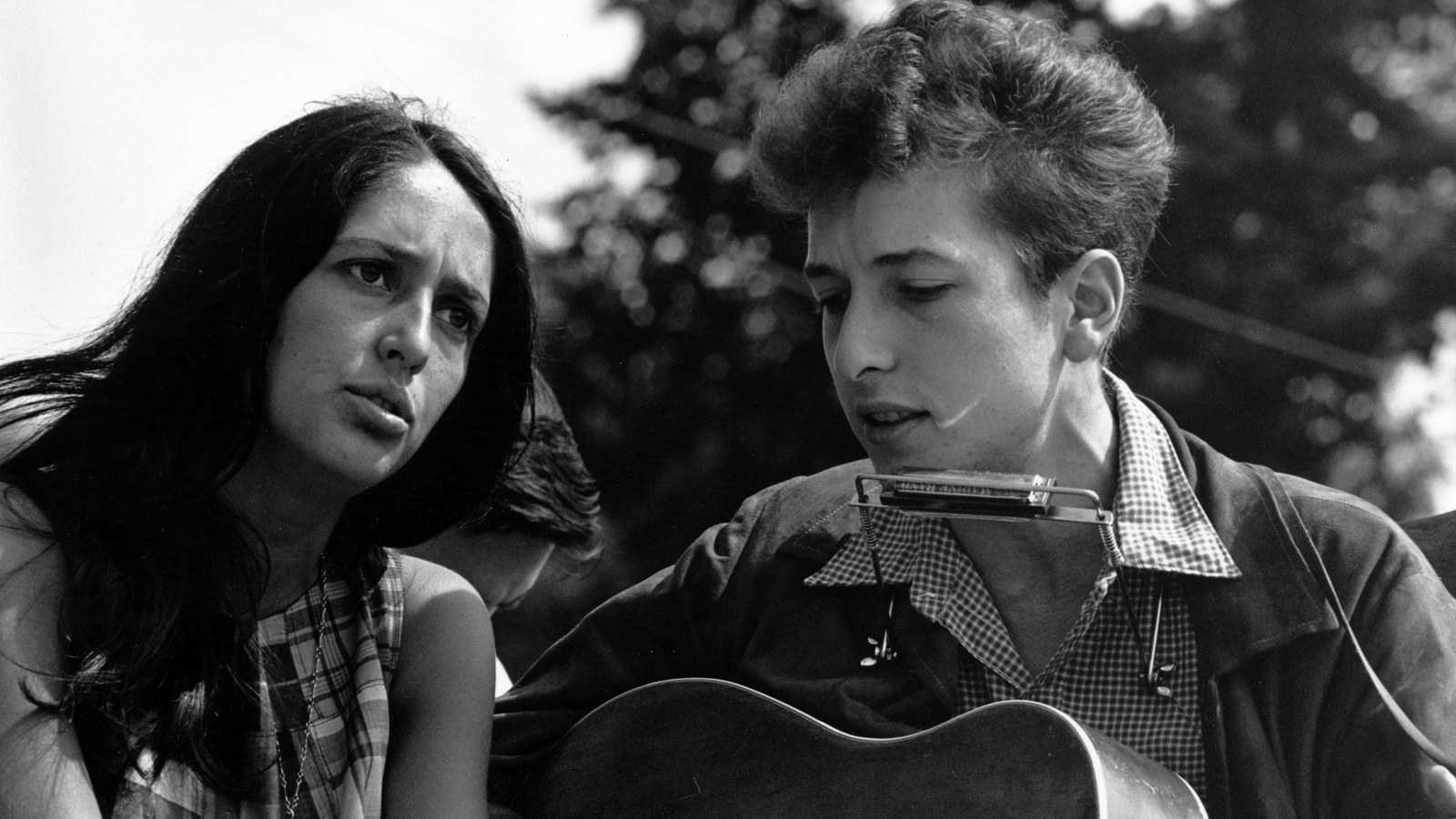
Joan Baez and Bob Dylan at the March on Washington on 28 August 1963.
Photo: Rowland Scherman, US National Archives / Wikimedia Commons (public domain)
Bob Dylan — Bob Dylan
Sign in to rank 1–10.
Bob Dylan has spent more than six decades refusing to stay put. He was a folk singer, then a rock star, then a country crooner, then a gospel preacher, then a road warrior who never stopped touring. Along the way he wrote songs that changed popular music, and in 2016 he won the Nobel Prize in Literature. The Swedish Academy honoured him "for having created new poetic expressions within the great American song tradition."
Hibbing to Greenwich Village
He was born in Duluth, Minnesota, on 24 May 1941, and grew up in the mining town of Hibbing. As a teenager he played in a string of bands, and his ears kept pulling him toward American folk music and the blues. His great hero was Woody Guthrie.
In 1961 he moved to New York and started playing the clubs and cafes of Greenwich Village. He'd learned around 200 of Guthrie's songs, and he took the bus out to New Jersey to visit his idol in hospital and sing them to him. Record producer John Hammond signed him, and his first album, Bob Dylan, came out in 1962.
The voice of a movement
His second record, The Freewheelin' Bob Dylan, opened with "Blowin' in the Wind" in 1963. Peter, Paul and Mary later took their version of it to number one. On 28 August 1963, Dylan sang beside Joan Baez at the March on Washington. Pete Seeger called the young New York folk singers "Woody's children," and Dylan was the most promising of them.
He didn't want the job of spokesman, though. As the Rock and Roll Hall of Fame tells it, he has always resisted labels. "I don't call myself a poet because I don't like the word," he once said. "I'm a trapeze artist."
Going electric
Bringing It All Back Home came out in March 1965 with a loud band behind his new songs. That summer "Like a Rolling Stone" reached number two on the pop charts. Then, on 25 July 1965, he walked onto the stage at the Newport Folk Festival with an electric guitar and a loud band behind him.
He played "Maggie's Farm," "Like a Rolling Stone" and an early version of "It Takes a Lot to Laugh, It Takes a Train to Cry." Parts of the crowd booed and called him a traitor. Seeger was so upset he reportedly said, "If I had an axe, I'd chop the microphone cable right now." When he came back out, he played two songs on acoustic guitar, "Mr. Tambourine Man" and "It's All Over Now, Baby Blue." He didn't return to Newport for 37 years.
Highway 61 Revisited and the double album Blonde on Blonde followed in 1965 and 1966. Filmmaker D. A. Pennebaker followed his 1965 tour for the documentary Dont Look Back. Bruce Springsteen later remembered hearing him for the first time. "I knew that I was listening to the toughest voice that I'd ever heard," he said.
The crash and the quiet years
On 29 July 1966, Dylan came off his motorcycle near his home in Woodstock, New York. The details are still hazy, but the result wasn't. He disappeared from public life for months and spent time raising his young family. When he started making music again, it was at a studio in West Saugerties with his backing group, the Band. Those relaxed recordings weren't meant for release, but they finally came out in 1975 as The Basement Tapes.
His records grew plainer and more country, and the songs more direct. He kept moving, as he always would.
Blood on the Tracks and the Rolling Thunder years
Blood on the Tracks, released on 20 January 1975, gave the world "Tangled Up in Blue" and "Shelter from the Storm." The Recording Academy counts it among the high points of his grown-up years. The next year came Desire, which opened with "Hurricane," written with Jacques Levy about the jailed boxer Rubin "Hurricane" Carter.
The gospel years
Then came the turn that shocked his fans more than Newport ever did. Raised Jewish, Dylan went through a Christian conversion in the late 1970s. At the urging of friends, he went to Bible study classes, and Rolling Stone later reported that he studied at the Vineyard Christian Fellowship in California.
In April 1979 he went to Muscle Shoals Sound Studio in Alabama with producer Jerry Wexler, the man behind classic records by Aretha Franklin and Ray Charles. The result was Slow Train Coming. Its opening song, "Gotta Serve Somebody," told listeners that whoever they were, they'd have to serve either the devil or the Lord. It earned Dylan his first solo Grammy, for best rock vocal performance by a male. Rolling Stone founder Jann Wenner, reviewing the album in 1979, called the choice of Wexler "an act of instinctual genius."
On 1 November 1979 he opened a run of shows at the Warfield Theater in San Francisco. He played only his new gospel songs and none of the old hits. Some fans booed, and local papers ran headlines like "Born-Again Dylan Bombs." But the crowds warmed up as the nights went on. Promoter Bill Graham told Rolling Stone, "I am a Jew, and I am deeply moved by what this man is doing. It's a very profound public display of personal convictions."
Rolling Stone's reviewer heard him sing of being "saved" and "born again," of "Hanging on to a solid rock / Made before the foundation of the world," and said he sang "with evident conviction." Two more gospel albums followed, Saved in 1980 and Shot of Love in 1981.
Critics weren't kind at the time, and many fans walked away. Dylan said he didn't mind. "I figured, 'Well, I don't care if I draw no crowds no more,'" he told Rolling Stone. Later he pushed back on the labels people put on him. "I've never said I'm born again. That's just a media term," he said in 1984. "I've always thought there's a superior power, that this is not the real world and that there's a world to come."
In 2017, the box set Trouble No More, part of his official Bootleg Series, gathered live recordings and 14 unreleased songs from 1979 to 1981. NPR's Ken Tucker said the set worked to redeem "a neglected and frequently scorned period" of his career. Dylan scholar Clinton Heylin told Rolling Stone that, for the amount and quality of songs he was writing, the gospel era was "probably second only to the great creative burst in the mid-1960s."
The long road back
The 1980s were rocky. By 1988 he'd made a couple of records even his fans didn't love. That year Springsteen inducted him into the Rock and Roll Hall of Fame, and on 7 June 1988 he played the Concord Pavilion near San Francisco. Nobody knew it at the time, but it was the first night of what fans call the Never Ending Tour. He has played thousands of shows since.
Oh Mercy in 1989 was a return to form. Time Out of Mind, made with producer Daniel Lanois in 1997, won the Grammy for album of the year. Modern Times followed in 2006. He wrote a memoir, Chronicles, in 2004, and in 2012 President Barack Obama gave him the Presidential Medal of Freedom.
Nobel laureate
On 13 October 2016 the Swedish Academy announced that Dylan had won the Nobel Prize in Literature. It put him alongside the poets and novelists he'd read as a young man, including the Beat writers and modernist poets who shaped him.
In March 2020, early in the pandemic, he released "Murder Most Foul," a nearly 17-minute song about the assassination of President John F. Kennedy. He shared it with a note that ended, "Stay safe, stay observant and may God be with you." It became his first number one on any Billboard chart, topping Rock Digital Song Sales. The album that followed, Rough and Rowdy Ways, made him the first artist with a top 40 album in every decade since the 1960s.
He's still out on the road in his eighties, still changing the songs night after night, and still impossible to pin down.
Watch
Five official uploads from Bob Dylan's channel follow the whole journey. "Blowin' in the Wind" is from The Freewheelin' Bob Dylan, "Tangled Up in Blue" from Blood on the Tracks and "Hurricane" from Desire. "Gotta Serve Somebody" is the Grammy-winning opener of his first gospel album, Slow Train Coming. "Murder Most Foul" is the song that finally gave him a number one.
Notes
Notes
No notes on this story yet.
Sign in to comment