
Don't print the humanoid first. Print one joint. Hackaday filed Berkeley Humanoid Lite on 30 August. Donald Papp's headline was "Low(er)-Cost Humanoid Robot Leverages DIY Actuators." The useful object on that page isn't a finished person-shaped product. It's a 3D-printed cycloidal joint you can make on a desktop printer before you decide whether you want a robot at all.
Quin Halberg · Monday 31 August 2026
Read next




Step by step
- Prepare the encoder
Swap the resistors on the AS5600 board as the Berkeley Humanoid Lite gitbook shows, then solder VCC, GND, SDA and SCL on the matching pads.
- Fit the magnet
Hot-glue the magnet that came with the encoder to the rotor shaft. It's radially charged, and a hardware-store disc magnet won't work.
- Print and assemble
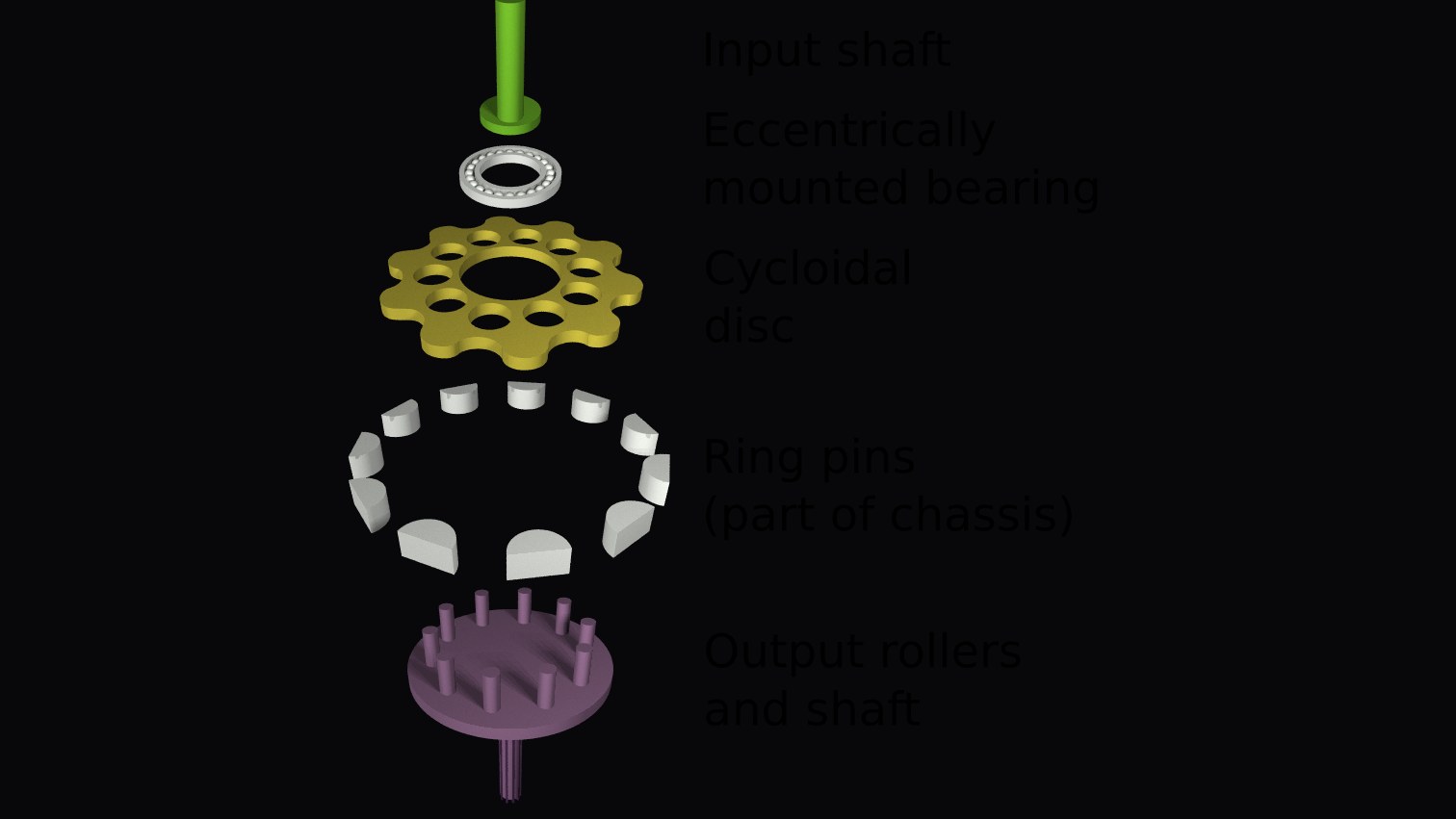
Print the housing, cycloidal disks, input shaft and output shaft in PLA on a 200 mm build volume, then assemble them following the lab's video and Figure 4 of the paper.
- Solder the electronics
Connect the encoder and motor to the B-G431B-ESC1 with care, because the CAN pads lift easily. Use the lab's colour code for the 14 AWG power and 30 AWG CAN wires.
- Test at 24 volts
Run the joint on a 24 V rail, the same as the paper. Check it turns, holds a position and doesn't strip a printed disk before you open the full robot bill.
This desk has not corrected this file. Corrections.
The paper
Comments
No notes on this story yet.
Sign in to comment