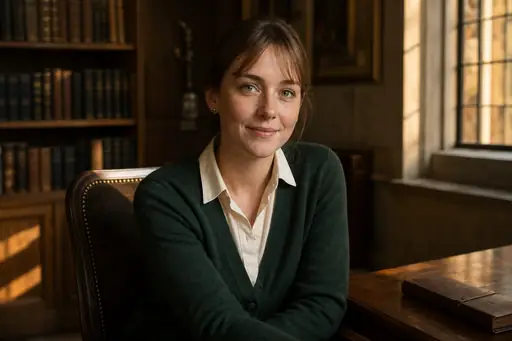
Pope Leo XIV closed his visit to Uruguay on Sunday 8 November with a short stop at a parish named for Saint Thérèse and an open-air Mass for the feast of Our Lady of the Thirty-Three. Then he flew on to Argentina, the middle stretch of a 12-day journey that will also take him back to Peru, the country he has called one of his homes.
The trip that almost stayed on the calendar
A lot of people wondered whether he would go at all. In mid-October surgeons at Rome's Agostino Gemelli hospital removed the lower lobe of his right lung. We reported that week as it happened, from the nodule announcement through the operation to the Saturday when he left hospital and was cleared for Latin America. The surgeon, Stefano Margaritora, told Vatican News there were "no clinical reasons" the long South America journey should not take place. The Holy See later said he had been cleared to make the trip.
On Friday 6 November, the Holy See Press Office said, he left the San Damaso Courtyard, drove to Rome's Fiumicino airport and departed at 7:05am on an ITA Airways aircraft. About an hour and a half into the flight he walked back to the 82 journalists travelling with him, greeting them in Italian, Spanish and English: "Buongiorno a tutti, buenos dias, good morning, everyone."
Salvatore Cernuzio, reporting for Vatican News from the plane, wrote that after the lung surgery many had doubted the visit would happen. The Pope's own answer was plain. "I know some people were doubtful about this trip taking place," he said. He "was convinced that this trip had to go forward." He thanked the medical staff travelling with him and said he was in "fairly good shape." "So, you're the witnesses of that," he told the reporters. "And I'm happy that you're joining us."
He described the journey as the "mission of the Bishop of Rome, of the Pope," which meant "sharing the joy of the Gospel," "announcing the Good News," and "walking together with people, expressing that closeness which is so important for people, whether it be in their moments of joy or in their moments of sorrow."
Peru will be the longest stage, and the most personal. He spent more than 20 years there as a missionary, including as Bishop of Chiclayo. Peru, he said, is "one of my many homes." He added, "I'm very happy to be going back there."
The questions kept coming as he moved down the aisle. Asked where he found the strength for the journey, he said, "In faith. The Lord is very generous to me." He credited "good doctors and a healthy lifestyle." He had a particular message for people with cancer: "Do not be afraid. Early diagnosis is the best approach, so regular checkups are a blessing." Asked about an urgent priority for his pontificate after the operation, he pointed to "a sense of commitment to continuing to be close to those who are ill," and added, "I would also like to tell people that health care should be a right for everyone."
US correspondents asked about the ballot he had mailed for the American midterm elections. "I have already made a statement about this. I am proud to be American and to exercise the right to vote," he said. He explained that he had not voted in Peru, where he also holds citizenship, because there was no way to vote remotely. Had that been possible, he would have done so. "It is a good thing," he said.
On Argentina, he called the visit "a tribute" to Pope Francis, "in the sense that I am visiting his country, which he was unable to visit," while stressing that the priority is to visit an important country. Francis, the former archbishop of Buenos Aires, never returned home during his 12-year pontificate.
Cernuzio put the itinerary at 12 days, more than 30,000 kilometres, and travel by car, plane and helicopter. The Holy See's own briefing on 3 November had spoken of about a dozen flights, ten cities and around 40 addresses, all in Spanish.
That same briefing, led by Holy See Press Office director Matteo Bruni, confirmed that the Pope will meet victims of clerical sexual abuse during the journey. Maria Montserrat Alvarado, the new prefect of the Dicastery for Communication, whom Leo formally introduced on the flight, relayed a message he had asked her to share: that he hoped journalists would help carry "his message of peace and encounter with the world, so that others can see what he knows through personal experience: the wonderful way the Church is expressed in Latin America through its diverse peoples and cultures."
Three countries, three mottos
The Holy See released the programme, logos and mottos on 21 September. Uruguay, from 6 to 8 November, takes the line "I bring you news of great joy," from the angel's words to the shepherds in Bethlehem. It is the first papal visit there since St John Paul II went in 1988. Argentina, from 8 to 11 November, is "Welcome everyone. Go and proclaim." That will be the first papal visit since John Paul II's journey in 1987. Peru, from 11 to 17 November, is "Let us open our hearts," with stops in Lima, Chiclayo, Cusco and Pucallpa.
Bruni told reporters the Holy Father was bringing a message of communion and unity. He described Peru as, in some respects, a homecoming, and said each stop would be a chance to encounter people, history, social realities and faith. He named saints and blesseds from all three countries, among them Blessed Jacinto Vera of Uruguay and, from Peru, St Rose of Lima, St Martin de Porres and St Toribio de Mogrovejo. Alvarado, asked why go to a country as secular as Uruguay, answered: "Why not? The Gospel is meant to go everywhere."
The aircraft landed at Montevideo-Carrasco's General Cesáreo L. Berisso International Airport at 4:19pm local time on Friday (8:19pm in Rome), according to the Press Office bulletin. The President of Uruguay, Yamandú Orsi, welcomed him at the foot of the steps. Two children presented flowers. After the guard of honour and the presentation of the Uruguayan delegation, he went on to Independence Square.
Friday: a secular square, and a case for public faith
Independence Square is where Uruguay keeps its memory of José Gervasio Artigas, the father of the nation, high on horseback above a bronze frieze of the 1811 exodus known as La Redota. That is where Leo gave his first address of the journey, to the authorities, civil society and the diplomatic corps. Vatican News correspondent Francesca Merlo described flags, rosaries, children with the colours of Uruguay and the Holy See painted on their faces, and a family holding a sign that read "We are from Chicago."
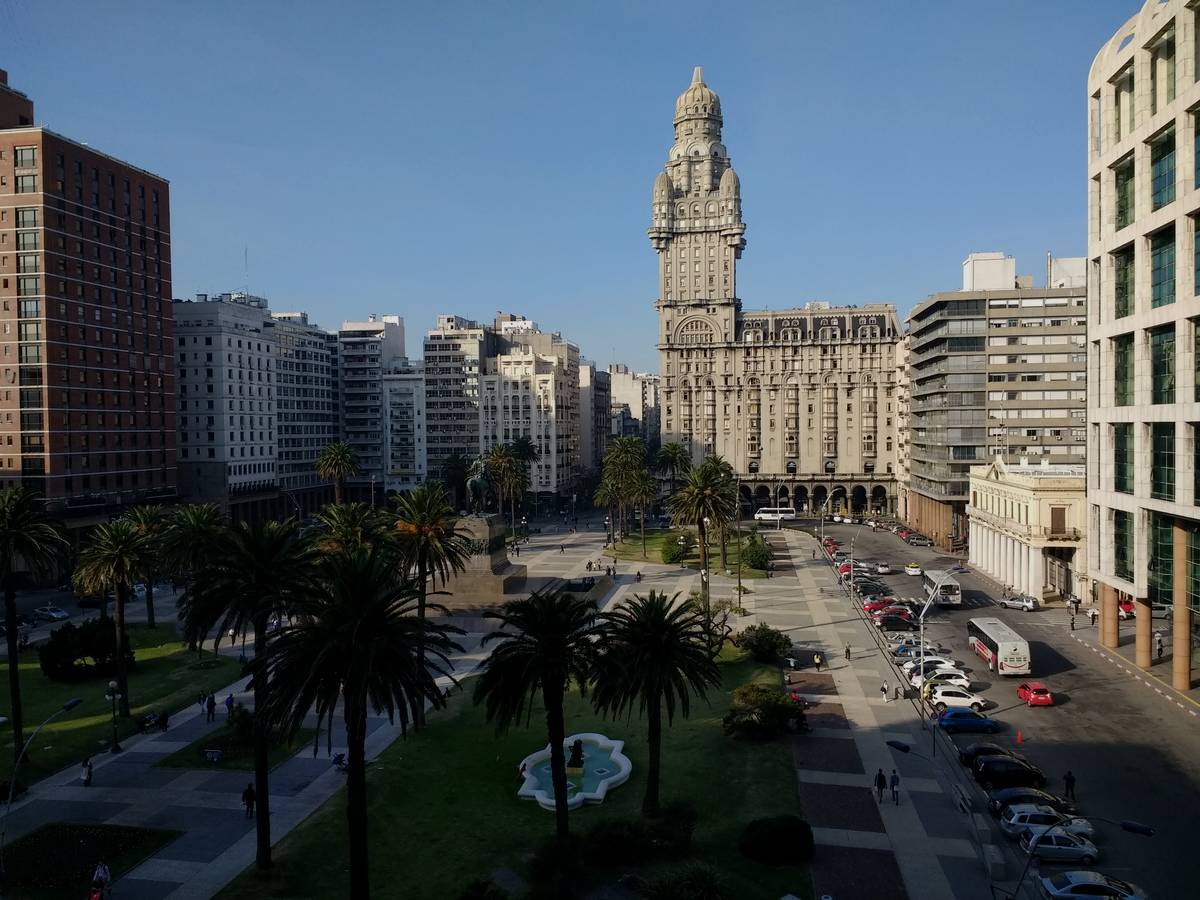
He thanked President Orsi for his welcome, greeted Uruguayans "wherever they may be," and placed the visit under the protection of Our Lady of the Thirty-Three, whose shrine in Florida would close the Uruguayan stage. Then he turned to the monument in the middle of the square.
At the top, he said, Artigas appears alone on horseback. Further down, on the relief, he is back among his men. Leo quoted words Artigas spoke in 1813: "My authority comes from you, and it ceases by your sovereign presence." In one sentence, the Pope said, Artigas had named both the origin of authority and the duty of those who hold it. Authority is received from a community, and it answers to that community.
He noted that 2025 marked four decades of uninterrupted democracy in Uruguay. Public authority, he said, "finds its raison d'être in service to the common good" and is called to exercise it "within the framework of law, with respect for the freedom and responsibility of the citizenry." He praised the country's near-total shift to renewable electricity as a long effort across governments and sectors, and said the next tests sit in transport, production, and the careful use of land, water and energy.
One figure on the frieze, a woman holding a baby as the march moves around her, prompted the most direct sentences of the afternoon. "That gesture of protection invites us to reflect on life that is just beginning, as well as life still developing in the mother's womb," he said. "The unborn already belong to the human family and to the future of their people. Their absolute dependence on their mother does not diminish the dignity to which they are entitled or the protection they deserve." Welcoming a new life, he added, requires fathers to take up their responsibility beside mothers, and social conditions that allow both parents to raise their children. He repeated St John Paul II's line that "the future of humanity passes by way of the family."
He also spoke about work. "Work is 'for man' and not man 'for work,'" he said, quoting St John Paul II, a principle he called "as relevant as ever in the face of rapid changes in technology and artificial intelligence." Those tools, he said, ought to expand human capabilities and create new possibilities, "while ensuring that the laborer is not reduced to a mere expendable cog in the production process." He has said before that AI tools are not persons.
He also spoke from his own recent illness. "Recently I experienced firsthand the limitations imposed by illness and I received care for which I am deeply grateful," he said. That experience, he added, made him think of people who cannot get a timely diagnosis or the treatment they need. "Ensuring that health care is accessible to everyone, regardless of their resources, is a duty that confronts every society." People's worth, he said, cannot be measured by what they produce. "The fundamental dignity of each person, therefore, is neither acquired nor earned, nor does it need to be justified."
Then he came to the question everyone asks about Uruguay: what a secular state owes to believers. "The secular character of the State involves an obligation to ensure that there is room for believers and non-believers to live together in freedom and respect," he said. "This neutrality does not require that the religious dimension be confined to the private sphere." Individuals and religious communities, he said, can contribute to the common good while respecting the autonomy of civil institutions.
After the square he visited the president at the Edificio José Artigas. The Holy See has not published an account of what was said in that private meeting.
Evening Prayer was in Montevideo's Metropolitan Cathedral of the Immaculate Conception and Saints Philip and James. He pointed to the baptismal font where Artigas was baptised, "a sign of the Church's fruitful contribution to the good of the country." He thanked clergy, religious and seminarians whose eyes, ears and hands have carried Christ's care for years. "How beautiful are the hands that have grown old doing good!" he said.
He also told a vocation story that he wanted heard beyond Uruguay. When the inter-diocesan seminary received no new candidates in 2024, many of the faithful began days of prayer and fasting to ask the Lord to send workers. Some of the young people who have since begun formation were sitting in the cathedral. "From this Cathedral in Montevideo, I invite my brother bishops throughout the world to promote days of prayer and fasting in their dioceses for an increase in vocations to the priesthood and to consecrated life," he said.
Later, outside the Apostolic Nunciature, young people were waiting. The official English text of his impromptu greeting begins: "Where are the young people? Where are the Pope's young people? Louder!" He thanked them and said, "I can see that Uruguay is a country of young people who have faith." Then came the joke that travelled. "The Nuncio says he wants to sleep, but sing as long as you like! Well, maybe not quite that long, because the neighbors will want to sleep, too." He blessed them and said good night.
Saturday: bridges in Paysandú, and a vigil in a football stadium
Saturday began with a short flight northwest. The Press Office bulletin says he left Montevideo's air base at 8:37am, landed in Paysandú at 9:38am, and presided at Mass in Parque París Londres at 10:20am. Local authorities, the bulletin says, confirmed around 40,000 people there. He toured among them in an open car before the liturgy.
The official homily used three local images: a bridge, palm groves, and mate. The General Artigas International Bridge spans the Uruguay River and joins two countries. "It is not difficult to imagine the benefits a bridge brings: openness, communication and exchange," he said. "That is why it is so important to be builders of bridges! This is the vocation to which we are all called: to build bridges, strengthen bonds, unite, communicate and share the joy of faith."
He remembered Blessed Jacinto Vera, the "gaucho bishop" of Montevideo, who rode the length of the country three times and, during the 1864 Siege of Paysandú, lived on the Isla de la Caridad across from the besieged city to care for refugees and the wounded on both sides. Palm trees, he said, do not stand alone in that region. They form groves, the way the Church is meant to live from a common spring of word, sacrament, prayer and charity. Mate, "that drink so characteristic of South America," he called a sign of familiarity, friendship and encounter. "Mate has even made its way to Rome!"
After Mass he stopped at the Basilica of Our Lady of the Rosary. The bulletin says about a thousand people were in the square. He unveiled a plaque marking the visit, blessed those present and greeted the sick. His impromptu words picked up the homily. "First, being bridge-builders — just as you here have this bridge that unites countries, we must build bridges that unite all peoples. They unite us in faith, they unite us because we believe in one God, we believe that peace is possible and we want to build peace."
Back in Montevideo that afternoon he went to the parish of Our Lady of Guadalupe in Casavalle, a neighborhood marked by poverty and insecurity. He visited newly built homes for families with limited means, an effort he said he had been able to help through benefactors of the Papal Foundation. The official greeting turned on the parable of the Good Samaritan, and on what a country should not learn to ignore.
"We cannot turn a blind eye to the fact that there are children in Uruguay who do not go to school for fear of never returning home," he said. "We cannot silence our conscience when we see a mother lacking the means to feed her children." In a country rich in resources, he said, children should not go to bed hungry or lose a decent education because of violence in the streets. "We must work together: the Church, civil society, and the State." Vatican News, reporting from the parish, described a young mother, Katerina Silva, telling the crowd about violence that had nearly cost her life, and about finding welcome through the Church.
From there he went to the Catholic University of Uruguay to meet the world of education. St John Paul II had visited the same institution more than 38 years earlier, when it was just getting started. Leo asked teachers to educate the whole person, including in the use of new tools, "placing the person before the algorithm." Outside, Vatican News said, students followed on large screens and waited to greet him from the balcony. In a short impromptu word at the end he told them he wanted their enthusiasm to last: "that you may be the voice that Uruguay needs to discover how truly important faith in God is, how valuable human life is and how precious each of your lives is."
Saturday ended in Montevideo's Estadio Centenario. The official greeting there is one of the longest texts of the Uruguayan stage, and it is where he faced the country's secular reputation head on. "Being here with you this evening gives me the opportunity to share a reflection on something that many Christian communities are experiencing today: the advance of secularization and an increasingly widespread religious indifference," he said. Uruguayans, he added, have had to learn to live and proclaim their faith in that setting, and their experience "can help brothers and sisters in other parts of the world who are beginning to discover, in different ways, what it means to be a minority."
He reached for Bethlehem. The prophet Micah had called it "the least among the clans of Judah." St Matthew later said, "By no means are you the least." The town was still small. "God chose Bethlehem, and that choice alone is enough to prevent us from equating smallness with insignificance." When people try "to build a world without God," he said, "we run the risk of leaving humanity without a place as well."
"To shed much light, we do not need to be many, but rather to reflect the Lord's light," he said. He asked the practical questions: is there room for Christ in our time, our thinking, our homes? "We must all become disciples again and again. If we want others to find Christ, we need to know the way to Bethlehem ourselves first."
He pressed the large choices as well. "Friends, young people, dare to take the step of marrying, starting a family yourselves. Do not be afraid of 'forever'!" Married couples, he said, should "open your home to life, even when the world tells you that a child is a burden." Those who feel called to the priesthood or consecrated life should not ignore that voice "out of fear of missing out on other opportunities." "When being just and honest comes at a price, pay it. When forgiving seems like a defeat, forgive."
"Be saints!" he said. "Do not settle for a merely decent life or for a habitual faith, content with doing only the essential. Do not give God only a part of yourselves — give yourselves completely!" And then the line Vatican News put at the top of its vigil account: "Christ did not call us to mediocrity; he called us to a new and full life like his own."
The motto of the visit, he reminded them, comes from the angel's words to the shepherds: "I announce to you a great joy!" Society may find valuable things in other institutions, he said, "but none can replace the proclamation that God's love is stronger than death, hatred, violence, war and sin. This is the joy we bring; the Pope has come to remind you about this joy."
Sunday: Juanicó, and a nation's memory of Mary
Before the Mass in Florida he stopped at the parish of Saint Thérèse in Juanicó, in the Montevideo area. Vatican News said he went into the church to pray, then greeted about 2,000 people in the courtyard.
The official English text of his impromptu greeting begins: "Good morning and happy Sunday! You may not know it, but I am indeed very happy to be here for this brief moment at the Parish of Saint Thérèse. This is the first parish in Uruguay dedicated to her following her canonization. My family —especially my father — had a great devotion to Saint Thérèse."
He tied the stop to the road ahead. "And so, being able visit here on this feast day — as you know, we are on our way to Florida to celebrate the feast of Our Lady of the Thirty-Three — is a moment of devotion, a moment of gratitude, a moment to recognize that God's grace, God's love, is always with us; and that God is with us at all times, whether in moments of joy or when we suffer, perhaps due to illness, pain and so many difficulties."
He asked a blessing on those present and on the rosaries and other objects they had brought, then added: "And let us ask the Lord to help us all grow in faith, to live our faith courageously, and not to be afraid to say, 'I am a Christian, I am a Catholic, I believe in Jesus Christ.'" He said Jesus had given a life that teaches people "to live well — by serving others, walking together, seeking God's presence, and sharing the joy of being Christians with everyone."
The official programme put him at Uruguay's National Shrine of Our Lady of the Thirty-Three at 10:00am local time on Sunday (11:30pm Sunday, Adelaide time) for Mass on the square in front of the Cathedral Basilica of Florida. The Associated Press, in a dispatch NPR published at 11:30am ET on 8 November (3:00am Monday 9 November, Adelaide time), said tens of thousands packed the main square under blue skies. The city has about 40,000 residents, AP reported, but the Vatican estimated 50,000 people were there. Some walked several kilometres to reach the site.
This was the first papal visit to Uruguay since 1988. AP described the country as Latin America's most secular, and said Leo had come hoping to remind people that the Catholic Church is part of their national identity even after a deeply secular, at times anticlerical, path.
In the homily he went straight at that history. He recalled that in 1825 those fighting for the land's freedom turned to Mary. AP adds the traditional detail that 33 independence patriots had the Guaraní statue with them when independence from the Brazilian empire was declared in Florida on 25 August 1825. Vatican News notes the wooden image is tied to those thirty-three and is thought to have arrived in the area in the 18th century.
"That gesture reminds us that the history of peoples, too, cannot be fully understood without reference to God," the Pope said. "Thus, from the earliest days of the nation's founding, Uruguay has been intimately linked to a Mother." He added that generations and circumstances have changed, "including the relationship of many Uruguayans to the faith. Yet she has remained here."
That line will sound familiar to readers of this paper. Australia's own laws, culture and identity rest on Judeo-Christian foundations, and that does not mean people of other faiths do not belong. Leo made a similar point in Florida, that a people's history cannot be fully understood without God.
He thanked the women who passed on the faith in homes rather than in history books: mothers who taught the first prayers and prepared children for the sacraments, grandmothers who kept an altar and prayed for the living and the dead. He named Saint María Francisca Rubatto and the Blessed Martyrs Dolores and Consuelo Aguiar-Mella. Then he spoke to the particular sorrow of parents whose children have stopped praying.
"You taught your children to pray, and today they no longer do so. You used to attend Mass together, and it has been years since they entered a church. You spoke to your grandchildren about God, and now you do not know if those words left a mark." He pointed to Saint Monica, and then said: "Mothers and grandmothers: never tire of passing on the faith! Preach with your lives as well as with your words."
He turned to men as well. "Dear fathers and grandfathers, young people need to see that you pray, receive the sacraments, treat your wives with respect, ask for forgiveness and live with integrity, even when doing so requires sacrifice." France 24 quoted part of that sentence and set it beside UN regional figures: more than 3,800 women killed in Latin America and the Caribbean in 2024 because of their gender, and nearly 20,000 femicides over five years, most by a current or former partner.
He asked the country to pray "for those who bear the responsibility of governing it, that they may seek with integrity the good of all," and he challenged Uruguayans not to wait for people who have drifted: "People of Uruguay: you must set out on the journey! You must enter people's homes once more, draw near to them, listen to their questions and bring them to Christ!"
At the end of the homily he offered a Golden Rose and consecrated the nation to Mary anew, asking that God "preserve beloved Uruguay from whatever might lead it away from Christ." In remarks of thanks afterwards he said he had been told that Uruguay, though relatively small, has people "capable of great things," and that the visit had shown it. He named Montevideo, Paysandú and Florida together. "Such is the mathematics of faith: what we have received and freely offer, with God's grace, multiplies."
Among the crowd, AP spoke to Fiama Pirez, an English professor who travelled from Montevideo so her mother could see a pope. "I'm religious in my own way, and although I never strayed far from the Catholic faith, I'm rediscovering it today," she said. France 24 quoted 22-year-old Ivanna Fisichella saying the visit "strengthens the Church's presence in our country," and 57-year-old Evangelina Campero pointing to "the effort the pope is making" on a demanding tour three weeks after surgery for lung cancer: "The message is to give it your all."
The flight to Argentina
The Holy See Press Office said the farewell ceremony began at about 3:10pm local time on Sunday at the General Cesáreo L. Berisso air base, where President Orsi received him. After greeting the Uruguayan delegation he went by car to the commercial area of the airport, took his leave of the president and boarded an Aerolíneas Argentinas Boeing 737 MAX. He took off for Buenos Aires at 3:52pm.
As he left Uruguay he sent President Orsi a telegram. The Holy See Press Office published it in English: "At the conclusion of my Apostolic Journey to your country, I wish to express my renewed gratitude to Your Excellency, the Authorities and the people of Uruguay for the warm reception and gracious hospitality afforded me during this visit. With the assurance of my continued prayers for the wellbeing of all, I willingly invoke upon the Uruguayan people an abundance of Almighty God's blessings."
The Press Office said the plane landed at Buenos Aires' Aeroparque Jorge Newbery at 4:33pm local time (6:03am Monday, Adelaide time). AP reported that a military honour guard and President Javier Milei were waiting for him, while crowds waving yellow-and-white Vatican flags pressed against the airport fence. The programme then had him at the monument to General San Martín at 5:00pm, and at the Casa Rosada at 5:20pm (6:50am Monday, Adelaide time) for a welcome ceremony and a meeting with Milei. A speech to authorities, civil society and the diplomatic corps was set for 6:30pm at the Palacio Libertad.
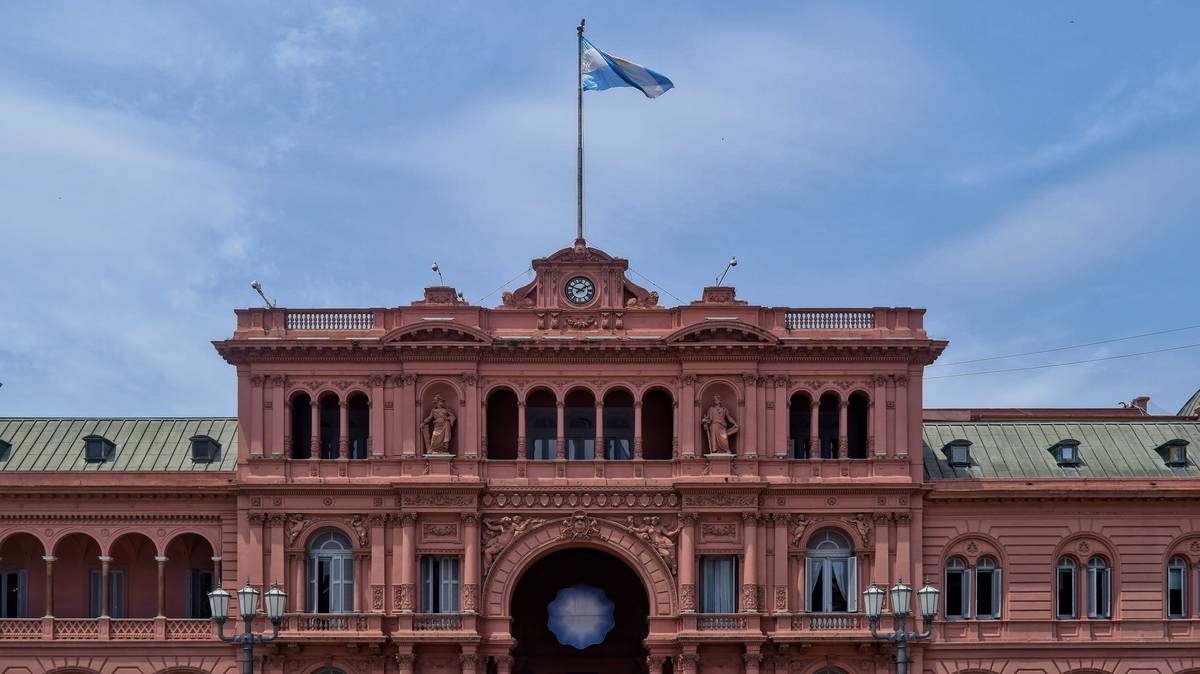
The Casa Rosada welcome and the Palacio Libertad speech were still ahead when this story was filed, and the Holy See had not yet posted their texts. Before takeoff, Vatican News said the apostolic nuncio, Monsignor Michael Wallace Banach, would be among those welcoming him. Any speech quotes from Buenos Aires should come from the official texts once they are published.
What Argentina is carrying into the visit
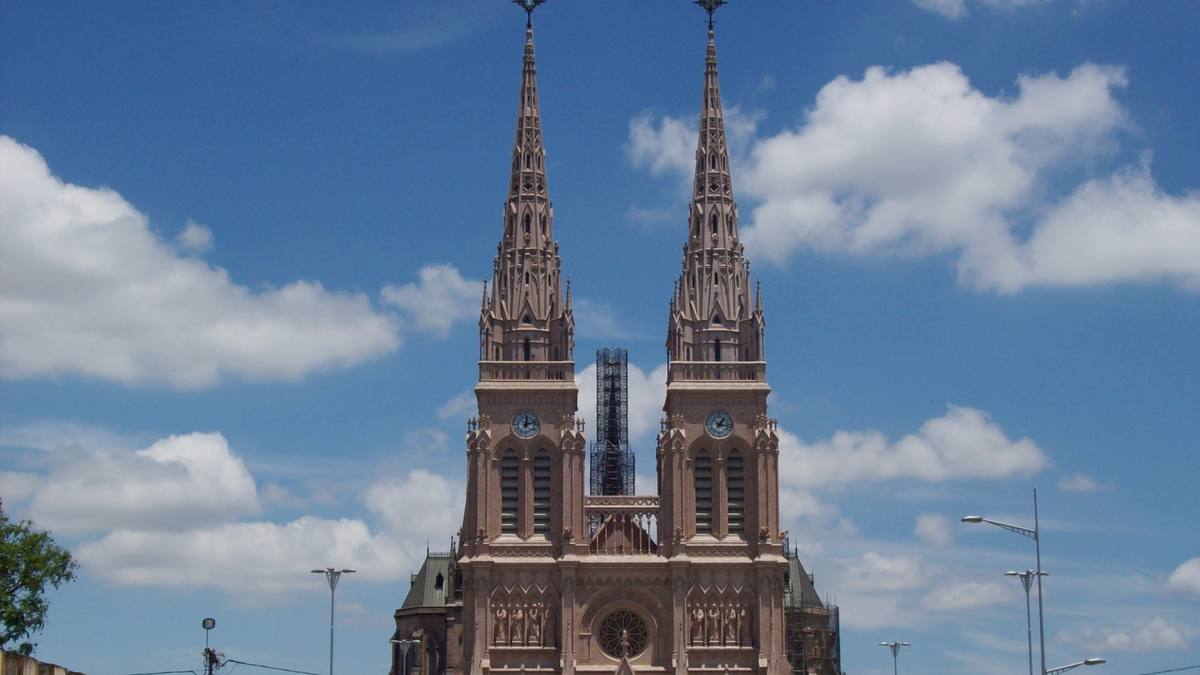
Argentina is the homeland of the late Pope Francis. Leo arrives almost four decades after John Paul II's 1987 visit. He is due to remain until 11 November, with stops in Buenos Aires, Córdoba and Luján, before flying to Peru.
AP called Argentina the most politically delicate stop because of the Catholic Church's criticisms of Milei's austerity programme. France 24 described Milei as a right-wing free marketeer whose spending cuts have drawn sharp criticism from the Church, and noted he campaigned in 2023 with a chainsaw as a symbol of those cuts. AP reported that since taking office in December 2023 Milei has slashed Argentina's healthcare budget by 48 per cent in real terms, and that official data put poverty at 32.3 per cent of the population in the first half of 2026, about 15 million people. It also said he has called social justice "an aberration" that amounts to stealing, and mocked as "huge stupidity" complaints that families squeezed by austerity cannot make it to the end of the month.
ANSA noted ahead of the visit that Leo took his name from Leo XIII, whose encyclical Rerum Novarum gave rise to modern Catholic social teaching. Over an 18-month papacy, France 24 said, he has warned about artificial intelligence, urged more humane treatment of immigrants and called for action on climate change. AP noted that Milei's government has courted AI investment, and that Leo has called for strict international safeguards.
None of that makes a clash inevitable. Milei's sister and secretary-general of the presidency, Karina Milei, told reporters the trip is religious: "The pope belongs to all Argentines. He doesn't belong to a political party or a political camp." Human Capital Minister Sandra Pettovello said before the visit, OSV News reported, that Leo would address pastoral concerns, "the protection of the vulnerable" and poverty, but would not intervene in domestic politics. "Making any interpretation directed at the government is not understanding the Vatican and not knowing the work and responsibility of the pope," she said.
The programme for Monday 9 November starts in the morning with a visit to staff and residents at the Pequeño Cottolengo Don Orione in Claypole, south of Buenos Aires. That visit had not happened at the time of writing. OSV News, reporting ahead of the stop, described a 124-acre "city of charity" where about 415 people with physical and intellectual disabilities live, supported by about 400 staff. The cornerstone was laid by Don Orione in 1935. It is the largest home in a network of 14 Cottolengos serving about 1,300 people in Argentina, Uruguay and Paraguay.
OSV News reported that Brother Jorge Silanes, the home's director, told AFP the pews in the shrine would be removed "so we can fit as many wheelchairs as possible," because "we want people with disabilities to be the protagonists." France 24 quoted him saying the visit carried extra weight because spending cuts have reduced disability benefits. OSV News reported that deliveries of medicines, diapers and other supplies through the federal Incluir Salud programme stopped in late 2025, and that in April Argentina's bishops warned the health minister that delayed and inadequate payments had placed the care of some 1,200 Cottolengo residents in "real and immediate danger." A federal judge later ordered the freezing of 828 million pesos in Health Ministry accounts to cover obligations to the Claypole institution, OSV News said, and the government subsequently said it had authorised payment of the disputed amount.
Bishop Jorge Lugones of Lomas de Zamora called the Pope's choice "a very strong sign for Argentine society." "The Church does not forget human suffering, those who today need greater attention," he said.
The rest of Monday's published timetable includes Mass at the Monumento de los Españoles, a meeting with the world of work at the Catholic University of Argentina, an encounter with representatives of Christian communities and other religious traditions at the Palacio San Martín, and vespers with the Argentine bishops. Tuesday takes him to Córdoba for Mass at the Military Aviation School and a meeting with clergy and pastoral workers, then back to Buenos Aires for a youth vigil. Wednesday's list includes a visit to the federal prison complex in Buenos Aires, then Mass in front of the Basilica of Our Lady of Luján, before the farewell and the flight to Lima.
AP also reported that Argentina's state intelligence agency said Saturday a person had been arrested over death threats against Leo, after a federal court in Campana, about 70 kilometres north-west of Buenos Aires, ordered the arrest. The agency did not elaborate.
Peru is still ahead
None of this has happened yet. It is the official schedule.
On Wednesday 11 November he is due to fly from Buenos Aires to Lima, with a welcome at the Palacio de Gobierno and a meeting with authorities at the Gran Teatro Nacional. Thursday in Lima includes the Peruvian bishops, mid-morning prayer in the cathedral, a meeting on the square about the country's challenges and hopes, and a prayer vigil with young people and students. Friday he flies to Chiclayo, the northern diocese he once led, for Mass near the Pampas de Pimentel and meetings with clergy and the university community. Saturday's list includes the coronation of the Immaculate Virgin in Chiclayo's cathedral and a helicopter journey to Santa Cruz de Succhabamba for Mass.
Sunday 15 November is the longest travel day on the published grid: Chiclayo to Cusco, a meeting with the faithful and representatives of popular devotion at the Saqsaywaman archaeological park, the Angelus in front of Cusco's cathedral, then on to Pucallpa for a meeting with missionaries and representatives of Amazonian peoples and Mass at the Villa Deportiva Regional Ucayali. Monday 16 November brings a visit to a home run by the Little Sisters for Abandoned Elderly People and a closing Mass at Las Palmas Air Base, before the farewell from Callao and the long flight back to Rome, due to land at Fiumicino on Tuesday 17 November at 10:25am.
That is the map he said he was confident would go ahead. Chiclayo is not a tourist stop on that list. It is the diocese that helped make him the pastor who is now making the trip.
What he said in Uruguay
On the plane: he was convinced the trip had to go forward, he was in fairly good shape, and Peru is one of his many homes.
In Independence Square: a secular state does not have to push faith into private life, the unborn belong to the human family, work is for man and not man for work, and health care should be within reach of everyone.
In the cathedral: how beautiful are the hands that have grown old doing good, and other dioceses should try Uruguay's prayer and fasting for vocations.
In Paysandú: be builders of bridges, because peace is possible.
In Casavalle: do not turn a blind eye to children who are afraid to go to school.
In the stadium: smallness is not insignificance, and Christ did not call anyone to mediocrity.
In Florida: the history of a people cannot be fully understood without reference to God, mothers and grandmothers should never tire of passing on the faith, and fathers should treat their wives with respect.
The question is no longer whether he would travel. It is what he is saying on the road, first to a secular Uruguay that he told to remember its mothers and its patroness, and then to an Argentina where a disability home, a prison and a meeting with the president sit on the same official list, before the longer homecoming in Peru. There is more on the trip from our Christian desk.
If this story helped, you can help keep the paper going: Support the paper.
The paper
Comments
No notes on this story yet.
Sign in to comment