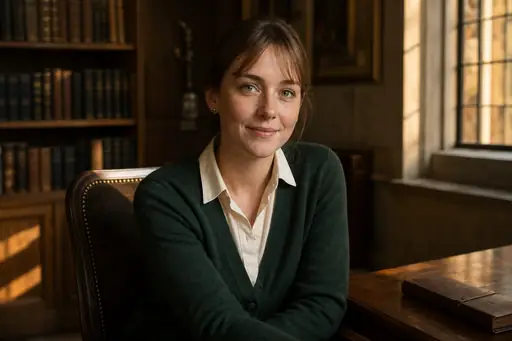
"What a joy it is to return to Chiclayo!" That's how Pope Leo XIV opened his homily on Friday, standing before about half a million people on a dusty plain outside the Peruvian city where he once served as bishop.
Then he gave them a job. Every baptised Christian, he said, is called to share the Gospel, not just priests and nuns.
A homecoming like no other
Chiclayo is the city that made Robert Prevost a bishop. He served there for almost eight years, first as apostolic administrator and then as bishop, before Pope Francis called him to Rome, Vatican News reports. Friday was his first visit back as pope.
The city turned out. Local authorities told the Holy See that around one million people lined Chiclayo's streets, and about 500,000 took part in the Mass at the Pampas de Pimentel, according to the Holy See Press Office's account of the day. He left the air base at 9.15am local time, toured the crowd in an open car, and began Mass at 10.56am.
It was hot and dusty, and people came anyway. Aleteia spoke to one pilgrim, a woman in her sixties named Sonia, who had travelled several hundred kilometres from Huarochirí with her family. "Despite this heat, which is exhausting, we came," she said, "because the pope comes from so far away, back to his country." She added, "Today, he is Peruvian at heart."
Peru is the final leg of a 12-day trip that has already taken him through Uruguay and Argentina. We set out what this Latin America trip covers when it began.
'Pray for me'
Before he got to the main message, the Pope said something personal. He thanked the crowd for their prayers "especially for my health during this time of trial which, with God's help, I am overcoming," according to the full text of the homily.
It's only a month since his surgery. We reported on his successful lung surgery at Rome's Gemelli hospital in October. On 26 October, the Holy See Press Office said his doctors saw nothing to stop him making this trip. Standing in the heat on the Pampas, he asked the people of Chiclayo to keep praying for him, "that Our Lord Jesus Christ may grant me the grace to strengthen always my brothers and sisters in the faith."
Every Christian a missionary
The heart of the homily was simple, and it was aimed at everyone in the crowd.
"Today's liturgy invites us to consider the urgent and binding duty of every baptized person to proclaim the Gospel," he said. All Christians, "whether ordained ministers or lay faithful," and regardless of how much formal teaching they've had, are what he called "missionary disciples."
He quoted Pope Saint Paul VI's 1975 exhortation Evangelii Nuntiandi. No baptised person can be indifferent to evangelisation, he said, because it is the Church's "essential mission, her deepest vocation and her very reason for being."
Then he asked the question plenty of ordinary believers would ask. "Proclaiming Jesus Christ is a crucial task, and for which we often feel inadequate," he said. How do we actually do it, as families and as parishes?
His answer was "the witness of an authentically Christian and coherent life." Put Jesus at the centre of what you say and how you live. And don't think you can manage that coherence on willpower alone. It's "also a grace for which we must implore the Lord," he said.
Not slogans, not strategies
The Pope was clear about what evangelising isn't. It "does not mean imposing doctrines or trusting in efficient strategies, but bearing witness to that real encounter with Jesus Christ," he said.
He pointed to the Eucharist and Scripture as the two "tables" where Christ waits for us. He also pointed to the people around us. Christ comes to us "through ecclesial communion and the fraternal welcome we extend to our neighbor, where we find him present and in need."
He quoted Pope Francis too. Evangelisation rests on "the beauty of the saving love of God made manifest in Jesus Christ who died and rose from the dead," he said, not on clever speeches.
Start at home
There was a practical tip in there for families. He urged Peruvians to recover the habit of "praying together," especially at home. Christian families, he said, are "the missionary nucleus." As "domestic Churches," they draw their members into the life of the parish, the wider Church and society.
That's a familiar idea, but it lands differently from a man who spent years as a missionary priest in Peru's north before he ever led a diocese.
Love and truth together
The Pope also drew on the day's reading from the Second Letter of John, which calls believers to love one another. Caring for the poor isn't separate from preaching the Gospel, he said. The two belong together.
But he wouldn't let love float free of truth. Truth "is not a theory, an abstract idea or a utopia, but a person, Jesus Christ," he said, and Christ asks us to follow his commandments. Then, drawing on Pope Benedict XVI's encyclical Caritas in Veritate, he said, "Without truth, love degenerates into mere sentimentality, while truth without love becomes rigid and cold."
It's a balance a lot of churches, here and overseas, are still trying to strike.
Faith in public
He didn't sugar-coat the state of things. In some parts of the world, he said, passing on the faith "has been almost entirely abandoned." He named three things Christians have to face with courage: "religious indifference, materialism and selfishness that dictate everyday decisions."
And he told believers not to keep their faith at home. He asked them to carry the joy of meeting Christ into their families, into their workplaces "through the excellence of our professional work," and into public life, "resisting the temptation to relegate faith to the private realm."
"Mission cannot be improvised," he said. "The world is waiting for us and the mission is only beginning."
The rest of the day
After Mass, the Holy See Press Office says, he went by car to the San Óscar A. Romero chapel. Aleteia reports it's in one of Chiclayo's poorest neighbourhoods, and that he helped rebuild it when he was bishop.
That afternoon he met priests, religious, seminarians and lay leaders at the Shrine of Our Lady of Peace. "It is easy to speak about synodality, but putting it into practice is a challenge and requires everyone to examine their attitudes and conduct, beginning with the pastors," he told them, OSV News reports.
He then spoke to students and staff at Santo Toribio de Mogrovejo Catholic University. A Catholic university, he said, has a duty to remind the public that "science without a conscience ruins everyone's life. In the same way, technology without a soul does not truly improve life."
Vatican News has posted the full Chiclayo Mass on its official YouTube channel if you'd like to watch it.
Why it matters here
You don't have to be Catholic to hear something useful in this. The Pope's message was that faith isn't a job you hand to professionals. It's every believer's work, done mostly through how you live, starting at your own kitchen table.
For Australian Christians of every tradition, his line about not relegating faith to the private realm is worth sitting with. So is his reminder that mission begins with love and doesn't work without truth.
The trip ends on 17 November.
If this story helped, you can help keep the paper going: Support the paper.
The paper
Comments
No notes on this story yet.
Sign in to comment