
Every Diwali break, churches across the Indian state of Maharashtra open their doors for Vacation Bible School, a few days of songs, games, crafts and Bible stories for kids. This year plenty of them are cancelling it, or putting up a banner that says it's for Christian children only.
That's according to The Indian Express, which spoke to church leaders from Mumbai to Nagpur for a report on Tuesday. They say the caution follows disruptions at prayer meetings and the state's new anti-conversion law, which took effect on 28 August.
What's changed this Diwali
Vacation Bible School, or VBS, usually draws Christian children aged five to 15, and they've long brought along friends from other faiths. That's the part that's now being dropped.
Some pastors in the Mumbai region have cancelled VBS altogether. Others are going ahead but limiting it to Christian children, and they're putting up banners, taking registrations and charging small fees so they can show no child was lured in.
Bishop Prakash D Patole, who leads the Church of North India's Marathwada Diocese, told the paper it's a first. "For the first time, this year, we have suggested to the protestant churches in our state to not hold VBS during the Diwali break," he said.
That advice is aimed mainly at smaller churches that meet in rented halls. Church leaders think those gatherings are the easiest to misrepresent as secret conversion meetings, and the disruptions so far have all been at venues like that. Patole's own church owns its building, and it'll still run VBS, but only for Christian children.
Dr Shakti Waghe, a member of the CNI Mumbai pastorate committee, said many churches in the city are skipping VBS this Diwali, though there's been no formal order from the CNI.
Robin Salve, secretary of the CNI's Nasik and Ahilyanagar diocese, put the mood plainly. "We are living in such a tough time that any programme we hold, we will be questioned," he said.
The disruptions behind it
The churches aren't reacting to the law alone. Between April and July, people identifying themselves as Bajrang Dal or VHP workers disrupted Sunday prayer meetings in rented halls, schools and homes around Mumbai, alleging conversion, the Indian Express reported. Five incidents led to nine first information reports, or FIRs, the police records that open a criminal case in India. Seven of them were against organisers and worshippers.
Before the law took effect, pastors had already started asking worshippers to sign forms saying they attend freely. The Hindu reported that prayer halls across Vasai, Virar and Mira-Bhayandar had begun circulating consent forms as a precaution.
What the law says
It's called the Maharashtra Freedom of Religion Act, 2026. The state's Home Department notified 28 August as its start date after it received presidential assent, and NDTV Profit reported that it makes Maharashtra the 13th Indian state with a law like it.
The Act, as published in the state gazette's English translation, bans conversion by force, coercion, fraud or "allurement". Its definition of allurement is broad. It includes gifts or material benefit, a job, "free education in school or college run by any religious body or institution", a promise to marry, "better lifestyle, divine healing", and "glorifying one religion vis-a-vis another religion".
Anyone who wants to convert, and anyone organising a conversion ceremony, has to give the District Magistrate 60 days' notice. The notice goes up on the office's notice board and at the local council, and objections are called for within 30 days. The magistrate can then have police look into "the intention, purpose or cause" of the conversion. Afterwards there's a declaration to file within 21 days, and if it isn't filed, the conversion is null and void.
The penalties are heavy. Breaking the core ban means seven years' jail and a fine of one lakh rupees. The fine rises to five lakh rupees where it involves a minor, a woman, or a member of a Scheduled Caste or Scheduled Tribe, and for mass conversion. A repeat offence means ten years and seven lakh rupees. NDTV Profit reported the offences are cognisable and non-bailable, so police can register cases without a court order.
Then there's section 13, the clause church leaders keep coming back to. "The burden of proof that a religious conversion was not made in contravention of the provisions of this Act, shall lie on the person who has caused such conversion and on the abettor who assists, aids or abets such conversion," it says.
That's why churches are building a paper trail. Under this law, it's on them to show nobody was pressured.
Chief Minister Devendra Fadnavis, who also holds the Home portfolio, introduced the bill, and it passed the Legislative Assembly in March. He's framed it as protection for women and girls from exploitation, NDTV Profit reported. Congress, the NCP and the Samajwadi Party opposed it in the Assembly, and the Shiv Sena (UBT) objected to the burden-of-proof clause.
The churches that cancelled
Vasai-Virar has seen five of the nine FIRs. Pastor Ravi Gupta of Masih Ekta Foundation has faced four FIRs this year, and he's not running VBS at all.
"Just this month we sought police permission to hold Sunday prayers from a new venue, we cannot risk it with children that's why we didn't have VBS in summer vacation and will not hold in Diwali vacation also," he said.
In Mira-Bhayandar, churches skipped summer VBS for the first time. Pastor Ashish Rao, president of the Maharashtra Christian Forum, said about 90 per cent of pastors there work from rented premises. There's some good news in his account, though. "After The Indian Express report, luckily the disruptions have stopped, so we are discussing to hold the programmes as we have resumed all our Sunday prayers too," he said.
Banners, fees and CCTV
Churches that are going ahead are doing it with a lot more paperwork. There are banners reading "VBS for church children or only Christian children", and for the first time, registration fees of 50 or 100 rupees as proof that parents sent their kids willingly.
"We have advised all the churches to adapt to measures such as registering children in advance, installing CCTV cameras and keeping records of unfamiliar visitors," Patole said. "Those who want to hold VBS or any programme, they should make sure they have their own venue, children who come are Christian and baptized."
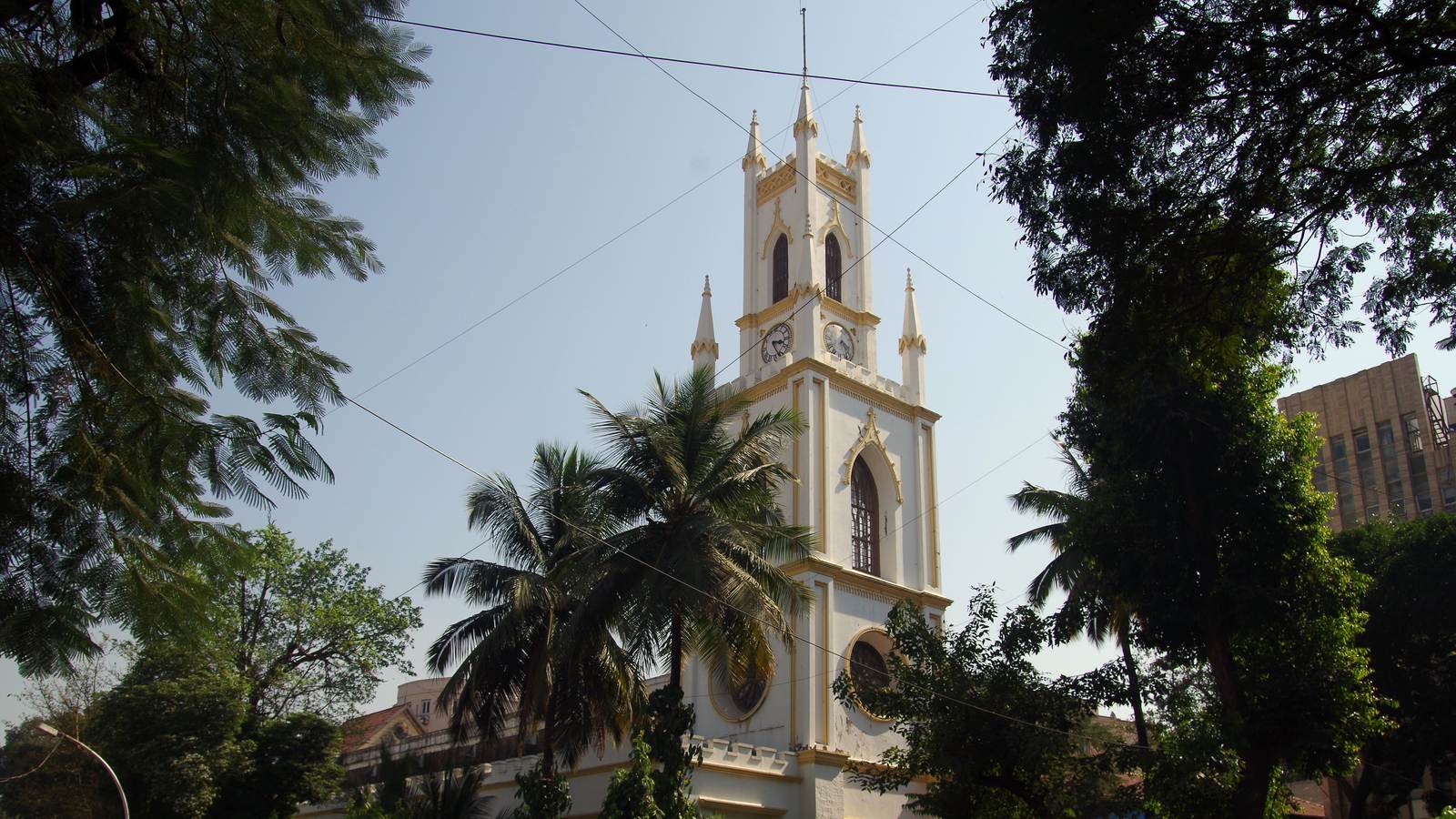
Rev Thomas Jacob, priest-in-charge of St Thomas Cathedral in Mumbai, said the cathedral will run VBS with a banner and registration for anyone from outside. "Churches like ours, which have their own premises, may be less vulnerable to such issues, but we really cannot say for sure. We have therefore instructed both small and large churches to exercise caution," he said.
Some smaller churches are charging a registration fee of 50 or 100 rupees, the Indian Express reported. The fee keeps a record of every child, the report says, "so that if any issue arises, the church can establish that the child had enrolled by paying a fee and had not been lured into attending."
Pastor Anil George of Jeevan Jyoti Ministries in Mira-Bhayandar is expecting about 300 children at a VBS running from 9 to 14 November. "We will not allow other faith children for the first time as precaution," he said.
Owning the building makes the difference
The split, church leaders say, comes down to property. Rev Sunil Raut, secretary of the CNI's Pune, Solapur, Latur and Osmanabad diocese, said St Mary's Church in Pune has its own premises and isn't worried for now. It'll still hold VBS, but only for Christian children.
In Nagpur, Manjusha Stephenson, secretary of the CNI Nagpur diocese, said children of all faiths still come to All Saints Cathedral's VBS, because the cathedral has its own school and property. "The caution is only for small churches," she said.
And Bishop Manoj Kate of the CNI Kolhapur diocese said rural Maharashtra still lives in harmony. His church has even been lending its building out. "We did conduct during summer and we let our church building for other churches who want to hold VBS and do not have their own premises," he said.
Why it matters
Holiday programmes like VBS are the kind of hands-on outreach that came out on top in a Scripture Union survey last month. Most of the 697 adults it asked in the UK and Ireland pointed to regular activities such as clubs and groups as the best way to reach young people, and they rated the Christian faith as far more relevant to young people than the church itself.
None of this is like the violence some Christians face elsewhere, such as the 60 Orthodox Christians killed in Ethiopia's Oromia region in October. The law's stated target is forced or fraudulent conversion, and these churches are going out of their way to prove that's not what they're doing.
But a week of songs and Bible stories is now arriving with registration forms, fees and CCTV. And children who've always come along with their Christian friends are being turned away, by churches trying to protect both the kids and themselves.


The paper
Comments
No notes on this story yet.
Sign in to comment