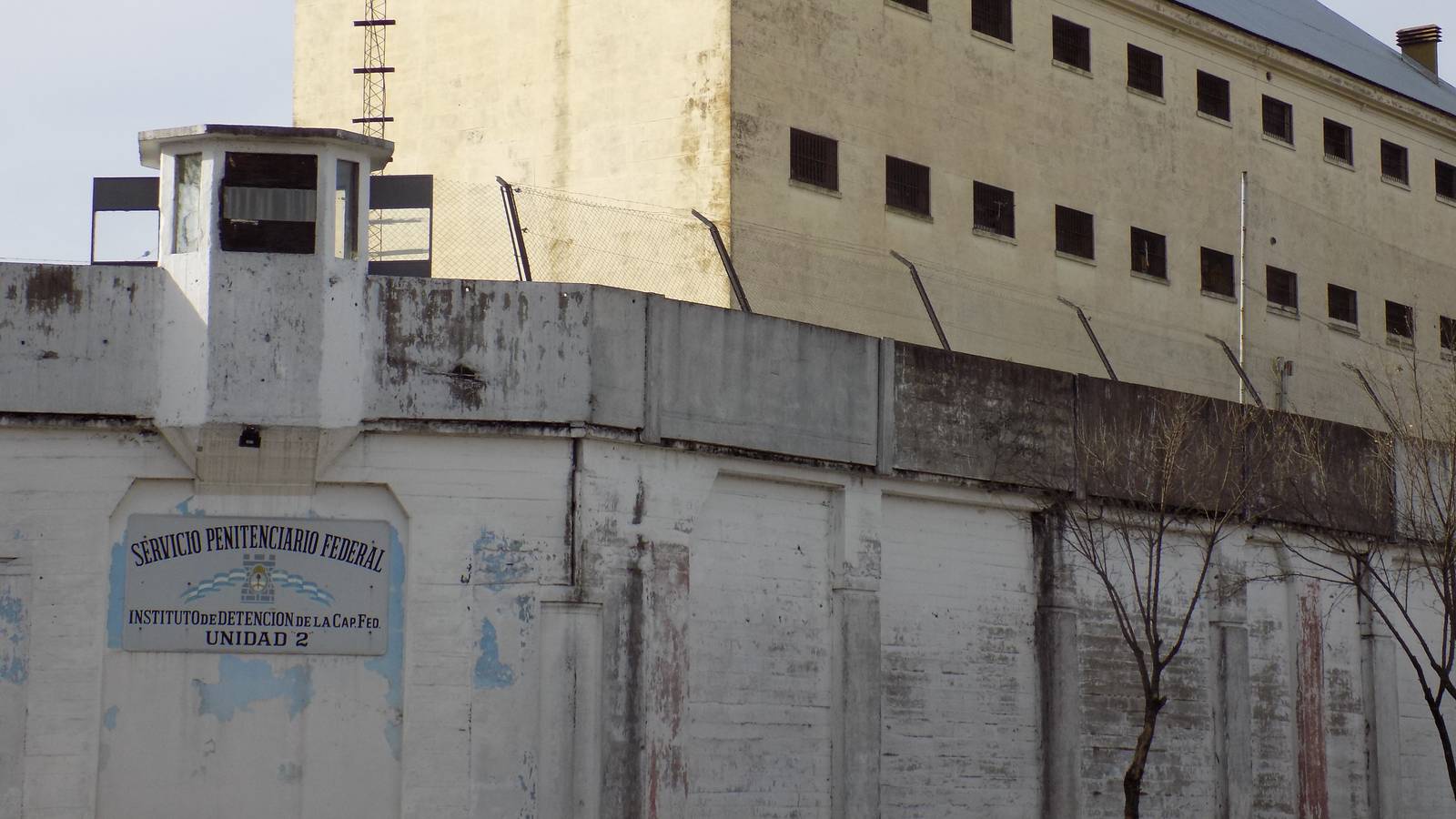

Pope Leo XIV has pulled down the Catholic Church's worldwide structure for prison chaplains and started again. A decree published at the Vatican on Wednesday shuts a commission that had been running since 1950 and replaces it with a looser network run out of a Vatican office.
It takes its name from a line in Matthew's Gospel that every prison chaplain knows by heart: "I was in prison and you came to visit me."
What the Pope signed
The document is a motu proprio, a decree a pope issues on his own initiative. Its Latin title is In carcere eram, et venistis ad me. Vatican News reported that Leo signed it on Sunday 22 November, the Solemnity of Christ the King, and the Holy See released it on Wednesday 25 November, Rome time. That was Wednesday evening in Adelaide.
It does two things. It abolishes the International Commission of Catholic Prison Pastoral Care, known as the ICCPPC. And it creates a new body, which Vatican News calls the Prison Ministry Pastoral Outreach Service. The Dicastery for Promoting Integral Human Development, the Vatican office the new service is attached to, translates it as the Prison Ministry Animation Service. Same body, two English names.
The Pope wants the new structure to be "agile and flexible" and "oriented towards service and imbued with a spirit of dialogue and sharing," according to Vatican News. He also hopes prisoners can experience their "time of solitude and isolation" as a "moment of grace and salvation."
The commission that's gone
The ICCPPC was no small outfit. Its own history page says it was founded at an international congress in Rome in the Holy Year of 1950, called by the Secretariat of State, where the future Pope Paul VI was then working. Heads of prison chaplaincies from many European countries, the United States and Argentina took part.
It adopted statutes in London in 1974. By 1990 it had representatives from 39 countries, mostly in Europe. By 2000 that had grown to 105, and the commission had gained observer status at the United Nations. Over the decades its congresses called for alternatives to prison, an end to the death penalty and better treatment of prisoners and their families. The last congress listed on its website was held in Panama City in February 2017.
So why close it? The decree doesn't spell it out. Silere non possum, an independent Catholic news site, points out that Leo named Archbishop Jorge Ignacio García Cuerva of Buenos Aires as his delegate to the commission in December 2025. That's the step the Holy See takes when it means to overhaul a body's governance. The outlet reported that his brief was to look into the difficulties and problems the commission was going through. Less than a year later, the commission's gone. The decree only refers to what the dicastery and the delegate reported back and recommended.
What replaces it
The new service is a network rather than an organisation in its own right. Vatican News says it will work as a "network for pastoral collaboration among the particular Churches, Bishops' Conferences, their regional and continental associations, and the hierarchical structures of the Eastern Churches." The decree says it "does not constitute a canonical entity with its own juridical personality."
Here's how it works on paper:
- A bishop coordinates it, appointed by the Pope for five years on the dicastery's proposal.
- At least three advisers who work in prison ministry assist him.
- Joining is voluntary. Each member body picks its own representative from experienced pastoral workers, theologians and people with firsthand experience of prison.
- Those terms run for five years and can be renewed only once.
- There's no permanent endowment. The coordinator sets up a fund for his term to cover running costs, and member organisations pay for their own projects.
According to the decree, its jobs include promoting prison ministry across the Church, helping local churches build their own, training pastoral workers (including through digital tools), talking with civil authorities, and offering "contributions towards the greater humanization of prison policies."
The first coordinator is García Cuerva himself. The National Catholic Reporter notes he's also been asked to encourage academic work linking law and theology. Silere non possum says he served as a chaplain in several prisons as a priest in the Diocese of San Isidro, and represented Latin America and the Caribbean on the old commission from 2010.
Sister Alessandra Smerilli, the prefect of the dicastery, now has the job of ending the delegate's mandate, approving any implementing rules and issuing the paperwork the change needs.
'A problem for society as a whole'
The Pope's own words in the decree reach well past the org chart. He writes that prison ministry needs "a review that does not stop at organizational aspects, but takes the form of a genuine process of spiritual and theological maturation."
He calls Jesus' words about visiting the prisoner the "cornerstone" of every pastoral action. And he insists this isn't a niche job for a handful of chaplains.
"Prison ministry is not separate from the overall evangelizing mission of the Church," he writes, in Vatican News' translation. "In a world marked by injustice, which lies at the root of social evils, the problem of prisons is a problem for society as a whole."
He also writes: "The disciples of Jesus are called to bear witness everywhere that no one is excluded from God's love. Everyone, with their own history, mistakes, and sufferings, continues to be precious in the eyes of the Lord."
Two weeks after Devoto
The decree comes two weeks after a prison visit. On 11 November, during his trip to Uruguay, Argentina and Peru, the Pope visited the Federal Penitentiary Complex at Villa Devoto in Buenos Aires. We set out what that Latin America trip would cover as it began. García Cuerva welcomed him at the prison, and Silere non possum says about 70 inmates were there. NCR says it was the second time Leo has visited a prison as pope.
Three men, Cristian, Maximiliano and Reinaldo, shared their stories. Then the Pope told the inmates that "your present circumstances can become an opportunity to begin your lives anew."
He didn't pretend prison was anything but hard. "I can imagine your sleepless nights, while you miss your loved ones or think about those you may have hurt," he said.
He spoke to families too, reminding them that Jesus "identified himself with a prisoner." And he spoke to the guards, volunteers and chaplains. "Let us remember that visiting those in prison is a work of mercy to which we are all called," he said, asking them to help make prisons "more humane and respectful, one that truly fosters rehabilitation and reintegration into the community."
In Buenos Aires he also prayed that prisoners' "time of solitude and isolation" would become "a time of grace and salvation", the same hope that's in Wednesday's decree.
Following Francis
Leo's predecessor made prisons one of his signature causes. On 26 December 2024, Pope Francis opened a Holy Door at Rome's Rebibbia prison for the Jubilee of Hope, the first time a pope had ever opened one in a prison, Vatican News reported. "I wanted the second Holy Door I open to be here at a prison," Francis said that day.
Leo, a canon lawyer, is coming at the same concern from another direction. Francis made a public gesture. Leo has changed how the Church organises the work itself.
What's still unclear
A couple of practical questions are open. The old commission held its consultative status at the United Nations in its own name. Silere non possum asks how a network without legal personality will take a seat in those international forums, and the decree doesn't answer that.
Membership is the other unknown. Because joining is voluntary, the 105 countries tied to the old commission won't simply carry across. Each bishops' conference has to decide whether to sign up, and who to send.
Closer to home
Prison chaplaincy in South Australia doesn't hang on a Vatican commission, but it's exactly the kind of local ministry the new network says it wants to support. The state's Department for Correctional Services says its Prison Chaplaincy Services is multi-faith, has around 70 accredited chaplains working across the state's prisons, and doesn't require prisoners to profess a faith before asking for help. The Principal Chaplain is based at Yatala Labour Prison.
The Catholic Archdiocese of Adelaide lists a chaplain covering Yatala and Mobilong prisons, the Adelaide Remand Centre and the Adelaide Women's Prison. If a family member or friend has been jailed or sent to the remand centre, the archdiocese asks you to get in touch so a chaplain can visit. Ongoing visits always happen at the person's request, and the chaplains will see people "of faith, or none."
The archdiocese is also looking for help. Anyone interested in volunteering, or in a paid chaplain's role, can contact its manager of hospital and prison chaplains.
Inside SA's prisons, a prisoner can ask an officer to call the chaplain. People on the outside can reach the chaplaincy by phoning Yatala Labour Prison and asking for the chaplain, the department says.
It's a quiet ministry, usually done one visit at a time. On Wednesday the Pope said it belongs to the whole Church.
If this story helped, you can help keep the paper going: Support the paper.
The paper
Comments
No notes on this story yet.
Sign in to comment