On Monday 28 September, in the French border city of Metz, Pope Leo XIV brought his trip to France to a close. He met leaders of other faiths. He gave a big speech on Europe's Christian roots, with President Emmanuel Macron in the room. He said Mass for peace and justice under the stained glass of Saint Stephen's Cathedral. Then he flew home on an Air France plane that took off just after 7:30 in the evening, local time.
It was the last day of a four-day visit that ran from Friday 25 to Monday 28 September. The Vatican calls a trip like this an apostolic journey, its name for a pope's official visit abroad, and this was Leo's fifth. Paris, Saint-Denis and Lourdes were already behind him. Metz was the last stop, and it's the day I'll walk you through.
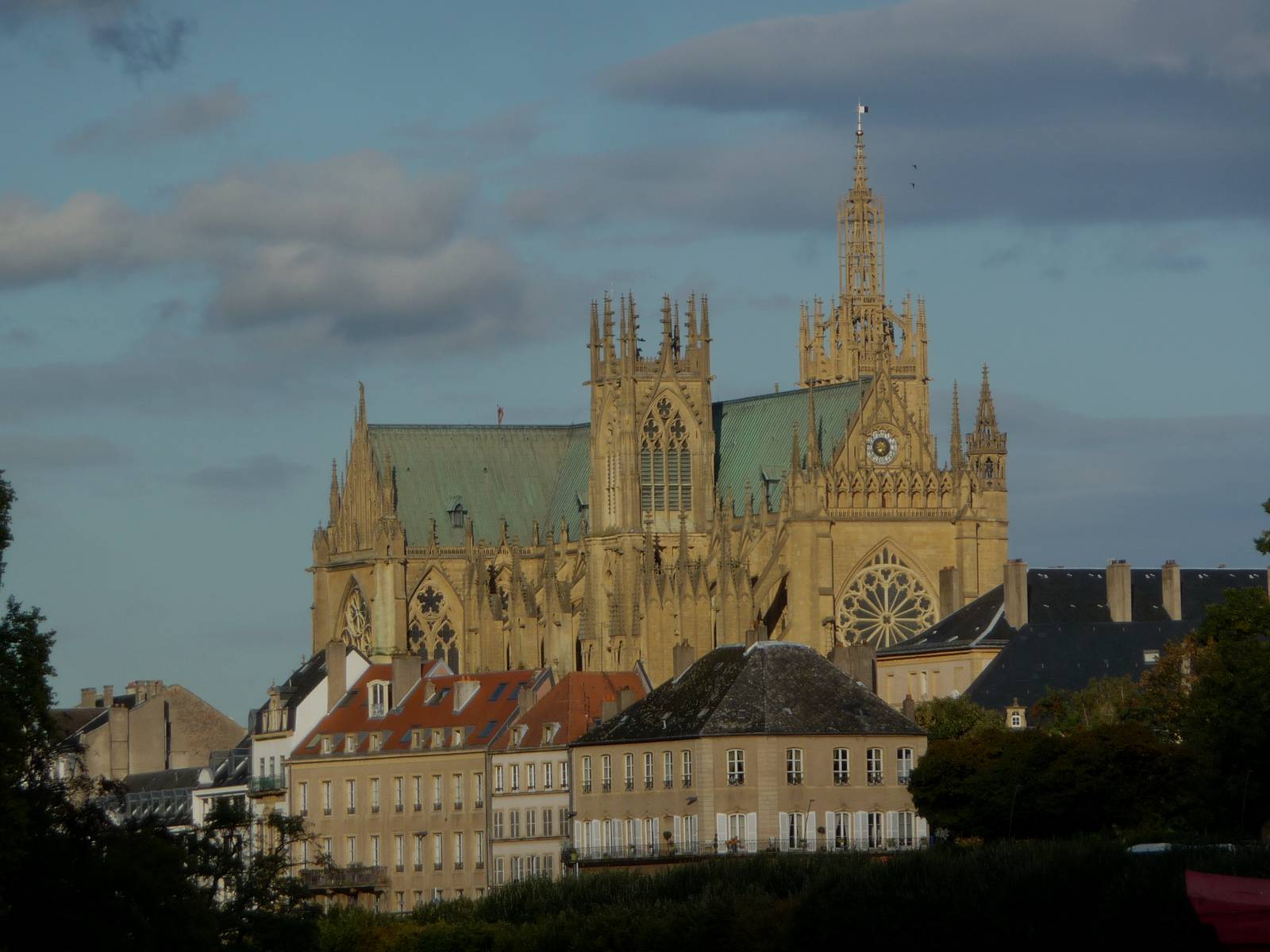
Here's the day in short. He flew in from Lourdes. He met faith leaders at a conference centre named after Robert Schuman, the French statesman counted among the founding fathers of the European Union. In the same building he gave a speech called "At the Roots of Europe for Peace and Unity." In the afternoon he said Mass in the cathedral locals call the Lanterne du Bon Dieu, God's lantern. Then a private goodbye with Macron and the flight home, with the usual questions from reporters on board.
From Lourdes to Metz
The Holy See Press Office puts out a daily bulletin, known by its Italian name, the bollettino. The 28 September edition gives exact times for the morning. He left the bishop's house in Lourdes at 7:10. His Air France A321 took off from Tarbes-Lourdes-Pyrénées airport at 7:51 and landed at Metz-Nancy-Lorraine at 9:02. A few local leaders met him. He had a short private meeting in the VIP lounge. Then a car took him to the Robert Schuman Congress Centre.
Those times don't quite match the official programme the Vatican published on 7 August. That had him leaving Lourdes at 7:40, landing at 9:20 and starting the interfaith meeting at 10:00. The times above are what the press office reported on the day.
Metz is in Moselle, in France's north-east, near the borders with Luxembourg and Germany. It's a region that's changed hands and paid for it. The Pope made that history part of his argument, and the idea of a crossroads came up in every room.
Meeting other faiths at the Schuman Centre
He got to the Congress Centre at about 10:20, walking in with representatives of other religions. There was music. Faith leaders read out a joint statement called the Metz Appeal. Then he spoke.
He started with Schuman. He called him a "man of faith and conviction" who "knew how to transform old dividing lines into bridges of hope for all of Europe, becoming a true ambassador of unity in diversity."
Dialogue doesn't water down who you are, he said. It expresses it. He quoted Pope Francis's encyclical, which is a pope's major teaching letter, called Fratelli Tutti. Francis wrote that dialogue between religions isn't simply about diplomacy or tolerance, because "the goal of dialogue is to establish friendship, peace and harmony." Leo called dialogue "an art of encounter," the very opposite of aggression and violence.
Then came the toughest line of the morning. "To invoke God's name in order to justify violence or oppression is to profane that name," he said. "Nothing that disfigures human dignity can claim to be inspired by God." Religious talk, he said, has to keep calling for "the disarmament of hearts and words."
Vatican News's English report quotes that first line as ending "to profane His name," while the press office text says "that name."
He also said religions show what they're worth by protecting life, especially for the weakest, and by staying with people "right to the very end." Religions, he said, are "guardians of life," not just people who talk about peace. Near the end he quoted his own encyclical, Magnifica Humanitas, paragraph 23: "the Church regards all who sincerely seek 'truth, goodness and beauty' as companions on the journey."
Europe's roots: Schuman, Saint Benedict and peace
At 11:30 he moved into the centre's auditorium for the meeting called "At the Roots of Europe for Peace and Unity." That's the name in the bulletin's heading. In the Pope's own opening line, the English text calls it "To the Roots of Europe, for Peace and Unity." Cardinal Jean-Marc Aveline, who heads the French bishops' conference, and President Macron welcomed him and sat with him on stage. After welcomes from Macron and the bishops, a video about Europe and the European anthem, the Pope spoke.
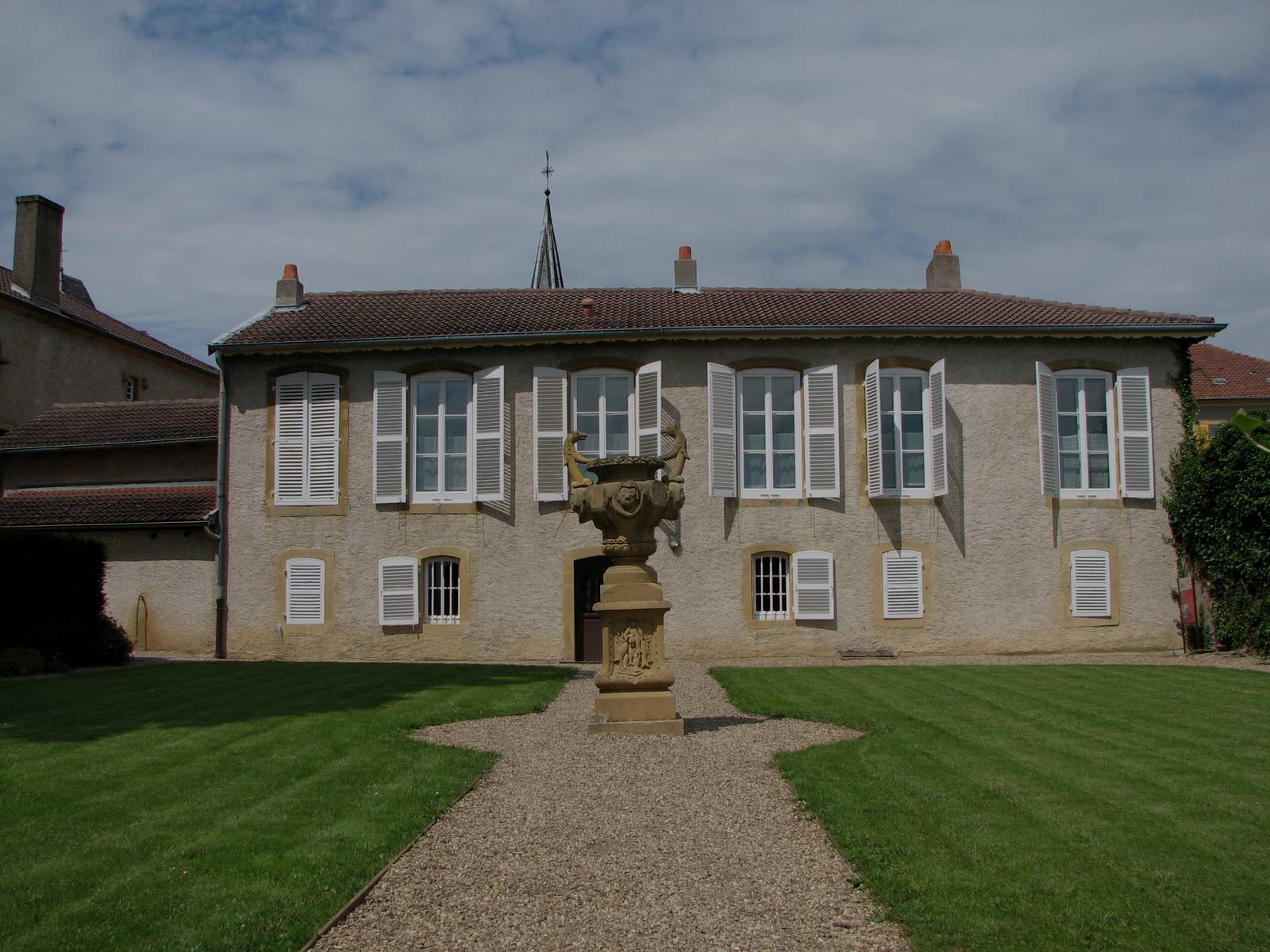
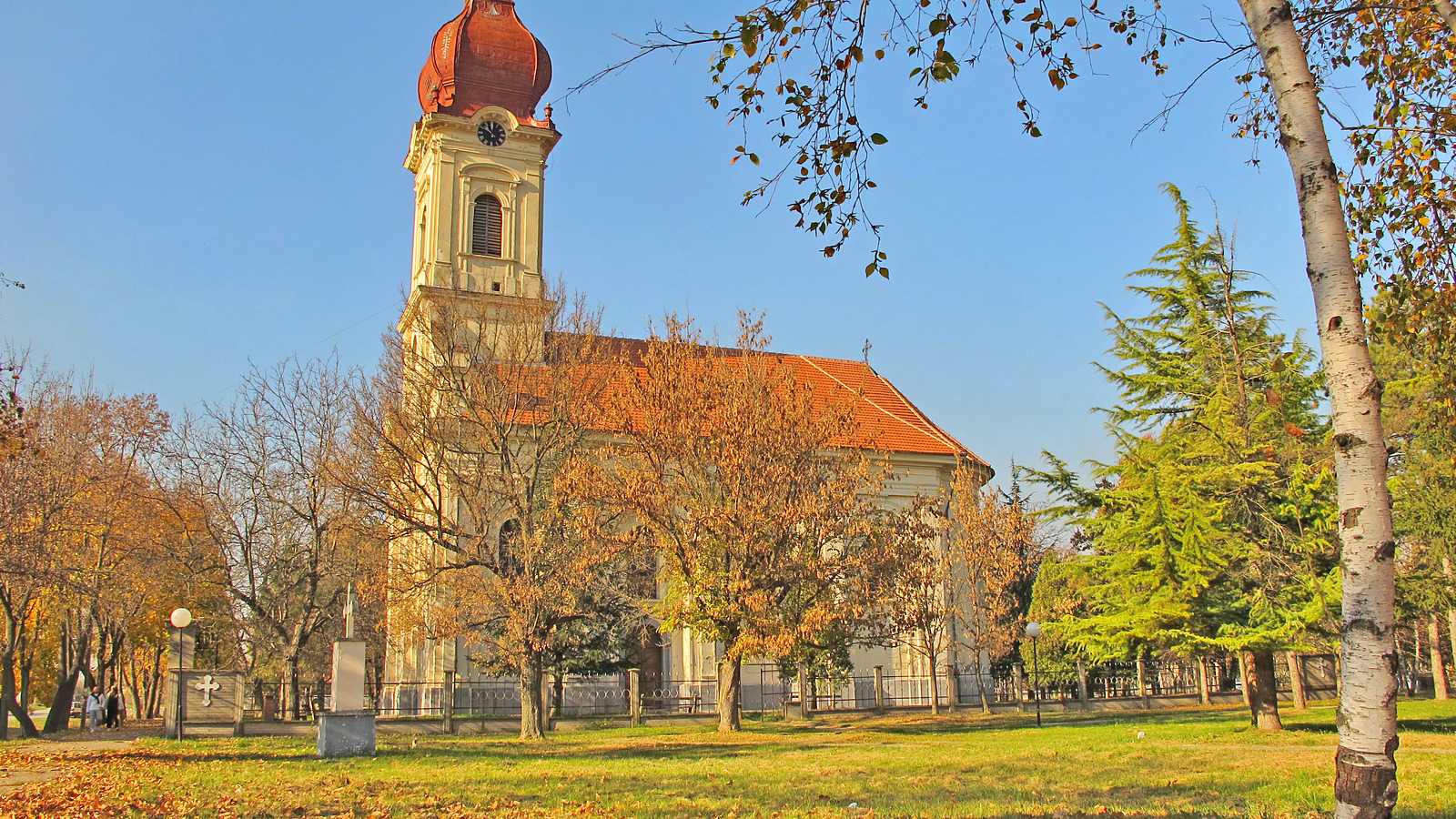
He proposed "an imaginary journey" from Europe's roots, through the present, towards the future. He honoured "Venerable Robert Schuman." Venerable is the title the Church gives someone on the road to being declared a saint. And he did it in Moselle, "where he lived for many years, where he is buried and which he represented for many years in the National Assembly." Schuman's old home at Scy-Chazelles, just outside Metz, is in the photo above. The Pope named Schuman's famous Declaration of 9 May 1950 as the high point of a lifetime spent working for peace and unity in Europe.
Europe, he argued, is a cultural and historical idea before it's a place on a map. Its borders shift. Crises come and go. But one thing stays the same, he said. Europe does well when it draws on the best of its past and reinvents it by meeting other people.
Then he reached back much further than the 1950s, to another founding father of Europe, Saint Benedict. Saint Paul VI named Benedict patron of Europe in 1964 and called him a "messenger of peace, craftsman of unity, teacher of civilization." So much grew out of Benedict and his monks, he said: care for the poor, the sick and the elderly, schools, universities, hospitals, science, law, even how cities are run. "Without this monastic tradition, European civilization as we know it would not exist," he said. And he tied it to Metz. Thanks partly to Saint Chrodegang, once the shepherd of the local church here, Metz carries that Benedictine spirit. It was from here, he said, that Gregorian chant, the ancient sung prayer of the Latin Church, spread across the lands of Charlemagne's Carolingian empire.
Then Christianity itself. He read out Schuman's words from his book Pour l'Europe, which means For Europe: "Christianity taught the equality of all people by nature, as children of the same God, redeemed by the same Christ, without distinction of race, color, class or profession. It taught the dignity of work and the duty of all to undertake it. It recognized the primacy of those inner values which alone ennoble the human person. The universal law of love and charity made every person our neighbor, and it is on this that social relations in the Christian world have since been founded."
Next came Alcide De Gasperi, the Italian statesman he called another founding father of modern Europe. De Gasperi spoke of a "common European heritage," a shared moral outlook that lifts up the person and personal responsibility, with a spirit of Gospel brotherhood, respect for law, love of beauty, and a commitment to truth and justice. Owning up to what Europe owes Christianity isn't only a religious point, the Pope said. It helps show that "openness to the transcendent is always a constitutive part of the human person and a living source of civilization." Put simply, reaching for something bigger than ourselves is part of being human.
On church and state he pointed to Article 17 of the Treaty on the Functioning of the European Union. It calls for "an open, transparent and regular dialogue" with churches, and respects the status they already have in each member country. Then he turned to laïcité, France's strict separation of religion and the state. It doesn't only mean that public institutions stay out of religion, he said. It also "presupposes genuine cooperation among all parties," along with respect for churches running their own affairs, and for their freedom to organise, speak and worship.
On migration, he said welcoming people isn't enough on its own. They have to be brought into the community too. He repeated what he'd said on his recent visit to Spain's Canary Islands: "Human dignity demands legal and safe pathways, rescue and assistance, real cooperation against traffickers, effective protection for victims, serious processes of reception and integration, and policies that allow every person to live with dignity in their own land." Then came a homely picture. "To welcome a person means to integrate them as if they were part of one's own family," he said, giving them room to grow their gifts and abilities, and to join in the life of the household.
War is back in Europe, he said. He called it a new "senseless slaughter," borrowing Pope Benedict XV's phrase from the First World War, one that's "claiming countless civilian lives every day." Schuman's 1950 words about an organised Europe helping keep the peace still hold, he said. That means patient dialogue, courage in negotiation, and a willingness to give up some positions for the greater good of peace.
He ruled out two easy answers. Chasing peace isn't "a naïve form of pacifism." But Europe also has to "guard against the illusion that rearmament is the answer." Promoting peace is "an active task," he said. He asked whether Europe is really making "creative efforts" for peace, or just trying to "stem the tide of war" while it gets ready for the next one.
Underneath all that sits international law. He named the old Latin principle pacta sunt servanda, which means agreements must be kept. He said the principle is protected by this region's own legal set-up, which still governs relations between the State and the Catholic Church under the 1801 Concordat between the Holy See and France. A concordat is a treaty between the Vatican and a country, and he said this one is still in force. Then he warned that relations between people and between countries are becoming "increasingly uncivilized." Keeping your word gets brushed aside, he said, and people boast about lies and deceit. Europe can help break that cycle, he argued, because over the past eighty years it's shown that people can work through clashing views and interests "through encounter rather than conflict."
Catholic News Service's headline on the speech used the word "barbaric," but the Vatican's English text says "uncivilized."
He finished with young people. Don't give in to "the mentality of violence and oppression." Love life, and "do not be afraid of the future!" Don't be afraid to start a family, to have children, and to defend every person's dignity "from the moment of conception to death." Don't be afraid to work hard for your community, including through politics. "Be builders of community!" After that he went back to the bishop's house for a private lunch.
Mass in God's lantern
The press office bulletin for the afternoon Mass has the times. He left the bishop's house at 15:00, which is 3 pm, and reached Saint Stephen's Cathedral at 15:32. He rode among the crowd in an open-top car, then went inside for a moment of silent prayer before the Blessed Sacrament, the consecrated bread Catholics believe is truly Christ. The Mass for peace and justice began at 16:04.
The same bulletin says he left for the airport "at 15.52," which clashes with its own 16:04 start for Mass and looks like a typing slip.
At the end, before the final blessing, the bishop of Metz, Archbishop Philippe Ballot, thanked the Pope and gave him some gifts. The bulletin misspells his first name as "Phiippe."
The homily, which is the sermon at Mass, worked through three pictures from the prophet Isaiah: the desert, the garden and the house. Then it turned to Jesus's words in Matthew 5:38–48, the passage about turning the other cheek. The desert stands for justice and for what really matters. The garden is the beauty of a good life. The house is peace, and people have to help build it. In a world marked by "so much violence, manipulation and arrogance," he said, Jesus shows a path through forgiveness, mercy and big-heartedness.
He spoke to Moselle's memory of neighbours fighting neighbours. People here know, he said, that "it is not true that those who seek revenge are stronger than those who forgive." It's not true that those who refuse to give way are stronger than those who seek reconciliation. And it's not true that those who walk away are stronger than those who take on the challenge of walking together. Metz and Moselle, he said, show the whole world that reconciliation only happens when someone has "the courage to break the chains of resentment."
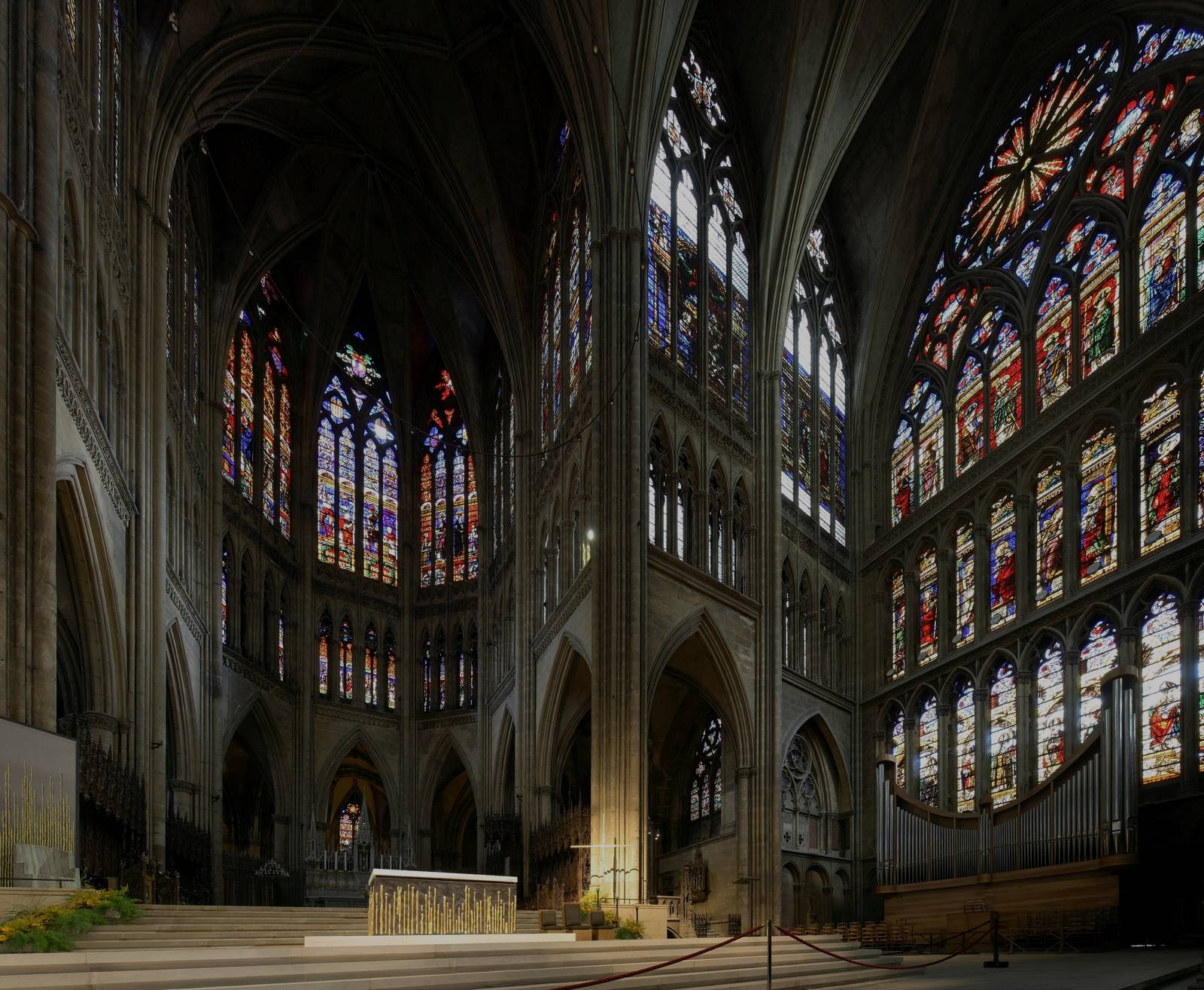
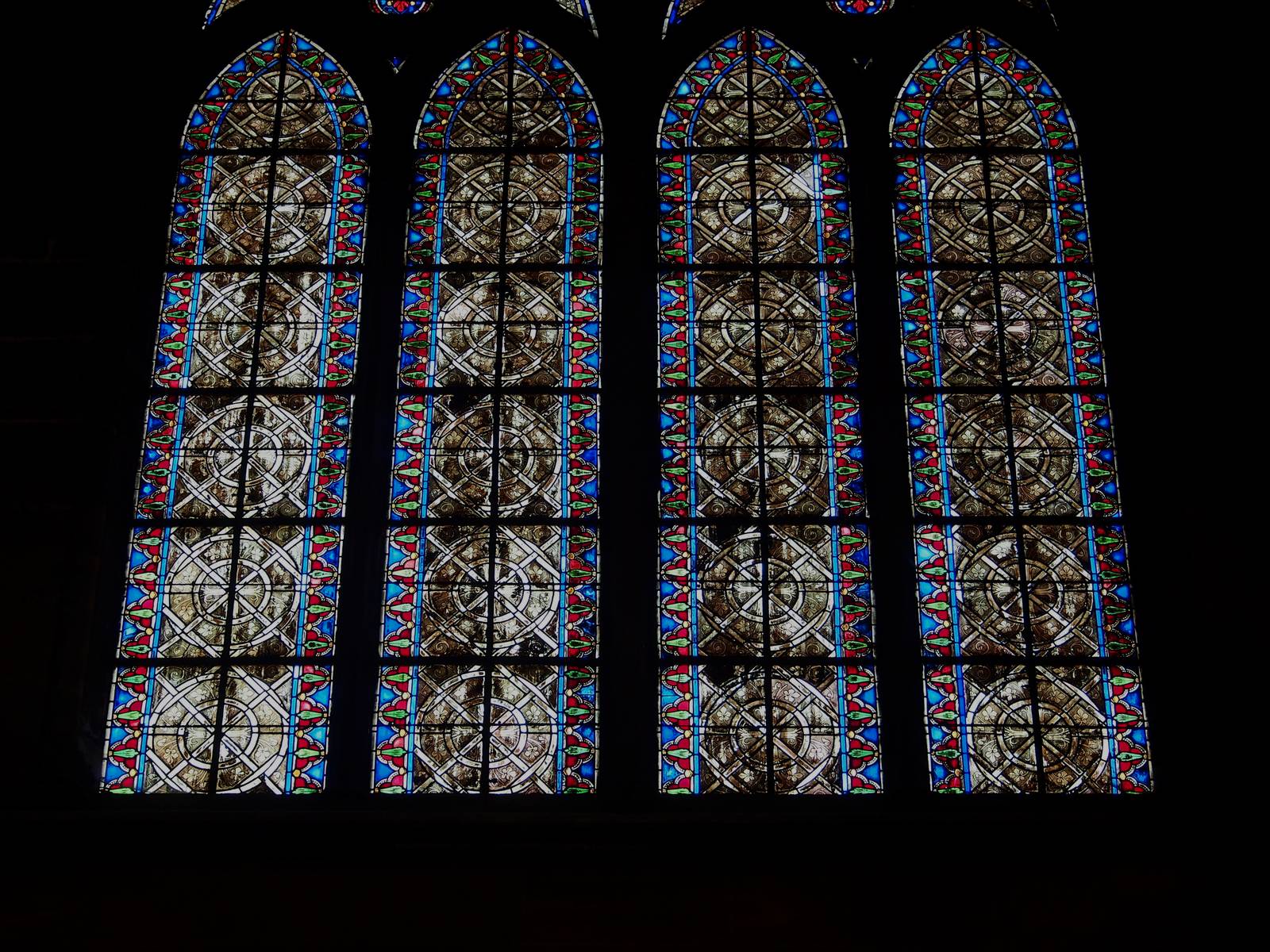
Then he turned to the building itself. The cathedral is known as the "Lanterne du Bon Dieu" thanks to its 6,500 square metres of stained glass showing scenes from the Bible. It seems the builders tried to keep the walls to a minimum so light could pour in. He called it a "biblia pauperum," a poor people's Bible, lit in a thousand colours. And he pointed to the windows by Marc Chagall, whom he called a "great Jewish painter." Set into the cathedral's walls, he said, Chagall's work turns the lantern into "an extraordinary symbol of ecumenism and interreligious dialogue." Ecumenism is the push for different Christian churches to grow closer together.
Here's the line most people will quote: "Europe's future does not lie in uniformity, but in the harmony of differences, where the wounds of the past become openings through which light shines."
At the end he called this Mass "the final public gathering of my visit to France." He thanked Macron and the civil authorities for looking after him in Paris, Lourdes and Metz. He thanked the head of the bishops' conference, Cardinal Aveline, and the bishops most involved, along with priests, deacons, religious sisters and brothers, lay people and volunteers. And he asked everyone to keep walking together, united in the Church, for God's glory and in the service of a kingdom of love, justice and peace.
The goodbye and the flight home
Vatican News described the goodbye. Leo had a private meeting with Macron inside the airport building. Then came an official farewell on the tarmac with full military honours. There was a guard of honour, and a band played the French national anthem and the Pontifical Anthem, the Vatican's own. The plane took off from Metz-Nancy-Lorraine just after 7:30 pm local time, and Vatican News said it was due into Rome's Fiumicino airport shortly after 9.
OSV News, a US Catholic news agency, reported that the chartered Air France jet actually touched down in Rome "a little before 9 p.m."
In Adelaide terms, Metz was on Central European Summer Time, UTC+2, seven and a half hours behind us. So the 16:04 Mass start was 11:34 pm Monday in Adelaide, and takeoff just after 7:30 pm in Metz was just after 3 am Tuesday here.
What he told reporters on the plane
Popes usually take questions from the travelling press on the way home, and this session ran about 20 minutes. Josephine Peterson of Catholic News Service reported it on the US bishops' USCCB website on 29 September. Here's what he said on the topics closest to this trip.
Asked about far-right politics and Christianity in Germany, he said Catholic and Protestant leaders there have spoken out against such movements as "not an authentic expression of Christianity." The values of the Gospel, he said, "are not about hatred and division, but about understanding and compassion and accompanying." He hoped people would make clear choices for the common good, not for extremist ideas that might do far more damage than anyone yet realises.
Asked about laïcité, and whether defending life on this trip had crossed the line into politics, he said he didn't think it had. "When the Church speaks about defending life, when it speaks about questions of social doctrine, we're not entering into politics, we're applying the Gospel to people's lives." He'd spoken against euthanasia during the trip, including at Lourdes, as France puts a recently approved law into effect. "If that's politics, I did that, but it was not to get involved in French politics," he said. "It was to teach what the Church really believes."
On Ukraine, he repeated the Church's opposition to violence, hatred and an escalating arms race while hunger, health, education and other human needs go unmet. The Church keeps inviting the leaders of Russia and Ukraine, and of other countries, to sit down and talk. "We cannot force anyone," he said. "Sometimes it seems that it can be useless, but we are going to keep talking, we are going to keep inviting, we are going to keep announcing the Gospel."
Vatican News's own English translation of that answer reads: "At times it may seem futile, but we will keep speaking, we will keep inviting, we will keep proclaiming the Gospel."
On abuse, he was asked about his private meeting during the visit with seven people who'd been sexually abused within the Church. He said several had spoken to him about systemic abuse, and he acknowledged that some organisations within the Church had, at times, been abusive "as a system." But he said he'd rather keep those cases distinct from sexual abuse more broadly. "Sexual abuse is first and foremost a human problem," he said. "When it happens within the Church, it actually has another whole dimension added to it because people's lives of faith are deeply wounded and sometimes even destroyed." The Church, he said, has a particular responsibility to walk with survivors and help them seek healing.
On housing, a Spanish journalist asked about Maricarmen Abascal, an 87-year-old woman with a disability who was put out of the Madrid flat she'd lived in for decades under an old rent-controlled lease. He said he didn't know the details of her case, but that cases like hers show the need for "more just solutions so that these cases don't happen." Neighbours, the community, the parish, the diocese or the state, he said, might need to come together and ask how the system lets this happen. "Many times we react only at the moment of emergency," he said, "but we have to see in reality what is the systemic cause of this problem and how to help."
On future travel, he was asked about trips beyond Latin America in November, and when he might visit Germany. He said no Germany date had been set. "The only trip definitely planned is World Youth Day in Korea," he said. That's due in August 2027.
Why Metz, and why Schuman's name is on the door
If you're coming to this cold, Metz wasn't a random last stop. Schuman lived in Moselle and is buried there. The Congress Centre carries his name. His Declaration of 9 May 1950 is still seen as a founding text of today's European Union. The Pope used Schuman's life like a teacher uses a map. Border country, shifting borders, generations of pride and revenge. Then a politician who decided Europe had to share its resources so that any war would become, in the words of that Declaration the Pope quoted, "not only unthinkable but materially impossible."
That's why the roots speech spent so long on international law and keeping your word. Schuman grew up where borders kept shifting. As the Pope tells it, living under one national government after another taught him the importance of international law and the value of keeping one's word. And growing up among pride and revenge, he chose peace and friendship between peoples instead. So when he says relations are becoming "uncivilized," he isn't picking a culture-war fight. He's saying the postwar habit of sitting down together is fraying, and that Europe knows better because it's done better for eighty years.
The Concordat point matters locally. In Moselle and Alsace, church and state still work differently from the rest of France, because of that 1801 Concordat the Pope said is still in force here. At Mass he mentioned the local Church's "special status" too. He said it had kept up "a fruitful dialogue between civil society and faith," and called it to be "a living laboratory" of faithfulness to the values Europe was built on. So he was speaking in a place where France's usual strict line between church and state has a local exception, and he knew it.
How the three Metz rooms fit together
Think of the three rooms as one argument in three keys.
The interfaith room: stop using God to bless violence. Protect life right to the end. Dialogue means friendship, not theatre.
The roots room: Europe has deep Christian and monastic foundations. Welcome migrants and bring them into the family. Seek peace without naïve pacifism or blind faith in rearmament. Young people, build community.
The cathedral: forgiveness isn't weakness. The lantern's glass, including Chagall's windows as the Pope described them, shows differences held together in one light. Uniformity isn't the future. The harmony of differences is.
Same day, same city. Metz is where he signed off by naming Europe's roots, his neighbours of other faiths, and a border church full of coloured light.
Watch the trip
If you'd like to see the trip moving, Vatican News has squeezed the whole France visit into a 100-second video, "Pope Leo XIV's Entire Apostolic Journey to France in 100 Seconds."
Sources
Holy See Press Office bulletin 260928a, 28 September 2026. Lourdes to Metz transfer and the Interreligious Meeting address. https://press.vatican.va/content/salastampa/en/bollettino/pubblico/2026/09/28/260928a.html
Holy See Press Office bulletin 260928b, 28 September 2026. Meeting "At the Roots of Europe for Peace and Unity." https://press.vatican.va/content/salastampa/en/bollettino/pubblico/2026/09/28/260928b.html
Holy See Press Office bulletin 260928c, 28 September 2026. Holy Mass in Saint Stephen's Cathedral, Metz, with the homily and closing thanks. https://press.vatican.va/content/salastampa/en/bollettino/pubblico/2026/09/28/260928c.html
Vatican News. Pope Leo XIV bids farewell to France. https://www.vaticannews.va/en/pope/news/2026-09/pope-leo-xiv-departure-metz-apostolic-journey-france.html
Vatican News, Christopher Wells. Pope: Europe must embrace its roots to build peace and unity. https://www.vaticannews.va/en/pope/news/2026-09/pope-europe-must-embrace-its-roots-to-build-peace-and-unity.html
Vatican News, Devin Watkins. Pope in Metz: God never inspires anything that disfigures human dignity. https://www.vaticannews.va/en/pope/news/2026-09/pope-leo-xiv-metz-france-interreligious-encounter.html
Vatican News, Kielce Gussie. Pope: The future of Europe is not found in uniformity but in the harmony of differences. https://www.vaticannews.va/en/pope/news/2026-09/pope-leo-in-metz-future-of-europe-not-found-in-uniformity-but-i.html
Vatican News. Highlights from Pope Leo's Apostolic Journey to France (video). https://www.vaticannews.va/en/pope/news/2026-09/video-highlights-pope-leo-last-day-in-france.html
Vatican News. Pope: Wars are senseless, Russia and Ukraine should sit down to talk (in-flight press conference). https://www.vaticannews.va/en/pope/news/2026-09/pope-leo-xiv-press-conference-apostolic-journey-france.html
Catholic News Service, Josephine Peterson, published on the USCCB news site, 29 September 2026. Report on the in-flight press conference from Metz to Rome.
OSV News, Courtney Mares, 28 September 2026. Report from the papal plane.
Holy See Press Office bulletin 260807b, 7 August 2026. Programme of the Apostolic Journey to France. https://press.vatican.va/content/salastampa/en/bollettino/pubblico/2026/08/07/260807b.html
Vatican News on YouTube. Pope Leo XIV's Entire Apostolic Journey to France in 100 Seconds. https://www.youtube.com/watch?v=S7pRBmPX9aE
Bottom line
In Metz on 28 September, Pope Leo XIV finished his France trip much as the programme said he would: interfaith meeting, Schuman roots speech with Macron in the room, Mass under 6,500 square metres of glass, then takeoff just after 7:30 pm local time. He told religious leaders God's name can't bless violence. He told Europe to honour its Christian roots, to welcome migrants and bring them in, and to seek peace without naïve pacifism or the illusion that rearmament is the answer. And he told a border cathedral that old wounds can become openings for light.
Keep three quotes if nothing else. "Nothing that disfigures human dignity can claim to be inspired by God." "Be builders of community!" And "Europe's future does not lie in uniformity, but in the harmony of differences." The lantern closed the trip.
The paper
Comments
No notes on this story yet.
Sign in to comment