
Chris Bowen called battery-electric cars outselling petrol a landmark. August’s national sales book is the peg, and Canberra is reading it as transport and energy policy in the same breath.
The Energy Minister’s line landed on the August 2026 figures that put battery-electric vehicles ahead of petrol-only sales in Australia. The Sydney Morning Herald carried the politics on 5 September. FCAI and Electric Vehicle Council monthly numbers put Toyota still first on brand volume at 19,712, BYD second, Tesla third. Infrastructure and federal framing sit beside the charging maps; the product-and-sales cut on the same tipping point is a different story.
Landmark is a politician’s word. The sales ledger underneath it is what the Federal Chamber of Automotive Industries and the Electric Vehicle Council publish each month. In August 2026, battery-electric cars outsold petrol-only cars on the national book. Bowen named that crossover a landmark moment. You can argue about how long the lead holds. You can’t argue with the month that put BEV ahead of petrol in the published tally.
Toyota remains the volume brand in the wider market: 19,712 units in the monthly brand ranking the industry sources carried. BYD sits second. Tesla sits third. That order matters for anyone reading the tipping point as a brand story as well as a fuel-type story. The petrol-versus-battery crossover is the headline. The brand ladder is the industrial texture underneath it — Japanese volume still on top, Chinese and American battery marques stacked immediately behind.
Frame this as national transport and energy, not a single suburb’s charging bay. Secret Harbour is someone else’s local peg. Here the story is the federal minister, the national sales book, the state charging maps, and the Christmas forecast for extra battery cars on Victorian roads. Same tipping point, different job: politics and infrastructure, not the model-by-model sales cut.
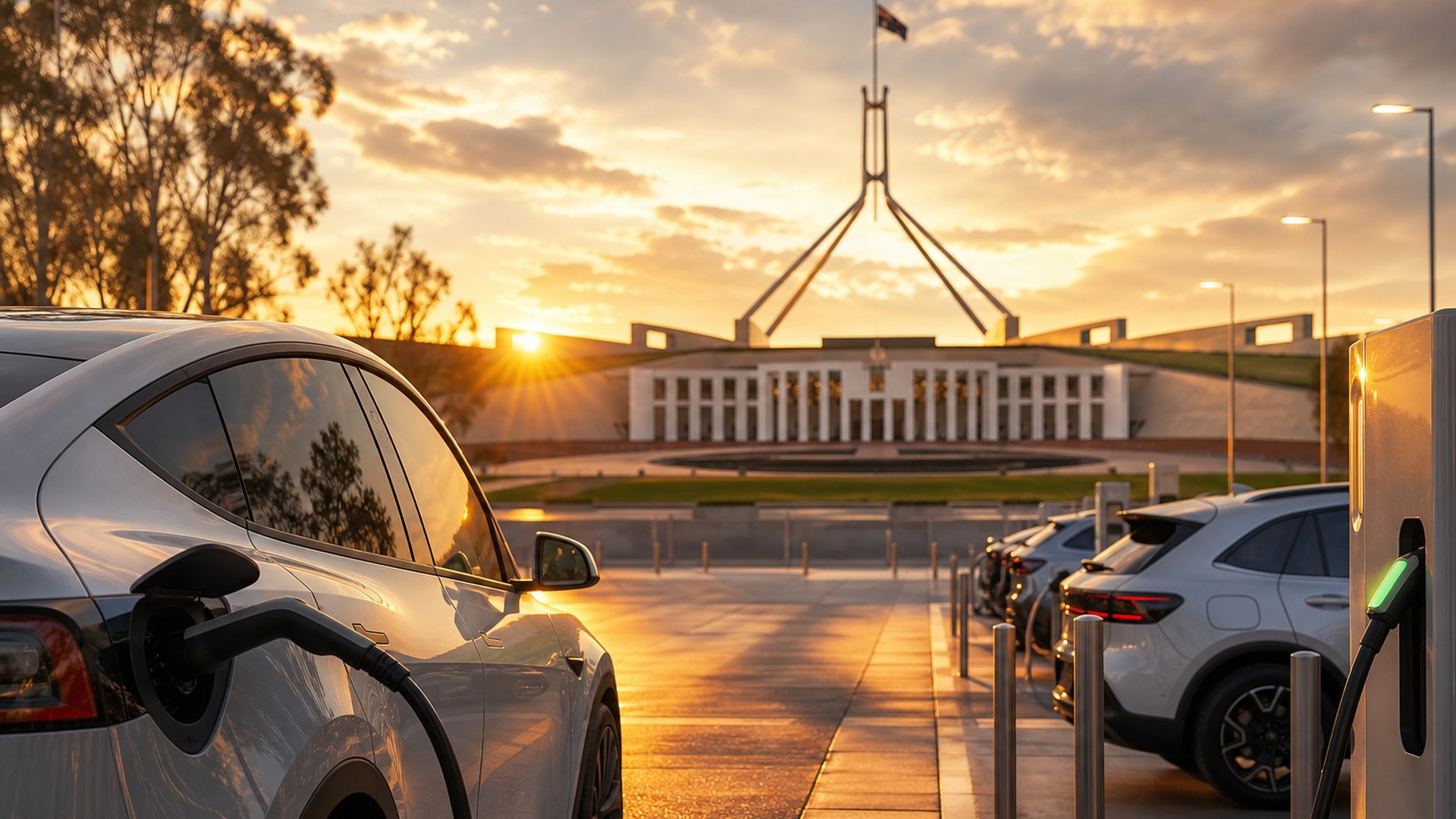
Charging is where the politics turns into concrete and cable. New South Wales counts 515 fast-charging sites on the industry maps cited in the September coverage. Victoria counts 396. The gap isn’t a slogan. It’s a site count. Industry voices in the same reporting cycle warned that Victoria needs more capacity for thirty thousand-plus extra electric vehicles by Christmas. That’s a forward load on the grid edge and the roadside network, not a press-release flourish.
NRMA’s Motoring and Safety director, Carroll Khoury, put the tipping-point language into the motoring body’s own register in the coverage SMH and the EV trade press amplified. When a national motoring organisation names a tipping point, it reads as transport-system news. Drivers don’t buy policy white papers. They buy range confidence, charger density, and a monthly repayment. Khoury’s line sits with those buyers.
Oil-price pressure belongs here only as the reported backdrop the September pieces already carried — cost-of-driving context, not a barrel forecast nobody published. Households feel petrol at the bowser. Fleet managers feel diesel on the spreadsheet. When battery-electric volume crosses petrol on the national sales book in the same season that fuel-price pressure is in the papers, ministers and motoring bodies both reach for landmark language. Report the pressure as reported.
Bowen’s portfolio is energy. The August crossover is vehicles. In Canberra those two corridors share a wall. Charging sites are electricity demand. Battery packs are manufactured goods and trade policy. Petrol displacement is climate accounting and fuel-security accounting at once. A landmark moment, in the minister’s phrasing, is the political shorthand for that overlap becoming visible in a single month’s VFACTS-adjacent tally.
State maps tell different stories. New South Wales at 515 fast sites is denser on the published count than Victoria at 396. Industry’s Christmas warning is aimed at Victoria’s side of the ledger: more than thirty thousand extra EVs expected on the state’s roads by the holiday peak, and a charging network that has to absorb that without turning highway exits into queues. Metric, plain: sites, vehicles, months.
Brand order keeps the industrial reading honest. Toyota at 19,712 is still the volume king in the monthly brand table the FCAI and EVC coverage used. BYD in second place is the Chinese volume story Australian dealers and buyers already know from showroom traffic. Tesla in third is the pure-play battery marque that trained the market on long-range highway cars. The petrol-to-BEV crossover doesn’t erase those brand facts. It sits on top of them.
This isn’t a model-by-model range test or a Secret Harbour suburb feature. It’s federal politics and infrastructure. Bowen’s landmark line. FCAI and EVC monthly figures. NSW and Victoria fast-site counts. The industry warning on Victoria’s Christmas EV load. Khoury’s tipping-point quote in the NRMA register. Oil-price pressure only as the papers already reported it. Sources named in the coverage: SMH on 5 September 2026, EVC and VFACTS coverage in the same cycle.
August 2026 is the month on the sales book. 5 September 2026 is the SMH politics date. The charging counts — 515 in New South Wales, 396 in Victoria — are the infrastructure spine. Thirty thousand-plus extra EVs in Victoria by Christmas is the load warning. Toyota 19,712, BYD second, Tesla third is the brand spine. Bowen’s landmark sentence is the Canberra peg. Hold those numbers. There’s no federal charging-fund dollar figure in the published packet to add.
Transport reporting used to separate cars from power stations. That separation’s harder when the bestseller list itself is an electricity story. Every battery car that replaces a petrol sale shifts kilowatt-hours onto the grid and litres off the bowser. Bowen’s landmark framing is the energy minister noticing that shift in public. Put the shift next to the charger map and the Christmas forecast.
Battery-electric volume ahead of petrol in a published national month is real movement on the electrification path Australia’s been talking about for years. Toyota’s continued brand lead shows the wider market still runs on mixed powertrains and dealer networks that know how to move metal. BYD and Tesla in second and third show battery marques aren’t a niche appendix. Charging-site growth in New South Wales and Victoria is real even when the Victorian warning says growth isn’t yet enough for the Christmas load. Progress and a warning can sit in the same paragraph.
Khoury’s tipping-point language from the NRMA side matters because motoring organisations speak to members who drive this week, not to 2035 scenarios alone. When the Energy Minister and a national motoring voice both treat August as a hinge month, that’s national transport news. The hinge is the sales crossover. The test after the hinge is whether charger density in Victoria and New South Wales keeps pace with the next thirty thousand-plus registrations.
Federal politics will keep arguing subsidies, fuel excise, and grid investment. This doesn’t sketch the next budget line. It records the August landmark as Bowen named it, the brand table as FCAI and EVC coverage published it, the fast-site counts as the industry maps carried them, and the Victorian Christmas warning as industry stated it. SMH on 5 September is the politics clip. EVC and VFACTS coverage is the numbers clip. Together they’re the packet.
So the close is plain. In August 2026, battery-electric vehicles outsold petrol-only cars on Australia’s national monthly book. Energy Minister Chris Bowen called it a landmark moment. Toyota led brands on 19,712 units; BYD second; Tesla third. New South Wales had 515 fast-charging sites on the cited maps; Victoria 396, with industry warning the state needs more for thirty thousand-plus extra EVs by Christmas. NRMA’s Carroll Khoury joined the tipping-point register. Oil-price pressure sits only as reported context. Sources: Sydney Morning Herald, 5 September 2026; Electric Vehicle Council and VFACTS monthly coverage. Landmark is the minister’s word. The sales book is the country’s.


The paper
Comments
No notes on this story yet.
Sign in to comment