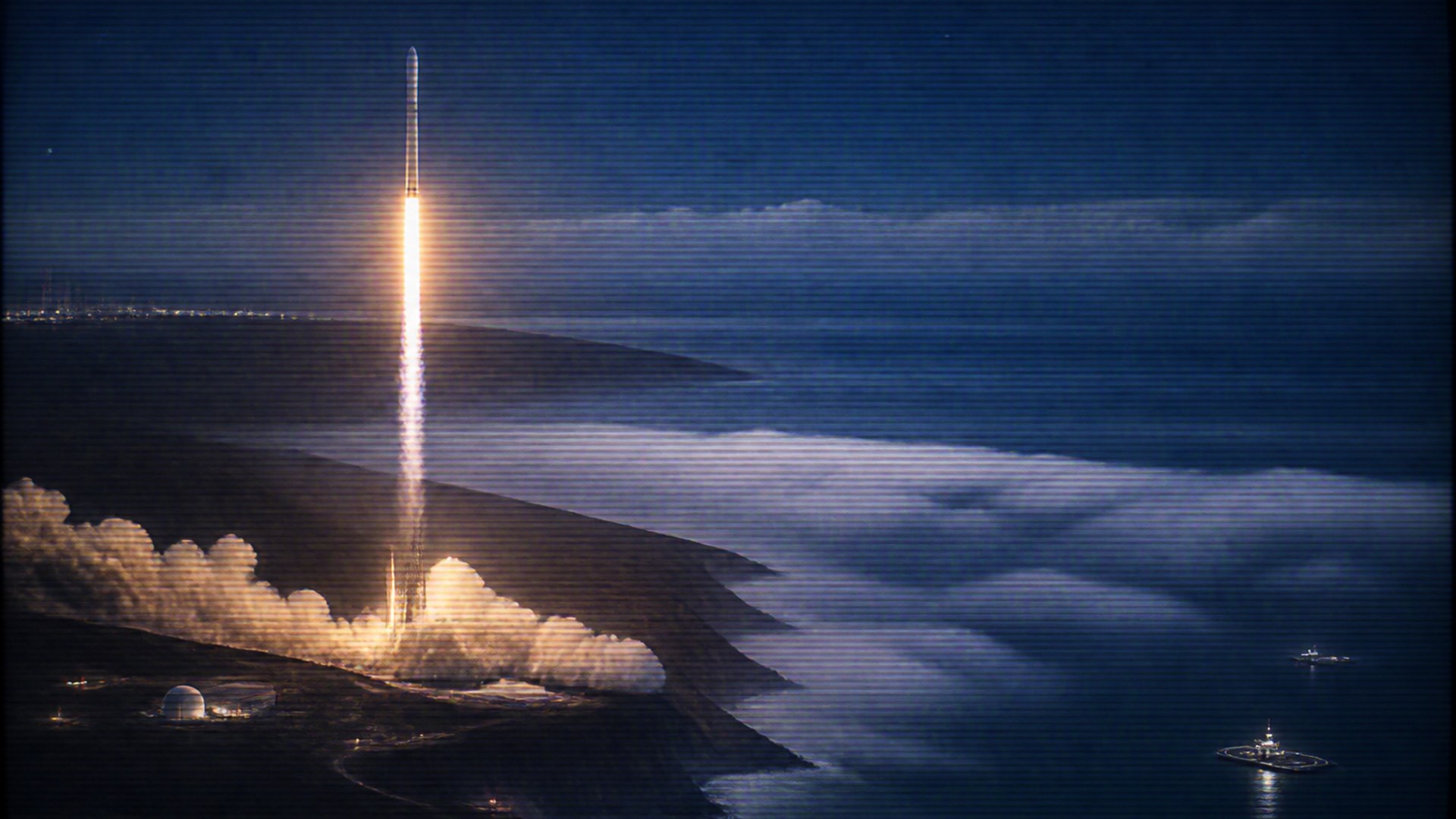

Spaceflight Now’s live coverage pages for 5–6 September 2026 framed Falcon 9 Starlink Group 15-24 from SLC-4E at Vandenberg as SpaceX’s 80th Starlink mission of the year — a West Coast webcast product with a window that moved in public updates.

Countdowns and Spaceflight Now’s schedule listed booster B1088 on about its 19th flight, a southeasterly trajectory, and a droneship landing target in the Pacific; Florida Starlink, on company remarks carried in that coverage, is shifting toward Starship.

The story is the launch webcast and the tape as product — what viewers were told to expect, how the cadence reads, where the household streams sit — not a second generic mission brief. Spaceflight Now opened live coverage for the 80th Starlink mission of 2026 and kept updating the clock as the weekend window shifted. Cite the shifts carefully. Early schedule lines had delays from 4 and 5 September. Later Spaceflight Now updates on 5 September moved the printed liftoff time again — one evening update put Sunday morning at 4:13 a.m. PDT / 11:13 UTC, another later line on the same live page family pointed at 7:26 a.m. PDT / 14:26 UTC. LookToSpace and other trackers also showed a Sunday 6 September target near 10:59 UTC in some syncs. Windows move. I’m filing the movement, not inventing a single frozen T-0 I haven’t locked from SpaceX’s final call.

Tap to enlarge

What the public coverage promised at a high level. Liftoff from Space Launch Complex 4 East. Southeasterly track off the California coast. About 27 Starlink satellites on the stack in Spaceflight Now’s schedule language (V2 Mini in that framing). First-stage booster B1088 flying for a 19th time on the countdowns that named the tail number. Landing target: the autonomous spaceport droneship Of Course I Still Love You in the Pacific, roughly eight and a half minutes after liftoff on the printed clock. Spaceflight Now said it would start live coverage about 30 minutes prior. SpaceX’s launches page is the company watch path when the mission card is live.

Cadence is the second act. Eighty Starlink missions in a calendar year is a factory tempo story as much as a single pad story. Vandenberg has been carrying more of the Falcon 9 Starlink load as Florida Starlink shifts toward Starship — Spaceflight Now quoted SpaceX launch VP Kiko Dontchev on that Florida-to-Starship move and noted Starlink 15-24 as among the early West Coast Starlink flights after that announcement. Three Starship towers in Florida planning (39A and two at SLC-37) sit in that same coverage as context, not as tonight’s pad.

Booster reuse without romance. B1088’s card, on Spaceflight Now’s live page, included prior national-security flights, Transporter-12, NASA’s SPHEREx, and a run of Starlink batches before this 19th outing. I’m not inventing turnaround hours I haven’t verified against Launch Library for this specific scrub. The reusable noun is the 19th flight line in the public countdown. The droneship noun is OCISLY. The landing-count colour Spaceflight Now printed — if successful, another landing on that vessel’s long ledger — stays attributed to that coverage.

What viewers typically see on a Vandenberg Starlink webcast, stated as coverage pattern rather than a shot list I invented for this specific night: pad cameras at SLC-4E, tracker views of the ascending stack on a southeast heading, stage separation calls, and — if the feed holds — droneship deck cameras for the landing burn. I’m not inventing which secondary camera caught which grid fin. High level only. The product is the stream Spaceflight Now and SpaceX point households at.

The numbers on the record. Mission: Starlink Group 15-24. Vehicle: Falcon 9. Pad: SLC-4E, Vandenberg Space Force Base, California. Programme count on Spaceflight Now’s framing: 80th Starlink mission of 2026. Booster: B1088, about a 19th flight in countdown language. Trajectory: southeasterly. Landing target: Of Course I Still Love You, Pacific. Payload framing on the Spaceflight Now schedule: 27 Starlink V2 Mini. Coverage: Spaceflight Now live pages 5–6 September 2026; SpaceX launches page. Window status: delayed from 4 and 5 September; Sunday 6 September targets moved in public updates — cite the update you watched, don’t freeze a scrubbed number as eternal.

A West Coast Sunday morning attempt sits in the afternoon for Australian watchers. That’s why a night paper treats the webcast as the object you can still play after the window closes — replay is the product when live has already folded. If the mission slips again after this filing, the tape identifiers and the 80th-mission framing still describe what the coverage sold.

Distinguish this from the OCISLY tape already on the shelf for Starlink 15-23. That was B1063, 2 September, a different booster flight and a different mission card. This is 15-24, B1088, the 80th Starlink mission framing, Labor Day weekend coverage. Same pad complex. Same droneship name in the Pacific. Different stack. Different countdown. Don’t mash the YouTube IDs.

Florida-versus-Vandenberg without a lecture. For years both coasts flew Starlink on Falcon 9. Company remarks in Spaceflight Now’s 15-24 coverage said Starlink missions out of Florida will fly on Starship from here on. That sentence is why an 80th Starlink mission from SLC-4E reads like cadence infrastructure, not a one-off. The West Coast pad keeps the Falcon 9 Starlink conveyor moving while Starbase works the orbital Starship profile.

I’m not inventing a final landing call I haven’t taken from a primary source after T+0. I won’t invent fairing recovery ship names for this flight without a verified line. I won’t invent a SpaceX webcast start second for a window that was still moving on 5 September. File the coverage promise, the pad, the booster flight count, the droneship target, and the shifting window with dates attached.

You’re watching a cadence machine. Eighty Starlink missions in 2026 is the headline Spaceflight Now put on the live page. SLC-4E is the stage. B1088 is the reuse line. OCISLY is the deck downrange. The window moved from Friday toward Sunday and then moved again in Saturday updates — that movement is part of the tape story. Play Spaceflight Now’s coverage and SpaceX’s launches path. Then read the Florida-to-Starship shift around it. The webcast is the news.

There’s a reason an 80th Starlink mission still gets a tape filing. Factory tempo can make individual flights feel interchangeable until you sit with the webcast language: which booster, which droneship, which window, which coast. Spaceflight Now’s live pages for 5–6 September did that naming work in public. B1088 on about its nineteenth flight isn’t a generic first stage. It’s a specific reuse card that already carried national-security flights, Transporter-12, SPHEREx, and a run of Starlink batches before this outing.

The shifting Sunday clock is part of the product, not a footnote. Early lines delayed from 4 and 5 September. Then Spaceflight Now’s 5 September updates moved the printed time again — 4:13 a.m. PDT / 11:13 UTC in one evening update, 7:26 a.m. PDT / 14:26 UTC in a later line on the same live-page family. LookToSpace and other trackers showed a Sunday 6 September target near 10:59 UTC in some syncs. Anyone who freezes one of those numbers as the eternal T-0 is filing a scrubbed clock as fact. I’m staying with the movement.

Payload language stays attributed. About twenty-seven Starlink V2 Mini satellites in Spaceflight Now’s schedule framing. Southeasterly track off California. Landing target OCISLY in the Pacific at roughly eight and a half minutes on the printed clock. Spaceflight Now said live coverage would start about thirty minutes prior. SpaceX’s launches page remains the company door when the mission card is live. Those are the nouns a household needs to find the stream.

The Florida-to-Starship shift is why this West Coast Starlink flight reads like infrastructure. Spaceflight Now quoted Kiko Dontchev on Starlink missions out of Florida moving to Starship, and noted 15-24 among the early Vandenberg Starlink flights after that announcement. Three Starship towers in Florida planning — 39A and two at SLC-37 — sit in that coverage as context. Tonight’s pad is still SLC-4E. The conveyor is what changed.

Coverage pattern for a Vandenberg Starlink night, stated carefully: pad cameras at SLC-4E, trackers on the southeast climb, separation calls, and — if the feed holds — droneship deck cameras for the landing burn. I’m not inventing which secondary camera caught which grid fin for this specific window. High level only. Official and Spaceflight Now paths are the product.

Don’t mash this with Starlink 15-23. That was B1063 on 2 September, a different booster and a different mission card, even if the droneship name in the Pacific looks familiar. This is 15-24, B1088, the 80th Starlink mission framing, Labor Day weekend coverage. Same complex. Different stack. Different countdown. Keep the YouTube IDs straight when you hand someone a link.

If the window slips again after this filing, the identifiers still hold. Mission Group 15-24. Falcon 9 from SLC-4E. B1088 on about its nineteenth. OCISLY downrange. Eighty Starlink missions of 2026 on Spaceflight Now’s framing. Play the coverage. Read the cadence shift around it. The webcast is the news.