Amplified · Christian heavy
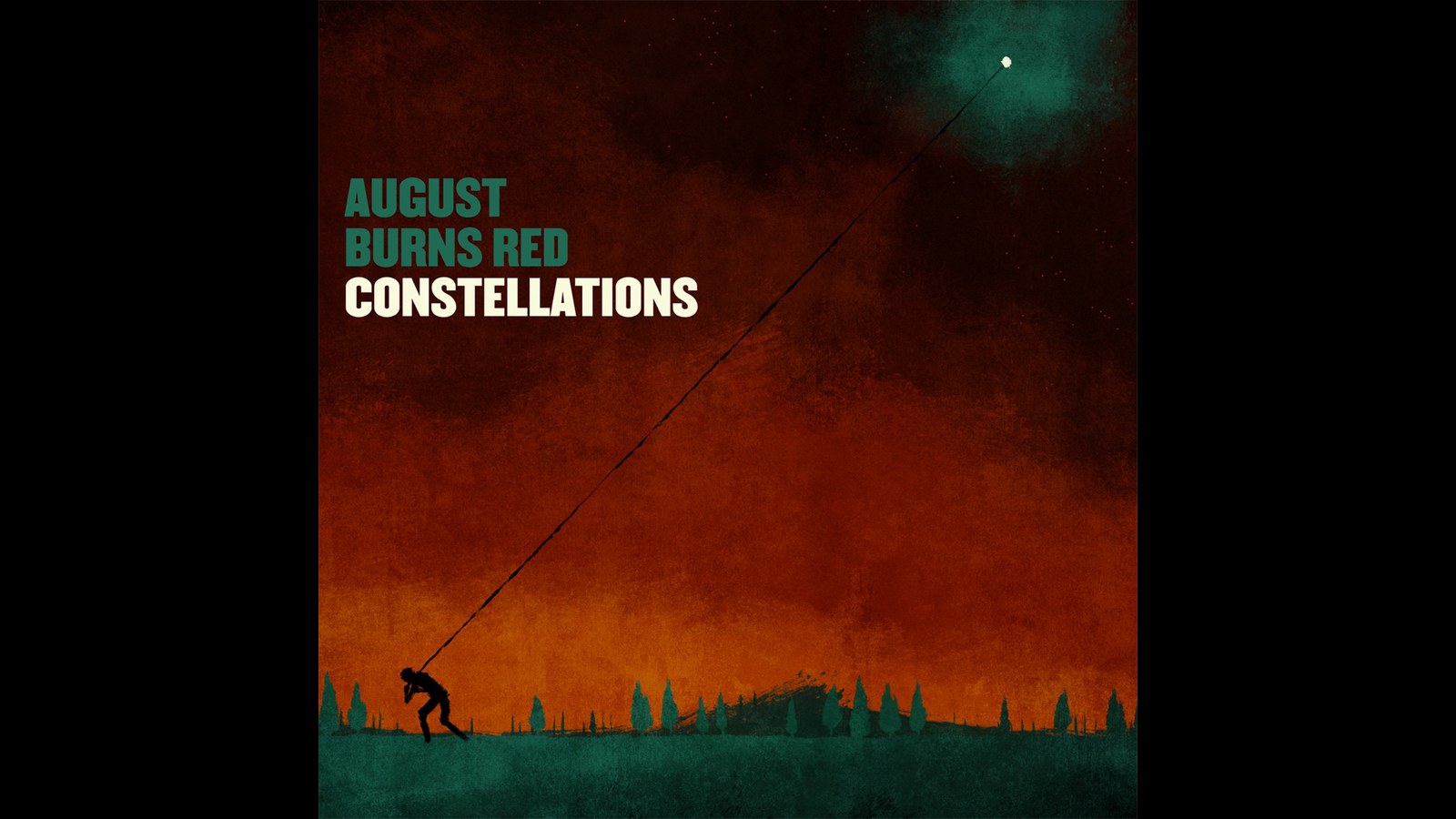
The cover of Constellations (Solid State Records, 2009).
Cover art: Ryan Clark of Invisible Creature for Solid State Records (2009)
Constellations — August Burns Red
Sign in to rank 1–10.
Constellations is August Burns Red's third studio album, released on Solid State Records on July 14, 2009. It runs twelve songs in just under forty-eight minutes, and it's the record where the Lancaster, Pennsylvania band stopped sounding like one more metalcore act and started sounding like itself. We give it an 8/10.
How it came together
The band went to Orlando, Florida, early in 2009 to make it with producer Jason Suecof at his Audiohammer studio. Fans got to watch. Blabbermouth reported that tens of thousands of them tuned in to a live video feed from the studio while the album was being recorded. The line-up was singer Jake Luhrs, guitarists JB Brubaker and Brent Rambler, bassist Dustin Davidson and drummer Matt Greiner.
Brubaker, the band's main songwriter, said in the album announcement that May that they'd been "paying more attention to the dynamics of the songs." As he put it, "We wanted the songs to breathe in certain places and explode in others." He was quick to add that the record would be "as unrelenting as our previous ones."
The cover is a painting by Ryan Clark of Invisible Creature. He told Noisecreep the idea came from the line "on earth as it is in Heaven" in the Lord's Prayer, and that the band wanted "a figure attempting to pull the heavens down to earth by lassoing a star." The band first wanted a photo-realistic version, but Clark worried it would come across "really corny" and painted it in acrylic paint instead. Greiner summed up the theme like this: "Constellations is about directing our attention towards heaven, trusting that God will direct our steps, regardless of our circumstance."
It sold. Billboard's chart history shows Constellations entering the Billboard 200 on the chart dated August 1, 2009, and peaking at No. 24. That was a big jump from Messengers, which had peaked at No. 81 two years earlier.
What you're hearing
Thirty and Seven opens with a trick. Dave de Sylvia of Sputnikmusic noticed the band teasing a breakdown, then pulling back into the chorus riff before it finally lands. That's the album in miniature. The breakdowns are still everywhere, but now they're placed with some thought.
Marianas Trench is the best example. Instead of stopping the song dead, the breakdown has guitar lines woven right through it, and then the solo takes over. That solo still comes up when fans argue about metalcore's best. It was one of the picks when Loudwire rounded up a Reddit debate on the subject in January 2024. Ocean of Apathy and the closer, Crusades, ease off for slower, bluesy middle sections, and Paradox is built on two guitars winding around each other.
Greiner is the big improvement. De Sylvia pointed to "the glitchy blast beats that simmer beneath the surface of Indonesia" and the careful fills that lead into Marianas Trench. Luhrs doesn't sing clean at all. He roars from start to finish, but you can make out most of what he's saying, and that matters on a record with this much to say.
What it's about
Indonesia is the heart of the album. Greiner said in a 2009 interview with Hopecore Magazine that it's about his friend David Clapper, and the song ends with the words "David, rest in peace." Clapper was a mission pilot whose church was in Manheim, just outside Lancaster, the band's home turf. Clapper spent eleven years flying food, school supplies and medicine to remote villages in Papua, and he was killed on August 9, 2008, when his small plane went down in the mountains there. He was 46 and left a wife and five children. Tommy Rogers of Between the Buried and Me sings on the bridge, and the song wrestles with the hardest question a death like that raises: "How does a man wrap his mind around eternity when he cannot even explain his own composition?"
Meddler goes after the idea that nothing is true. "Oh God, we live in misery," Luhrs screams, before asking, "If everything's relative, then why the emptiness in our souls?" Jesus Freak Hideout heard White Washed and The Escape Artist as harsh attacks on legalists, people who shrink faith down to a rulebook. These are angry songs, but the anger keeps pointing back to God.
What the critics said
Timothy Estabrooks of Jesus Freak Hideout gave it four out of five on release day. He admitted he went in biased, saying he'd always thought of the band as "cheap breakdowns and not a great deal of creativity." The album changed his mind. "This is a very tight album," he wrote, and "Constellations never drags." He found the new guitar solos "competent" rather than thrilling and called the instrumental Meridian "an overly-generic quasi-instrumental that never really goes anywhere." His verdict was that it wasn't "Album of the Year" material, but that any metal fan could enjoy it.
De Sylvia, writing a few days before release, heard real progress, "though not entirely progressive," from what he called the "formulaic and relatively uninspired" Messengers. He had no time for The Escape Artist, Rationalist or White Washed, which he called "unimaginative, meathead rock," and he thought some lyrics were too vague to say much. Still, he decided the band was "doing things just a little differently from everybody else out there."
Time has been kinder still. Writing for Revolver in 2021, Eli Enis called Constellations the band's "first masterwork," praising it as "technical but unpretentious, anthemic yet scorching." What set it apart, he said, was "the impressive amount of beauty and atmosphere" the band managed to build into the heaviness.
Watch
Start with the official video for Meddler, which Solid State Records posted on July 29, 2009, two weeks after the album came out. Then watch the official video for Marianas Trench. The band filmed it in 2009 but shelved it, and finally released it through Solid State on June 19, 2019, as it set off on a tour playing the whole album for its tenth anniversary. "10 Years ago we made a video for Marianas Trench that we decided not to fully release," the band wrote at the time.
The verdict
Why an eight? Because this is where August Burns Red found its sound. The breakdowns finally serve the songs, Marianas Trench and Indonesia are as good as anything the band has recorded, and Greiner and Brubaker play like they've got something to prove. Why not a nine? Estabrooks and de Sylvia were both right about the weak spots. Meridian drifts, and a few of the heavier tracks in the middle blur together. Why not a seven? Because the best songs are still standards more than fifteen years on, and few metal records of 2009 carried this much faith and grief this well. It sits next to Messengers as the start of everything August Burns Red went on to become.
8/10



Notes
Notes
No notes on this story yet.
Sign in to comment