Amplified · Christian heavy
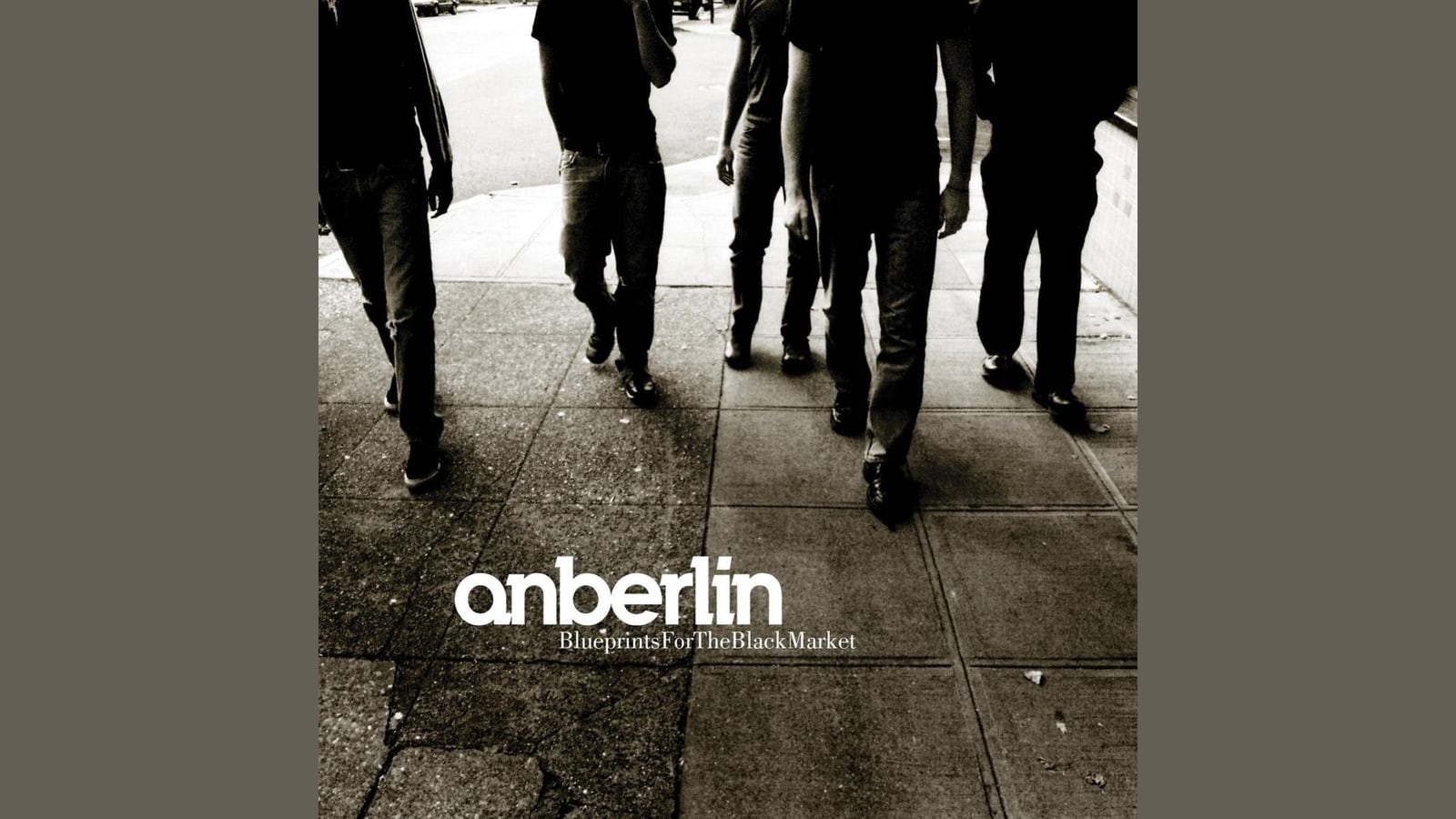
The cover of Blueprints for the Black Market (Tooth & Nail Records, 2003).
The cover of Anberlin's 2003 album Blueprints for the Black Market. Image: Tooth & Nail Records
Blueprints for the Black Market — Anberlin
Sign in to rank 1–10.
Blueprints for the Black Market is the debut album by Anberlin, the rock band from Winter Haven, Florida. Tooth & Nail Records released it on May 6, 2003, barely a year after the band came together. It's eleven songs in just under thirty-eight minutes, bright and quick and full of hooks, with a singer who already sounded like he was built for bigger rooms. It isn't the record Anberlin are remembered for. That's Cities, four years later. But you can hear the whole band starting here.
Where it came from
Anberlin grew out of SaGoh 24/7, a Florida punk band with singer Stephen Christian, bassist Deon Rexroat and guitarist Joseph Milligan. When drummer Nathan Young joined, a side project with a bigger rock sound turned into a new band, and friends in the scene, Underoath's Timothy McTague among them, pushed them toward Tooth & Nail. You can read more on the Anberlin band page.
The lineup on this record is Christian, Milligan, Rexroat, Young and rhythm guitarist Joey Bruce, and it's the only Anberlin album with Bruce in the band. Aaron Sprinkle, the former Poor Old Lu member, produced it and recorded it at The New Compound Studios in Seattle. J.R. McNeely mixed it and Troy Glessner mastered it. Sprinkle would go on to make Anberlin's first three albums.
What it sounds like
The album opens with "Readyfuels," and it's still the best argument for the whole thing. It's fast, it's catchy, and the chorus goes straight for the roof. A 2015 Sputnikmusic review called it "a live staple," praising its "punchy guitar work" and the dueling guitar solos. It was the single that got a music video, and it's the song most fans still know from this record.
"Foreign Language" comes next, and it's lighter and bouncier. Jesus Freak Hideout reviewer Matt Gray called it "very pop punk" and said it's about the differences between guys and girls. Johnny Loftus at AllMusic said it "marries the yearning of Cutting Crew to a post-new wave beat," which is a fair description of how odd and likeable it is.
Then the record starts to get heavier. "Change the World (Lost Ones)," the second single, is one of the angriest songs here. The Sputnikmusic review said Christian pulls off "half-screams" on it and sounds "righteously pissed off," and read the lyric as being about feeling lost and forgotten but still able to make a difference. "Glass to the Arson" is the hardest song on the album. Gray heard a "new metal" feel in it and compared it to Trust Company, and called it "the most aggressive song on the disc."
The middle of the record eases off. "Autobahn" is the poppiest song, with acoustic guitar and a cheerful synth line, and the Sputnikmusic review called it "simply a love song," one where the stereo plays and everybody sings along. The band also cover the Cure's "Love Song," a choice critics split on. Gray said they "truly do this song justice," while Loftus called it "preening."
The last two songs might be the best pair on the album. "Cadence" is gritty and loud, and the Sputnikmusic review said it "blends deep-seated anger with graceful thankfulness." Its chorus is about drawing closer to someone and finding out they're "a miracle to me," and the song leaves it open whether that someone is a person or God. "Naïve Orleans" closes on a slower, sadder note. A second Sputnikmusic review called those two songs "among the album's best" and said the closer "changes up the pace by ending the record on a somber and bittersweet note."
What the critics said
Most reviews at the time were warm, and some were glowing. Tony Cummings of Cross Rhythms gave it a perfect ten and called it "something special." Bert Gangl of The Phantom Tollbooth said the band "succeeds magnificently." Russ Breimeier at Christianity Today only gave it three stars, but he still said it "sounds absolutely terrific." CCM Magazine gave it a B minus and credited "the dynamic production of Aaron Sprinkle." Gray at Jesus Freak Hideout went furthest, calling it "the glorious debut of one of Christian rock's best new talents."
The sharpest pushback came from outside the Christian press. Loftus gave it two stars on AllMusic. He thought the record was polished so hard that it lost its edges, calling it "an utterly pleasant bore" whose players "lack any definition." Paul at the British site Punktastic was blunter. He called it "so offensively inoffensive and safe" and said his 50-year-old dad could happily listen to it in the car.
There's some truth in both camps. The production really is spotless, and across the album the songs can start to blur together. The second Sputnikmusic review made the same point, saying most of the album "manages to sound the same after a while." The first Sputnikmusic review counted "The Undeveloped Story" and even "Naïve Orleans" as filler, and the record is short on the slow, big moments the band would master later on.
How it did
It wasn't a chart hit. The album didn't make the Billboard 200, but it still sold more than 60,000 copies, according to Philstar, a solid start for a new band. Two years later Never Take Friendship Personal got them onto the Billboard 200, and Cities opened at No. 19 in 2007.
The verdict
Blueprints for the Black Market is a young band's first record, and it sounds like one, eager and sometimes a little too clean. But Stephen Christian's voice is already the real thing, "Readyfuels" still hits as hard as it did in 2003, and "Cadence" and "Naïve Orleans" show a band that could do more than write a catchy chorus. The critics who called it safe weren't wrong, but they missed how many of these songs still stick. It's a good debut, and the first sign of the great band Anberlin were about to become.
7/10
If this story helped, you can help keep the paper going: Support the paper.
Notes
Notes
No notes on this story yet.
Sign in to comment