Amplified · Christian heavy
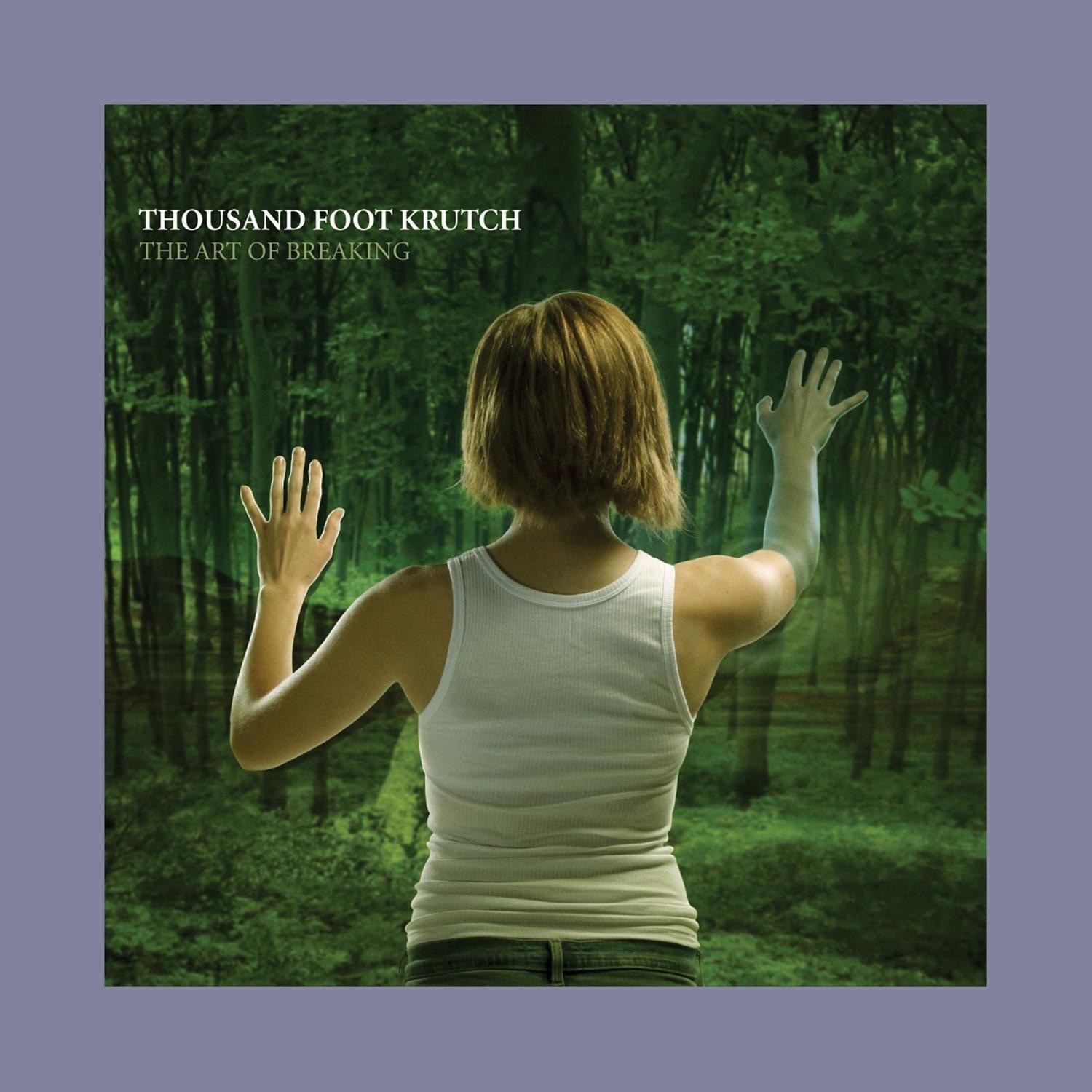
The cover of The Art of Breaking (Tooth & Nail Records, 2005).
Cover art: Thousand Foot Krutch, The Art of Breaking / Tooth & Nail Records, official cover
The Art of Breaking — Thousand Foot Krutch
Sign in to rank 1–10.
The Art of Breaking is the third studio album by Thousand Foot Krutch, the Christian rock band from Ontario, Canada, led by singer Trevor McNevan. Tooth & Nail Records released it on July 19, 2005. It's eleven songs in just under 41 minutes, produced by Arnold Lanni, the man behind records by Our Lady Peace and Finger Eleven. It followed Phenomenon, the 2003 album that broke the band, and it's the record where they finally let go of rap and just played rock.
The story
By 2005 the band was down to three: McNevan on vocals and guitar, Joel Bruyere on bass and Steve Augustine on drums. Tony Cummings at Cross Rhythms pointed out that McNevan was the only one left from the original four-man lineup.
According to the band's own notes for the album, they went into a Toronto studio late in 2004 with 25 songs and worked hard to trim that pile down to something lean. McNevan was spending more than 15 hours a day in the studio right up to the deadline, and he gave a lot of credit to Lanni. "We really hit it off and see music in the same colors," he said. "The only way you can improve as a songwriter and musician, I think, is to get outside of your own musical box. That's what we did here."
The biggest change was what's missing. The rapping that had defined the early records was gone. Augustine said mixing hip-hop and rock could sound great when it was done honestly, "but it seemed like too many bands were doing it just to sell records." McNevan was blunter. When the band started in 1997, he said, only a handful of bands had tried it, and then it "became ridiculous and a way to make cash." His verdict: "So we've put it to bed."
Making the record wasn't easy. McNevan told Christian Retailing magazine that "everything I can think of has gone wrong," from the recording itself to his personal life. "I've definitely personally felt the closest to the end of myself," he said.
What it's about
That feeling of hitting the end of yourself is the whole idea behind the title. "The 'art of breaking' in general is talking about that moment in each of our lives, whether it happens once or twice, the moment when we come to the breaking point," McNevan said. "Spiritually, it's when you come to the end of yourself and you realise all the blood, sweat and tears you're doing is not going to get you there." Cummings called the title track "a gem, a powerful exhortation to die to self."
The opener, "Absolute," sets the tone. "We want the Truth. Give us the absolute," McNevan sings. "We need Your help. Because we've got nothing." He said the song came from talking to kids at shows who were tired of being fed easy answers. "We're tired of people trying to sugarcoat things, while giving false hopes," he said in the band's notes. "Even if you don't have an answer, say it, that's your answer. It's about demanding honesty."
At the other end of the record is the closer, "Breathe You In," the quietest thing the band had ever recorded. McNevan called it his favorite song on the album. "For me, it's about the feeling of running on empty, and needing a refill," he said. He put it even more simply: "For me personally, it's about (saying) 'God, I need to breathe you in.'" Josh Taylor at Jesus Freak Hideout called it a "desperate, heartfelt" cry out to God.
McNevan didn't want the band boxed in as preachers, though. "From a spiritual point of view, we're all Christian guys," he said. "We would never want to hide that fact, but musically, we just want to play."
The sound
Think big, chugging guitars, short songs and choruses built for rock radio. Jonathan Avants at The Phantom Tollbooth heard "razor-edged melodic rock" where there used to be rap-rock, and he thought some of the new material was "nearly jaw-dropping." He singled out "Hurt," with its "completely unexpected gentle piano-lead chorus," and "Slow Bleed," which has "a slight punkish thrust." He called "Hand Grenade" "exactly what 'Rawkfist' should've been." That's the band's big 2003 hit, and his point was that "Hand Grenade" is loud and fun rather than loud and bombastic.
"Move" was the single that got the music video, and it's a good place to start. It's tight and punchy, with a chorus that sticks the first time you hear it. The title track and "Absolute" hit just as hard.
How it landed
The album debuted at No. 67 on the Billboard 200 in its first week, according to Cross Rhythms, which called the band "one of the biggest Christian acts in the USA" by then.
The reviews were mixed. Avants called it "one of the most unexpectedly good records of the year," though he thought a run of three "mindless fist-in-the-air party tracks" late in the album kept it from being excellent. Cummings praised McNevan as "one of the most arresting frontmen in Christian rock" and said "Absolute" had "a strong hook and a memorable message." He did admit that longtime fans might feel the band had "wimped out" by moving away from the hard music underground.
Taylor at Jesus Freak Hideout was cooler. He found it "more of the same" as Phenomenon, but said the lyrics had matured and the album grows on you. "The Art of Breaking may not be rocket science," he wrote, "but it's fun, aggressive, and perfect to blast through your car stereo with the windows down."
The harshest take came from Jon Marck at The Queen's Journal, the student paper at Queen's University in Ontario. He heard "smooth nu-metal" polished to chase Linkin Park fans and thought songs like "Hand Grenade" and "Absolute" showed "how trite their lyrics can be."
Our verdict
Marck isn't entirely wrong. This is a slick, radio-friendly rock record, and some of the lyrics are about as subtle as a hand grenade. The party songs in the back half are filler, and if you loved the band's rap-rock days, you'll miss the swagger.
But Avants put his finger on what works. Strip away the gimmicks and you find a band that's genuinely good at writing catchy, hard-hitting rock songs. "Absolute," "Hurt," "Slow Bleed" and the title track are as strong as anything the band made, and "Breathe You In" is a real prayer set to music, the moment where all that noise drops away and McNevan admits he needs God just to keep going. That's the album's point, and it lands. Start with "Move," then play "Breathe You In" straight after it. For more on the band, see our Thousand Foot Krutch page.
7/10
If this story helped, you can help keep the paper going: Support the paper.
Notes
Notes
No notes on this story yet.
Sign in to comment