
NASA Glenn put a lunar reactor on paper. The draft SPARC solicitation — Space Power and Reactor Capabilities — posted 30 August 2026 as a Multiple Award IDIQ for space nuclear systems, with an awardable Sample Task Order for Lunar Reactor-1 Phase 1.

New Space Economy carried the procurement read on 1 September 2026. As of that date the package was still draft, not awarded. NASA and the Department of Energy had set intent in January 2026 to develop, fuel, authorise, and ready a lunar surface reactor for launch by 2030. Real milestone. No contract yet.

SPARC is an acronym you’ll see again if lunar power stays on the books. Space Power and Reactor Capabilities. Glenn Research Center posted the draft solicitation on 30 August 2026. The contracting shape is a Multiple Award Indefinite Delivery Indefinite Quantity vehicle for space nuclear systems — a framework that can hold more than one vendor lane, not a single-nameplate bake-off announced as finished.

Tap to enlarge

Inside that draft sits an awardable Sample Task Order for Lunar Reactor-1 Phase 1. Sample task orders are how IDIQ vehicles show what a real call might look like. The draft says the government may award zero, one, or multiple awards against the structure. That sentence is the anti-hype clause. Procurement language that admits zero awards is honest. There’s no winner to name when New Space Economy’s 1 September read still called the package draft.

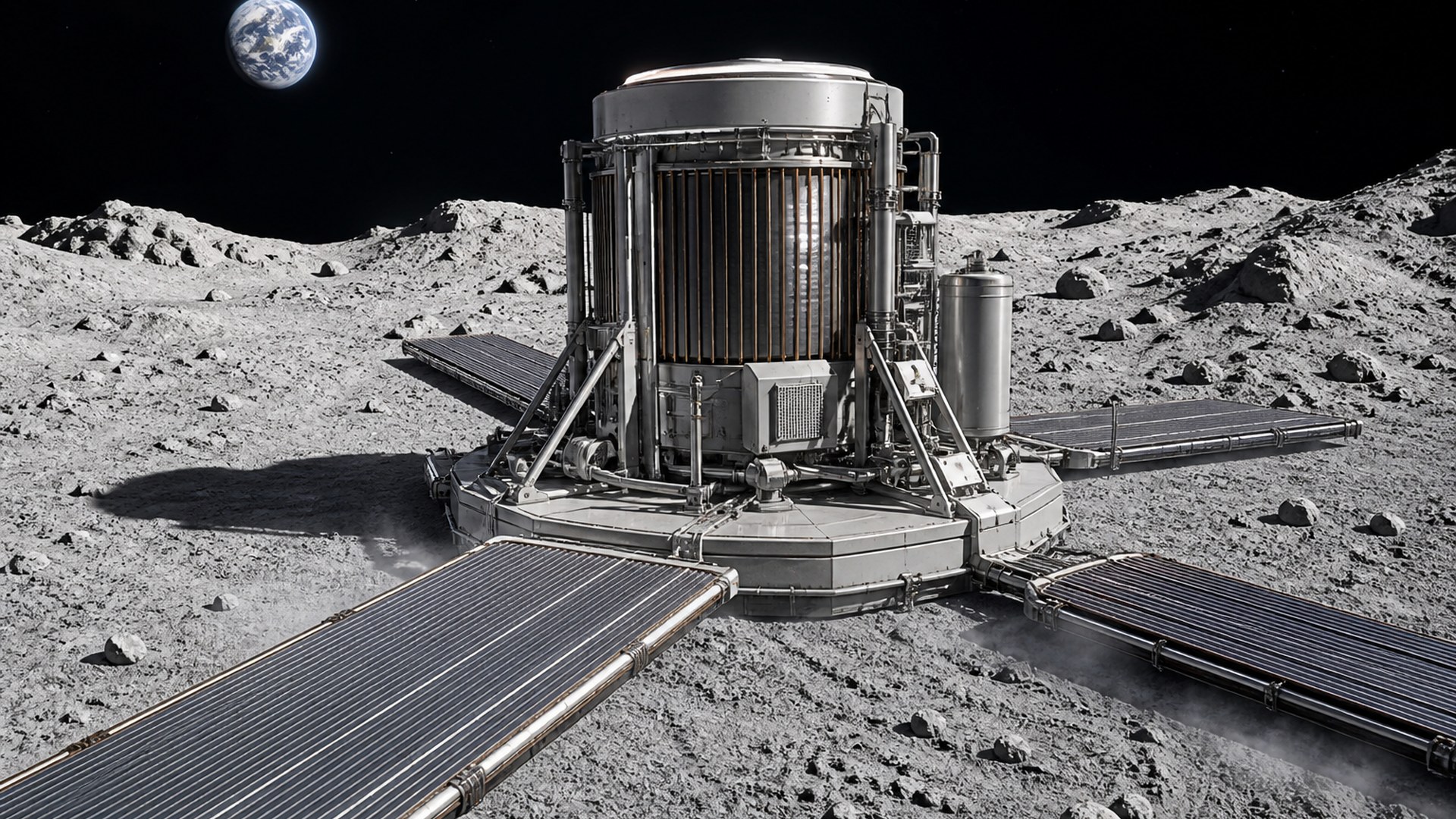
January 2026 is the policy intent date. NASA and DOE said they intend to develop, fuel, authorise, and ready a lunar surface reactor for launch by 2030. Four verbs. Develop. Fuel. Authorise. Ready. Launch by 2030 is the calendar end of that chain, not a landing party already ticketed. LR-1 — Lunar Reactor-1 — is framed as the first planned fission reactor on the Moon, with a landing target in 2030 in the programme language the draft and prior intent carry.

Draft specifications in the package point to roughly 20 kilowatts electric, high-assay low-enriched uranium fuel, a closed Brayton conversion loop, and years of continuous operation without refuelling. Those are engineering adjectives with numbers attached. Twenty kilowatts electric isn’t a city grid. It’s a surface outpost power plant class — lights, instruments, ISRU breadboards, habitat loads in the early architecture. HALEU is the fuel form. Closed Brayton is the conversion choice. Multi-year continuous run without a tanker of fresh fuel is the operational promise the draft specs are aiming at.

Metric and plain: 20 kWe. Years without refuel. Land in 2030 as the planned first fission reactor on the lunar surface — planned, not already on a manifest with a named lander flight. Stick to SPARC’s paper.

Why Glenn? NASA’s Glenn Research Center owns deep heritage in space power and nuclear systems work. Posting SPARC from Glenn puts the solicitation on the campus that has carried radioisotope and fission power studies for decades. The centre name and the 30 August draft post are enough geography.

A draft Multiple Award IDIQ with an awardable LR-1 Phase 1 sample task order is a real procurement milestone. January’s NASA–DOE intent to have a lunar surface reactor developed, fuelled, authorised, and ready for 2030 launch is a real interagency statement. Putting roughly 20 kWe HALEU closed-Brayton specs on paper is a real requirements signal to industry. None of that is an award. None of that is a reactor glowing on Mare Imbrium. Paper first. Hardware later. Mark the solicitation without toasting a vendor who isn’t named.

What “may award zero, one, or multiple” means for readers: the government isn’t obliged to buy. Draft solicitations test industry response, refine requirements, and sometimes stop. Phase 1 on LR-1, if awarded, would be the opening slice of work — definition and early development territory in ordinary IDIQ practice — not a finished flight unit. Phase 2 language isn’t in the facts on the street.

Fission on the Moon is a different problem from solar arrays at the equator of a place that has a two-week night. Polar camps and permanently shadowed regions make continuous solar harder. A small reactor that runs for years without refuel is how architects talk about base power that doesn’t die at sunset. SPARC’s LR-1 sample task order is the procurement expression of that architecture talk. Twenty kilowatts electric is the draft size class. Closed Brayton is the conversion path on the paper. HALEU is the fuel adjective.

Authorise is the verb in the January intent that sits next to develop, fuel, and ready. Nuclear launches and surface reactors carry safety cases, launch approval chains, and interagency sign-off. DOE’s fuel and authorisation role beside NASA’s mission role is why the January statement was joint. SPARC’s draft doesn’t erase that jointness. It operationalises a path toward it.

As of 1 September 2026, New Space Economy’s coverage still treated the solicitation as draft — posted, readable, not yet an awarded contract. That timestamp matters. Anyone claiming a winner on 1 September was ahead of the source. Draft on 30 August. Still draft on 1 September. Sample task order for LR-1 Phase 1 awardable in the structure. Zero, one, or multiple possible.

IDIQ vehicles are how NASA and other agencies keep a bench of qualified performers without re-competing every tiny task from scratch. Multiple Award means more than one holder can sit on the vehicle. Space nuclear systems as the scope means power reactors and related nuclear space capability, not a single science instrument buy. Lunar Reactor-1 Phase 1 as the sample task order tells industry what a first call might demand: a lunar surface fission plant in the roughly 20 kWe HALEU closed-Brayton class aimed at 2030 landing as the first planned reactor on the Moon.

This is procurement and programme news, not science fiction. The romance of a lunar reactor sells itself. The discipline is leaving the romance attached to dated documents: Glenn draft 30 August 2026; New Space Economy 1 September 2026; NASA–DOE January 2026 intent; 2030 launch-ready goal; about 20 kWe; HALEU; closed Brayton; years without refuel; may award zero, one, or multiple; still draft as of 1 September.

No awards named. No vendor names. No thermal kilowatt figures beyond the roughly 20 kWe electric draft class. No landing site on the record. The procurement milestone stands on what’s published — a draft SPARC IDIQ with an LR-1 Phase 1 sample task order on the street is how a 2030 lunar reactor stops being only a speech and starts being a contracting action in progress.

So the close is procurement-plain. On 30 August 2026 NASA Glenn posted a draft SPARC — Space Power and Reactor Capabilities — Multiple Award IDIQ for space nuclear systems, including an awardable Sample Task Order for Lunar Reactor-1 Phase 1, with zero, one, or multiple awards possible. January 2026 NASA–DOE intent: develop, fuel, authorise, and ready a lunar surface reactor for launch by 2030. LR-1 framed as the first planned fission reactor on the Moon, land 2030; draft specs about 20 kWe HALEU, closed Brayton, years continuous without refuel. As of 1 September 2026, still draft, not awarded. Source: New Space Economy, 1 September 2026. The reactor is on paper. That’s the milestone.