Amplified · Christian heavy
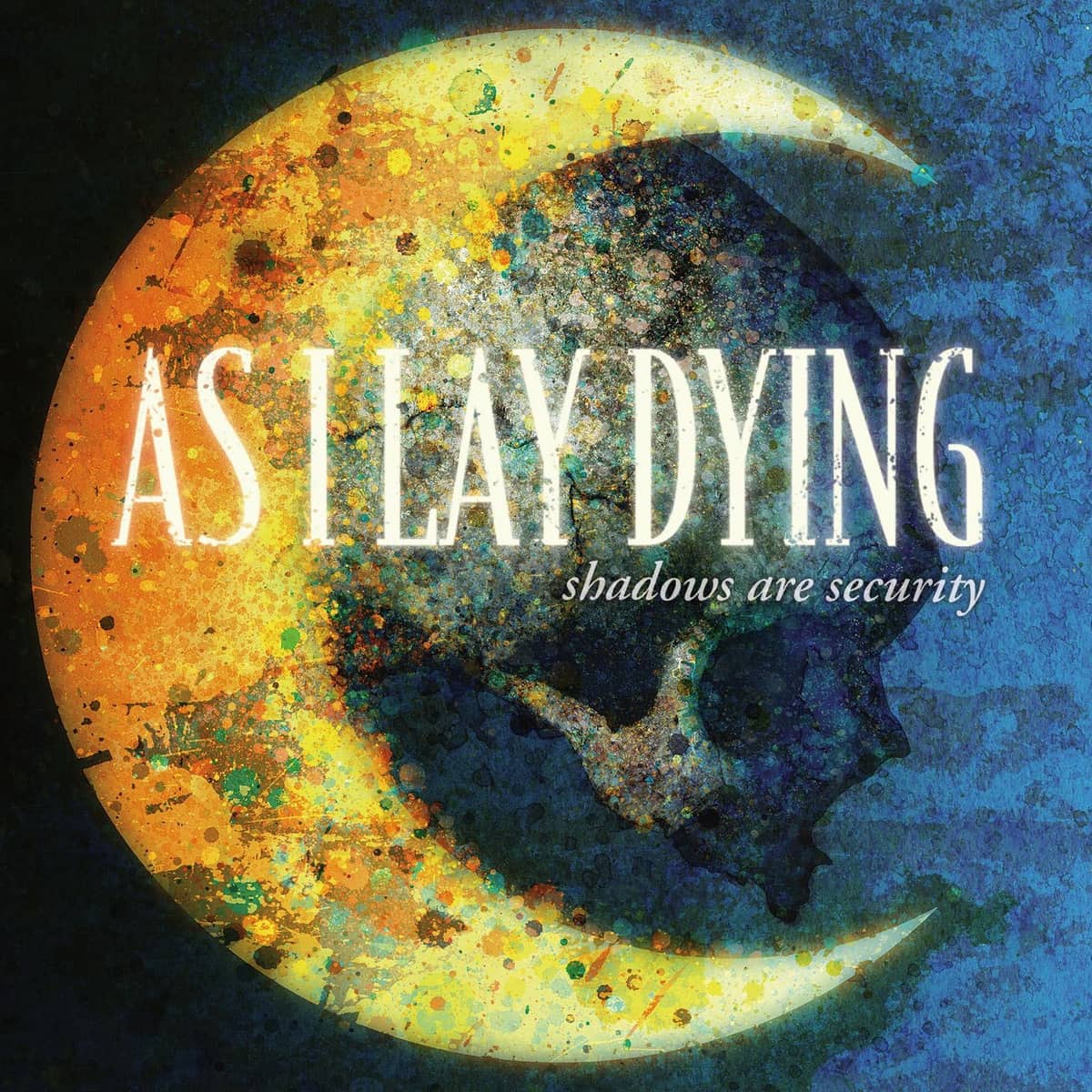
The cover of Shadows Are Security (Metal Blade Records, 2005).
Cover art: As I Lay Dying, Shadows Are Security / Metal Blade Records, official cover
Shadows Are Security — As I Lay Dying
Sign in to rank 1–10.
Shadows Are Security is the third album by As I Lay Dying, the metalcore band from San Diego fronted by Tim Lambesis. Metal Blade Records released it on June 14, 2005. It's twelve songs in about 43 minutes, and it's the record that took a band from the Christian hardcore underground and put it on the Billboard 200. If you want to know what mid-2000s metalcore sounded like at full strength, this is one of the albums people still point to.
The story
As I Lay Dying's first Metal Blade album, Frail Words Collapse, came out in 2003. Lambgoat reported that the band went into Big Fish Studio in Encinitas, California, in early January 2005, with the mixing to be done in England by Andy Sneap. The album credits back that up. Lambesis and guitarist Phil Sgrosso produced it, with engineer Steve Russell as co-producer, and Sneap mixed and mastered it.
The band around Lambesis had changed a lot. Max Deneau at Exclaim! counted "three major line-up changes" in the two years since Frail Words Collapse. The lineup on this record is Lambesis on vocals, Sgrosso and Nick Hipa on guitar, Clint Norris on bass and clean vocals, and Jordan Mancino on drums.
The timing was right. According to Nielsen SoundScan figures reported by Billboard and Variety, the album sold about 33,000 copies in its first week and entered the Billboard 200 at No. 35. That summer the band played the second stage at Ozzfest, which Lambesis told Lambgoat was mainly about reaching "the lazy metal fans who don't go out and find out about new bands."
What it's about
Lambesis explained the title in that same Lambgoat interview. "It just deals with the false sense of security we find in the things that we're taught and the way that most of us live, moreso instinctual and driven by our emotions and our feelings," he said. "To me, those things are like shadows. They're there one minute and gone the next."
He was clear that faith sat at the centre of it. "A lot of my lyrics have a spiritual twist to them," he said, and he took aim at people who call themselves religious but are "driven entirely by emotion." His point was that love and worship go deeper than a passing feeling. "I believe in Christianity because I believe it's the truth," he said, "but I think that truth itself is more important than the idea of religion."
That's not a typical thing to hear on the Ozzfest tour. Tom Day at musicOMH, writing about the special edition reissue, noted that Lambesis' own liner notes show several songs written directly about God's love for people, sacrificial love and his own struggles with self-discipline. Day called Lambesis' growl "gruff" and said he "scowls a remarkably inspiring philosophy from the bottom of his youthful lungs."
Years later, Lambesis said he'd lost his faith. In 2014, he pleaded guilty to trying to hire someone to kill his wife, and he was sentenced to six years in prison.
The sound
The big change is melody. Day put it in one word. On Frail Words Collapse there were "snippets of clean choruses and sing-a-long flashes," he wrote, but here melody gets a much more prominent place, and that's exactly why he thought some older fans would be unhappy. Greg Sammons at Cross Rhythms heard the same thing. He said the clean vocals "play a more pivotal role this time" and that Lambesis now had "a higher range, which somehow doesn't negate from its usual aggression."
Most of those clean parts come from Norris. Deneau called them "controversial attempts at clean vocals," but said that whatever you think of "emo backups on a metal record," they were "an immense improvement" on the last album. Day was more generous. On "Confined," he said, Norris comes in with "a chorus so big it becomes quickly apparent that this band listened to far too much Queen in their formative years."
Underneath the singing is a lot of Swedish-style guitar. Bryan at Punknews.org heard "Swedish death metal riffs" kicking off "Meaning in Tragedy," the opener, and said the song uses them best. Scott Alisoglu at Blabbermouth praised Mancino's drumming as "first rate" and liked the "sweet twin-guitar harmonies" from Sgrosso and Hipa. He also heard a fuller production than on the last record, helped by Sneap's mixing.
There's one guest worth knowing about. Dan Weyandt of Zao, the band behind Parade of Chaos, adds his voice to "Control Is Dead." Alisoglu pointed that out, and so did a reader review on Jesus Freak Hideout.
The songs to start with
Start with "Confined." It shows the whole formula in about three minutes, with a hammering verse that gives way to Norris' huge chorus. Then go to "The Darkest Nights." Bryan at Punknews called it "obviously the best song on the entire CD," with the best riff and the best clean vocals on the album. A Jesus Freak Hideout reader review named it a highlight too.
"Through Struggle" is the third video, and Sammons called it "groove-heavy." Alisoglu said the melodic singing on all three breaks up the album nicely. Bryan rated "Morning Waits" as another of the better songs, though Sammons heard it as one of the "melody-laden" tracks where the band lost a little of its rawness. Alisoglu's pick was the closer, "Illusions," which he called "a (welcome) black sheep compared to the rest of the tunes."
What the critics said
Not everyone was won over, and the complaints are worth hearing. Alisoglu called it "a solid album" but said it was "now difficult to distinguish this band from the slew of similar acts," and that he kept thinking of Killswitch Engage or Unearth. Bryan heard Darkest Hour all over it and called the album "a little too generic." Deneau said the band's "failure to provide much experimentation or variation upon the melodic metalcore formula" would hold them back, though he still called it "catchy, solid, well produced American metal."
Sammons said the album was "light-years ahead of their previous releases" as a whole, "so much tighter and better structured," even if no single track jumped out. And he summed up its place well. "2005 is the year that As I Lay Dying could no longer be ignored by the mainstream hard music scene and this is the album that achieved that."
The bottom line
The critics who called it familiar weren't wrong. If you've heard plenty of mid-2000s metalcore, you'll spot the moves coming. But very few bands did those moves this well. The riffs are tight, the drumming is excellent, the choruses are huge, and the lyrics come from a singer who said in 2005 that he believed Christianity was the truth.
If you want more Christian metalcore from the same years, read our reviews of August Burns Red's Messengers and Norma Jean's O' God, the Aftermath, or browse our Christian metal and hardcore video playlist.
7/10
If this story helped, you can help keep the paper going: Support the paper.
Notes
Notes
No notes on this story yet.
Sign in to comment