
Victoria's premier has said it out loud. One Nation terrifies him.
On Wednesday, ABC News published a 7.30 report in which Premier Ben Carroll declared "One Nation terrifies me." He was warning that the Coalition could end up governing with Pauline Hanson's party after the state election on Saturday, 28 November. Liberal leader Jess Wilson didn't bite. "I'm not really interested in the other parties," she told 7.30. She said she's running to win majority government, and she hasn't spoken to One Nation's Victorian leader, Warren Pickering.
This is a Victorian story. One Nation's recent by-election wins in Western Australia and New South Wales get a quick mention later on. But the focus here is Carroll's warning, Wilson's answer, a poll that has Labor running third, a shaky Labor seat in Melbourne's west, and a country seat up north where people are angry about roads and power lines.
It's all happened fast. Carroll only became premier on 28 July, after he challenged Jacinta Allan for the Labor leadership. Pickering was unveiled as One Nation's Victorian leader on Monday, 3 August. Wilson has led the Liberals since November 2025. And the election is now just over two months away.
Each of them is running a different line. Carroll is using fear of a Liberal–One Nation government as a big part of his pitch. Wilson is trying to starve that fear of oxygen by only talking about a Coalition majority. And Pickering has said since August that One Nation wants to govern in its own right, not as anyone's junior partner.
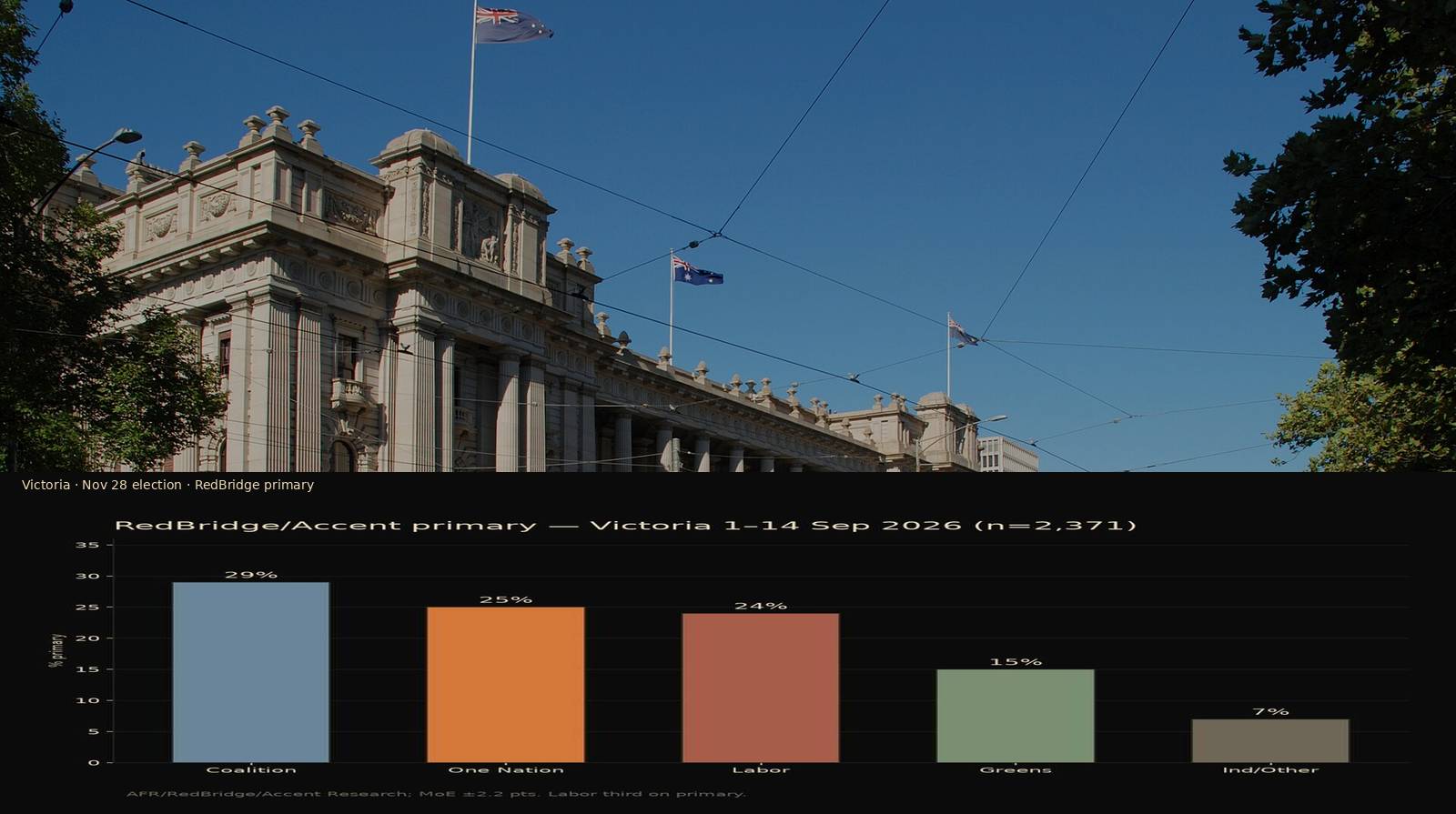
What Carroll said
Since he took over in July, Carroll has made the chance of a Coalition–One Nation government a central part of Labor's campaign. On Wednesday he pushed it further.
"I will fight every day against the Liberal Party and One Nation coming together, because that is what will happen in November if Labor is not successful," he told 7.30.
Asked if he was worried about One Nation's rise, he admitted the prospect "terrifies him". Then he drew the line he wants voters to remember. "[The] Liberal Party and One Nation teaming together … they're about attacking working people. I'm about fighting for them."
That's not subtle. He's talking to Labor voters who are fed up and thinking about a protest vote. His message is simple. If you park your vote with One Nation, you could help put in a government that he says will hurt you.
What Wilson said
Wilson's answer, in the same report, was cool on purpose.
"I'm not really interested in the other parties," she said. "I am running to win majority government at this election because I know that we have the plan to fix Victoria, and I know the only way to do that is to achieve majority government."
She said she hadn't spoken to Pickering. And she urged voters to "fix this state" by voting for the Coalition. 7.30 asked One Nation for comment. The party didn't respond.
Wilson didn't give a long speech about preference deals. She tried to make the whole question look like a Labor trap. Majority or nothing. No chats with Pickering. Move on.
Does that end the argument? Not on Labor's terms. Victoria's lower house, the Legislative Assembly, has 88 seats. You need 45 to govern alone. Carroll is asking voters to picture election night with Wilson short of 45 and One Nation holding a bunch of seats. Wilson is asking them not to picture that night at all, and to hand her the majority first.
The poll behind the panic
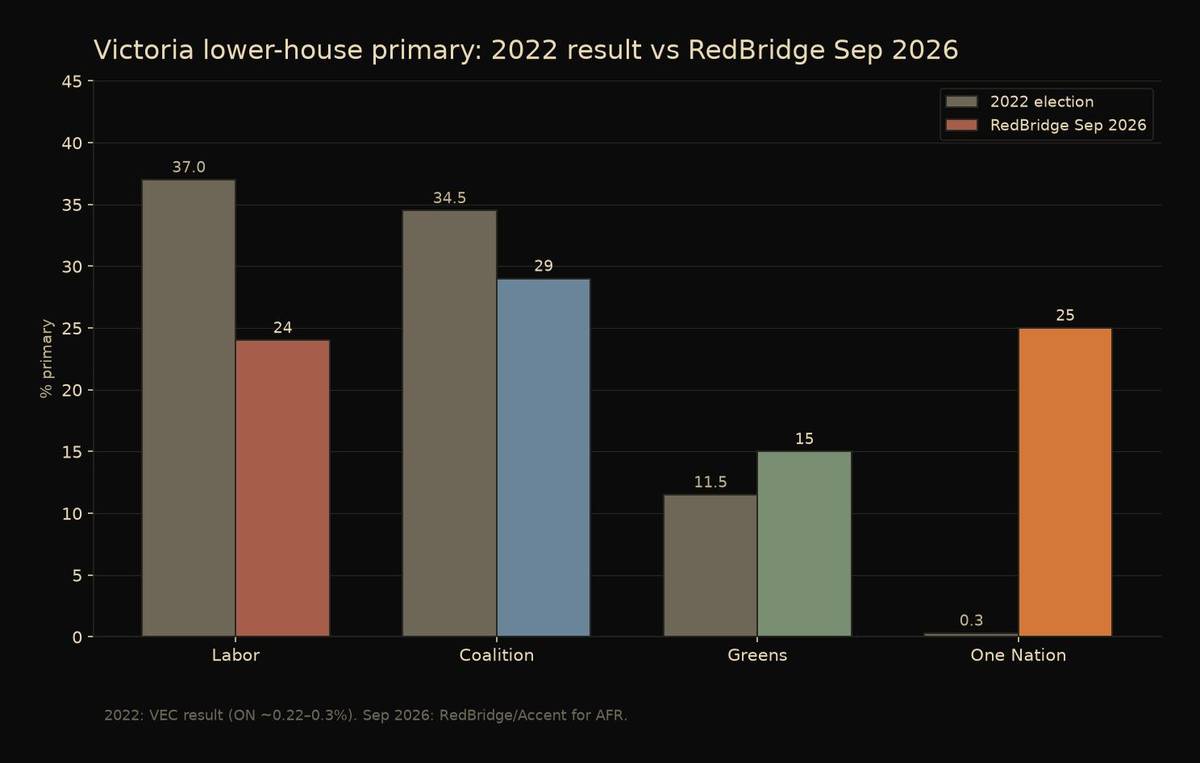
Here's why this is suddenly so heated. RedBridge Insights and Accent Research ran a survey for the Australian Financial Review from 1 to 14 September. They asked 2,371 Victorian voters. The Coalition came out on 29 per cent of the primary vote. That's people's first choice on the ballot. One Nation was on 25 per cent, Labor on 24 and the Greens on 15.
The margin of error was 2.2 percentage points. That means each number could be out by about two points either way. The ABC described it as a survey of almost 2,400 Victorians earlier this month. So the Coalition's first, but not by a landslide. One Nation's second. And the party in government is third.
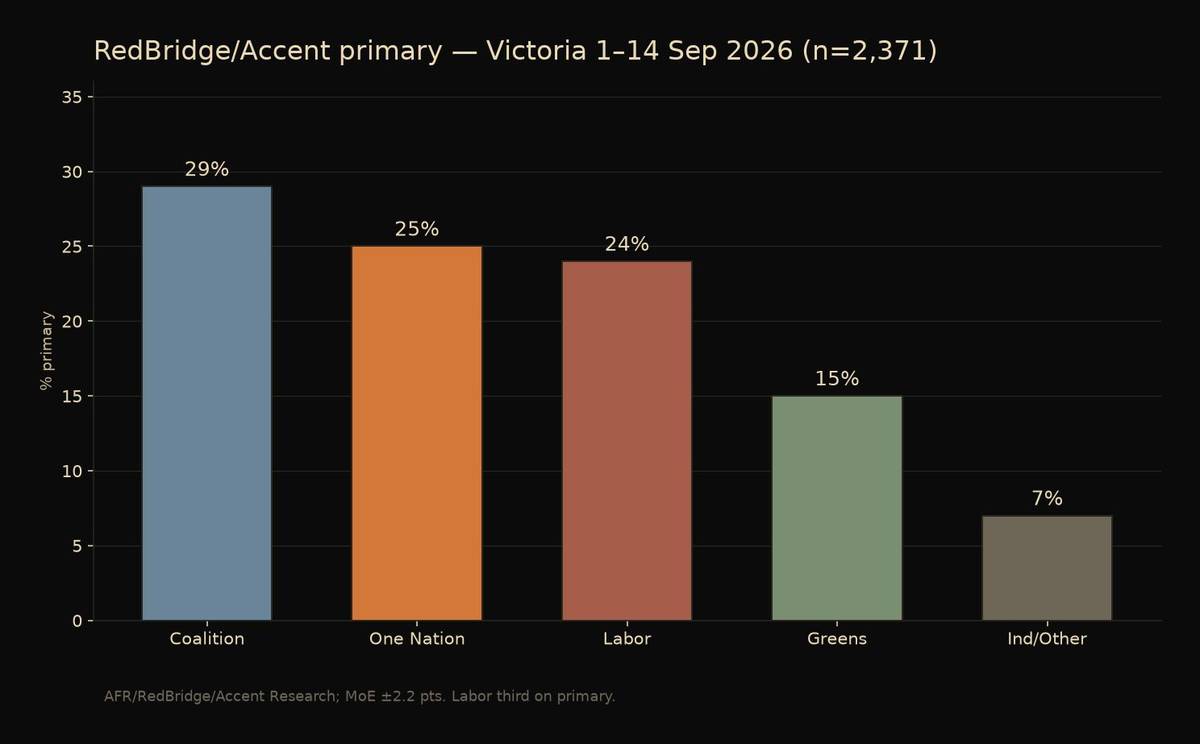
Compared with RedBridge's previous poll, Labor was up a point, One Nation up three and the Coalition down one. The Labor and Coalition moves were inside the margin of error, so don't read much into them. What matters is the shape. It's a three-way race.
Kristy McSweeney is an adviser at RedBridge Insights. She's a former political adviser, and she ran as the Liberal candidate for the WA seat of Swan at the 2022 federal election. She told the ABC Carroll was ramping up his One Nation warnings to target unhappy Labor voters who are thinking of switching.
"He's going for a fear campaign due to Labor's very low primary vote and Labor trailing those two parties consistently over polls the last six months, including post his leadership change as the third party among Liberal, Labor and One Nation," she said.
She said the pitch was aimed especially at Melbourne's west. Labor's traditional voters there are frustrated that roads, trains and services haven't kept up with fast population growth. "It is a pitch to them to say, 'If you switch from Labor, you will get a One Nation-Liberal Coalition and that represents a lot of things that you don't like in multicultural communities out there on the peri-urban fringe'," she said.
But she also said voters were starting to have doubts about One Nation. "A lot of people are saying, 'I'm starting to look at One Nation's policies for Victoria and I can't see what they're going to do for Victoria'," she said. That matters. A big statewide number isn't the same thing as a finished plan for every local seat.
Melton and the 'Red Wall'
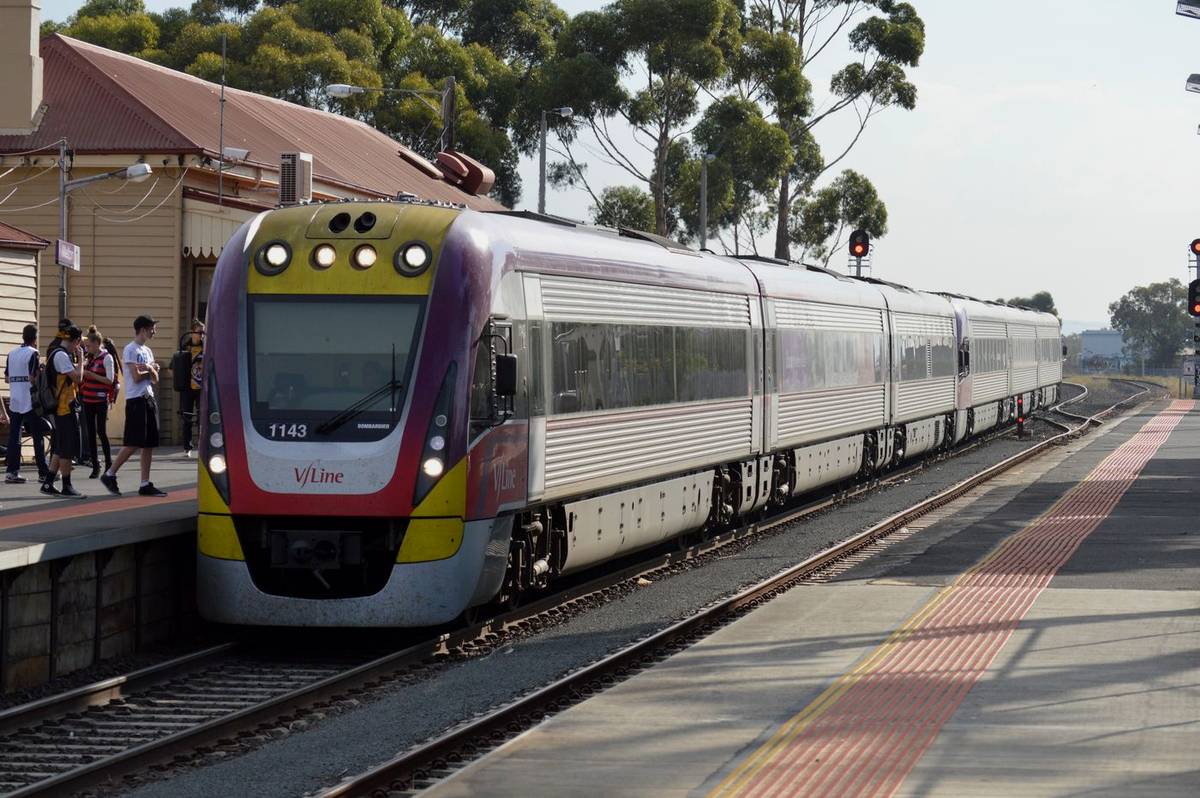
Melbourne's outer west has long been safe Labor country. People call it the "Red Wall". It takes in the seat of Melton, the nation's fastest-growing local government area, plus suburbs like Sunbury and Werribee. Labor has built a strong base there among migrant, working-class and first-home-buyer families.
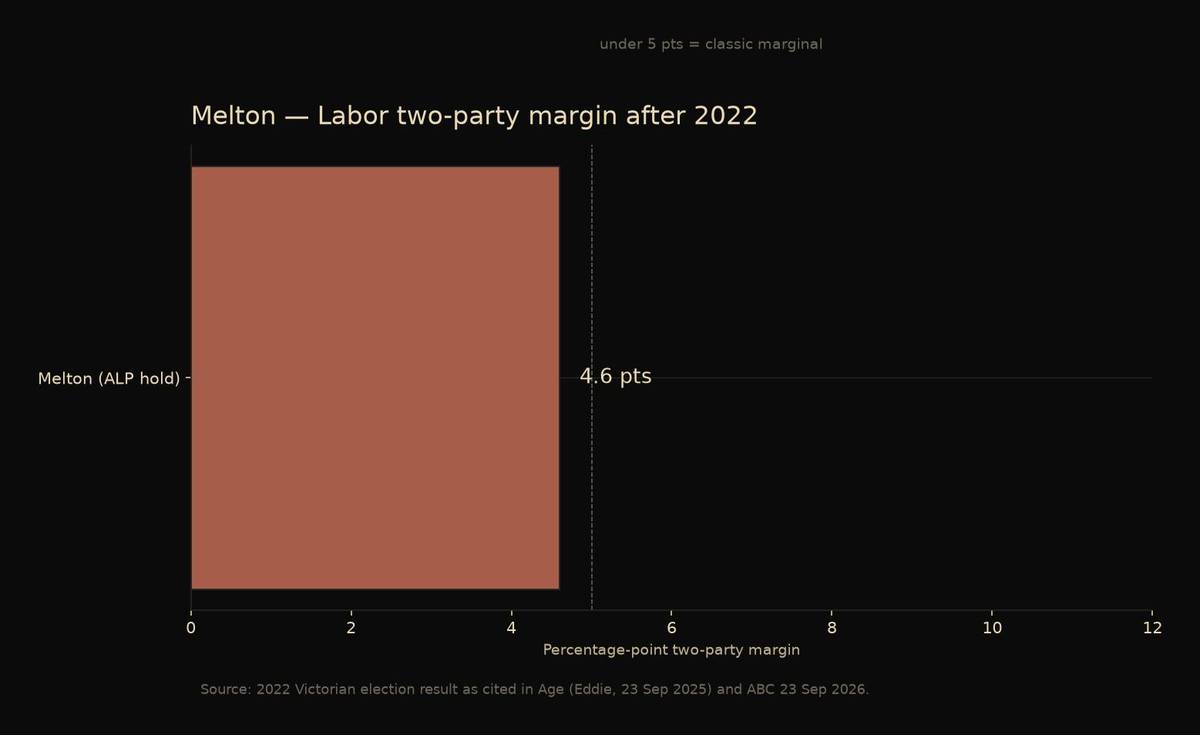
Melton is the sharpest example. Labor holds it on a 4.6 per cent margin. Roughly, that means a swing of 4.6 points away from Labor, once preferences are counted, would be enough to lose it. Labor has held the seat for more than three decades. But at the 2022 election it was the only seat in Victoria to swing against Labor. Now the long-serving Labor member, Stephen McGhie, is retiring. And there have been delays to local projects, including electrifying the Melton train line.
Put that together. A thin margin, no sitting member, anger about infrastructure, and a third party polling in the mid-20s statewide. That's how a safe seat starts to wobble.
This isn't a new worry. On 23 September 2025, a year out from the poll, Rachel Eddie at The Age flagged Melton as the most exposed seat in Labor's outer northern and western heartland once McGhie stepped aside. McGhie is a former paramedic and ambulance union secretary. He won the seat in 2018, the year of Daniel Andrews' big win that people nicknamed the "Danslide". The opposition put Melton on its target list.
One Nation has since picked Matthew Katselis as its Melton candidate. He works in logistics and coaches soccer. He's campaigning on roads, public transport, housing costs and infrastructure. Party material pointed to a Melton campaign launch in late September.
Carroll's government has tried to put money on the table. Around the time of the RedBridge poll, it announced an extra $352 million to fix potholes, with a target of 500,000 of them. It also put another $550 million toward upgrading the Western Freeway between Melton and Caroline Springs. Whether voters see that as delivery or as late cash is up to them. So far, Labor's vote in the RedBridge polls hasn't climbed out of the mid-20s.
How far things have moved since 2022
Look at the last election. In 2022, Labor won about 37.0 per cent of first-preference votes in the lower house and 56 seats. The Liberals won 18, the Nationals nine and the Greens four. One Nation's statewide lower-house vote was somewhere between 0.22 and 0.3 per cent. Basically nothing.
Going from under half a point to 25 per cent in a major poll four years later is the shock that makes Carroll's language possible. It's also why Wilson can't treat One Nation as a fringe party, even while she refuses to talk about a deal.
A second poll from the same fortnight points the same way, though the numbers aren't identical. Resolve Strategic surveyed about 1,000 people for The Age, reported around 13 September. It had the Coalition on 28 per cent, Labor on 25, One Nation on 23 and the Greens on 12.
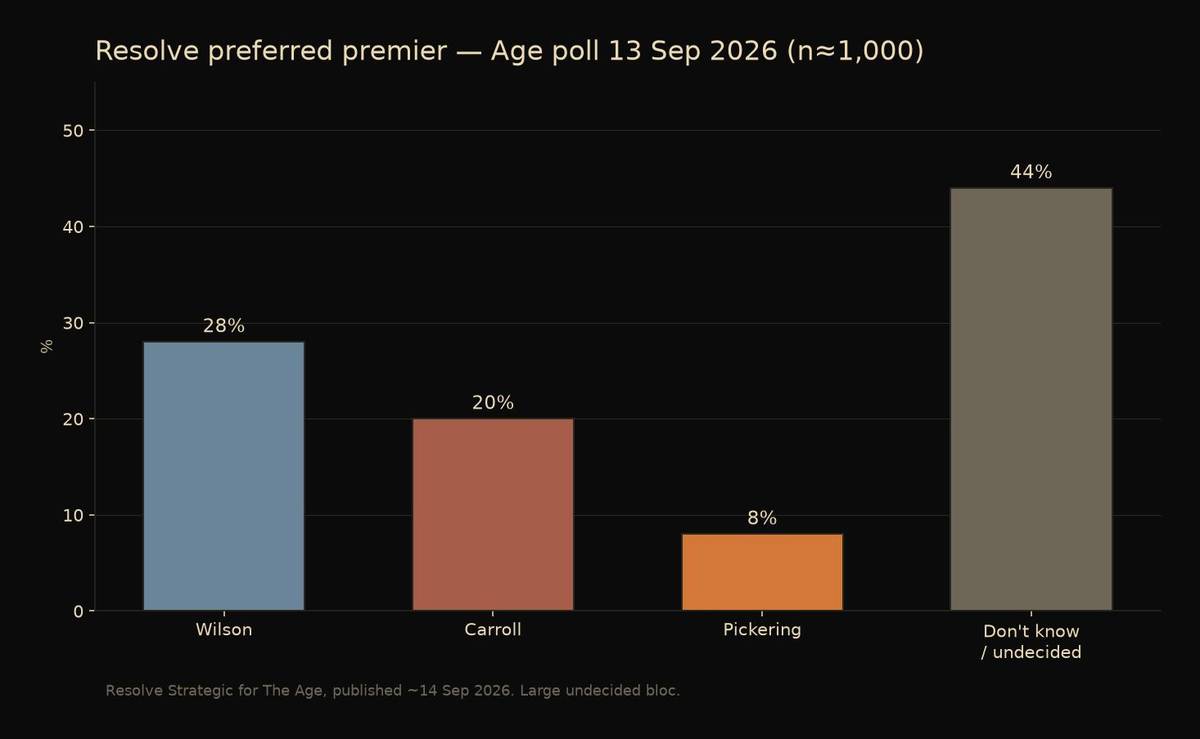
Resolve also asked who people wanted as premier. Wilson led on 28 per cent, Carroll was on 20 and Pickering on 8. About 44 per cent were undecided or didn't know. That's a huge group. It tells you this race is still soft, even though the overall shape already looks scary for Labor.
There's another way pollsters slice it, called two-party preferred. In Victoria you number the boxes on your ballot. If your first choice drops out, your vote flows to your next choice. Those next choices are called preferences. Two-party preferred shows who'd win if it all came down to two sides after preferences.
On RedBridge's version, where people chose their own preferences, the Coalition led Labor 56 to 44. In a made-up head-to-head between Labor and One Nation, Labor led 53 to 47.
Those numbers aren't a seat forecast. There are 88 separate contests, and One Nation will be running in lots of them. That breaks neat statewide stories. RedBridge director Kos Samaras has argued that three-way contests could help the Coalition in some seats if Labor falls to third on first preferences and has to rely on votes flowing from the Greens and others. That's one analyst's view, not a result.
Pickering's launch
Pickering's August launch is the other reason Carroll keeps talking about a Liberal–One Nation government. On 3 August, Hanson presented Pickering as One Nation's Victorian leader and its candidate for the lower-house seat of Pakenham. He's an army veteran, a former Senate candidate and the party's Victorian state president.
Outside The Tower Hotel in Hawthorn, about 200 protesters turned up. Victoria Police said behaviour was fine and there were no arrests. Inside, the ABC, The Guardian and The Age were denied entry to the media event. "I'm not putting up with their rubbish, I'm not putting up with their spin," Hanson said.
Pickering told reporters One Nation intended to govern in Victoria. "It's also not lost on us that this is the biggest state campaign in the party's history," he said, calling Victoria "the most fiscally and morally bankrupt state in Australian history". He put the major parties on notice. "We intend for this to be a November to remember and we are contesting to govern."
He also made clear he didn't plan to "share" government as part of a coalition with the Liberals. "We don't see it. We can win in our own right," he said. "Let's take this state back."
So there are three stories going at once. Carroll warns about a Liberal–One Nation government. Pickering says he won't be Wilson's junior partner. Wilson says she isn't talking to him and wants to govern alone. They can't all be right, and one night in November will sort it out.
Hanson said in a statement that the party planned to run candidates in every Victorian seat. "We'll have a talented team of people intent on restoring Victoria and kicking out the tired and toxic Labor government which has run this state into the ground, getting away with it thanks to a weak Liberal opposition," she said.
On the idea of holding the balance of power, meaning enough seats to decide who governs, she was blunt. "If we can get government, or even the balance of power, it's going to make one hell of a difference in this state," she said.
Pickering said One Nation's policies would come "within a month", with farmers, crime and corruption expected to feature. The party also named six upper-house candidates that day. They were Liberal defector Colleen Harkin, Please Explain cartoon creator Mark Nicholson, lawyer Aaron Sanford, Natalie Adams, Geelong councillor Chris Burson and Fiona Lopez. Sitting Northern Victoria MP Rikkie-Lee Tyrrell will run again.
Pickering has faced personal scrutiny since then. He's admitted to illicit drug use and drink-driving when he was younger, and he says he made mistakes and has changed. That's background here, not the main story. But it's part of why Labor and other rivals keep picking at his past while his party's vote stays high.
Up north in Murray Plains
Now leave Melbourne and head north. On Saturday, 19 September, ABC News published a story from the seat of Murray Plains called "Rural voters flirt with electoral change amid rising anger over roads and renewables".
Murray Plains has been a Nationals stronghold since the 1980s. It runs more than 200 kilometres along the Murray River, from Swan Hill to Echuca and Kyabram. The long-time Nationals MP, Peter Walsh, is retiring after 24 years.
The Nationals have picked Brett Hosking. He's a fifth-generation farmer from Quambatook and a former president of the Victorian Farmers Federation, the state's main farm lobby. One Nation has picked Garner Smith, the Gannawarra Shire mayor. He's an economist, farmer and small-business owner who grew up on a dairy farm between Leitchville and Gunbower. The Greens are running Zoe Cook. When the ABC story ran, Labor still hadn't named a candidate.
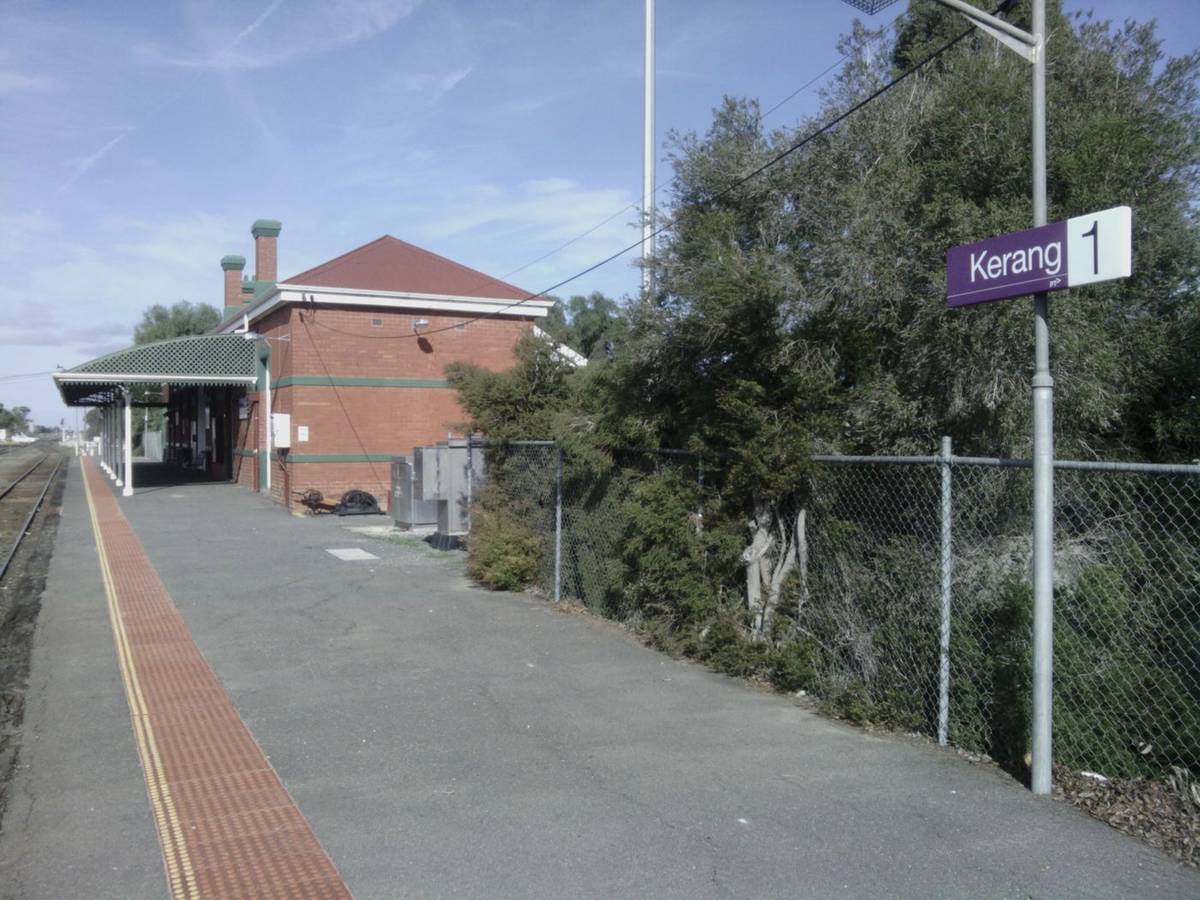
On Monday, 21 September, the ABC's Central Victoria news briefing boiled the fight down for locals. Voters are weighing up change. The Nationals MP is retiring. It's Smith for One Nation against Hosking for the Nationals. And the anger is about roads, renewable energy projects and a sense that the city gets looked after and the country doesn't.
That's how it sounds in Kerang. It's not a Melbourne talking point. It's power lines, crumbling roads, and whether the Nationals still own this irrigation country when One Nation is running the local mayor.
A big part of this is VNI West. It's a planned high-voltage transmission line, a major power line that would carry electricity between New South Wales and Victoria. A lot of landholders and towns along the route are against it.
Smith's One Nation candidate page says he's been at the front of the fight against VNI West and against the government buying back water from farmers. It says he's also pushed for local towns to get real benefits from renewable projects and mineral-sand mines.
The ABC reported on 19 September that both One Nation and the Coalition have pledged to scrap VNI West if they win. Some earlier regional coverage had the Nationals talking about pausing it for reviews rather than scrapping it outright, along with restoring landholders' rights to challenge decisions at VCAT, the state's planning tribunal. Either way, when both main contenders promise to stop the same power line, the fight shifts to trust. Who do voters actually believe will do it?
Smith's background doesn't fit the easy label of a protest candidate. In the mid-1990s he wrote policy for the National Party. He worked for Nationals Senator Julian McGauran, advised Bill Baxter when he was roads and ports minister, and held office in the Young Nationals. Then he went back to Leitchville for more than 25 years of farming and business before becoming mayor and joining One Nation. Hosking's background is classic Nationals farm leadership. In Murray Plains, those two country résumés run head to head.
There's also the question of Smith's council job. On 19 August, the Riverine Herald reported that he had no immediate plan to step down as mayor or councillor, pending talks with other councillors and the shire's chief executive. A month later, the ABC reported that Smith told a council meeting he'd step aside as mayor on 30 September and ask for his council allowance to be suspended. He'll stay on as a councillor. Under Victoria's Local Government Act 2020, councillors don't have to stand down to run for state parliament, but they must leave council if they're elected.
The key dates are set. Enrolment closes at 8pm on 3 November. Candidate nominations run from 3 to 9 November. Early voting opens on 18 November. Election day is 28 November.
So why does Murray Plains belong in a story about Carroll's fear? Because his warning is statewide, and One Nation isn't only a problem for Labor in the suburbs. If One Nation can hurt the Nationals in safe country seats while also eating into Labor's vote in the west, the numbers after the election get strange.
Wilson's path to a majority needs the Coalition to hold its own seats and win Labor ones. Pickering's path needs a 25 per cent vote to turn into real seats. Carroll's nightmare needs any result where Wilson has to lean on One Nation to govern. What's happening in Kerang feeds all three.
The national picture, briefly
You'll probably hear about this, so here it is. On 29 August, One Nation won the Secret Harbour state by-election in Western Australia. On 9 May, One Nation's David Farley won the federal seat of Farrer, in New South Wales, at a by-election. Kerang is only a short drive from the NSW border.
Those wins are why the major parties now treat One Nation winning seats as something that can really happen. But they're not Victoria's election. Different states, different contests, same party riding a wave of anger at the big two.
Carroll's record and the money
Since July, Carroll has tried to put distance between himself and Allan. His first big move was a royal commission into alleged corruption and crime in Victoria's construction industry, including the government's big infrastructure program. The government also talked up stronger powers for IBAC, Victoria's anti-corruption watchdog, and a path to a special prosecutor for evidence from the royal commission.
He's tried to get back to the basics. That means roads, crime, cost of living and infrastructure in the outer suburbs. Recent reporting also noted he backed wider police powers to search for knives, under a Victorian version of "Jack's Law".
Labor still carries a heavy debt load. The 2026–27 budget forecast net debt for the core of government rising from $175.6 billion in 2026–27 to $199.3 billion by June 2030. Treasury argued that debt starts shrinking as a share of the economy over the next few years, and pointed to forecast surpluses. The Coalition keeps attacking on debt anyway.
Neither number tells a Melton commuter whether the train line will be electrified. Neither tells a Kerang farmer what happens to VNI West. But both shape the mood that makes a 25 per cent One Nation vote possible.
Roy Morgan research, reported in round-ups last month, found voters linked a possible Labor government with worries about corruption and integrity, money management and state debt, crime, and more of the same problems from the Andrews and Allan years. Their worries about a Coalition government included cuts to the public service, internal fighting, a lack of policy detail and, tellingly, the chance of more One Nation influence.
That last worry is exactly what Carroll is trying to stir up. Wilson's job is to convince voters she can win clean without One Nation.
Across August and September, Wilson's line has been steady. She says the Liberals and Nationals can govern without One Nation's support. She's ruled out an alliance. And she's said the Coalition can win without relying on a One Nation preference deal.
Why preferences matter so much
In Victorian lower-house seats, if nobody gets more than half the first-choice votes, preferences decide the winner. Parties hand out how-to-vote cards to steer them. A big One Nation vote could flow mostly to the Coalition, mostly to Labor, or split differently from one polling booth to the next. Statewide polls don't show that.
McSweeney's point about voters not knowing what One Nation would do for Victoria is the gap Pickering promised back in August to fill within a month. If local candidates in Melton and Murray Plains are more popular than the party's actual policy offering, that could cut either way on the day.
Pollsters have been modelling One Nation into parliament for a while. In the middle of the year, YouGov ran what's called an MRP, a model that uses a big national survey to estimate results seat by seat. It was paid for by the pro-Treaty group Common Threads and covered by The Age in August. It showed a hung parliament, with the Coalition short of a majority and One Nation winning a double-digit number of seats.
Election analyst Kevin Bonham's summary of that YouGov run had first-preference votes at roughly Labor 23, Coalition 26, One Nation 24, Greens 13 and others 14, with One Nation winning somewhere in the teens of seats. It's a model, not a ballot. It shows serious pollsters see One Nation in the chamber. It doesn't predict 28 November.
The upper house could matter too, even if nobody wins a lower-house majority. One Nation already has a foothold in the Legislative Council through Tyrrell. Roy Morgan estimates through August had One Nation winning a double-digit number of upper-house seats in some scenarios. A Coalition majority in the lower house with a hard-to-manage upper house is one outcome. A hung lower house with a strong One Nation upper-house bloc is another. Carroll's warning squashes all of that into one line.
A fear campaign, or a warning?
Carroll's words have an audience inside Labor too. Unhappy voters in Melton or Sunbury need a reason to come back that isn't another lecture about being wrong. Scaring people about who might end up in Cabinet is an old tactic in Australian politics. Whether it still works when One Nation is polling about the same as Labor is the big test.
McSweeney called it a fear campaign. Carroll would call it a warning. Wilson would call it a distraction from Labor's record.
Here's what Wednesday's ABC report didn't show. There's no signed deal between Wilson and Pickering, because none is on the record. Nobody showed them sitting down to negotiate. What the report did show was Carroll naming his fear, Wilson rejecting the premise, and a poll with Labor in third. That's enough to shift an election argument. It isn't proof of a deal.
Wilson's refusal to engage is disciplined. But it could become a problem if the numbers on election night are messy. Australian leaders have ruled out deals before the votes came in. Sometimes that holds. Sometimes the result forces a rethink. For now, all we have is what she said to 7.30. She wants a majority, and she hasn't spoken to Pickering.
Pickering's "we can win in our own right" also needs a reality check. Governing alone means winning at least 45 of the 88 seats. A 25 per cent vote could be a base for that if the field splits enough. Or it could just win a handful of seats on the crossbench, the MPs who sit outside government and the main opposition. Hanson's August comment kept both options open. Pickering talks up governing. Carroll warns about One Nation's influence. Wilson only talks about a majority.
Allan's shadow
Carroll's takeover in July was Labor admitting Allan had become a liability. Before the switch, Resolve and other polls through 2026 showed Allan well behind Wilson as preferred premier. Carroll's early polls haven't lifted Labor back to 37 per cent. RedBridge still has Labor on 24. The leadership change gave Labor a new messenger. It hasn't given it a better vote yet. That helps explain why Carroll is reaching for a line about being terrified, instead of relying on a honeymoon.
Wilson beats Carroll as preferred premier in the Resolve poll, 28 to 20. But with 44 per cent undecided, most people haven't settled on who should lead. Pickering is on 8 per cent as preferred premier, while his party polls 23 to 25 per cent. That's a familiar pattern. The party brand is much bigger than its local leader. Hanson is still the national face. Pickering is the Victorian vehicle. Carroll is aiming at the brand, and at what happens after the election.
Three-cornered contests
To govern alone, Wilson needs to win a lot of seats off Labor. And Hanson has promised One Nation will run in all 88 lower-house seats. That means three serious parties on the ballot in places that used to be a two-horse race.
In some outer-suburban booths, a strong One Nation vote could push Labor into third and change where preferences go. In some country booths, One Nation could eat into the Nationals' vote and drag the Coalition into a preference fight it used to avoid. Samaras thinks three-way contests could help the Coalition. Another view is plain chaos that helps whoever survives the count. RedBridge's 29–25–24 is the statewide headline. Individual seats won't all look like that.
Sunbury and Werribee are part of the same Red Wall conversation, even if Melton has the thinnest margin. The complaint across the west is the same. Population grew faster than trains, freeway ramps and services. Labor was in government through that boom. One Nation wasn't. The question is whether voters blame the party in power, or both major parties, which is how One Nation prefers to frame it.
Carroll is trying to make it a two-way choice again. Labor, or a Liberal–One Nation government he says would attack working people. Wilson offers a different choice. A Coalition majority, or more Labor. Pickering rejects both and asks for a One Nation government.
Crime and cost of living sit in the same mix. Knife-search powers and cost-of-living pressure feed the back-to-basics message Carroll wants. One Nation's August focus on farmers, crime and corruption overlaps with that on purpose. When parties fish in the same pond, trust decides who gets the catch.
There's also fatigue with big building projects. Resolve work reported alongside the September polls found nearly half of people wanted the Suburban Rail Loop paused or cancelled, against about a quarter who wanted it to go ahead as planned. That's the same frustration as Melton's train complaint and Kerang's anger about renewables. Carroll owns the projects he keeps going. Wilson attacks the ones she'd change. One Nation attacks the politicians who approved them all.
The Age's 2025 story on retirements also named Bayswater MP Jackson Taylor, who's stepping aside on a 4.2-point margin. Bayswater is in Melbourne's east, a different kind of seat where the Liberals hope to win back ground. But it shows Labor is defending several thin margins with new candidates. Melton stays the focus here because it's the seat the ABC and RedBridge linked to the One Nation threat.
Expect more scrutiny of candidates as nominations close. One Nation has expanded fast in Victoria, and that invites vetting. Labor and the Liberals will go digging. Katselis and Smith will face local questions about the kind of policy detail McSweeney says voters are already asking for. The official list of who's running will be clear once nominations close on 9 November.
The video
The video with this story is ABC 7.30's segment "Is Labor's 'red wall' under threat from One Nation in Victoria?", posted on the ABC News In-depth YouTube channel.
If you're outside Victoria
This isn't a federal election. Jess Wilson isn't Sussan Ley. Ben Carroll isn't Anthony Albanese. Warren Pickering isn't Pauline Hanson, though Hanson is still One Nation's federal leader and was at his launch. The November contest is about who runs Victoria from Spring Street. State debt, the Suburban Rail Loop and VNI West are state fights. One Nation's wins in Farrer and Secret Harbour only add to the mood.
Where it stands
So here's where things are. In Wednesday's ABC report, Carroll said One Nation terrifies him, and warned a Liberal–One Nation government is a real risk after 28 November. Wilson says she wants a Coalition majority and hasn't spoken to Pickering. Pickering says One Nation is running to govern, not to share.
RedBridge has the Coalition on 29, One Nation on 25 and Labor on 24. Melton sits on a 4.6 per cent margin with its Labor MP retiring. And in Murray Plains, it's the Nationals against One Nation in a fight over roads and VNI West around Kerang.
Carroll will keep asking Labor-leaning voters if they want to risk the government he's describing. Wilson will keep asking for a majority and refusing to talk about One Nation. Pickering will keep telling Victorians One Nation is a real option for government, not just a protest vote. Melton will keep arguing about trains and roads. Kerang will keep arguing about power lines and potholes.
The premier's line is short enough to fit on a leaflet. "One Nation terrifies me." Victorians give their answer on 28 November.
The paper
Comments
No notes on this story yet.
Sign in to comment