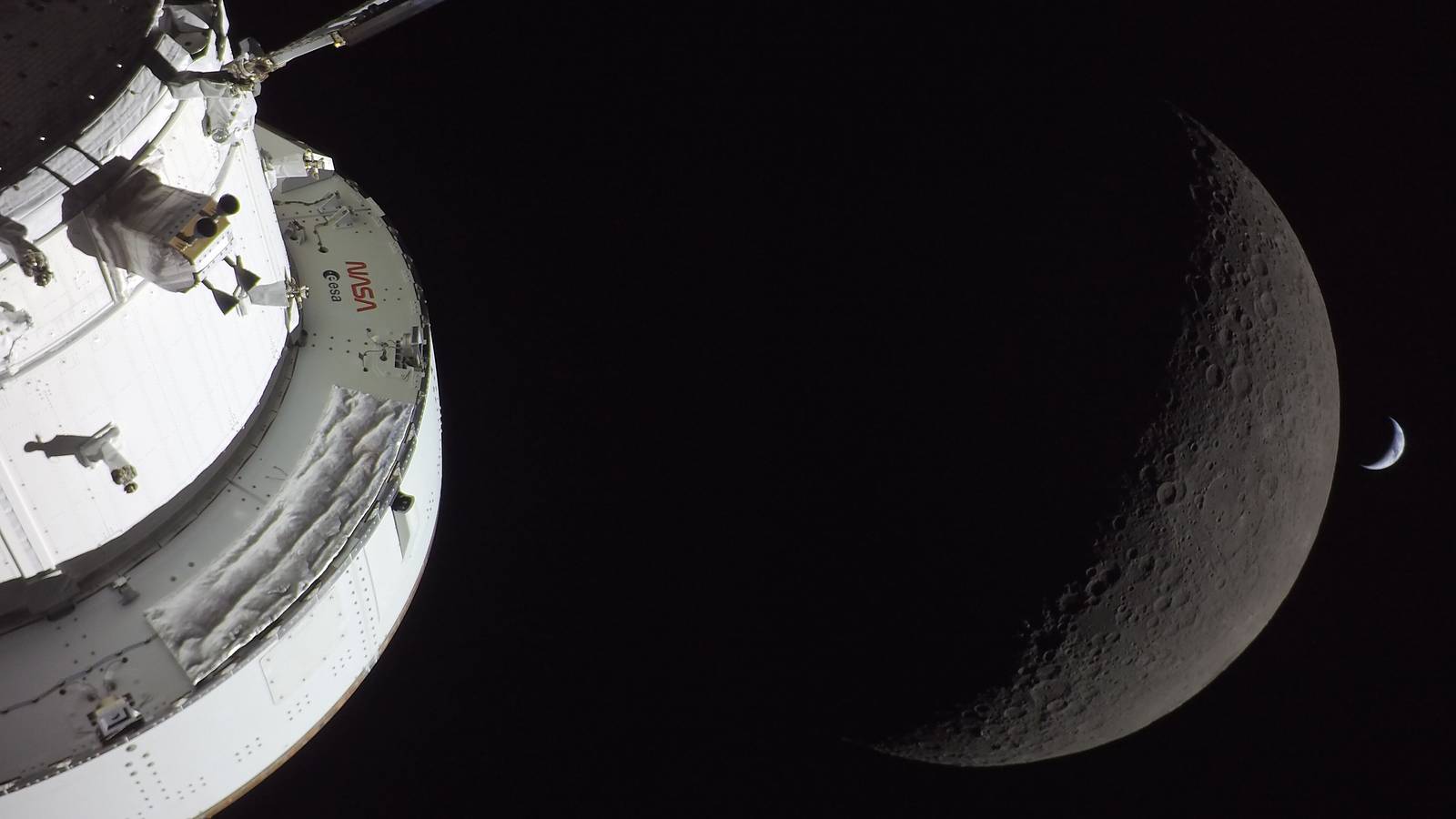

Countries that have signed NASA's Artemis Accords, the shared rules for peaceful exploration of the Moon and beyond, will meet on Monday 5 October at the International Astronautical Congress in Antalya, Türkiye. They'll come to the table 76 strong. NASA says they'll work on support for emerging space nations and on spreading recommendations for cutting debris on the Moon.
That headcount grew fast. Four nations signed in the space of five days in September, Albania, Croatia, Côte d'Ivoire and San Marino, and NASA marked the milestone in a release on 28 September.
Four signings in five days
The run kicked off in Washington. Albania signed on Monday 21 September at NASA's headquarters, becoming the 73rd signatory. Foreign Minister Ferit Hoxha signed for his country, with Albania's ambassador to the US, Ervin Bushati, and Connor Tomlinson, the State Department's Deputy Assistant Secretary for Space and Environment, taking part. "It is a great honor for Albania to join the growing community of nations that have signed these important Artemis Accords," Hoxha said. "By taking this step, Albania affirms its commitment to peaceful, transparent, sustainable, and cooperative exploration of space." NASA Deputy Administrator Matt Anderson welcomed the country with a nod to history: "The relationship between our nations goes back more than a century. Today, we extend that partnership into space."
Croatia followed on Wednesday 23 September at a ceremony in Zagreb, as signatory number 74. Science, Education and Youth Minister Radovan Fuchs signed. "Croatian scientists and companies are demonstrating growing interest in the space industry," Fuchs said. "We have therefore decided to expand our international cooperation by joining the Artemis Accords." US Ambassador Nicole McGraw and Gregory Mann, NASA's Europe representative, were there, and Anderson spoke in pre-recorded remarks.
Côte d'Ivoire signed on Thursday 24 September in Abidjan, during the Africa Space Expo, ASPEX 2026. Minister of Higher Education and Scientific Research Adama Diawara signed as the 75th signatory, with the State Department's chargé d'affaires, Junaid Munir, as witness. Tidiane Outtara, Director General of the Space Agency of Côte d'Ivoire, called it "a great achievement, and important for Côte d'Ivoire's ambitions and for the rest of the African Union members." Anderson said: "The United States and Côte d'Ivoire already cooperate on Earth. Today, we expand that partnership beyond it."
San Marino wrapped up the week on Friday 25 September, at a ceremony in nearby Rimini, Italy. Minister of Industry and Technological Research Rossano Fabbri signed for the 76th spot, with Mann and the US Consul General in Florence, Joseph Tordella, at the ceremony. "We fully share the principles and values expressed in the Artemis Accords," Fabbri said, "and we are convinced that the signatory states united under the Accords will make a tangible contribution to promoting international cooperation in space and ensuring the use of space for peaceful purposes."
Small countries, real space links
None of the four is a big space power, but NASA pointed to a track record for each. Albania launched two Earth-observation satellites, Albania-1 and Albania-2, in January 2023 from NASA's Kennedy Space Center in Florida. It's also hosted local events for NASA's Space Apps Challenge, the global hackathon built on open NASA data.
Croatia launched its first satellite, CroCube, on 21 December 2024. Côte d'Ivoire has worked with NASA since 2019 on Earth observation and geodesy, which is the science of measuring Earth's shape, gravity and movement. It set up its own national space agency in 2025. NASA says that agency coordinates national work on Earth observation, space weather, astronomy, satellite navigation and communications.
San Marino is one of the smallest countries in the world. Anderson said it "joins a growing coalition of like-minded nations committed to the peaceful, transparent, and responsible exploration of space," and that it "is already looking toward that future."
What signing actually means
The United States, through NASA and the State Department, launched the Artemis Accords in 2020 with seven other founding nations. They're a set of practical principles, not a treaty. Signatories promise to explore peacefully and openly, to help those in need, to make scientific data available, to stay out of each other's way, and to protect historically important sites and artefacts by working out best practices.
NASA says the group has grown from an informal coalition into a structured community. Under a working framework adopted in 2024, signatories meet twice a year. One meeting is a technical workshop, and the other is a principals' meeting during the International Astronautical Congress, with virtual sessions in between. NASA says they've agreed recommendations on non-interference, interoperability, scientific data sharing and registration practices.
This year's two workshops were hands-on. NASA says signatories went over their planned lunar landings and orbital missions. Experts from dozens of countries worked through real examples of making mission information easier to find, use and share, from releasing lunar science data to common standards that cut interference between missions.
The numbers behind the milestone
NASA's release puts the growth in context. It says nearly 40% of the world's nations are now working with NASA under the accords, and nearly two-thirds of the countries that signed the 1967 Outer Space Treaty have also signed the Artemis Accords.
NASA Administrator Jared Isaacman said: "Our momentum reflects a growing commitment to peaceful, responsible exploration and a shared understanding that the future in space will be shaped by those willing to lead." He added that "nearly one-third of all signatories have joined since the start of President Trump's second term."
Next stop, Antalya
The Artemis Accords Principals' Meeting at the IAC in Antalya opens on Monday 5 October. Anderson will co-chair it with Major General Roberto Melgar Sheen, director of Peru's space agency, CONIDA.
Signing also opens practical doors. NASA says it has invited every signatory to take part in its return to the Moon through scientific payloads, technology demonstrations, CubeSats and other capabilities, as part of its planned Moon Base. That Moon programme is moving on several fronts. The Artemis II crew flew around the Moon in April and have since received the Congressional Space Medal of Honor, and Artemis III's four RS-25 engines were installed at Kennedy on 1 September.
NASA says it expects more nations to join in the months and years ahead. With four signings in a single week in September, the list has been growing quickly. Monday's meeting in Antalya will be the first chance for the four newest members to sit at the table with the rest.

The paper
Comments
No notes on this story yet.
Sign in to comment