Amplified · Christian heavy
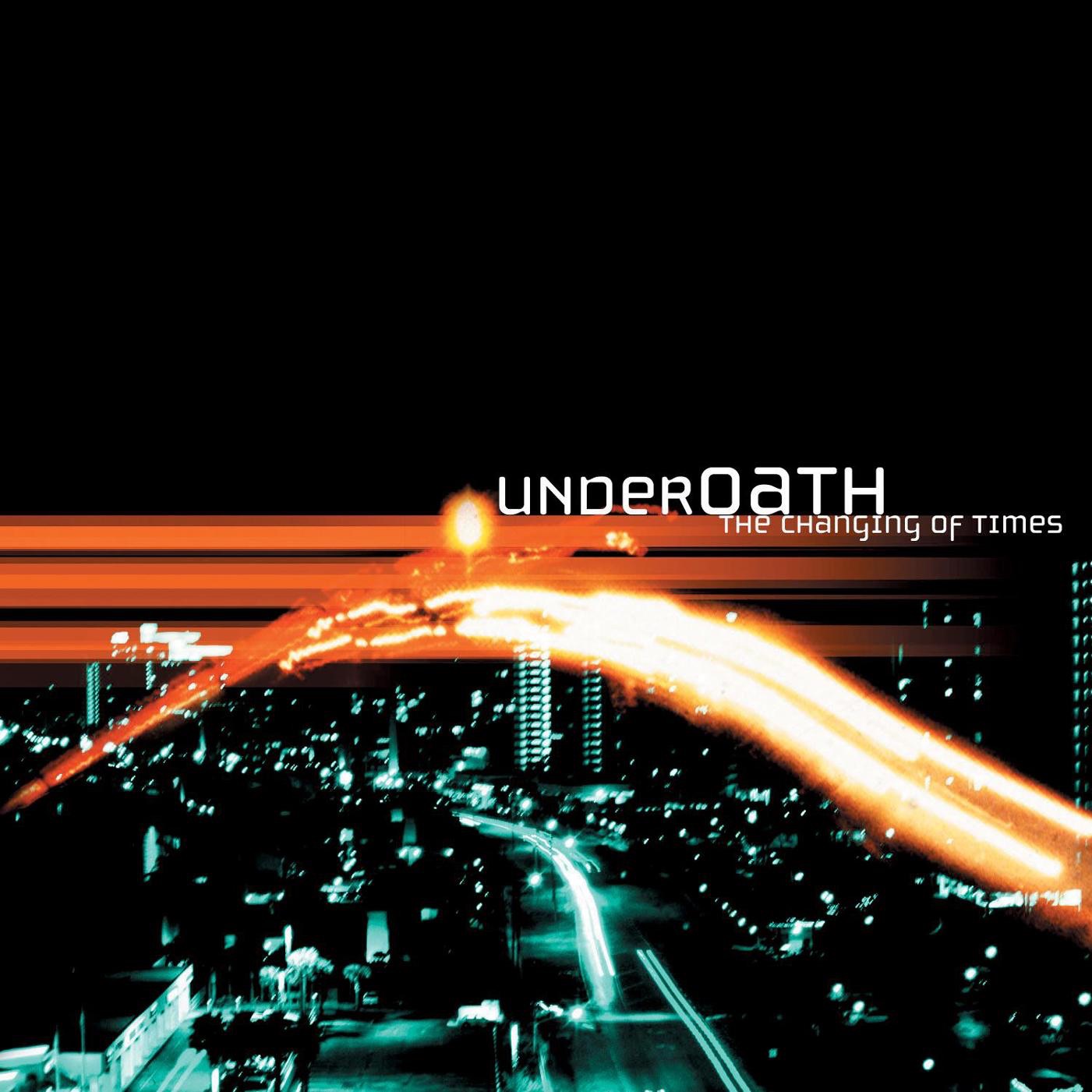
The cover of The Changing of Times (Solid State Records, 2002).
The cover of Underoath's 2002 album The Changing of Times. Image: Solid State / Capitol Christian Music Group.
The Changing of Times — Underoath
Sign in to rank 1–10.
The Changing of Times is the third album by Underoath, the Christian band that started in Ocala, Florida, in 1997 and later grew into one of the biggest names in heavy music. Solid State Records released it on February 26, 2002. It's ten songs in under thirty-six minutes, produced by James Paul Wisner, and it's the last Underoath album with Dallas Taylor screaming up front. If you only know the band from the MTV2 years, this is the record where you can hear that future being built in real time.
The story
Underoath spent their first years as a rough, metal-leaning hardcore band on Alabama's Takehold Records. Act of Depression came out in 1999 and Cries of the Past in 2000. Then the lineup moved. As Jesus Freak Hideout's Steven Powless tells it, guitarist Corey Steger and bassist Matt Clark left after Cries of the Past, and Tim McTague came in on guitar. McTague would stay for the band's big run. The album nearly came out on Takehold. But when Tooth & Nail bought Takehold, it was licensed to Solid State instead. According to Solid State, it became the label's best-selling debut.
The players here are Taylor on lead vocals, McTague and Octavio Fernandez on guitar, Christopher Dudley on keyboards and samples, and Aaron Gillespie on drums. It's also the first Underoath record where Gillespie sings, according to Alternative Press. Then Taylor left during the 2003 Warped Tour. Spencer Chamberlain took his place, and Wisner produced They're Only Chasing Safety in 2004. That album went gold. The Changing of Times is the bridge between the two bands that shared one name.
The sound
The reviews keep coming back to the same idea. This thing is all over the map, on purpose. Chris Gramlich at Exclaim! heard "black metal runs, heavy breakdowns, grindcore spasms," then melodic choruses, "epic keyboard sweeps," acoustic guitars, piano and "the odd '80s electro-pop moment," and said it was all "done seamlessly." He called it "excellently constructed, produced and presented," with one warning. It may be too heavy for some, and the new elements could throw the band's older fans.
Ink 19 heard much the same, comparing them to the Canadian band Grade and saying the album is "all over the map." Reviewer Daniel L. Mitchell singled out "A Message for Adrienne," which has a Jawbox feel until the singer starts "screaming like he's being murdered." The same review praised the recording, saying the clean production lets every palm-muted note ring true and doesn't bury the bass.
Dudley is the wild card. At Teeth of the Divine, Stacy Buchanan wrote that his keyboards range from samples to "straight out of the '80s cheesy synth sounds" to "lush orchestra and piano pieces," and that "for the most part they work." On AllMusic, Tom Semioli wrote that Dudley's "orchestral textures soften the blow" of Taylor's screams, while Gillespie's "lush multi-tracked backing vocals" cushion the darker parts.
The heart of the record
"When the Sun Sleeps" opens the album, and it's the one with an official music video. Gillespie and Taylor split the vocals almost evenly. Powless says it "could have fit seamlessly" on They're Only Chasing Safety, and that's the best way to hear it. It's the first draft of the sound that made them famous. Semioli quoted a line from it as a taste of the record's doom and gloom: "The romance has been dead for years / But I've been afraid to dig the grave."
From there, "Letting Go of Tonight" is under two minutes and hits fast. Powless hears it as a song about someone, and here it sounds like the Lord, who made the singer feel alive when death was on his mind. "A Message for Adrienne" is the heaviest song here and the closest thing to the old band. "Never Meant to Break Your Heart" leans toward melodic hardcore. The title track mixes old and new with a breakdown Powless calls "catchy-as-all-getout." "Angel Below" is a song of rebellion against Satan. Buchanan picked "Short of Daybreak" as the one that should sell a new listener, with "all the elements" in place.
Then there's "Alone in December." Buchanan heard a slower song that's all about emotion and melody, with piano and lush synth. It swells into a climax where Taylor tearfully screams "God take me because I hate me!" Powless called it "truly a moving moment," and it is. Much of the album grew out of a rough stretch in Taylor's life. Powless writes that his fiancée left him, came back, then changed her mind while he was on the road. So yes, there's a lot of heartbreak here. But the faith keeps breaking through the hurt, and that's what makes these songs more than angst. The short closer, "814 Stops Today," ends the album and gave the band the name of its publishing company.
What the critics said
Jesus Freak Hideout gave it five stars. Powless called it "a masterpiece," and said it stands with Cries of the Past as one of the two "tallest colossi" in the band's catalogue. He wished Taylor's deep death growl showed up more than it does, but said the emotion in the screams nearly makes up for it. Mark Broomhead at Cross Rhythms praised the production, musicianship and songwriting, and said the band "push hardcore/metal beyond its limits." His one complaint was that the vocals "grate a bit after a while." Semioli was cooler, calling it "for hardcore genre fans only," but still "not necessarily a bad choice."
The main knock comes from Buchanan. Some songs feel thrown together, and they downshift "right when you're rocking out to a riff or getting lost in a melody." That's fair. A few transitions here stop the momentum dead. Years later, Alternative Press counted it among the scene albums of 2002. Looking back, this is the record that brought in the melodic hooks and structured choruses that became central to the band.
The verdict
The Changing of Times is a transition record, and it sounds like one. Some of it is still a black metal band in hardcore clothes. Some of it is already the band that would sell gold with Define the Great Line. The joins show, just as Buchanan said. But the best songs here, "When the Sun Sleeps," "A Message for Adrienne" and "Alone in December," hold up next to anything the band did later. And Taylor's raw, bleeding performance gives the album something the slicker records never quite had. Start with the video for "When the Sun Sleeps," then play it top to bottom. It's under thirty-six minutes, and it's where Underoath became Underoath. You can find more on the band on our Underoath page.
8/10
If this story helped, you can help keep the paper going: Support the paper.



Notes
Notes
No notes on this story yet.
Sign in to comment