WebAssembly (WASM) is a binary instruction format for a stack-based virtual machine. Compilers emit it as a portable compilation target — not a language you usually write by hand for whole apps.
WebAssembly · Lesson 1 · On the house
What WebAssembly is
Binary format, portable target, browsers and runtimes; .wat vs .wasm; WASM vs JS. Lesson 1 is free — on the house.
Lessons · WebAssembly · Lesson 1 of 10 · On the house
What WebAssembly is
Binary format, portable target, browsers and runtimes; .wat vs .wasm; WASM vs JS.
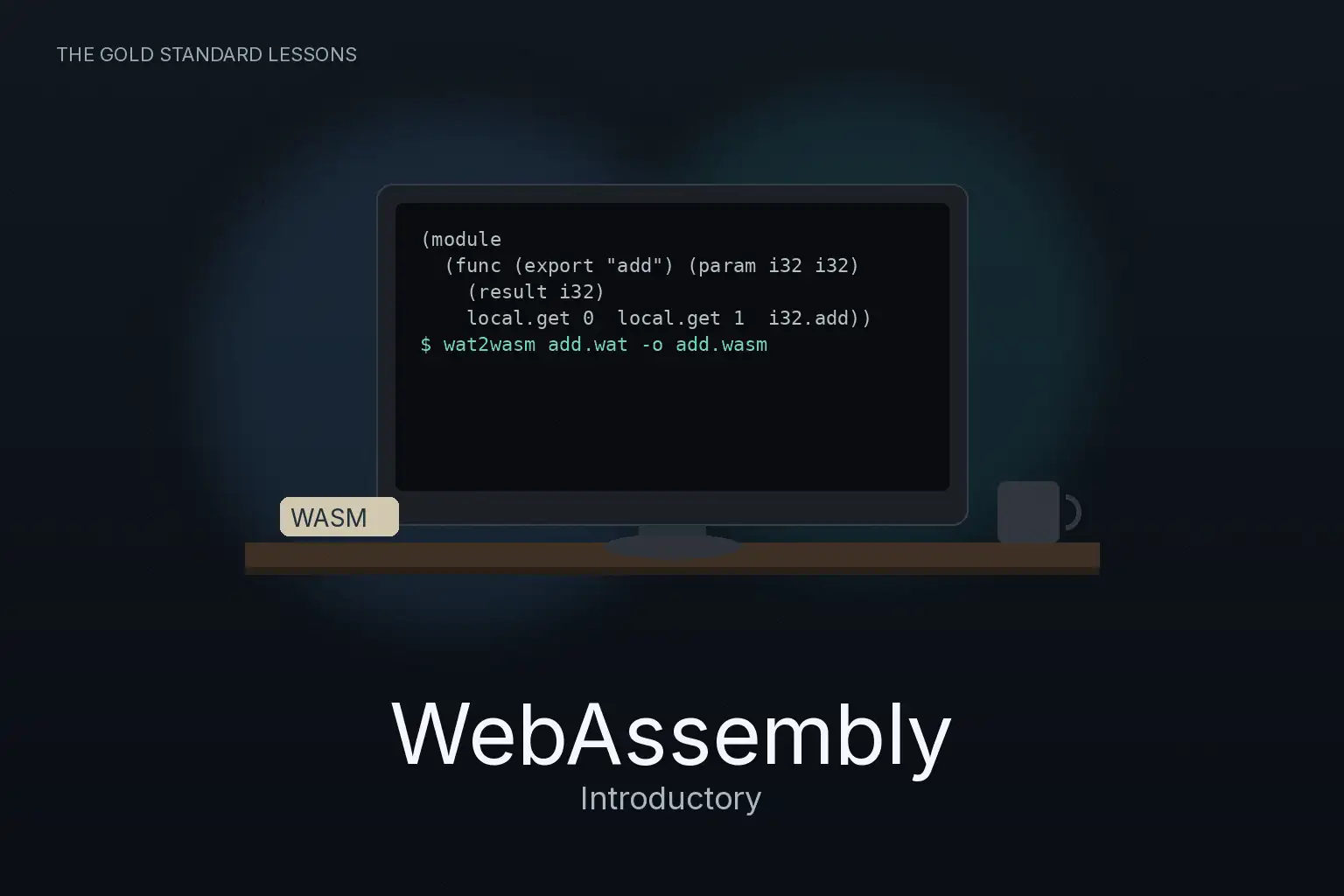
Engines run .wasm modules in browsers (Chrome, Firefox, Safari, Edge) and outside them (Wasmtime, Wasmer, Node’s WebAssembly API). Same bytecode, different hosts.
JavaScript stays the browser’s dynamic language for DOM and glue. WASM shines for CPU-heavy, predictable code compiled from C, C++, Rust, and others. They cooperate: JS loads and calls into a module.
Text format is .wat (S-expressions humans can read). Binary is .wasm (what engines load). Convert with WABT: wat2wasm and wasm2wat. Magics start with bytes \0asm (U+0061 ‘a’, etc.).
Misses: treating WASM as a JS dialect, editing .wasm in a text editor as if it were source, or assuming WASM replaces HTML/CSS.
what-wasm
;; add.wat — text format
(module
  (func (export "add") (param i32 i32) (result i32)
    local.get 0
    local.get 1
    i32.add))
Quiz
What is WebAssembly primarily?
Quiz
Which file is the binary engines load?
Quiz
What is .wat?
Quiz
How do WASM and JavaScript relate in the browser?
Check
Match the still for: What WebAssembly is.
Open-book: the answers are on this page. Pass every quiz and check (5) to mark the lesson done. This visit: 0/5.