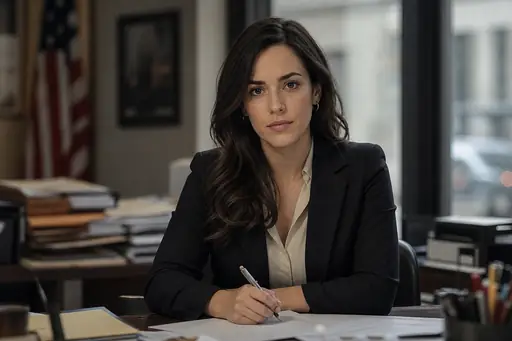
CNN, MS NOW and Politico went to federal court in Washington on Monday, 21 September, after the White House took away their reporters' hard passes. They say it breaks the First Amendment. The judge on the case is the same Trump appointee who restored CNN reporter Jim Acosta's press pass in 2018.
Here's what happened. President Trump announced a ban on the three outlets on Friday, 18 September. The Secret Service then turned away three of their White House correspondents and took or switched off their hard passes. The court's order says the passes were revoked on or about 18 September. The three outlets and the three reporters sued on Monday.
The lawsuit
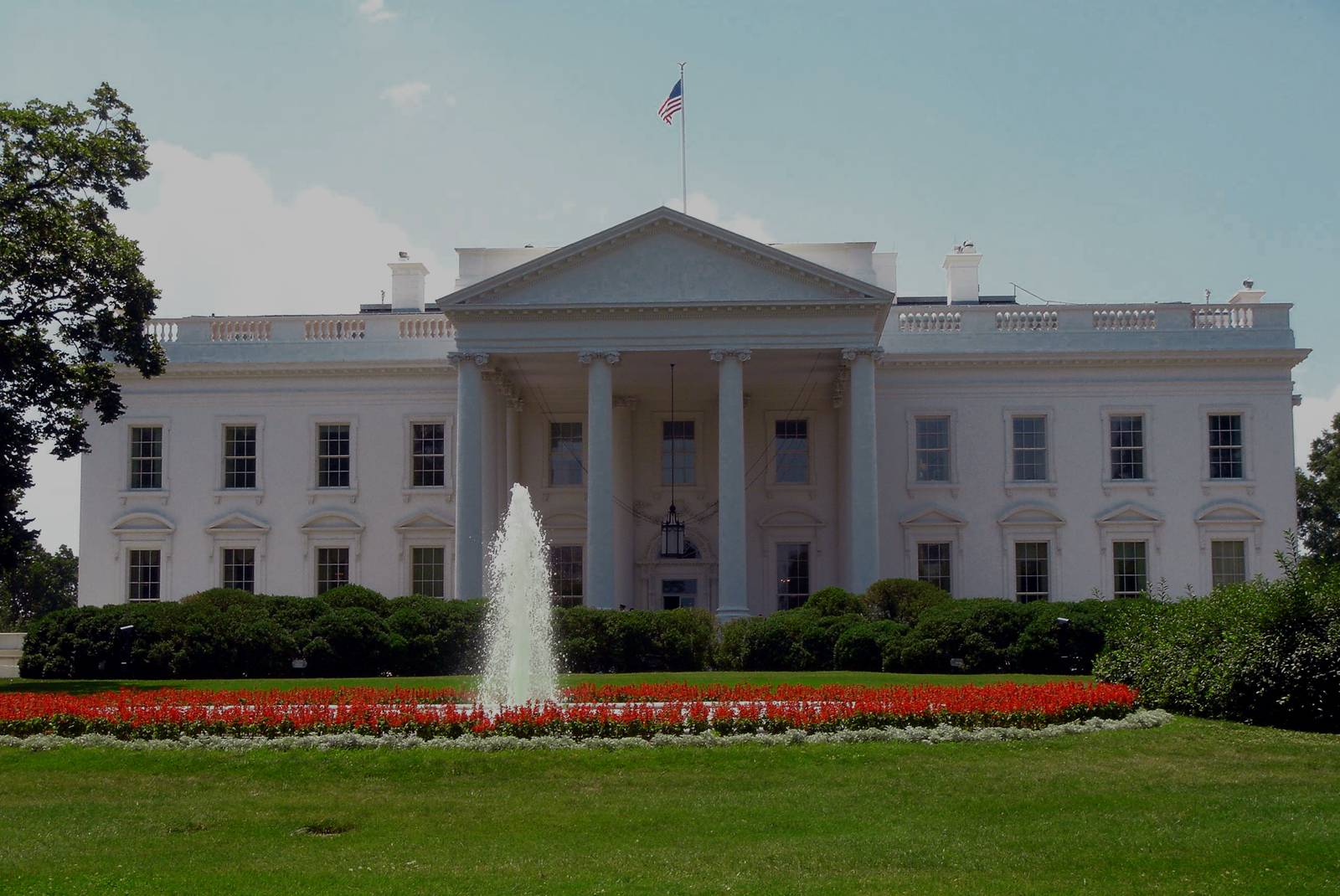
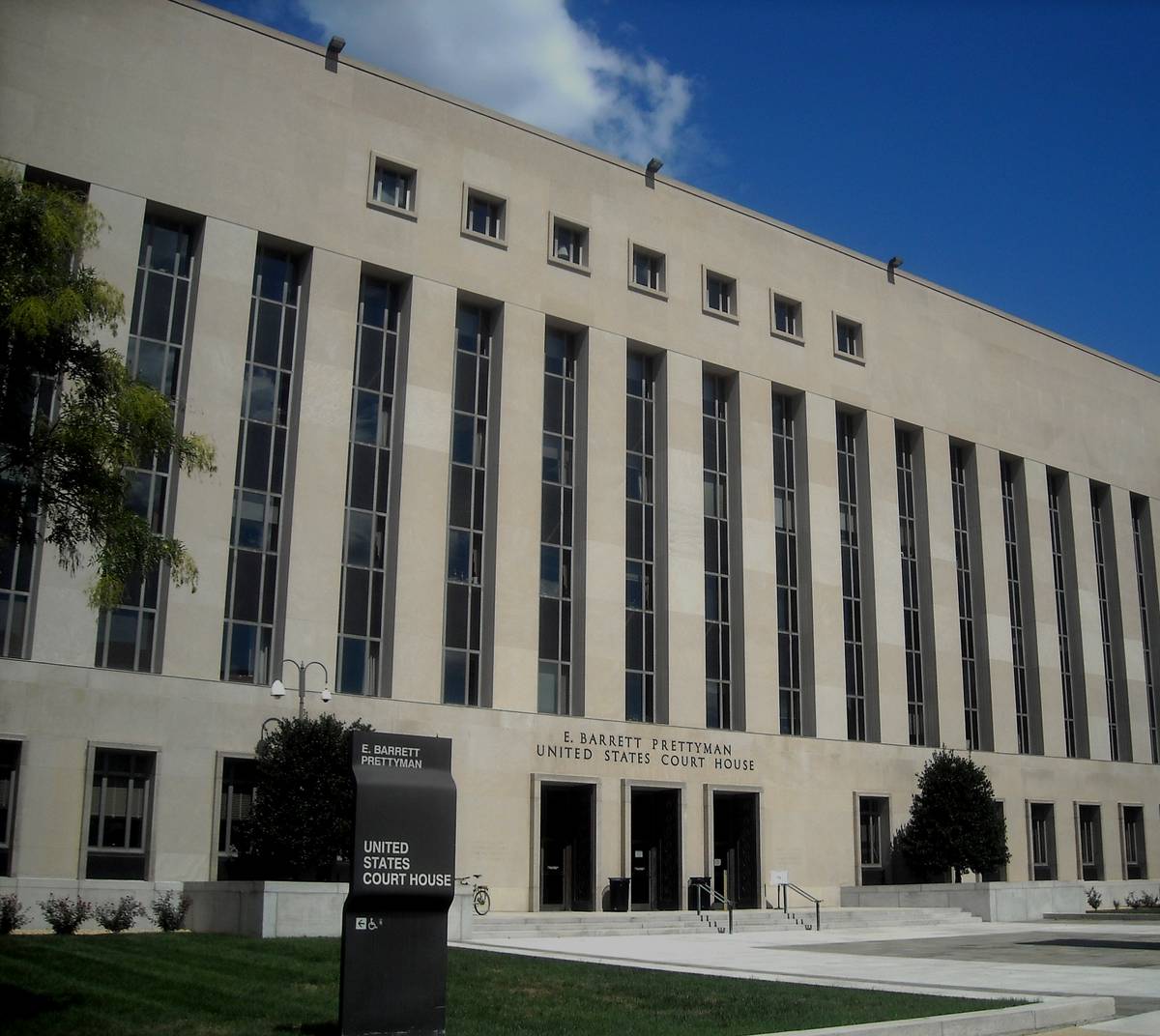
The outlets filed in the US District Court for the District of Columbia. CNN's Katelyn Polantz, Brian Stelter and Tierney Sneed reported that the emergency request would go before a judge, with hearings possible that week. AP, via PBS, and MS NOW both say the plaintiffs include the three reporters who were turned away: Betsy Klein of CNN, Akayla Gardner of MS NOW and Cheyenne Haslett of Politico. The emergency motion is on the public docket.
Their joint statement on Monday, carried by CNN, MS NOW, AP and the BBC, said: "This morning, we notified the government that we are filing a lawsuit today to protect our First Amendment rights and defend the principle that the government does not decide what the press reports or publishes."
It went on: "Without notice or process, the White House revoked our journalists' credentials because it objected to our reporting. Left unchallenged, this threatens press freedom and the public's right to independent journalism free from government interference."
The complaint itself, as CNN and MS NOW quote it, says: "This ban could not be a more direct assault on the First Amendment nor a more blatant violation of our most fundamental constitutional principles."
MS NOW quotes another part. It says the President banned the outlets and reporters "expressly for the improper purpose of retaliating against Plaintiffs for past news coverage because he deemed it 'negative' and chilling future reporting about him and his administration's policies and actions."
AP quotes the filing's Constitution line. It says the Constitution "does not allow a president or any other government official to deprive the press of their First Amendment rights and liberty and property interests with no notice or process based solely on his dislike of the content of their reporting."
What Trump said on Friday
Trump announced the ban in the Oval Office on Friday, 18 September, on the day of a healthcare announcement. CNN reported his words this way: "Something is wrong with a country that can allow people to write purposely negative stories." MS NOW carried a slightly different version of the same exchange, ending "if they want to write them, that's fine, but I don't have to let them into my, into the people's house."
Asked whether a court challenge could succeed, Trump said, according to MS NOW: "I don't think a court should allow fake news to be written day after day after day." He added that someone has a right to keep them away "if they're going to write false stories all the time."
The BBC's Alicia Curry noted Trump didn't name specific stories. He later said "it's really just cumulative stories over the last few years," and that there "may be others to join them." Asked what that meant, the BBC says, he pointed to The New York Times and The Washington Post as "fake news."
Three reporters, three passes
CNN reports that Gardner, Klein and Haslett each tried to enter the White House grounds to cover the news, and the Secret Service denied them entry and took their press passes. AP says Klein and Gardner went live to report they'd been turned away and their badges switched off. Soon after, Politico said Haslett had also been denied entry and had her badge taken.
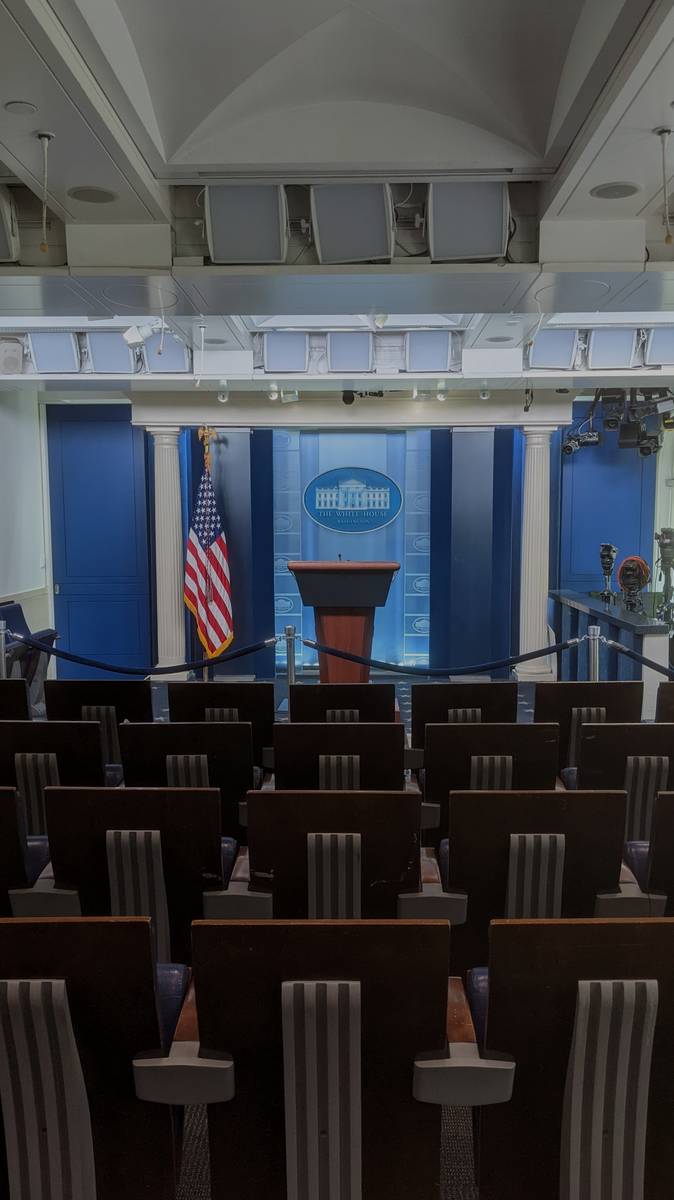
CNN's Monday report says reporters from all three outlets can't get to their workspaces inside the White House. CNN and MS NOW also can't use their TV equipment and camera positions on the grounds. The BBC described CNN's five-seat booth in the basement press area on Monday morning, empty and closed with its screens off, while its crew broadcast from a public footpath outside.
No TV pool on Monday
CNN was due on TV pool duty on Monday, travelling with the President to New York for the UN General Assembly. That didn't happen. AP says CNN was removed from its pool duties, which the five big networks share. In an email to members seen by AP, the pool said it wouldn't cover events with the President that day: "Effective today, the TV pool will not be covering events designated as pool coverage of the President. This follows the White House's position preventing CNN from fulfilling its assigned pool duties. There will be no replacement pool put in place."
CNN's chief White House correspondent Kaitlan Collins explained on air, per AP, that "When the president does anything today, there will be no TV camera with the president that is broadcasting and sharing this footage" with viewers.
The pool is how one crew's pictures of the President go to every network, whether it's Marine One, a motorcade or a speech. The BBC carried a similar note from Fox News Washington bureau chief Bryan Boughton, who was organising the TV crews. The BBC said Real America's Voice was listed as a secondary crew on the trip, but that isn't the shared pool. The five networks, ABC, CBS, CNN, Fox News and NBC, said in a joint statement: "The public has a vital interest in receiving accurate, independent information about its government. No administration should restrict a news organization because it objects to its reporting."
Trump's reply on Truth Social
MS NOW says the White House pointed to a Truth Social post when asked about the lawsuit. Trump wrote: "The White House is not instituting an assault on the Free Press, something which I cherish. It is instituting an assault on the FAKE NEWS, something that has grown like Cancer in our beloved United States of America. It is corrupt, purposeful, pervasive, fully coordinated, and totally out of control. It is a threat to our National Security, and must be stopped, NOW!" MS NOW noted he gave no examples to back up the national security claim.
The judge, and the Acosta echo
MS NOW reports that US District Judge Timothy J. Kelly was assigned soon after the filing. He set a hearing by videoconference for Wednesday afternoon. Kelly is a Trump appointee. In 2018 he heard CNN's lawsuit over Acosta's credentials and ordered the administration to temporarily restore them, finding Acosta hadn't been given due process. The White House backed down, and CNN dropped the case.
In a later Truth Social post, CNN reports, Trump suggested the assignment was bad news for his side: "They have drawn a great Judge, for them, a man who ruled in favor of Jim Acosta, who now seems to have disappeared from the Planet." He said he'd appeal any ruling against him.
Theodore J. Boutrous, known as Ted, represents the outlets, as he represented CNN in the Acosta case. His statement, per CNN: "The President's ban of CNN, MS NOW and POLITICO from the White House is a direct assault on the First Amendment and a blatant violation of due process. The President has been explicit that this ban is intended to punish reporting he doesn't like and to intimidate journalists and news organizations covering him and his administration."
He added, per CNN and MS NOW: "This ban on the free press harms the American people, who are entitled to rigorous, fact-based coverage of the President of the United States. The law is on our side across the board, and we look forward to presenting our arguments to the court as soon as possible."
The legal arguments, in plain English
MS NOW lays out three claims. First, the ban punishes the outlets for coverage the President doesn't like, which is viewpoint discrimination and retaliation under the First Amendment. Second, even in a limited space like the White House press area, rules can't target a viewpoint and must be reasonable. Third, under the Fifth Amendment, there was no advance notice under clear standards and no chance to be heard before the badges went dead.
CNN leans on a 1977 appeals court case, Sherrill v. Knight, 569 F.2d 124. Robert Sherrill, a reporter for The Nation, had his White House pass revoked by the Secret Service, and the court restored it. CNN quotes the court: "denial of a White House press pass is violative of the first amendment only if it is based upon the content of the journalist's speech or otherwise discriminates against a class of protected speech."
And: "Not only newsmen and the publications for which they write, but also the public at large have an interest protected by the first amendment in assuring that restrictions on newsgathering be no more arduous than necessary, and that individual newsmen not be arbitrarily excluded from sources of information."
CNN also says the filings point to the case of reporter Brian Karem, and that courts mostly sided with journalists in the Acosta, Karem and related cases. They didn't say White House access is unlimited. CNN adds that appeals court law says the White House can't revoke press passes without due process where the general press has access and there's no national security concern of the kind a court would accept.
AP has its own case. Last year the White House barred AP reporters from the Oval Office, Air Force One and other limited events after AP wouldn't follow Trump's renaming of the Gulf of Mexico as the "Gulf of America". AP sued, and the case continues. Judge Trevor McFadden granted AP a preliminary injunction in April 2025 in AP v. Budowich. In June 2025 the appeals court partly paused it for spaces like the Oval Office and Air Force One while the case went on.
Waltz's defence
On Sunday, 20 September, UN Ambassador Mike Waltz went on CNN's State of the Union. Stelter reported the exchange. Waltz told Dana Bash the President is "absolutely within his rights to limit journalists to government facilities, particularly when, in his opinion, they're not behaving as good-faith journalists." He cited a 1965 Supreme Court case, Zemel v. Rusk, quoting Chief Justice Earl Warren that "the right to speak and publish does not carry with it the unrestrained right to gather information."
CNN's answer, in the same piece, is that this fight is about viewpoint discrimination, because Trump has said openly he's banning outlets over "negative" coverage, and courts have ruled that out. When Trump briefly banned AP from some events last year, a Trump-appointed judge wrote that when the White House opens its facilities to the press generally, as in the Brady Briefing Room, it can't exclude journalists because of their viewpoint. Zemel is real case law, but about a different situation. The court will have to decide which rule applies here.
Support from other news outlets
White House Correspondents' Association president Jacqui Heinrich, per AP, called for access to be restored right away: "The implications extend beyond these organizations: a standard used to exclude one news outlet because of its coverage could be applied to any outlet in the future. The American people, through a free and independent press, must be able to scrutinize those elected to power, regardless of whether government officials view it favorably."
Stelter reported that The Washington Post said in a Saturday statement that the ban is "a clear form of intimidation to silence coverage, stripping the public of information and threatening our democracy." Fox News Sunday covered it too. Heinrich, filling in as anchor, interviewed her predecessor Weijia Jiang of CBS, who said that once you start picking who can cover the White House, the range of views shrinks and no longer represents the public.
AP said in its own weekend statement that no news organisation or person should be punished by the government over the words they use. Jameel Jaffer, executive director of the Knight First Amendment Institute, called it "an attack both on press freedom and the public's right to independent information about the government," and said the institute is filing a brief in support. National Press Club president Mark Schoeff Jr. said, per Stelter: "The First Amendment does not permit the government to pick and choose which journalists are allowed to do their jobs."
Natalie Harp
CNN's Kevin Liptak and Kaitlan Collins reported on 21 September, citing people familiar with the matter, that Trump's close aide Natalie Harp showed him clips of media coverage the week before the ban. One source said a Politico graphic was among the material believed to have angered him. Another said he also watched TV clips. The Wall Street Journal has reported along similar lines.
In the same CNN piece, Trump, asked on Friday about the ban, said "No reason," called it "a very simple ban," said he didn't want them in his office, and said his frustration was "really just cumulative stories over the last two years. You get sick of it."
Why it matters to you
Hard passes sound like building admin. They're more than that. A hard pass gets a correspondent into the workspace, the briefing room and the pool rotations that feed every other news outlet without a camera on the South Lawn that hour. Presidents have always disliked some coverage. The question in this case is whether the government can open a space to the press and then shut out named outlets and reporters because of what they report, without notice or a hearing.
The 1977 Sherrill ruling puts the public in that question on purpose. Shutting reporters out isn't just a problem for the outlets. It's the public's. That's why rival outlets like AP and The Washington Post backed the three plaintiffs. The outlets say it's retaliation and a denial of due process. The President says it's fake news and national security. The plaintiffs say they'll keep covering the administration either way. In other news from this White House, Trump also signed an order on a US Space Academy, and his administration struck a Venezuela oil deal.
Sources
CNN, Brian Stelter, 20 Sep 2026: Trump's UN ambassador defends press ban.
MS NOW, 21 Sep 2026: MS NOW, CNN and Politico sue Trump over White House ban.
Update: Judge Kelly granted a 14-day temporary restraining order restoring the reporters' credentials, according to the court's order. It expires around 8 October, and a motion for a preliminary injunction is pending.
The paper
Comments
No notes on this story yet.
Sign in to comment