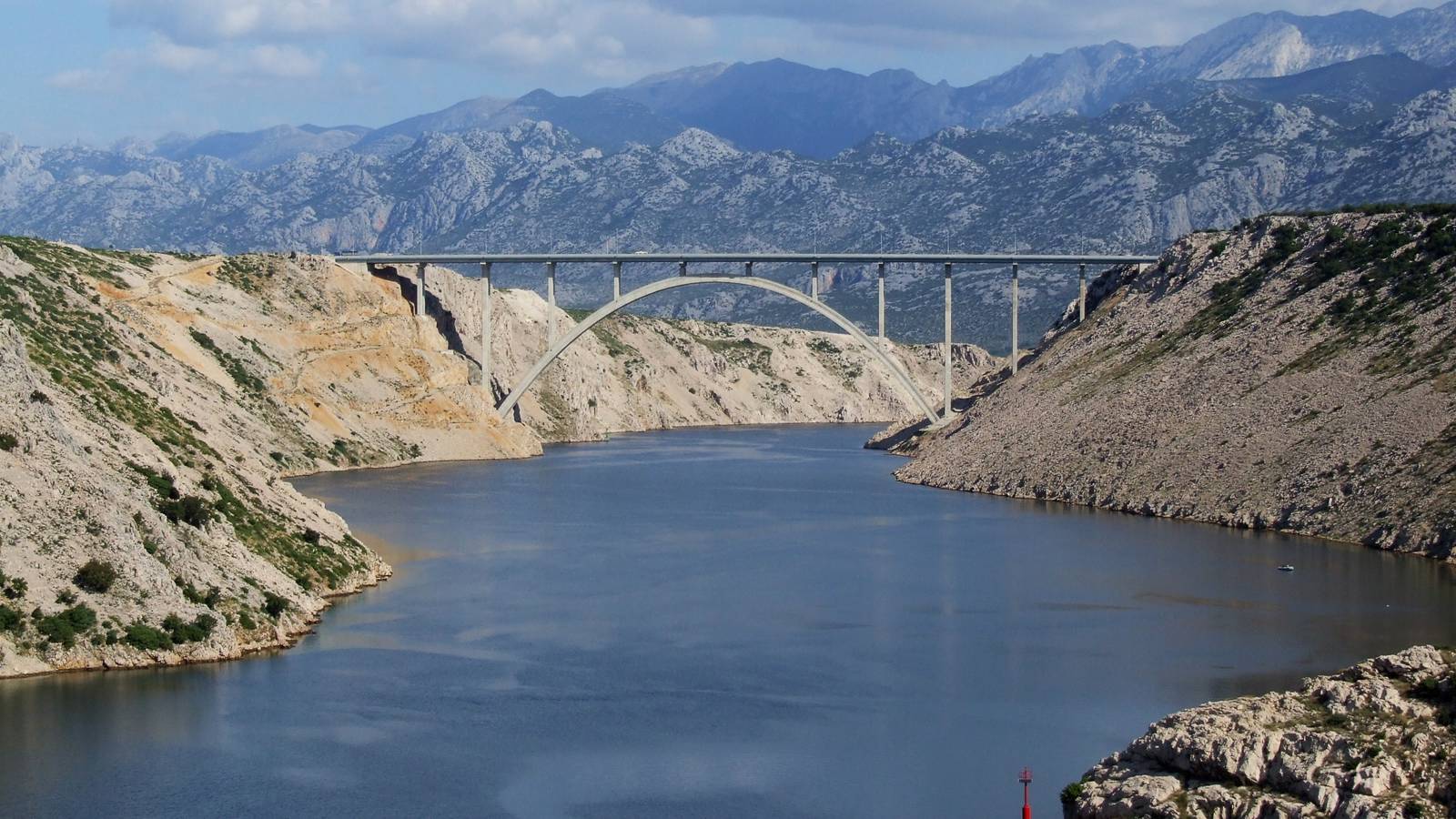

Croatia has approved Tesla's Full Self-Driving (Supervised) for its roads, making it the eighth European country to clear the driver-assistance system. Croatia's State Office for Metrology, which handles vehicle type approval there, confirmed the decision on Tuesday 29 September, Croatian news agency HINA reported.
Tesla Europe posted the news on X the same day. "FSD Supervised now approved in Croatia," it wrote. "Rollout will begin soon." Croatia's the third European country to sign off in September, after Slovenia early in the month and Czechia on 21 September.
What Croatia actually approved
Croatia didn't run its own test programme. It recognised the provisional EU type approval that the Dutch regulator RDW gave Tesla on 10 April 2026 under EU Regulation 2018/858. Every other approving country has gone the same way.
HINA obtained the letter the State Office for Metrology sent to Tesla Croatia. All the quotes from Croatian sources in this story are our own translations from Croatian. "The State Office for Metrology, as the type-approval authority in the Republic of Croatia, hereby confirms recognition of the provisional EU type approval for the Tesla FSD (Supervised) system, issued by the Dutch type-approval authority RDW on 10 April 2026 on the basis of EU Regulation 2018/858," the letter says.
The office said it weighed RDW's explanations on "continuous monitoring of the approval, monitoring and reporting during use, and the handling of safety-related findings" that could affect the exemptions granted under the European rules.
The name matters here. FSD Supervised helps the driver. It doesn't turn the car into a self-driving one. Tesla's own Croatian web page, quoted by HINA, says the features currently switched on "require active driver supervision and do not make the vehicle autonomous". The driver has to watch the road and be ready to take over at any moment.
That page, as HINA quoted it, also spells out what the system does in practice. It handles driving for the person behind the wheel, including following a navigation route, steering, changing lanes and parking, all while that person actively supervises. Tesla says it trains the feature on a huge amount of anonymised real-world driving data so it reacts properly in stressful everyday situations. The page says FSD Supervised is available in selected markets across North America, Europe and Asia-Pacific, with more regions expected.
Eight countries and counting
Reports don't all agree on which countries have approved FSD Supervised, so the list here is Tesla North's. The Netherlands went first, with RDW's approval in April. Lithuania and Estonia followed in May, then Denmark and Belgium in June, according to a timeline from Tesla North. After a three-month gap, Slovenia approved it in early September. Czechia's transport ministry announced its approval on 21 September. Croatia makes eight.
The Czech decision shows what regulators look at. The ministry said it came after months of expert assessment and talks with Czech and international specialists, and with Tesla representatives, Tesla North reported. Officials checked how the system handles everyday driving, how it reacts to traffic signs and speed limits, and how it keeps the driver paying attention. They also drew on experience from countries where FSD Supervised was already switched on. The ministry stressed it's still an assistance system and that safety stays the top priority.
Each of those countries used Article 39 of the EU type-approval rules. It lets a member state accept another member state's provisional approval while the EU decides whether to extend it across the bloc. It's a country-by-country path, and that's why access can change at a border. A Tesla owner in Zagreb is about to get a feature that a driver just over the border in Hungary can't use yet.
So far the approvals are mostly in smaller markets. None of the big four, Germany, France, Italy and Spain, has recognised the Dutch approval, according to Tesla North.
The EU-wide vote has slipped
The bigger prize is a single EU decision. That needs a qualified majority in the Technical Committee on Motor Vehicles. That's at least 15 of the 27 member states, representing at least 65% of the EU population.
Plenty of people expected a vote at the committee's 6 October meeting. That's off. Autoevolution reported on 29 September that the meeting agenda had been set without an FSD vote. Germany's transport ministry has since said a vote won't happen before December, according to Charge News Canada.
The sticking point is speed. The European Transport Safety Council has objected to what it calls FSD's "speed offset". It says that lets the system pick speeds up to 50% above a detected limit to keep up with traffic. Reuters reported that several member states share the worry. Germany's ministry said the country "remains open to new technology", but its Federal Motor Transport Authority, the KBA, is still going through the documents with Tesla and RDW, Charge News reported.
What Tesla says about safety
Tesla has put out its own safety figures for Europe. It said on 1 September that across 100 million kilometres on EU public roads, FSD Supervised had been 4.1 times less likely to crash than manual driving, according to Tesla North. That's Tesla's own claim, not an independent study, and Tesla set the crash definitions too.
Back home in Australia, FSD Supervised has been available since 2025, and Zurich recently became the first Australian insurer to price it in, as we reported. In the US, Tesla says its supervised fleet has passed about 16 billion kilometres, as we covered in May.
What happens next in Croatia
Tesla hasn't given a date for the Croatian rollout beyond "soon". Approval only means the system's allowed. Tesla still has to push the software out to cars, and it hasn't said which models or hardware versions get it first in Croatia.
Charge News reported Tesla's figure that more than 70,000 customers in the first five fully approved countries drive over one million kilometres a day with FSD Supervised. That's a company number, but it shows how fast use builds once a country opens up.
Croatian owners should watch for the update in the coming weeks. Across Europe, the pattern looks set to keep going. More national regulators are reviewing the Dutch approval, and each one that signs off adds weight to the December vote, whenever it's held.
The paper
Comments
No notes on this story yet.
Sign in to comment