
Apple's opened pre-orders for the iPhone 18 Pro and iPhone 18 Pro Max, but its first foldable, the iPhone Duo, has to wait. Pro orders opened on Saturday 12 September 2026 at 5 a.m. Pacific Time. The Duo won't take orders until Friday 16 October 2026, at the same 5 a.m. PT, and it reaches shops from Friday 23 October.
That's the confirmed order of things after Apple's Surprise and Shine event on 9 September. Australia is in the first wave for both phones. And Monday 14 September 2026 is the day Apple Intelligence arrives with iOS 27, with Siri AI rolling out as a beta, in English first.
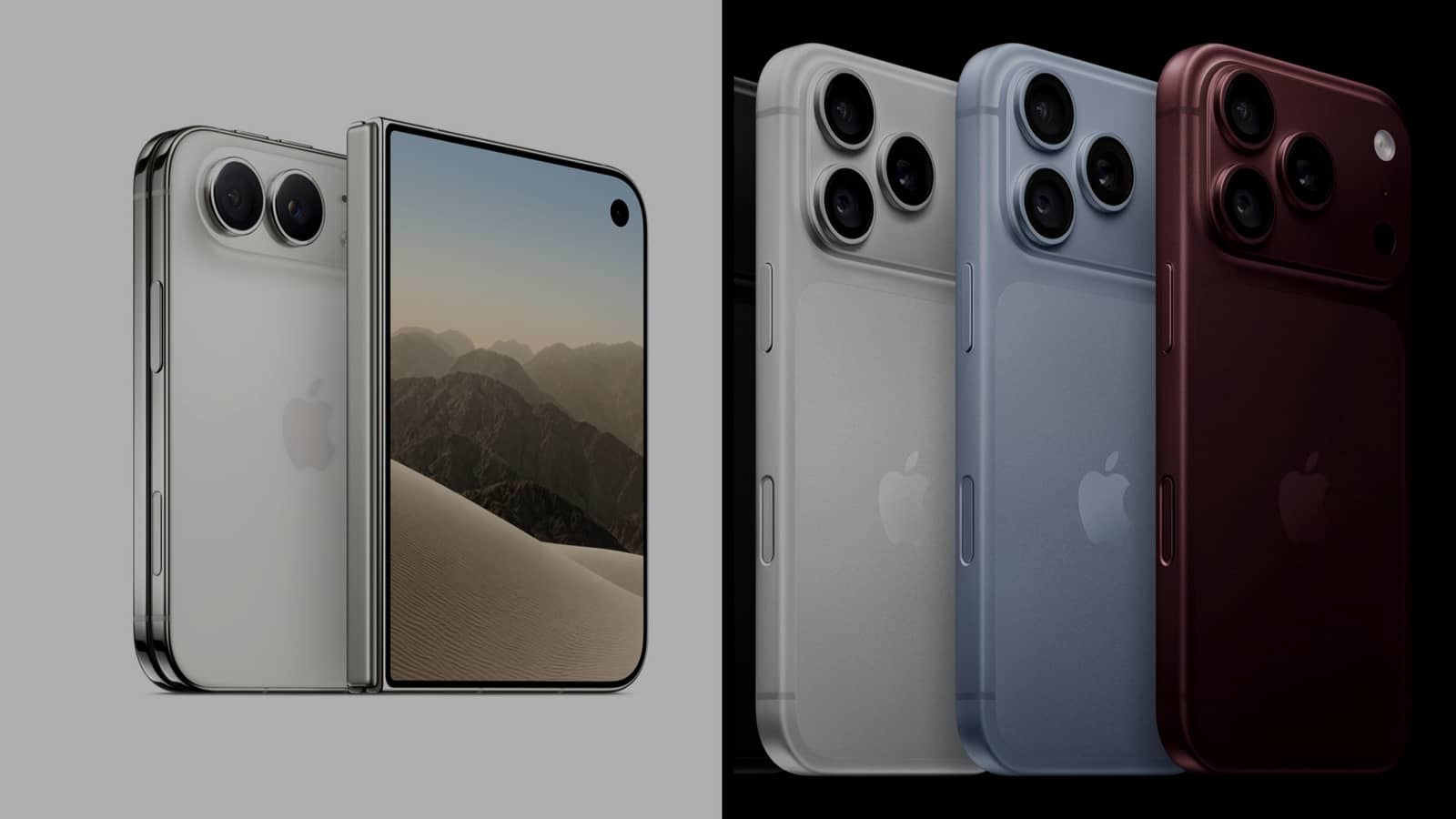
Apple's press releases are out, Pro orders are open, and the Duo's October dates are set in Apple's own pricing and availability details. So rather than go back over the rumours, here's the hardware Apple actually announced.
Why Apple split the dates
Start with the dates Apple published, because the whole story hangs on them.
iPhone 18 Pro and iPhone 18 Pro Max pre-orders began on Saturday 12 September 2026 at 5 a.m. PT. They're in shops from Friday 18 September 2026. Twenty more countries join from Friday 25 September. Apple says customers in more than 65 countries and regions are in the first wave, and Australia's one of them.
iPhone Duo pre-orders begin on Friday 16 October 2026 at 5 a.m. PT. It's in shops from Friday 23 October. Twenty-eight more countries and regions join from Friday 30 October. Apple lists customers in more than 70 countries and regions for that 16 October wave, and again Australia's included.
Apple's 11 September note about getting ready for launch covers the other new gear. The Apple Watch Series 12, Apple Watch Ultra 4 and AirPods 5 were already up for pre-order. They go on sale in shops and online around the world with the Pro phones on Friday 18 September. The Mac mini and Mac Studio reach shops on Tuesday 22 September.
So why split the Pro and the Duo by more than a month? Apple's press release doesn't explain the manufacturing side. What it does make clear is that there are two different order dates. You can pay for a Pro now. You pay for a Duo in mid-October. If you want a regular phone in the next fortnight, the Pro is the one you can order. If you want the foldable, you'll wait.
What opened on Saturday: the Pro in brief
The Pro is the other half of Surprise and Shine, and it's already taking orders. The iPhone 18 Pro and iPhone 18 Pro Max get a 48MP Fusion Main camera with variable aperture, plus Pro camera controls and a smaller Dynamic Island. Inside is the A20 Pro chip, with a next-generation vapor chamber to keep it cool. On the Pro Max, Apple says it's the biggest jump in battery life ever on an iPhone. Both models come with iOS 27, Apple Intelligence and Siri AI.
The colours are black, silver, glacier and burgundy. Storage goes from 256GB to 2TB. Apple's US prices start at $1,199 for the Pro, or $49.95 a month for 24 months, and $1,299 for the Pro Max, or $54.12 a month for 24 months. Australia is in the first pre-order wave, which opened at 5 a.m. PT on 12 September, with phones available from Friday 18 September.
We won't go through every Pro camera feature here. The Pro is the phone you can order this week. The Duo is the one you're waiting for. Both use the A20 Pro chip. Think of the Pro as the one you can buy now. The fold is the bigger story.
What the Duo looks like opened up
The iPhone Duo is Apple's first foldable iPhone. Opened up, Apple says it's the thinnest iPhone ever. The inner screen is a 7.6-inch Super Retina XDR display. Apple's footnote says that's measured as a standard rectangle, at 7.58 inches across, and the area you can actually see is smaller. Closed, the outer screen is 5.4 inches, or 5.36 inches measured the same way. Apple says that outer screen gives you 90 percent of the screen area of the iPhone 18 Pro in a compact phone that fits in a pocket. Closed, Apple compares it to a passport.
Both screens have the same shape, so apps scale up or down when you open or close it. The inner screen has a nano-texture finish to cut glare and make the crease harder to see. There's a FaceTime camera under the inner screen that stays hidden when you're not using it. Both screens have ProMotion, Always On and 3000 nits of peak brightness outdoors. Apple says the Duo will work with the Apple Pencil with USB-C on either screen later this year.
Apple says the 7.6-inch inner screen is 50 percent bigger than the iPhone 18 Pro Max's. That's the whole pitch in one sentence. It's the biggest screen Apple's ever put on an iPhone, and it still closes up like a pocket-sized book.
The hinge, titanium and toughness
Apple makes the Duo from grade 5 titanium with a mirror-polished finish. Ceramic Shield covers the back. Apple says the Ceramic Shield 2 on the front is 3x more scratch resistant than the previous generation. The phone is rated IP68. That means it was lab tested to a depth of 6 metres for up to 30 minutes under the IEC 60529 standard, with the usual warning that water and dust resistance doesn't last forever.
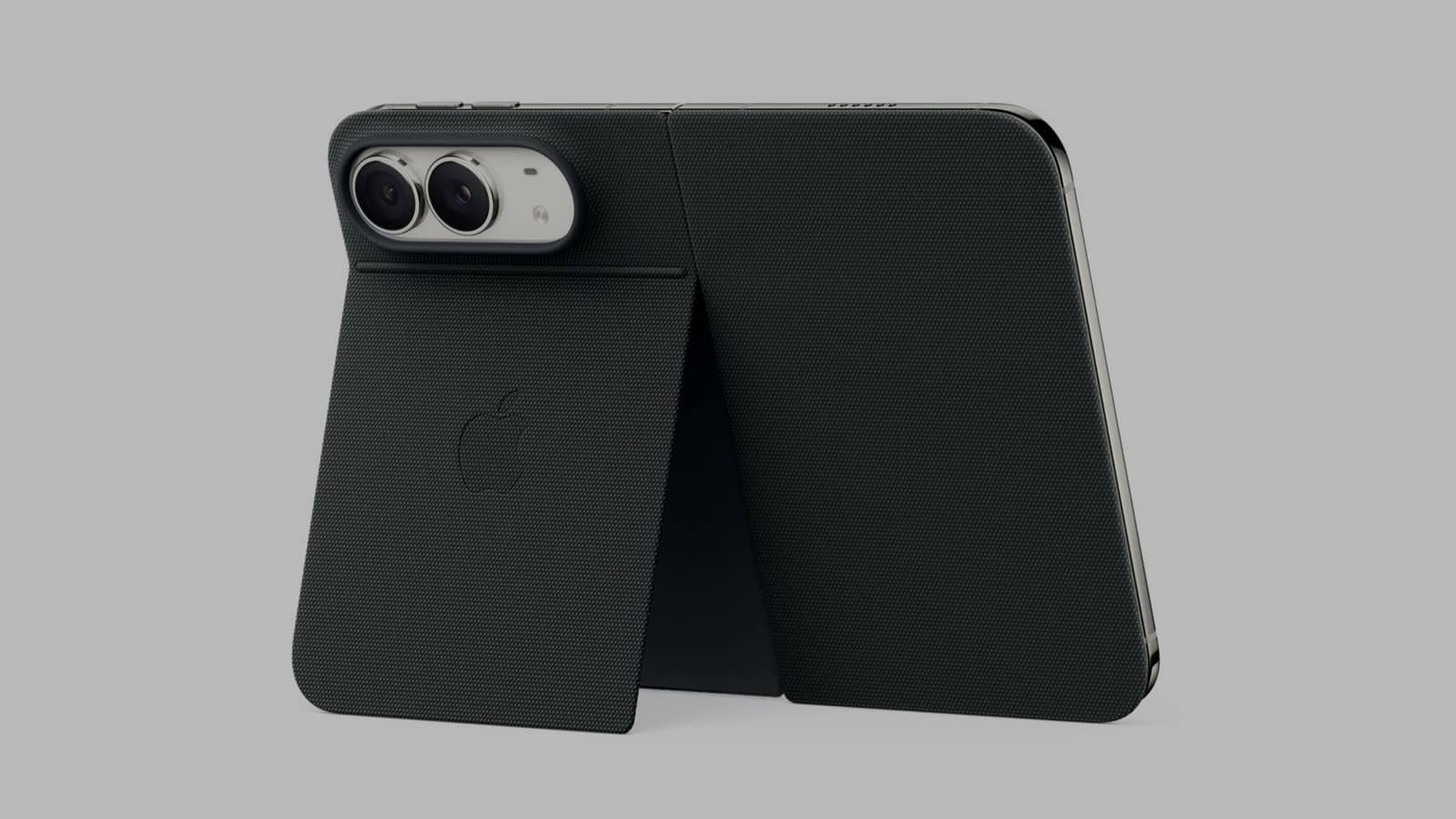
The hinge is the big engineering story. Apple says it's made from more than 100 parts, holds up the middle of the screen so it can lie flat when open, and works with a set of built-in magnets to close securely. The hinge cover is 3D-printed, with a micro-blasted finish that stands out against the mirror titanium. Inside, Apple describes support ribs for stiffness and ceramic fibre inserts that split up the antennas.
You unlock it with Touch ID in the side button, which works open or closed, or with your Apple Watch. It also has Camera Control, including Siri Camera mode, so Siri can see what the camera sees.
None of this comes from taking one apart. It's Apple's own case for toughness. That's the titanium shell, the Ceramic Shield layers, the IP68 lab rating and a hinge with more than a hundred parts. Foldables succeed or fail on whether people trust the crease and the hinge, so Apple's putting a lot of effort into explaining them.
Cameras: Pro-level lenses, plus tricks only a fold can do
The rear cameras start out familiar, then make use of the second screen.
The 48MP Fusion Main camera has zero shutter lag, takes 24MP photos by default so they're easy to share, gives optical-quality 2x zoom, and has a large sensor, a fast aperture and sensor-shift image stabilisation. Apple says the 48MP Fusion Ultra Wide matches the one on the Pro models, with a wide view and macro. Center Stage on the front camera widens and can turn the frame when more people join a shot. The FaceTime camera under the inner screen handles calls when the phone's open or propped up, without a hole punched in the big screen.
Then there are the features only the fold can do, as Apple names them.
Smart Take uses on-device models on the A20 Pro to watch the scene and take the shot when people are posing, so you don't have to stand behind the shutter or race a timer.
Duo Preview puts the live view on the outer screen when you take a selfie with the rear camera, so the person in the photo can see how it's framed.
Kid Cue plays Peanuts animations on the outer screen to get a child to look at the lens.
Duo FaceTime lets someone join a call on the outer screen while it's running.
Dual Capture FaceTime shows the front and rear cameras at once.
That second screen does camera jobs a regular phone can't. Seeing the preview on the outside for a rear-camera selfie is the obvious one. Kid Cue sounds like a gimmick, but it solves a real problem, which is getting the person to look at the right part of the phone.
Video without a tripod
On the Main camera, Apple lists 4K at 120 frames a second in Dolby Vision. You can add Cinematic effects after you've shot, at up to 60 fps. Audio Mix gets new algorithms for clearer voices. Time-lapse works in 4K Dolby Vision HDR. And because the Duo folds, Apple says you can prop it open instead of using a tripod for longer shots.
Propping a foldable up like a stand isn't new. But it's telling that Apple included it in the Duo's launch material. The hinge is part of the video story, not just something for multitasking.
iOS 27 on the Duo: controls on the side, Split View and StandBy on either screen
iOS 27 is built around the fold. Lock Screen controls, the Dock and app navigation move to the side to free up space top to bottom. When the Duo's open, Apple shows two Home Screen pages, with Today View, a scrolling list of widgets, on the left. The status icons tuck into a corner. The Dynamic Island is redesigned to run up the side of both the outer and inner screens, and it expands for Live Activities.
Split View comes to the iPhone for the first time. You can run two apps side by side, or two windows of the same app, and save pairs to come back to. You can keep a Siri AI conversation on one side and something else on the other. StandBy works on either screen without the phone being on charge. Put it down and the outer or inner screen can become a clock and widget display.
Apple also names apps that are already being adapted. Netflix, Zoom and Slack appear in the Duo launch material as examples of apps with big-screen and fold-aware layouts. That's Apple's list of partners, not an independent review of the apps.
The A20 Pro, vapor chamber and two batteries
The Duo runs the same A20 Pro chip as the 18 Pro models, made on a 2-nanometer process. Apple pairs it with a custom vapor chamber. Apple says sustained performance is up to 35 percent better than the iPhone 17 Pro. The 6-core CPU is up to 20 percent faster than the A19 Pro, and the 7-core GPU is up to 40 percent faster. The dual 16-core Neural Engine gives 2x the computing power for on-device models. Memory bandwidth is 50 percent higher. A new chip package, inspired by the M-series chips in Macs, connects the A20 Pro straight to the vapor chamber.
There are two batteries, one on each side of the fold, managed as one. Apple says you get up to 31 hours of video playback on the inner screen, up to 44 hours on the outer screen, and up to 24 hours of use per charge if you use both screens equally. Apple says fast charging gets you to about 50 percent in around 20 minutes with a cable, or around 30 minutes with MagSafe or Qi2 wireless charging.
It's eSIM only around the world. The N1 chip handles Wi-Fi 7, Bluetooth 6 and Thread. The C2 modem adds mmWave in the US. Apple says going eSIM-only frees up room for battery.
Those percentages are Apple's comparisons with its older chips and phones. They haven't been tested independently. Treat them as Apple's claims, and remember battery life always depends on how you use the phone and your network.
Colours, prices, accessories and Australia
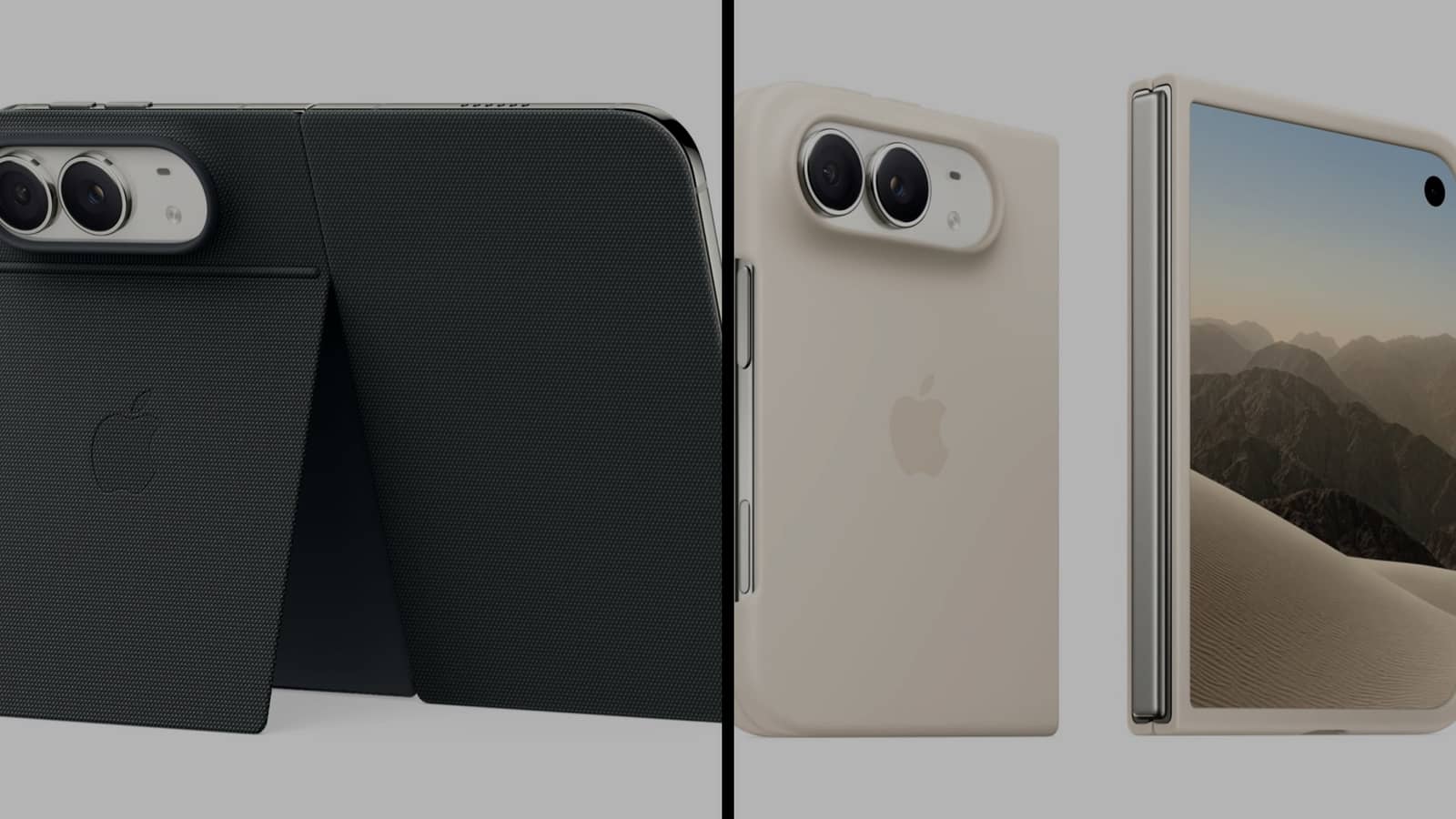
The Duo comes in star white and night sky. Storage goes from 256GB to 2TB. The US starting price is $1,999. Apple also lists $83.29 a month for 24 months on that starting model, with Apple Upgrade leasing prices alongside.
There's an iPhone Duo Folio with a kickstand for $129, in navy blue and taupe, and an iPhone Duo Case for $79, in sand and navy blue. You can order both from Friday 16 October, when Duo pre-orders open.
Apple's availability details say the Duo comes with iOS 27.1. Monday's iOS 27 update is the software release for phones people already own.
Australia is named in the 16 October pre-order wave of more than 70 countries. You don't need a rumour about grey imports to know when Apple plans to take Duo orders here. 5 a.m. PT on 16 October is midday UTC and 10:30pm Adelaide time on the same Friday. Apple's official time is Pacific, so check the conversion when you set your alarm.
What Ternus said
Here's John Ternus, Apple's CEO, in the Duo press release.
"iPhone Duo is the most transformational change to iPhone since the original. With an entirely new design and intuitive experiences, it shows what's possible when hardware and software are engineered together and redefines what it means to use a foldable phone,"
And he went on.
"With the largest display ever on iPhone that still fits easily in your pocket, combined with the power of A20 Pro, iPhone Duo helps you stay more immersed and productive wherever you go, whether you're enjoying content, multitasking across apps, or gaming."
That's how Apple's CEO wants people to see its first foldable. He compares it to the original iPhone, talks about hardware and software working together, and stresses the biggest screen that still fits in a pocket. That's his view, not ours.
Monday's software release, Apple Intelligence and Siri AI
While Pro pre-orders are open and the Duo waits for October, Monday 14 September 2026 is a software date on the same Apple calendar. Apple Intelligence becomes available with iOS 27 for people with a device that supports it, set to a supported language. Siri AI rolls out as a beta with iOS 27 on the same day, in English first.
Apple's fine print matters here. Siri AI needs a device that supports Apple Intelligence and a supported language. It isn't available in the EU on iOS at first. Features that use server-side models can hit daily limits. Siri AI isn't available to anyone under 13. Those limits are Apple's own.
On the Duo, Apple pitches the big inner screen as a place to keep a Siri AI chat open next to something else in Split View. The 18 Pro press release uses the same Siri AI beta wording for the Pro models. Monday's update brings the software half of Surprise and Shine to phones people already have, while the new Pro is still days from shops and the Duo is more than a month from pre-orders.
The watches, AirPods and Macs
Apple's 11 September note about getting ready for launch is short. The Watch Series 12, Ultra 4 and AirPods 5 were already on pre-order. They go on sale in shops and online on Friday 18 September, the same day as the iPhone 18 Pro. The Mac mini and Mac Studio follow into shops on Tuesday 22 September.
It's mostly a phone story, but that's useful background. Apple is filling the middle of September with Pro phones, watches and earbuds, then Macs on the Tuesday, and holding back the foldable until mid-October. The Duo wait doesn't leave the Apple Store empty. It's a deliberate gap for one product while the other new gear goes on sale.
The competition
Xiaomi's 18 Fold went on sale in China around 12 September 2026, after it was unveiled on 7 September. It starts at around $1,540, against the Duo's US starting price of $1,999, and the Duo doesn't reach shops until 23 October. These are different markets on different timelines. Xiaomi's China launch and Apple's global Duo release in October aren't happening in the same week in Australia.
The key points
Surprise and Shine was on 9 September 2026. Pro pre-orders opened on 12 September at 5 a.m. PT. Duo pre-orders open on 16 October at 5 a.m. PT.
The Pro is in shops from 18 September, with 20 more countries from 25 September. The Duo is in shops from 23 October, with 28 more countries from 30 October. Apple lists Australia in both first waves.
The Duo is the first foldable iPhone. It has a 7.6-inch inner screen and a 5.4-inch outer screen of the same shape, a nano-texture finish inside and a FaceTime camera under the screen. Closed, it's the size of a passport, and Apple says the outer screen has 90 percent of the 18 Pro's screen area.
For toughness, it has grade 5 titanium, Ceramic Shield on the back, Ceramic Shield 2 on the front with 3x the scratch resistance of the last generation, an IP68 rating from lab tests at 6 metres for 30 minutes, and a hinge with more than 100 parts and a 3D-printed cover.
The cameras include the 48MP Fusion Main and Ultra Wide, Center Stage on the front, and fold-only features called Smart Take, Duo Preview, Kid Cue, Duo FaceTime and Dual Capture.
It runs the A20 Pro on a 2 nm process with a vapor chamber. Its two batteries give up to 31 hours of video on the inner screen, 44 hours on the outer screen, or 24 hours using both equally. It's eSIM only, with the N1 and C2 chips, and mmWave in the US.
It starts at US$1,999. The Folio is $129 and the Case is $79. It comes in star white and night sky, with 256GB to 2TB of storage.
On Monday 14 September, Apple Intelligence arrives with iOS 27, with the Siri AI beta in English first and Apple's limits by region and age.
The Watch Series 12, Ultra 4 and AirPods 5 go on sale with the Pro on 18 September. The Mac mini and Mac Studio reach shops on 22 September.
Why the wait is the story
With most iPhones, you decide in a single weekend. This year you have to decide which timeline you're on. The Pro's already on sale. The Duo comes in October. They share the A20 Pro chip, but they've got different bodies, different starting prices, and the Duo comes with iOS 27.1 when it goes on sale.
If you wanted the foldable the week of the launch, Apple's answer is not yet. If you wanted the new Pro, Saturday was the day orders opened. That isn't a rumour. It's in Apple's pricing and availability details.
So in practice, if you've ordered a Pro, a Watch or AirPods, they can already be on the way for 18 September. Duo orders wait until mid-October. And if your current phone and language qualify, it can get iOS 27 and Apple Intelligence now.
Why the same screen shape matters
Apple keeps coming back to one point. Both Duo screens have the same shape, so apps scale when you open or close it. That sounds minor until you've used a phone with a cover screen that's a different shape from the inside one. A lot of foldables make you learn two layouts. Apple's pitch is that it's the same layout on both sides of the hinge.
Closed, you get a 5.4-inch outer Super Retina XDR screen that Apple says has 90 percent of the iPhone 18 Pro's screen area, while staying the size of a passport. Opened, you get the 7.6-inch inner screen Apple calls the biggest ever on an iPhone, fifty percent bigger than the iPhone 18 Pro Max by Apple's comparison. The nano-texture finish inside is there to cut glare and make the crease less noticeable. The FaceTime camera sits under the screen so the big display doesn't have a permanent hole in it.
Both screens have ProMotion, Always On and 3000 nits of peak brightness outdoors. Apple's promised Apple Pencil with USB-C support later this year, for notes and markup on either side. Touch ID in the side button unlocks the phone whether it's open or shut, and you can also unlock it with your Apple Watch. Camera Control, including Siri Camera mode, is just part of the controls.
What Split View changes on a phone
Split View is new to the iPhone with the Duo. You can have two apps side by side, two Safari windows to compare, or a saved pair you can reopen. You could keep a Siri AI chat on one half while a document or your timeline sits on the other. That's the kind of thing you'd do on a tablet, on a phone that still folds up to fit in your pocket.
StandBy without a cable is a quieter change. Put the Duo down and either screen can become the StandBy display, with photos, widgets and little information panels, even when the phone isn't charging. On a regular phone, StandBy usually needs a charger and the phone turned on its side. With the Duo, Apple's saying either screen can do that job on a table or a shelf without being plugged in.
Moving the Lock Screen controls, the Dock and app navigation to the edge is how Apple frees up room on the tall open screen. Two Home Screen pages with Today View on the left, when it's open, lets the Home Screen use the extra width instead of just stacking icons like a closed phone. And the Dynamic Island runs up the side of both screens to suit the new shape.
Adelaide time and Apple's Pacific order times
Apple gives 5 a.m. Pacific Time as the official opening time for both pre-orders. For Adelaide, that conversion matters twice.
The Pro already opened on Saturday 12 September 2026 at 5 a.m. PT. That's midday UTC and 9:30pm on Saturday in Adelaide. If someone asks whether "pre-orders opened Saturday," the answer is yes, both in California and here. Apple's official wording is Saturday at 5 a.m. PT.
The Duo opens on Friday 16 October 2026 at 5 a.m. PT. It's the same Pacific time in a different month. It's in shops from Friday 23 October, with 28 more countries from Friday 30 October. Australia is named in the 16 October wave of more than 70 countries. You don't need a reseller rumour to know Apple plans to open Duo pre-orders here that Friday.
Apple's iOS 27, Apple Intelligence and the Siri AI beta land on Monday 14 September, and that's Monday here too. So keep the time zones straight. The software arrives on our Monday. The hardware orders open on Pacific time.
What $1,999 gets you, and what it doesn't
The Duo starts at $1,999 in the US for Apple's base model, with storage from 256GB to 2TB. The Folio is $129 and the Case is $79. It comes in star white and night sky. Those are Apple's US figures.
The Pro starts lower, at $1,199 for the 18 Pro and $1,299 for the 18 Pro Max, with the same 256GB to 2TB of storage and four colours including burgundy. It's the same A20 Pro family, but the body costs more and the timing's different. That price gap is part of why the split matters. Apple's selling two flagship phones at two prices on two timelines.
Xiaomi's 18 Fold starts at around $1,540 in China, against the Duo's $1,999, and Xiaomi was already selling it around 12 September while the Duo waits until 23 October to reach shops. That comparison is only about timing, though. The two phones are sold in different markets, with different first-wave countries and different software.
The bottom line
The Pro's open and the Duo waits. The Pro pre-orders opened on Saturday at 5 a.m. PT. On Friday 18 September the Pro goes on sale, along with the Watch Series 12, Ultra 4 and AirPods 5. Tuesday 22 September is when the Mac mini and Mac Studio reach shops. Monday 14 September brings Apple Intelligence with iOS 27 and the Siri AI beta in English. The Duo opens for orders on 16 October and reaches shops on 23 October. Australia is named in both of Apple's phone waves.
If you remember one thing, make it the split. The phone you can order now is the 18 Pro. The foldable, which Apple calls the most transformational change to the iPhone since the original, makes you wait until October. That wait isn't a rumour. It's Apple's own schedule.
For more, read our preview of Apple's Surprise and Shine event, what we expected from Apple's 9 September event and our story on Xiaomi's 18 Fold launch.
Sources
Video: Introducing the new iPhone Duo (Apple): https://www.youtube.com/watch?v=FUfGcZ092b0.
Apple Newsroom, Apple unveils iPhone Duo (9 September 2026). The first foldable iPhone, its screens, hinge, cameras, iOS 27 features, A20 Pro, battery and prices, the 16 and 23 October dates, Ternus's quotes, and Australia in the October wave.
Apple Newsroom, Apple debuts iPhone 18 Pro and iPhone 18 Pro Max (9 September 2026). The variable-aperture Fusion Main camera, A20 Pro, vapor chamber, Pro Max battery claim, colours, $1,199 and $1,299 prices, the 12 and 18 September dates, and Australia in the first wave.
Apple Newsroom, Get ready to experience iPhone 18 Pro, the new Apple Watch lineup, and AirPods 5 (11 September 2026). Watch Series 12, Ultra 4 and AirPods 5 pre-orders, sale alongside the Pro on 18 September, and the Mac mini and Mac Studio in shops on 22 September.
Competition: Xiaomi 18 Fold on sale in China around 12 September 2026 after a 7 September unveil, starting at about $1,540, against the Duo's $1,999. The Duo reaches shops on 23 October.

The paper
Comments
No notes on this story yet.
Sign in to comment