
Microsoft will stream its Windows and Surface event from San Francisco on Wednesday 7 October at 10am Pacific time. That's 3:30am Thursday 8 October in Adelaide, on daylight saving time (ACDT). The livestream's now up on Microsoft's Windows YouTube channel, and NVIDIA's RTX Spark chip is the headline.
The stream's description is short: "Join us live October 7th at 10:00 am PT for a look at what's next from Windows, Surface, and NVIDIA. See the latest, including RTX Spark and new experiences designed to unlock more possibilities for developers and builders."
Engadget and Windows Central both expect three big names on stage: Microsoft CEO Satya Nadella, Windows and Devices chief Pavan Davuluri and NVIDIA CEO Jensen Huang. Engadget says Microsoft has billed the session as "a conversation on how local AI will shape the next chapter of the PC."
How to watch from Australia
The official placeholder is titled "Something new is coming from Windows | October 7," and it's on Microsoft's Windows channel. Hit "Notify me" there and YouTube will ping you when it goes live.
The timing's rough for our side of the world. Sydney and Melbourne will be on daylight saving by then, so it starts at 4am Thursday there. Brisbane gets it at 3am, Perth at 1am and Adelaide at 3:30am. Most of us will catch it as a replay over breakfast, and that's fine. Microsoft usually posts the full keynote and short product videos straight after.
The laptop we already know about
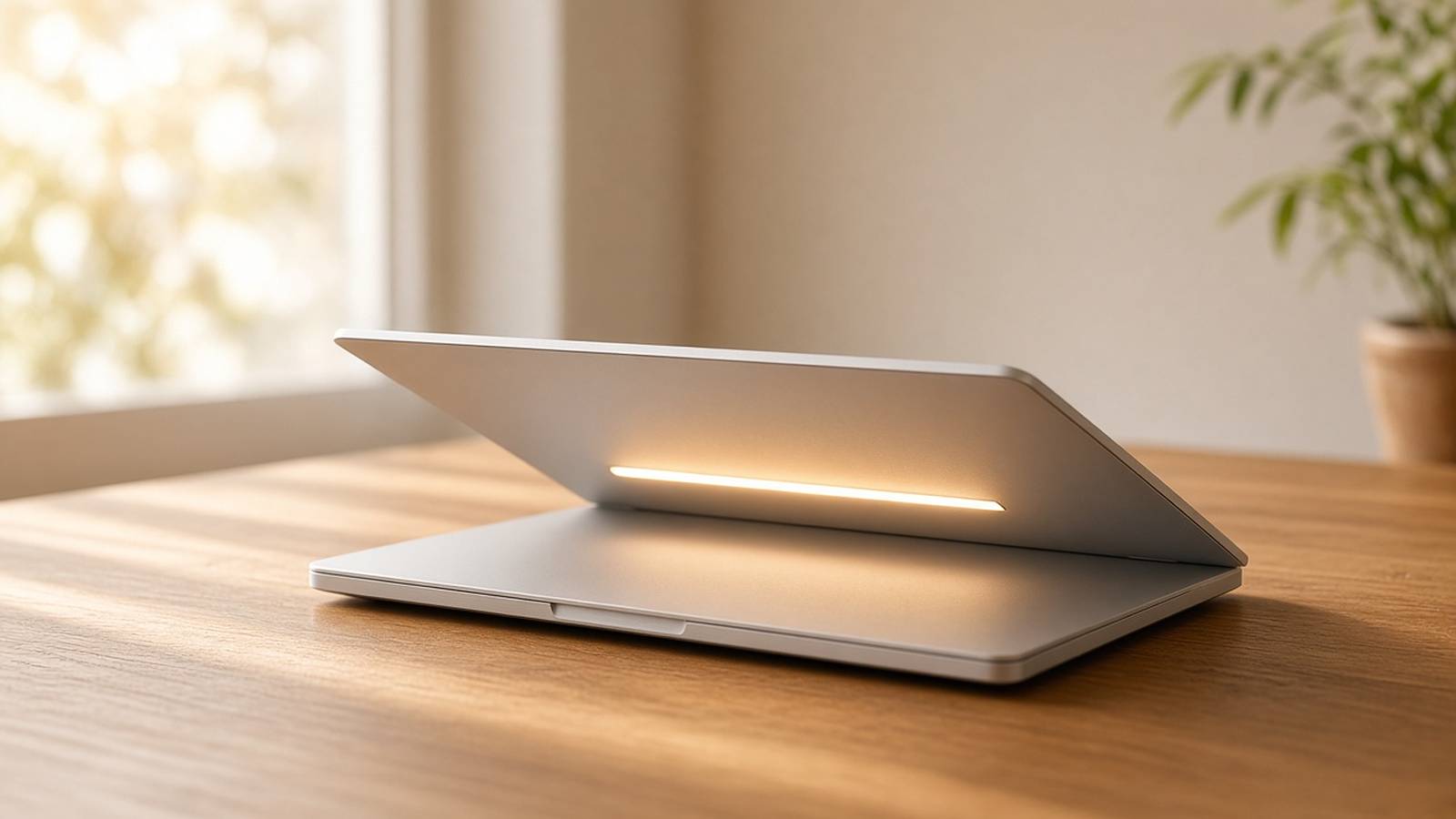
The Surface Laptop Ultra won't be a surprise. Microsoft showed it off on 31 May in a Surface blog post from Brett Ostrum, its corporate vice president for Surface. He called it "the most powerful Surface Laptop ever built."
Here's what Microsoft has confirmed. It's the first Surface laptop to pair an NVIDIA Blackwell RTX GPU with up to 128GB of unified memory and full CUDA support. The 15-inch mini-LED PixelSense Ultra touchscreen peaks at 2,000 nits in HDR and packs 262 pixels per inch. Microsoft says it's the brightest display it's ever shipped. There's HDMI, USB-C, USB-A, an SD card slot and a headphone jack, plus Surface's biggest haptic touchpad yet. It comes in two finishes, Platinum and Nightfall.
Microsoft also says the laptop delivers "1 petaflop of AI compute" and can run AI models with up to 120 billion parameters on the machine itself. Its footnote credits NVIDIA for that figure, and says it's a theoretical FP4 number that relies on sparsity. So think of it as a peak rating, not an everyday benchmark. Microsoft's also promising "all-day battery life," and a second footnote says that's based on internal testing of pre-release units and will vary with use.
Ostrum's post leans hard on how the machine was built. He wrote that mechanical, electrical, thermal, acoustic, materials, industrial design and software engineers were "at the table from day one," and that the laptop was meant to balance "performance, durability and repairability." The repairability claim is one to test once teardowns arrive.
What Microsoft hasn't given us is a price or a ship date. The May post said only that the laptop "will be available later this year." Engadget expects both on Wednesday. Microsoft hasn't confirmed that.
What RTX Spark brings
RTX Spark is NVIDIA's first Arm-based system-on-chip for Windows PCs. It puts a Grace CPU and a Blackwell GPU on one package that shares a single pool of memory. Ordinary laptops split memory between the processor and a graphics card. Here, the whole pool can go to whichever side needs it, and that matters when you're running large AI models on the laptop itself.
TechPowerUp reports two versions of the N1X chip. The top one has a 20-core CPU, a GPU with 6,144 CUDA cores and 24GB to 128GB of memory, and it's for laptops and mini PCs. The second has 18 CPU cores, 5,120 CUDA cores and 24GB or 32GB of memory, for laptops. TechPowerUp says posts from Microsoft's Windows account and NVIDIA's RTX Spark account confirmed 7 October as the platform's launch date. It lists Acer, ASUS, Dell, MSI, HP, Microsoft and Lenovo among the launch partners.
We covered NVIDIA's October ship window when it was set at IFA in Berlin in September. Our earlier report on RTX Spark covers the two chip setups, and our Computing report goes deeper into the chip itself. What's new this week is a firm day, a stage and a line-up of CEOs.
Partners are already moving. Guru3D reports that ASUS will formally introduce its ProArt P16 creator laptop, model H7607, on 8 October. It runs RTX Spark N1X with up to 128GB of unified memory, a 99.9Wh battery and weighs about 1.77kg. That's Thursday in the US, so depending on the hour it could be Friday by the time it reaches Adelaide.
What else could show up
The big question is the stream's line about "new experiences designed to unlock more possibilities for developers and builders." Tom Warren at The Verge called it "mysterious." Windows Central thinks a Surface RTX Spark Dev Box, a small desktop for AI developers, may turn up. Engadget expects Microsoft to talk up agents in Windows, meaning AI tools that can do tasks for you.
Don't hold your breath for Windows 12. 9to5Windows has told readers to give up on that, and Windows 11 only just got its yearly feature update. When Microsoft says "What's next," it more likely means features and hardware than a new version number.
For buyers, the unknowns that matter most are price and timing. Engadget says NVIDIA's Linux-based DGX Spark desktop sells for US$4,999, which gives you a rough idea of where big-memory AI machines sit today. A Surface with the same class of chip and a 15-inch mini-LED screen won't be cheap. If Microsoft gives Australian pricing at all on Wednesday, that's the number to watch.
The short version
Set an alarm for 3:30am Thursday in Adelaide, or sleep in and watch the replay. Microsoft's Windows channel is the official stream. Based on the previews from Engadget, Windows Central and The Verge, we're likely to see a price and date for the Surface Laptop Ultra, the first wave of RTX Spark laptops and mini PCs from Microsoft's partners, and whatever Microsoft means by new experiences for builders. Then partners like ASUS should follow with their own launches within a day.


The paper
Comments
No notes on this story yet.
Sign in to comment