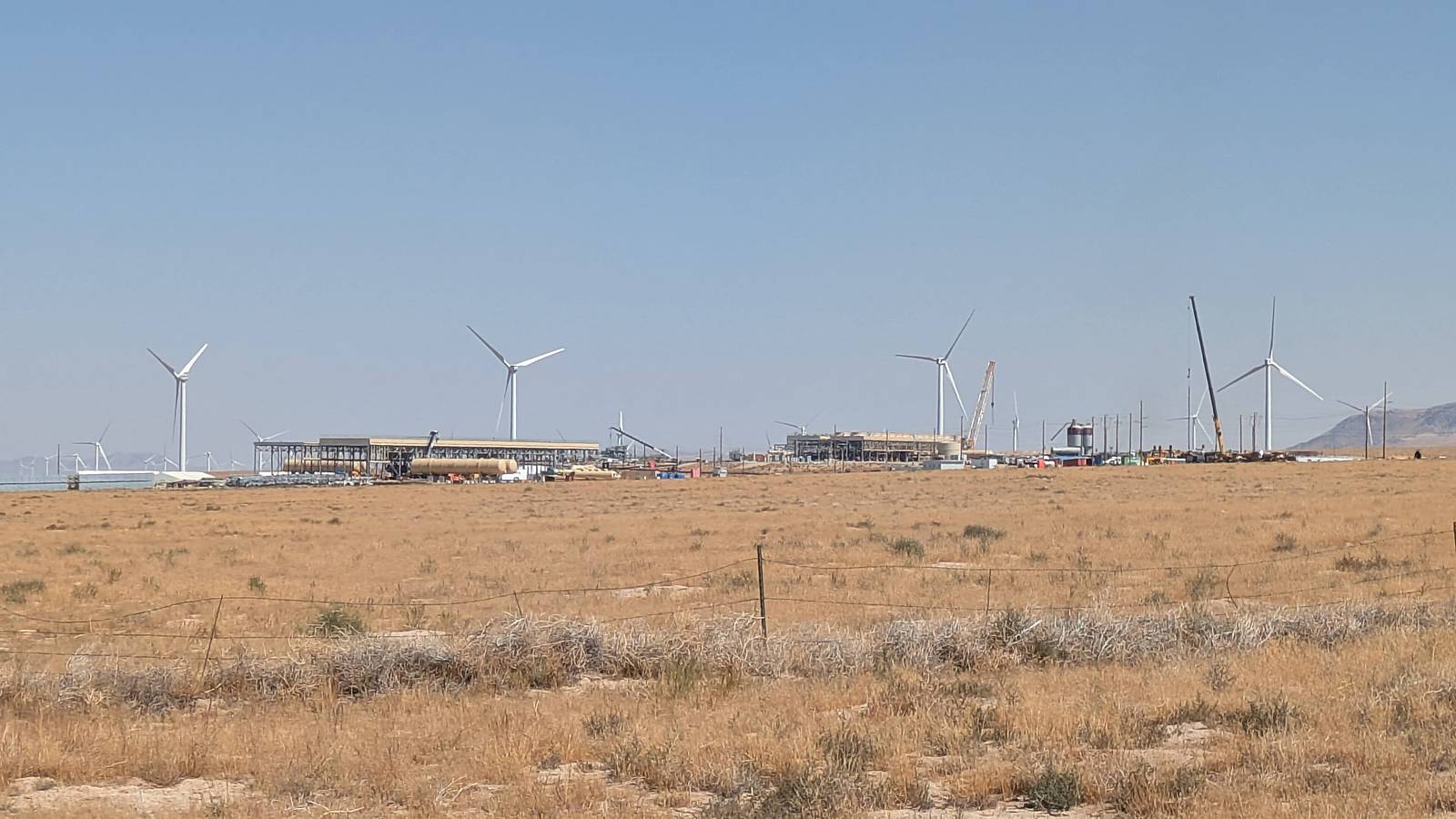

Fervo Energy's Cape Station in Utah is now selling electricity made from deep, man-made geothermal reservoirs, and Fervo says nobody's done that at this scale before. The Houston company said on Thursday 1 October that the first 33-megawatt unit at the site, in Beaver County, reached commercial operation on Wednesday 30 September. That's one day before the date in its power contract.
Fervo calls it the first greenfield enhanced geothermal project in the world to reach commercial operation under contract. The unit took 23 months to build from groundbreaking, Fervo says, and it's the first of three that make up the roughly 100-megawatt first phase. A much bigger 400-megawatt second phase is already being built.
What "enhanced" geothermal means
Old-style geothermal plants go where nature has done most of the work, with hot water or steam sitting fairly close to the surface. Those spots are rare. Enhanced geothermal goes after heat deeper down, where the rock is hotter but doesn't have enough natural cracks or water to carry that heat up by itself. Engineers drill into it and open up pathways in the rock. Then they pump water down one well and bring it back up hot through another, to drive a turbine.
Fervo's twist is to borrow heavily from the oil and gas industry. It uses horizontal drilling, which lets it drill several wells from one pad and reach rock that older geothermal methods couldn't use, the company said in its first power announcement on 24 September. Its earlier pilot, Project Red, has been feeding electricity into the grid since 2023.
"Cape Station works because we treated the subsurface like an engineering challenge," Jack Norbeck, Fervo's chief technology officer and co-founder, said in that release. "Years of drilling, completion design, subsurface modeling, and flow testing led to this moment, and this is the validation that matters most. First Power is proof the science works."
Six days from grid to commercial
Things moved fast at the end. The first unit, which Fervo calls a GeoBlock, hooked up to the grid and started sending out power on Thursday 24 September. Six days later it was declared commercial. That means it met the terms of its power purchase deal and started earning money under it.
Fervo said the unit produced 33 megawatts of net power, which matches what the contract expected. That's a big detail for a first-of-its-kind plant. With new energy tech, the worry is often that a project runs late or comes in below its rated output. On Fervo's own numbers, this one did neither.
"Reaching commercial operations at Cape Station is both a huge milestone for Fervo, and a turning point for the entire energy industry," said Tim Latimer, Fervo's chief executive and co-founder. "No team has ever built a project like this anywhere in the world, and we did it ahead of schedule. We are excited to prove that Fervo Energy can bring a new track record of execution to the power sector, an industry where project delays are often the norm."
Fervo now expects to cut build time for future units from 23 months to about 18. "Every GeoBlock we bring online makes the next one faster and more predictable, and that repeatability is the foundation of how we scale and bring down costs," said Dawn Owens, Fervo's senior vice president and head of development and commercial markets.
How big this could get
The first unit is a small slice of the plan, and it isn't fully ramped up yet either. In its 24 September release, Fervo said it would keep ramping up the first GeoBlock as it brings the full well system online, while it commissions the other two. Those two Phase I units are due to reach commercial operation by 1 January 2027. Phase II, another 400 megawatts, is aimed at 2028.
Fervo said in September that about 900 megawatts of Cape Station's output is already under contract. It says that's enough to power the equivalent of nearly a million US homes. Across all its projects, chief financial officer David Ulrey said the company has signed more than a gigawatt of binding power purchase deals. TechCrunch reported that Google and Southern California Edison are among the buyers. It also reported that Fervo had told it the whole site could one day produce as much as 4 gigawatts.
There's serious money behind it. TechCrunch reported Fervo raised US$1.9 billion in an upsized share market listing in May, after raising more than US$1.3 billion as a private start-up from investors including Breakthrough Energy Ventures. The company was founded in 2017.
Why it matters for the grid
Geothermal's big selling point is that it runs around the clock. It doesn't depend on the weather or the time of day, so it's one of the few carbon-free sources that can supply steady, always-on power. Demand for that kind of electricity is climbing fast in the US, mostly because of data centres for artificial intelligence.
Fervo also argues geothermal plants need fairly little land for what they produce, give off no emissions while running, and rely on a mostly US-based supply chain. Those are the company's claims, but they're the reasons utilities and tech companies have been signing up.
That puts Fervo in the same conversation as nuclear. The US has been pushing hard on firm, low-carbon power, with four advanced reactors reaching criticality by July and Washington telling the nuclear regulator to move faster. Geothermal's edge is that it can be built in blocks, a bit like data centres themselves, so buyers can add power as their demand grows.
There's still plenty to prove. One 33-megawatt unit running for a few days isn't a long track record, and enhanced geothermal wells have to keep delivering heat for years to pay off. Fervo's own risk warnings flag the chance that its estimates of capacity and underground heat turn out to be wrong. The next test is whether the other two units come online by New Year's Day, and whether output holds up through the first full year.
For now, though, the plant's built, it's on the grid, and it's getting paid for the power it makes.

The paper
Comments
No notes on this story yet.
Sign in to comment