
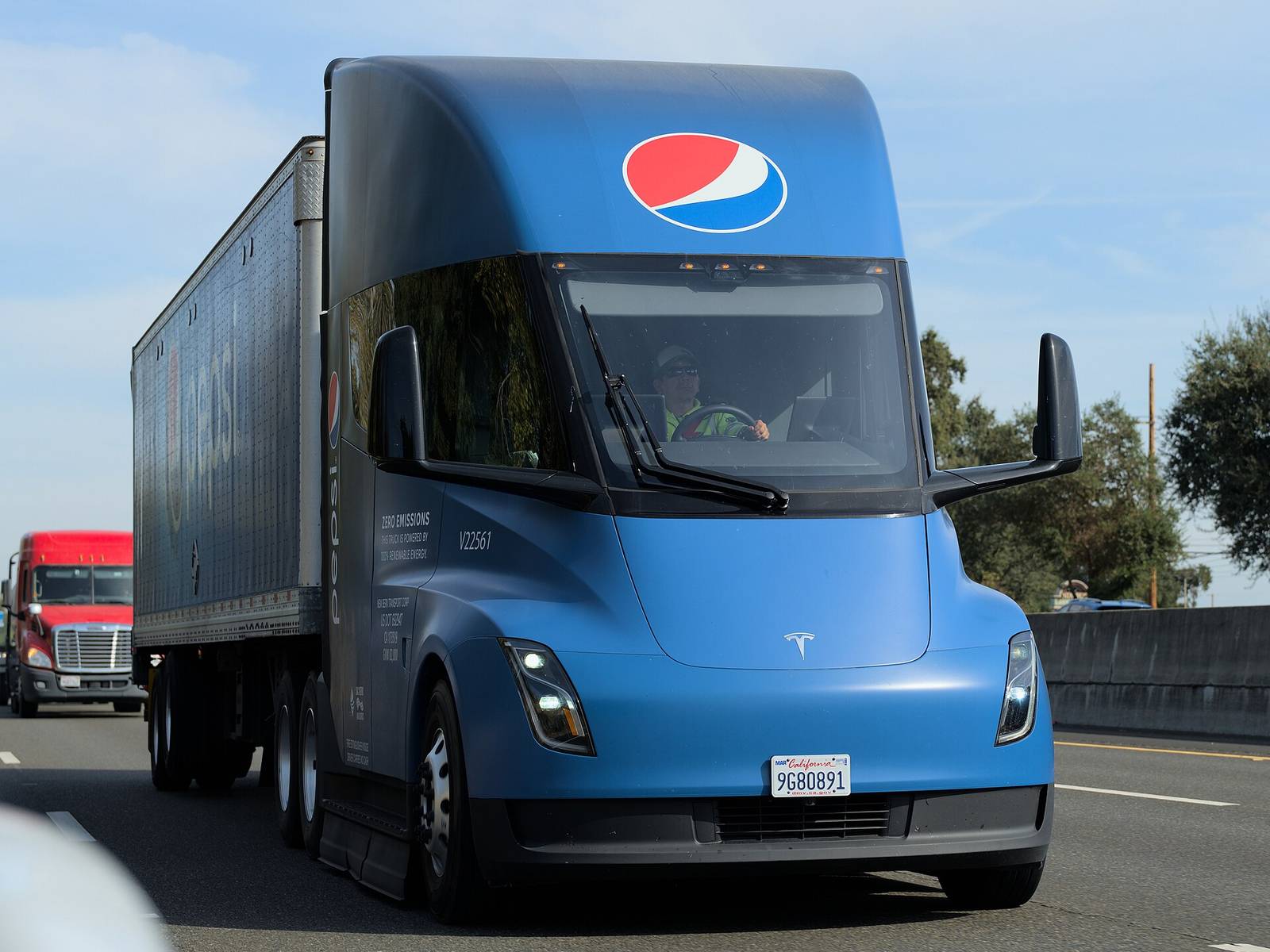
On Thursday night, Tesla said the words truck buyers have waited years to hear. Deliveries "start now." High-volume production of the Semi, Tesla's electric big rig, is running at a new factory built just for that truck. It sits right beside Gigafactory Nevada in Sparks, near Reno. And the truck that rolled out isn't the hand-built early version you've been reading about for years.
The event started at 6pm Pacific time on Thursday 24 September. Here in Adelaide, that was about 10:30 on Friday morning. Tesla streamed it on X and on its own website.
First, a quick word on the truck itself. The Semi is a Class 8 truck. That's the heaviest class on American roads, the big rigs that pull full-size trailers down the highway.
What happened on Thursday night
Fred Lambert at Electrek put it simply in his report on Friday 25 September. Tesla officially launched high-volume production of the Semi at its new dedicated factory in Nevada. Tesla says the plant can build 50,000 electric trucks a year.
Sean O'Kane at TechCrunch, writing the same day, described the crowd in Reno. It was customers, employees and influencers. He also noticed who wasn't among the executives on stage. That was Tesla's CEO, Elon Musk.
Abhirup Roy at Reuters says Tesla is beginning deliveries to a first set of customers this week. That's almost nine years after Tesla first showed off the truck in 2017.
So how late is it?
Here's the timeline. Tesla unveiled the Semi in November 2017 and promised production in 2019. PepsiCo started getting a small number of trucks in late 2022. The first truck came off the high-volume line in April 2026.
How late that is depends on where you start counting. Electrek counts from the 2019 promise and calls it "seven years behind schedule." Natalie Neff at Autoweek counts from the 2017 unveiling and gets "nearly nine years." Reuters does the same sum. Both are fair. They just start the clock in different places.
TechCrunch lists the reasons for the delays. There was the pandemic, a shortage of parts and computer chips, and changes Tesla made after feedback from its early customers. Reuters adds that Tesla's July letter to shareholders said Semi production would begin in 2026, and it dropped an earlier forecast for volume production this year. Then Thursday came, and Tesla called it the volume launch.
A short show, timed to a charger
The broadcast was short. TechCrunch timed it at about 30 minutes, and that wasn't an accident. Tesla ran it alongside a live charging demo on site. While the executives talked, a Semi sat plugged into a Megacharger, which is Tesla's high-power charger built for the truck. Its battery climbed toward 60 percent as the talk went on. We'll come back to that.
Musk wasn't there. TechCrunch says he was at President Trump's state dinner with China's Xi Jinping. He showed up in a pre-recorded video instead.
Nehal Malik at Not a Tesla App, also writing on 25 September, says the video showed Musk standing next to a production Semi. Then he handed the night over to two people. One was Lars Moravy, Tesla's vice president of vehicle engineering. The other was Dan Priestley, who runs the Semi program.
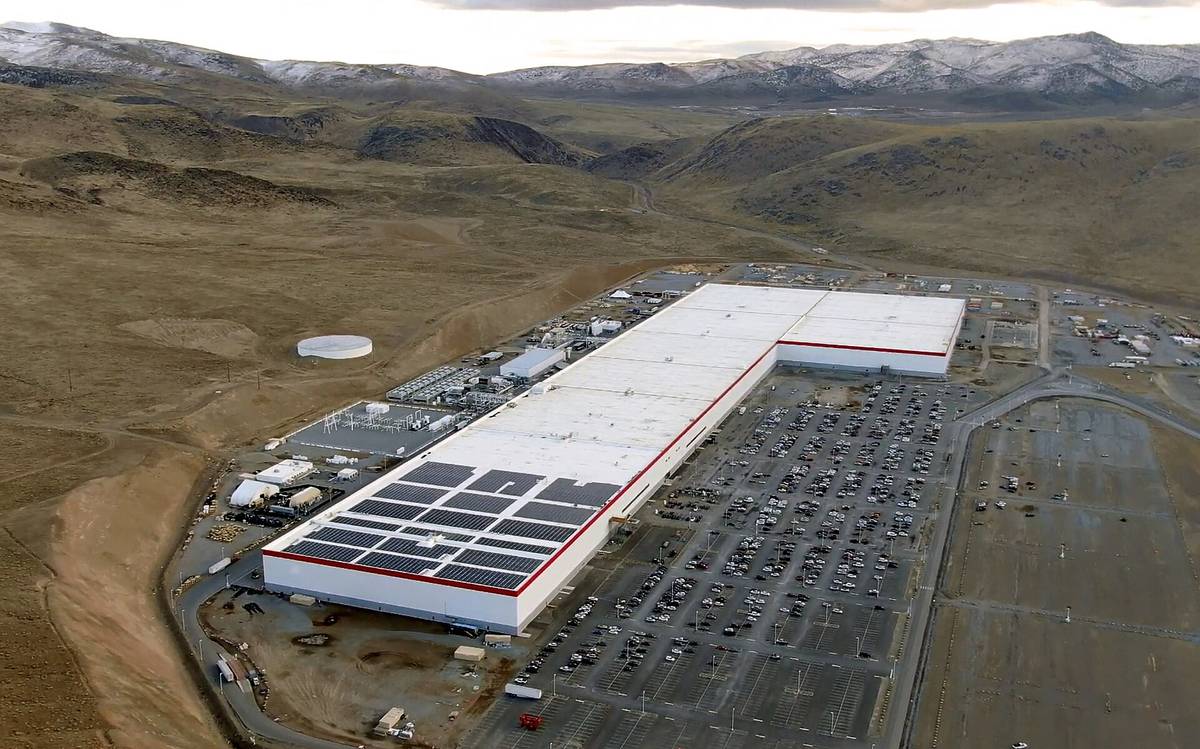
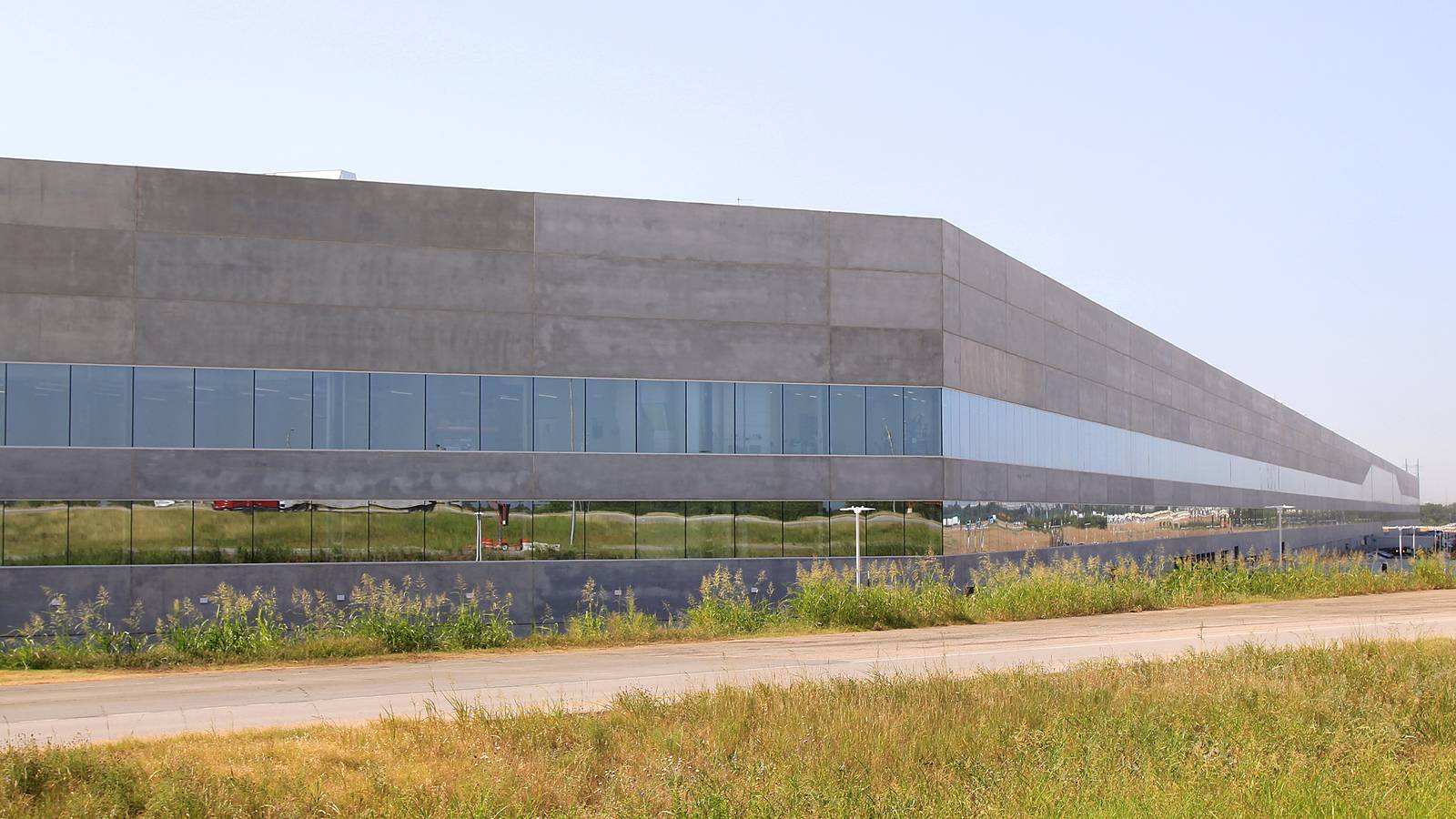
A factory just for the Semi
Tesla called it "our first factory built for Semi," according to Electrek's read of the company's posts.
Tesla's broadcast put the plant at about 1.8 million square feet. Earlier secondhand reports said 1.7 million. We're going with Tesla's 1.8 million.
The goal is 50,000 trucks a year. TechCrunch says that works out to about 1,000 a week. It also says the plant means about 3,000 local jobs. Electrek and Not a Tesla App both report that every version of the truck gets built on the same line. That's the Standard Range, the Long Range and the European model.
Tesla's big cost pitch is what it calls vertical integration. That just means making your own parts instead of buying them in. Tesla says it does its own metal stamping, batteries, drive axles, high-voltage power distribution, cooling modules and even seats, while "most truck plants just assemble." Electrek quotes Tesla directly. "Vertical integration is the only real way to bring cost down."
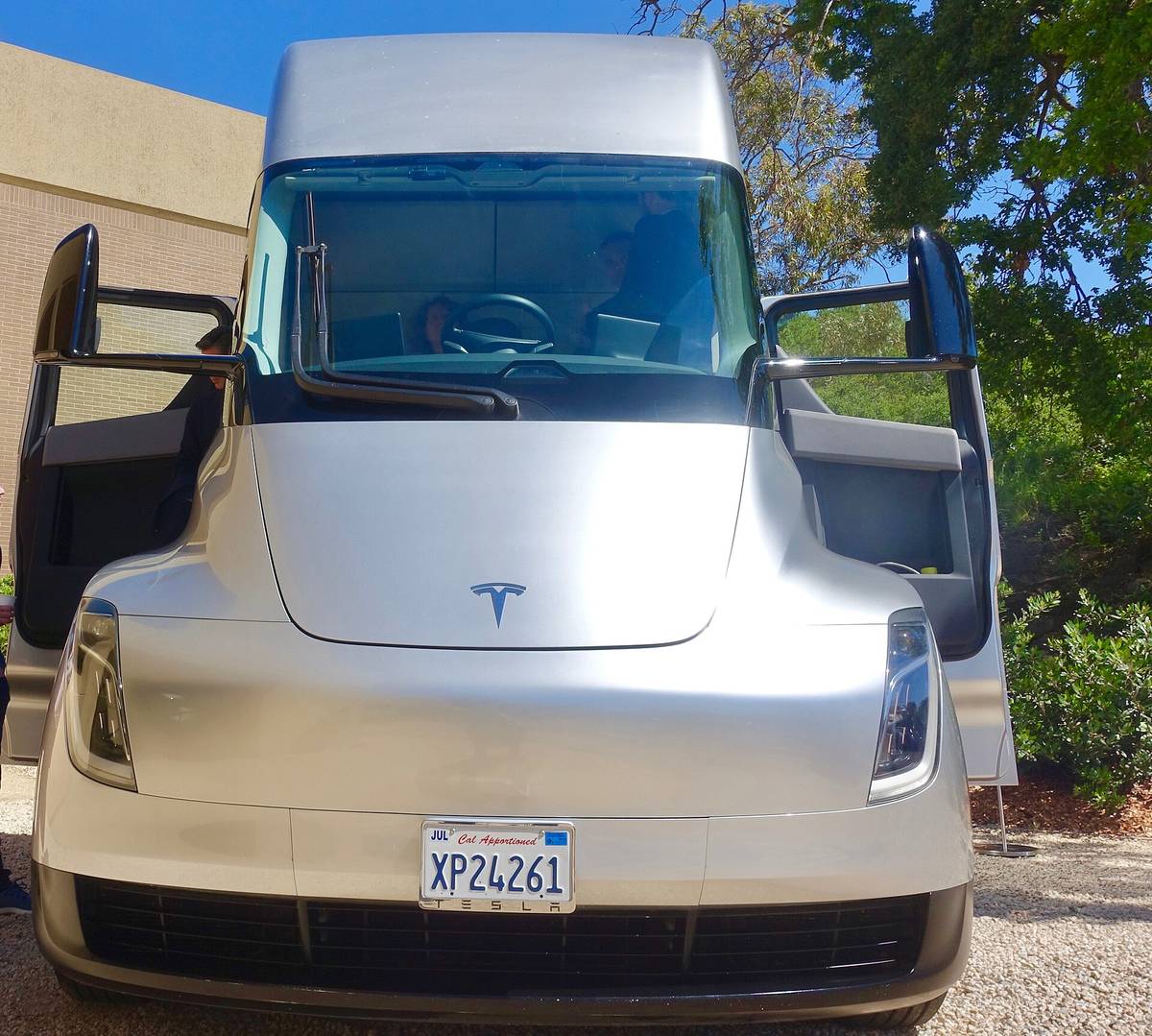
Not a Tesla App says the trucks are powder-coated. That's a tough paint finish baked onto the metal, and Tesla claims it's a first for a Class 8 truck. They're white "for now." Other fleet colours may follow, and plenty of operators wrap their trucks in their own branding anyway.
The building also holds one of Tesla's most automated battery lines to date, according to the same run of reports from the event.
Four years of redesign
The truck PepsiCo got in late 2022 isn't this truck. Electrek reports Tesla spent four years redesigning the Semi "for true volume." In Not a Tesla App's recap, Moravy and Priestley joked it'd be easier to list what they didn't change.
Start with the battery. The new Semi uses Tesla's 4680 battery cells instead of the older 2170 cells. The numbers describe each cell's size, and the 4680 is the bigger one. Tesla says the switch means a lighter battery and fewer kilowatt-hours, with no hit to range.
A kilowatt-hour, or kWh, is a unit of energy. It's the same one on your power bill, and it's how battery size gets measured.
Here's a gap, though. Electrek says Tesla didn't restate the battery pack's size in kWh at the event. What we do have is the spec sheet Tesla released in February. Electrek says it listed 325 miles of range for the Standard Range and 500 miles for the Long Range, both at a weight of 82,000 pounds. It put energy use at about 1.7 kWh per mile. Until Tesla puts out newer numbers, those are the ones to go by.
Then there's the motor. Every electric motor has a part that spins, called the rotor, and a part that stays still around it, called the stator. Tesla swapped the old rotor, which was wrapped in a carbon-fibre sleeve, for one held in a steel cage. Tesla says the new one is cheaper, more reliable and more efficient.
The stator is now bar-wound. That means its copper windings are solid bars rather than coils of round wire. It's the same stator Tesla uses in the Cybertruck, a part it already builds in big numbers.
The drive axles used to need three different oils. Now they need one. Moravy told TechCrunch the three-oil setup had "always frustrated" him. Priestley said changes to the motor, plus work by Tesla's lubricants team, let them drop the extras. "Occasionally we get a little too far out there," he said.
TechCrunch says the new truck is about 1,000 pounds lighter than the original.
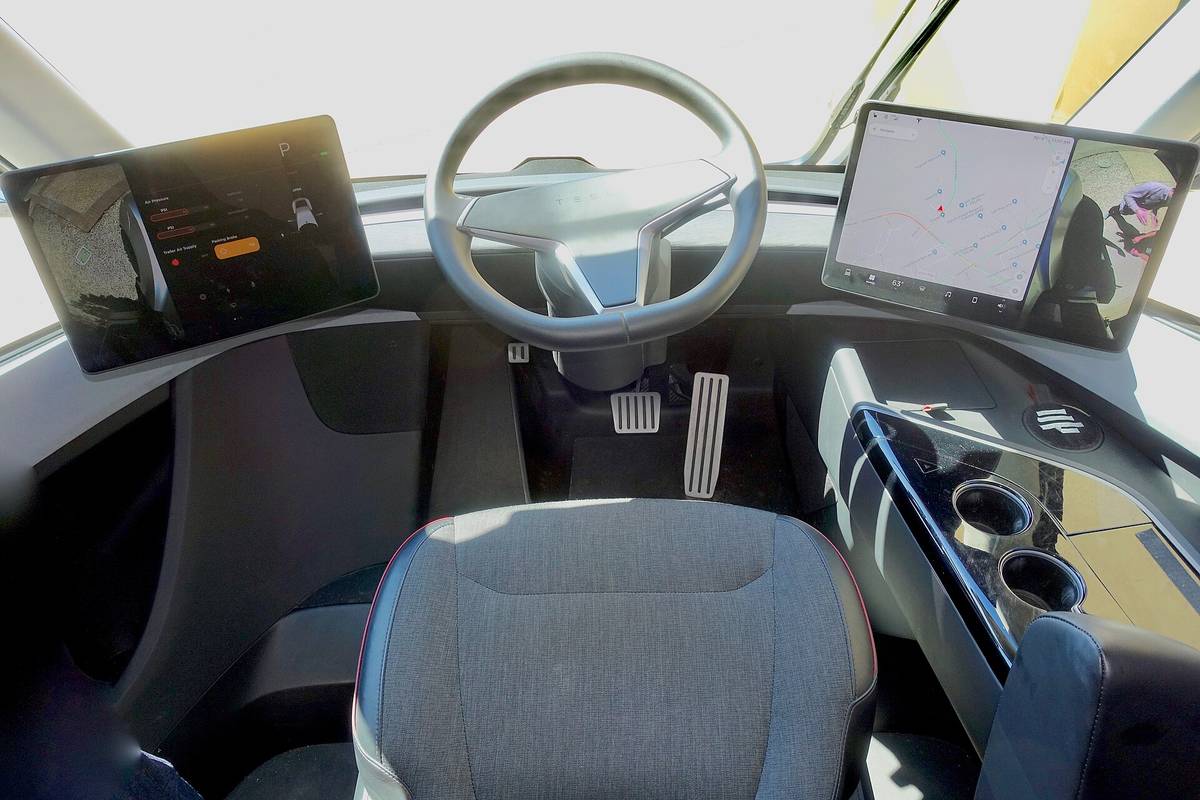
The Semi now has electric steering, too. Tesla says it's the first heavy-duty truck with it. That means no hydraulic pumps, and no fluids that leak and need servicing. Tesla also says it "lays the groundwork for future autonomy." In plain terms, that's trucks that can one day drive themselves.
Heating and cooling now run through what Tesla calls the Megamanifold. It's a heat pump system. It heats and cools the cab, and it also keeps the motors and battery at the right temperature. It comes from the same family of heating and cooling hardware as Tesla's Cybercab.
Inside, there's acoustic glass to cut noise, windows that roll down, and a cab tall enough to stand up in. Parts of the pre-trip inspection are now automated. That's the safety check drivers have to do before they set off. The truck also keeps electronic logs of when those checks were done.
Not a Tesla App adds one more feature, called Driver Profiles, stored in the cloud. Lots of fleets rotate different drivers through the same truck. With a profile, the seat, steering wheel and mirrors adjust to a driver's saved settings when they sign in. On the European version, that recap says, cameras replace the side mirrors. That software detail comes from Not a Tesla App. The wider list of hardware changes comes from Electrek and TechCrunch as well.
Tesla admits it got the windows wrong
If you only watched the charging demo, you might've missed this bit. The original Semi had pop-out side windows that didn't fully open. Drivers and bloggers complained for years. On Thursday, Priestley owned it.
He called the old design "not sufficient." TechCrunch quotes him. "We fully admit we were wrong about the windows."
The new truck has ordinary roll-down windows. His reason was practical. Badge readers, toll booths and call boxes all sit at that height. "It's okay to be wrong, Dan," Moravy added, according to TechCrunch.
It sounds small. But a fleet manager will care about it right alongside range. You can't swipe into a truck yard through a window that won't open.
500 real-world miles, and the doubters
Priestley spoke about the Long Range figure, as Reuters reports. "That's 500 real-world miles. Our customers have validated it." The Standard Range stays at 325 miles, the same as on the February spec sheet.
That 500-mile promise with a full load goes back to 2017, and it drew years of mockery. TechCrunch points out that Bill Gates wrote in a 2020 blog post that electric big rigs would "probably never be a practical solution" because "batteries are big and heavy."
On Thursday, Moravy and Priestley took a swipe without naming anyone.
First, Priestley explained the thinking behind chasing every last bit of efficiency, TechCrunch reports. Make the truck more efficient, and you need less battery for the same work. Take battery out, and you cut both the cost and the weight.
Then came the exchange. Moravy said, "We had some naysayers, names shall not be mentioned." Priestley said, "But, pretty well-known names." And Moravy finished it. "And at Tesla, we love when people tell us something's impossible. So we took that challenge."
To be clear, nobody on stage named Gates. The link to his 2020 comments is TechCrunch's background, not something Tesla said.
The 30-minute charging demo
Now, back to that charger. TechCrunch says the Semi went from about 3 percent to 60 percent on a megawatt charger while the talk ran. A megawatt is a million watts. Not a Tesla App says the truck started at 0 percent, not 3. It says the Semi got back roughly 300 miles of highway range in that same 30 minutes. So the two reports differ on the starting point.
Electrek gives Tesla's broader claim. It's up to 60 percent of range back in 30 minutes.
Tesla also showed a map of Megacharger sites along major freight routes. Electrek says it's heavy in California, Texas and the East Coast, with big gaps across the Mountain West and the Plains.
A person familiar with the matter told TechCrunch, on the condition of not being named, that charging is still a hurdle. The same person said customers can take delivery whenever they're ready. In practice, the charger map decides where these trucks can actually work.
Priestley talked about how Tesla is building out that network during the event, TechCrunch reports. But plans aren't plugs. Any fleet counting on lots of chargers across the Mountain West right away is getting ahead of the map Electrek describes.
Diesel versus electricity
Tesla's money pitch came as a chart. Electrek says it compared the fuel cost per mile of a diesel truck getting 7 miles per gallon with a Semi using 1.7 kWh per mile, charged at electricity rates for transportation. Going by that chart, diesel has jumped back up to about 80 cents a mile this year. Electricity has stayed at 20 to 30 cents a mile.
That gap is the business case Tesla wants buyers to see.
Musk's video, as TechCrunch reports, said the same thing out loud. The Semi makes "a ton of sense economically, because the cost of electricity per mile is much less than the cost of diesel, especially in these crazy times."
Tesla made two more claims, Electrek reports. It says its Semi fleet has been up and running more than 98 percent of the time so far in 2026. That's called uptime. And it says the truck "requires almost no maintenance." Those are Tesla's own claims from its launch materials. They aren't independent measurements.
Who showed up, and the 2,500-truck order
Customer trucks at the event carried logos from PepsiCo, DHL, US Foods, ABF, Einride, IMC Logistics and WattEV, among others, Electrek reports. Reuters says PepsiCo, DHL and US Foods were among the customers invited on stage. Tesla will also use Semis to haul its own freight.
The biggest order came from the ZET SCALE alliance and Catalyst Mobility. It's for 2,500 trucks, with Tesla as the main supplier. Reuters and Autoweek say Microsoft and PepsiCo are among the cargo owners in that group.
According to Reuters, the nonprofit said the order nearly doubles the number of electric Class 8 trucks already working in the US. It follows a 500-truck order in August from Einride AB, a Swedish freight technology company, as Autoweek and Reuters report.
PepsiCo's small batch of trucks since late 2022 was the trial run. Thursday was about mass production, and deliveries starting now.
What about the price?
Tesla didn't confirm pricing at the event. Here's what's out there instead.
Electrek reported earlier that Tesla was quoting about $290,000 for the 500-mile Long Range and about $260,000 for the Standard Range. Electrek says that's roughly 60 percent more than the $180,000 Tesla advertised back in 2017. It's still about $145,000 below the average price of an electric Class 8 truck, by Electrek's comparison.
TechCrunch says the most capable version is expected to cost "just shy of $300,000 before incentives." Before incentives means before any government rebates or tax breaks come off. That's TechCrunch's reporting. Tesla didn't put that number on stage.
Reuters and Autoweek both note that Tesla didn't reveal pricing. Reuters also says Tesla didn't give production volume plans, beyond repeating the goal of 50,000 a year. So treat those dollar figures as reports. They're not a price Tesla announced on Thursday.
Musk on video: fun to drive, and a waiting list
In his pre-recorded video, Musk said the Semi will be the "funnest truck to drive," TechCrunch reports. He also promised partial automation in the "near future." Those are features that help with the driving. TechCrunch notes they've been "curiously missing from the Semi despite the years of delays."
Reuters quotes Musk nudging buyers. "I'd recommend placing more orders if you haven't already, but the waiting list is already pretty significant." Autoweek reports the same point about the waiting list.
So there's no date for self-driving features on the Semi. The electric steering is the hardware groundwork, according to Electrek. And "near future" is as specific as Musk got.
Emissions, and Tesla hauling its own freight
Priestley said heavy trucks produce 16 percent of emissions, even though they're just 1 percent of vehicles on the road, TechCrunch reports.
He also talked about putting Semis to work in Tesla's own operations. "We're super excited to be deploying these into our own operations because it's fulfilling the mission that we originally started out [with]."
TechCrunch also points out that Tesla's been talking a lot more about robots and AI lately. Its mission language has been shifting toward "build a world of amazing abundance." Thursday was a return to talk about sustainable-energy trucking. That's useful background. But at heart, Thursday was a volume launch for the Semi.
Europe: same line, later date
The European version is built on the same Nevada line, Electrek and Not a Tesla App report. We've covered Tesla's European plans before, including deliveries starting there in 2027.
The new bit for European readers is about supply. The Standard Range, the Long Range and the European model all come off the same high-volume equipment in Sparks.
Two smaller things
Not a Tesla App says Tesla has officially added the Semi to the top menu bar of tesla.com. It now sits next to the cars Tesla sells to everyday buyers. It's a small website change, but it's worth a mention.
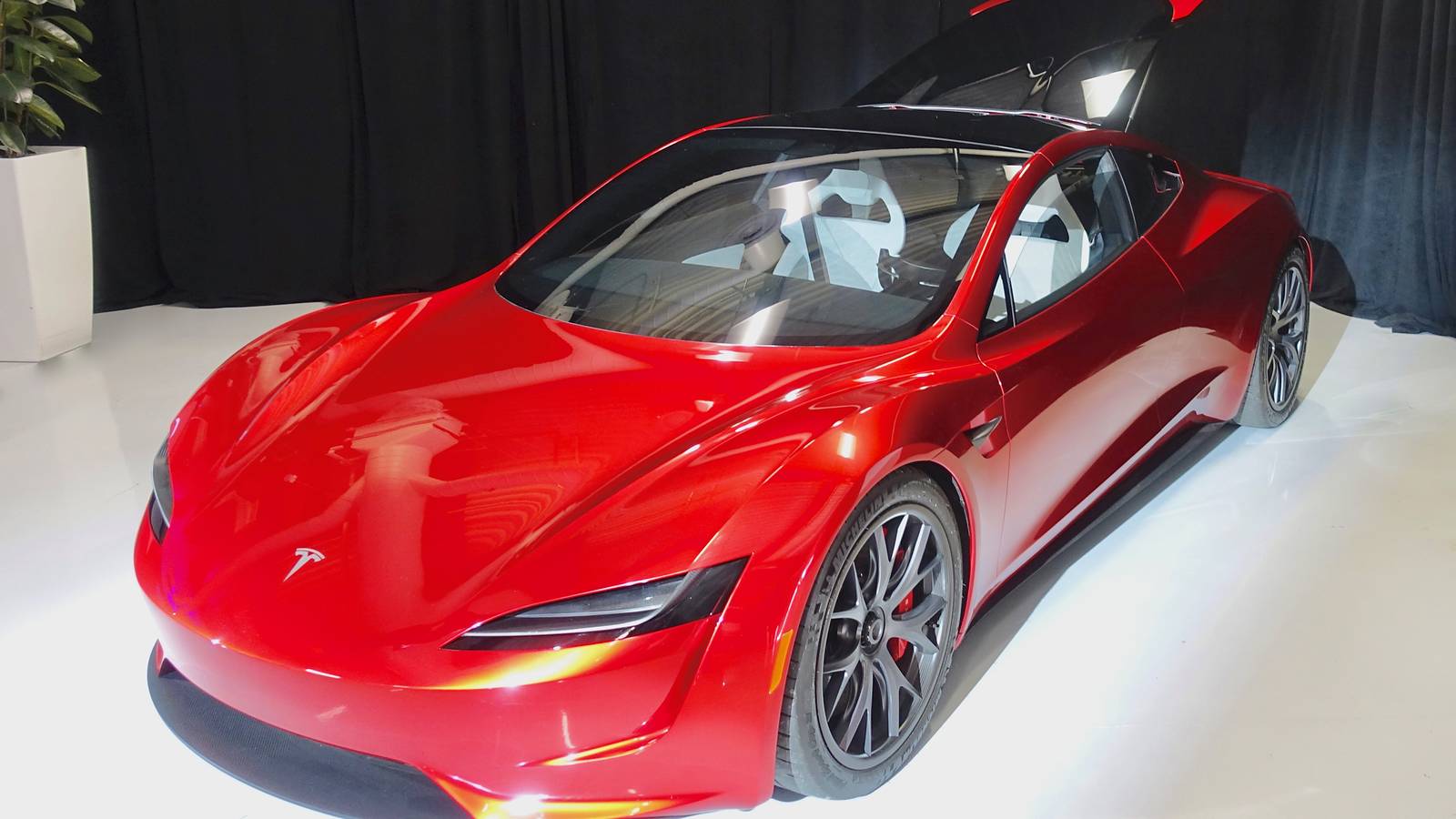
And there was a surprise at the end. Tesla teased a next-generation Roadster, its sports car, ahead of a reveal on 1 October, according to the same recap. That's all we'll say about it here. This story's about the truck.
What we still don't know
A few things are still missing. Tesla didn't restate the exact battery pack size in kWh at the event, according to Electrek. It didn't confirm a price. The charger map still has big gaps. There's no date for self-driving features. And nobody knows yet how many trucks will actually reach customers.
Why volume is the story
Showing off a truck is easy. Building lots of them is hard.
The useful news from Thursday isn't that Tesla once showed a Semi in 2017. It's that a dedicated plant of about 1.8 million square feet is launching high-volume production. It's that deliveries start now. And it's that the truck on the line has been redesigned to be built in big numbers. Fleet buyers also got a charging demo, a fuel-cost chart and a waiting-list warning, all in the same half hour.
Whether Tesla ships thousands of trucks or just a trickle is the next question. Electrek says it's watching 2027 delivery numbers for exactly that reason.
The short version
On Thursday night, 24 September, Tesla launched high-volume Semi production at its new factory beside Gigafactory Nevada in Sparks. It says deliveries start now.
The plant is about 1.8 million square feet. The goal is 50,000 trucks a year, or about 1,000 a week, with about 3,000 local jobs, according to TechCrunch.
The truck's been redesigned. It's got bigger battery cells, a reworked motor, electric steering, one axle oil instead of three, roll-down windows and about 1,000 pounds less weight.
Range is 325 miles for the Standard Range and 500 miles for the Long Range, at 82,000 pounds.
The charging demo got the truck to 60 percent in about 30 minutes. But the charger map still has big gaps in the Mountain West and the Plains.
The biggest order is 2,500 trucks from the ZET SCALE alliance and Catalyst Mobility. Einride ordered 500 in August.
Tesla didn't confirm a price. Electrek earlier reported about $260,000 and $290,000. TechCrunch says "just shy of $300,000 before incentives."
Musk wasn't there. On video, he said the waiting list is "already pretty significant."
Where this comes from
Electrek, Fred Lambert, 25 September 2026. Read Electrek's report. It covers the launch, the factory size and capacity, the redesign, the charger map, the fuel-cost chart, customer logos, earlier pricing and the uptime claim.
TechCrunch, Sean O'Kane, 25 September 2026. Read TechCrunch's report. It covers Musk's absence and his video, the charging demo, jobs, the windows, the axle oils, the weight cut, the jab at the doubters, emissions, charging hurdles and the expected price.
Reuters, Abhirup Roy, updated 25 September 2026. Read the Reuters report. It covers the start of deliveries, the 500-mile quote, the waiting list, the ZET SCALE and Einride orders and the July shareholder letter.
Autoweek, Natalie Neff, 25 September 2026. Read Autoweek's report. It covers the nine-year wait, the customers on stage, the 50,000 goal and the big orders.
Not a Tesla App, Nehal Malik, 25 September 2026. Read Not a Tesla App's recap. It covers the factory, the white powder coat, Driver Profiles, the charging demo, the tesla.com menu change and the Roadster teaser.
Tesla Semi's account on X and Tesla's event materials, as reported by the outlets above.
The bottom line
On Thursday night in Sparks, Tesla launched high-volume production of a truck that's been in public view for almost a decade. It says deliveries start now. The truck on the line is the redesigned version, and the charging demo ran while the executives talked.
Fifty thousand trucks a year is the goal. The charger map still has holes. Pricing stayed off the stage. And the waiting list, Musk said on video, is already pretty significant.
The paper
Comments
No notes on this story yet.
Sign in to comment