
Crew-13's Dragon Grace docked at the International Space Station on Thursday, 1 October 2026, just 7 hours and 55 minutes after it left Florida. It lifted off at 11:10 a.m. Eastern and was on the station's Harmony forward port by 7:05 p.m. the same day. NASA called it the fastest launch-to-docking of a U.S. spacecraft in the history of the International Space Station.
Here's who flew, how the chase went so fast, what the record does and doesn't mean, and what happens on the station next.
In Adelaide, that docking landed at about 8:35 on Friday morning. The hatch opened a couple of hours later. In Florida it's still Friday afternoon as you read this on Saturday morning, and NASA says the station crew slept in on Friday and spent the rest of the day relaxing.
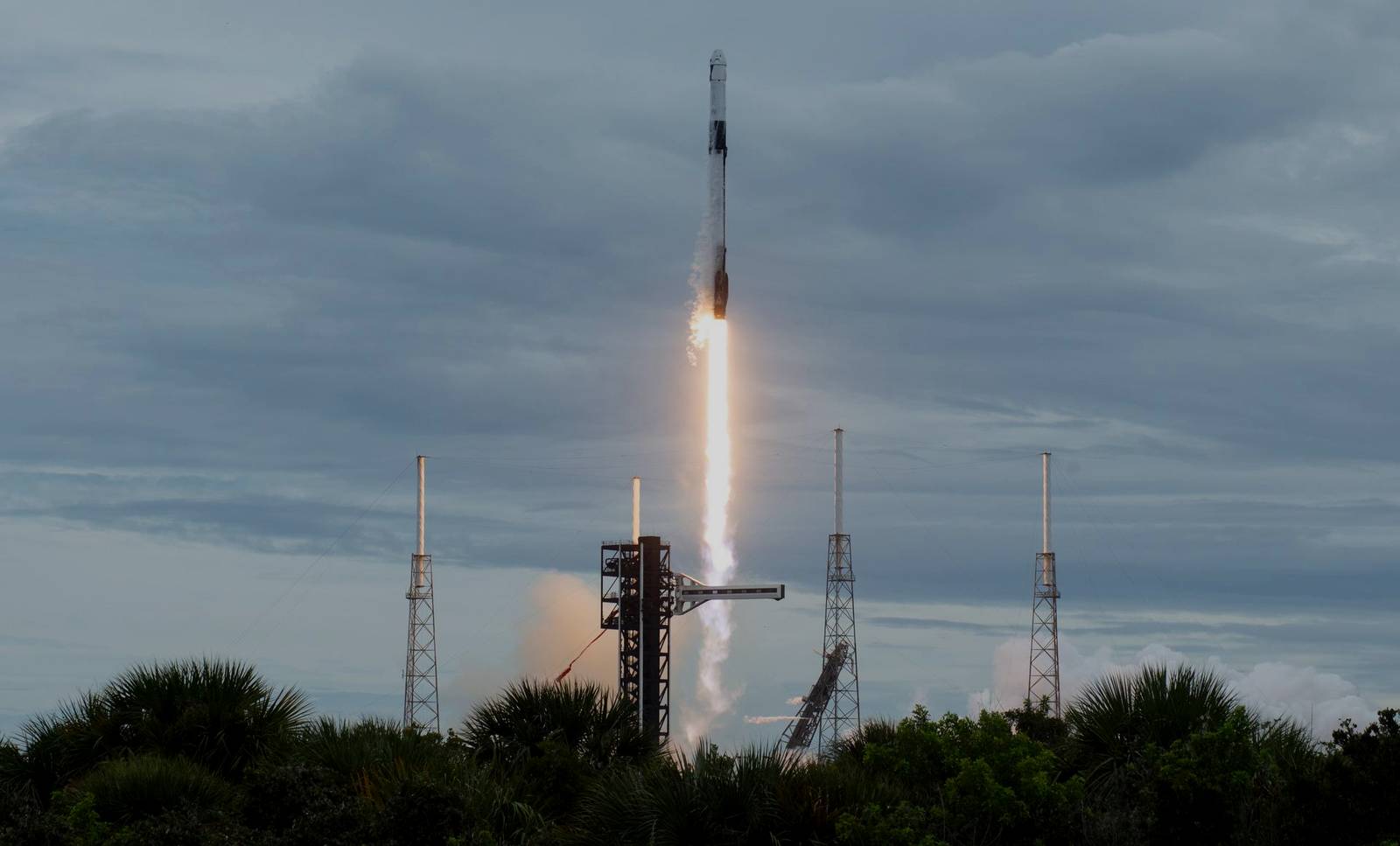
Liftoff from Pad 40
A SpaceX Falcon 9 with a Dragon spacecraft on top left Space Launch Complex 40 at Cape Canaveral Space Force Station at 11:10 a.m. EDT on Thursday, 1 October 2026. On board were NASA astronauts Jessica Watkins and Luke Delaney, CSA (Canadian Space Agency) astronaut Joshua Kutryk, and Roscosmos cosmonaut Sergey Teteryatnikov. Watkins is the commander.
NASA says Crew-13 is the 13th crew rotation flight of the Dragon spacecraft and Falcon 9 rocket. That's the regular service that followed the Demo-2 test flight, run under NASA's Commercial Crew Program. On launch day NASA put it inside its Low Earth Orbit Program, which it says gives safe, reliable rides to the station through American private companies. The crew's science is meant to help plan for the Moon and Mars while still paying off back on Earth.
The weather wasn't a sure thing. That morning the U.S. Space Force's 45th Weather Squadron gave a 40 percent chance of good conditions at the pad. The worries were the usual Florida ones: the cumulus cloud rule, the thick cloud layers rule and flight through precipitation. The rocket went at 11:10 a.m. anyway.
After the rocket's stages split, NASA said Dragon had safely reached orbit, separated from Falcon 9's second stage and opened its nose cone. A post-launch news conference was set for about 1:10 p.m. EDT at Kennedy Space Center. That same NASA post laid out the plan: just under eight hours of phasing, docking targeted for 7 p.m. at the space-facing port of Harmony, and the fastest launch-to-docking in station history. NASA's later docking post put Grace on Harmony's forward port.
The capsule is Grace
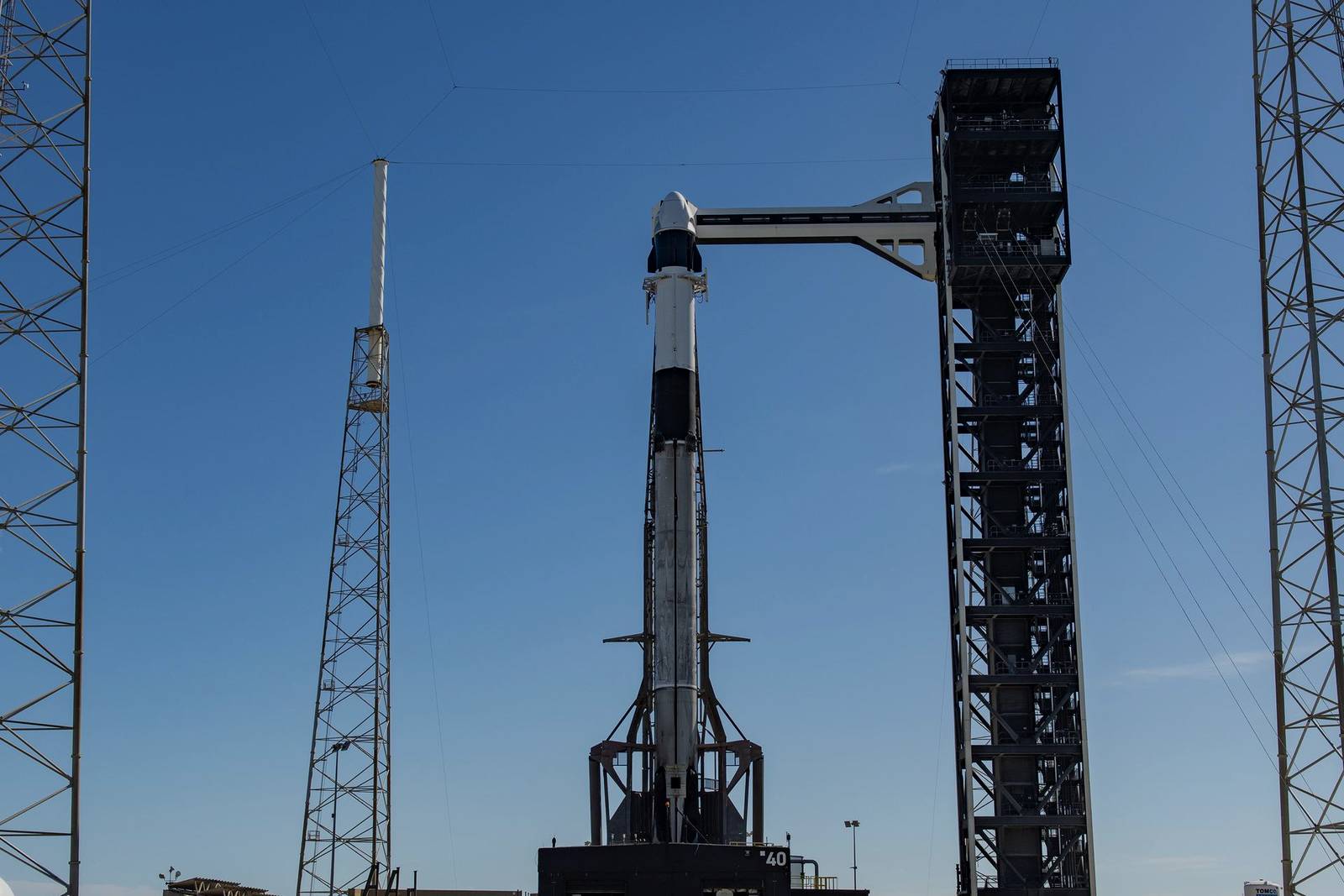
NASA named the spacecraft on launch morning. With communication checks complete, it said, the hatch was closed on SpaceX's Dragon spacecraft Grace. This is Grace's second flight to the International Space Station. Its first was in 2025, on Axiom Mission 4.
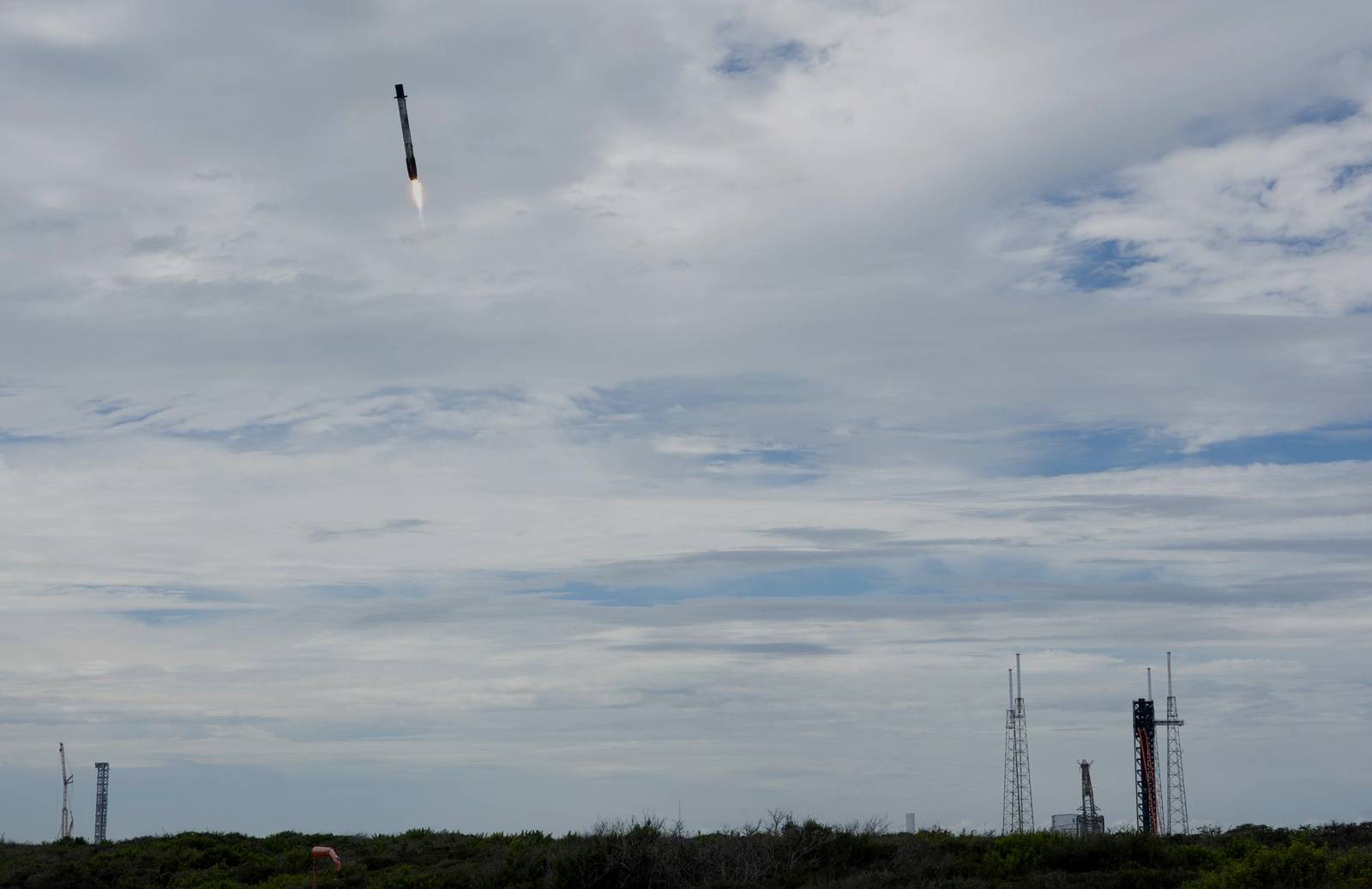
The rocket's first stage came home too. NASA photograph NHQ202610010031, credited to Joel Kowsky, shows the Falcon 9 first stage landing at Space Launch Complex 40 after the Crew-13 launch. So the booster flew back to land beside its own pad at the Cape, rather than touching down on a ship at sea.
Seven hours, fifty-five minutes
NASA's docking post is short. Watkins, Delaney, Kutryk and Teteryatnikov arrived at the station at 7:05 p.m. EDT, docking to Harmony's forward port. "At 7-hours and 55-minutes, this marked the fastest launch-to-docking of a U.S. spacecraft in the history of the International Space Station," NASA wrote.
Note the wording. It's the fastest U.S. spacecraft, in station history. It isn't the fastest anything has ever reached the ISS.
Space.com's Mike Wall reported the earlier U.S. marks that evening, citing NASA officials. The previous U.S. record was 12 hours and 33 minutes, set in November 2024 by a Dragon cargo capsule on the robotic CRS-31 resupply flight. The fastest astronauts had made the trip in a U.S. vehicle before this was 14 hours and 43 minutes, on Crew-11 in August 2025.
So why so quick this time? Julianna Scheiman, director of NASA science and Dragon programs at SpaceX, told the post-launch press conference, as Space.com reported: "We got lucky this time." Then: "The space station was in an opportune spot in space, and the orbital mechanics, the physics of it all, worked out for it to be the shortest launch-to-docking time we've had to date." She added that "this is close to the fastest it could be."
Watkins spoke from the station on Thursday evening, Houston Public Media reported on 2 October. "It's amazing and kind of ironic to think that it's such a short trip to get here because the journey to get here has been long," she said. That long journey is the delay story further down.
Fastest American, not fastest ever
Crew-13 didn't take the overall speed record to the station. Space.com reported that a Russian Soyuz carrying three people reached the lab in 2020 just 3 hours and 3 minutes after lifting off from Baikonur, catching up after only two orbits of Earth.
That's not because Soyuz is the faster ship. Space.com said the gap comes mostly down to choices made by mission controllers, and Russia tends to fly more aggressive "fast-track" paths. Crew-13 got the short American version that the station's position allowed on 1 October.
So if someone tells you it was the fastest trip to the ISS ever, that's wrong. If they say it was the fastest launch-to-docking by a U.S. spacecraft in station history, NASA backs them.
How a fast chase works
The station circles Earth about every ninety minutes. A Dragon launching after it has to raise its orbit with planned engine burns, line up to approach along the right path, then fly itself in to a set port. If the station is in what Scheiman called an "opportune spot" at liftoff, those catch-up burns can be shorter. If it isn't, Dragon spends more orbits catching up. Crew-13 got the short version.
Even with automatic docking, people on the ground are watching every step. Docking at 7:05 p.m. and opening the hatch at 9:19 p.m. are two different clocks for a reason. The crew has to check for leaks before anyone floats through.
Hatch open, Expedition 75
Right after docking, NASA said the crew would run standard leak checks and pressurization before opening the hatch, then planned for about 8:45 p.m. In the end the hatch opened at 9:19 p.m. EDT, and Watkins, Delaney, Kutryk and Teteryatnikov floated into the station.
Crew-13 joined Expedition 75. Already aboard were NASA astronauts Jessica Meir, Jack Hathaway and Anil Menon, ESA astronaut Sophie Adenot, and Roscosmos cosmonauts Pyotr Dubrov, Anna Kikina and Andrey Fedyaev. That brings the number of people living on the station to 11, NASA said on Friday.
The parking spots were full, too. NASA's station map for 1 October showed six spacecraft attached: the Crew-12 and Crew-13 Dragons, a Northrop Grumman Cygnus XL, the Soyuz MS-29 crew ship, and the Progress 95 and 96 cargo ships. That's a normal handover week. One Dragon arrives, another gets ready to leave, cargo ships stay put, and the Russian side keeps its own traffic.
The long road to a short trip
Crew-13 didn't fly on its first date. As we reported in NASA slipped Crew-13 after a Dragon oxidizer leak, Cole Vance covered the August delay. NASA and SpaceX moved the launch date after an oxidizer leak on Dragon's propulsion system turned up during standard prelaunch processing. That pushed it off a mid-September target.
Teams fixed it. On 30 September the Launch Readiness Review ended with mission leaders polling "go," and Thursday's 11:10 a.m. launch time held. The short chase on Thursday doesn't cancel out the weeks on the ground before it, which is the point Watkins was making.
Harmony's forward port has a recent story of its own. Meir and Adenot worked outside that module in September. Their spacewalk is here: Meir and Adenot finish a 6-hour, 49-minute ISS spacewalk. On US spacewalk 99 they fitted a new docking target to Harmony, among other jobs. Grace has now docked at that same forward port.
Crew-12 is packing to leave
NASA's Friday station blog sets out the handover. The new crew will spend a few days getting used to weightlessness and learning station systems. On Saturday, 3 October, US time, Crew-13 will unpack Dragon, move standard safety gear into the spacecraft, and go over emergency roles and responsibilities.
On Sunday, 4 October, the departing Crew-12 members will formally hand their duties to the new crew. NASA astronaut Jessica Meir will pass command of the station to Roscosmos cosmonaut Pyotr Dubrov at a change-of-command and farewell ceremony starting at 10:20 a.m. EDT, with the ceremony streamed online. That's 12:50 a.m. Monday in Adelaide, once daylight saving starts on Sunday.
The Crew-12 members have spent the past several days packing cargo, setting up their Dragon and testing their pressure suits. Weather permitting, Meir, Jack Hathaway, Sophie Adenot and Andrey Fedyaev could start the trip home as early as Monday, 5 October, with a splashdown off the California coast. NASA and SpaceX are watching the weather there, with more departure weather briefings over the weekend. NASA says it'll put out an advisory once the return plan firms up. Until then, Monday is a hope, not a date.
Where commercial crew sits on the contract clock
Crew-13 isn't a one-off. It's another rotation in a program NASA bought so American crews wouldn't depend on one foreign ride. We covered the latest contract add in Three more crew flights through thirty. On 18 September 2026 NASA posted a CCtCap change buying Crew-15, Crew-16 and Crew-17 for $946 million. That takes SpaceX to seventeen missions and about $5.92 billion under that contract, with the work running through 2030.
For the wider industry picture, Joss Renn's NASA's Commercial Crew Bet Keeps Paying Off covers the partnership. The money still matters here, because Crew-13 is only a boring, repeatable product if NASA keeps buying the next seats.
NASA's own pitch on launch morning was that working with American private industry opens low Earth orbit and the station to more people, more science and more commercial opportunities. You can like that line or argue with it. Either way, that's what NASA said.
The short version
Most crew rotation days are logistics. Seats change, experiments get handed over, and a capsule that's flown once goes back for another tour. Thursday added a number you can say out loud: seven hours, fifty-five minutes, Florida to Harmony, a U.S. record for the station.
It wasn't magic. Scheiman says the station was in the right place and the physics lined up. Crew-13 is on board, Grace has docked on its second ISS flight, and Expedition 75 just got bigger. Crew-12 is packing, with a Sunday change of command and a ride home that still needs the California weather to cooperate.
Sources
NASA: Dragon Docks Bringing SpaceX Crew-13 to Station (1 Oct 2026). Docking at 7:05 p.m. EDT on Harmony's forward port, 7 hours 55 minutes, the U.S. record, hatch then planned for about 8:45 p.m.
NASA: NASA's SpaceX Crew-13 Reaches Orbit (1 Oct 2026). Orbit, nose cone open, about eight hours of phasing, 7 p.m. docking target.
NASA: Crew-13 Members Enter Station, Join Expedition 75 (1 Oct 2026). Hatch open at 9:19 p.m. EDT, the Expedition 75 crew and the station map.
NASA: Station Crew Expands as NASA's SpaceX Crew-12 Prepares to Depart (2 Oct 2026). Saturday unpacking, Sunday change of command, Crew-12 return as early as Monday, weather permitting.
NASA: Hatch Closed on Crew-13 SpaceX Dragon Spacecraft (1 Oct 2026). The capsule is Grace, on its second ISS flight after Axiom Mission 4 in 2025.
NASA: Launch Day for NASA's SpaceX Crew-13 Mission (1 Oct 2026). Weather odds and the Low Earth Orbit Program.
NASA: Live Streaming Coverage of NASA's SpaceX Crew-13 Mission Begins (1 Oct 2026). The 11:10 a.m. EDT target from SLC-40 and the Crew-12 handover plan.
NASA: NASA, SpaceX Conclude Review, Crew-13 'Go' for Launch (30 Sep 2026). The Launch Readiness Review.
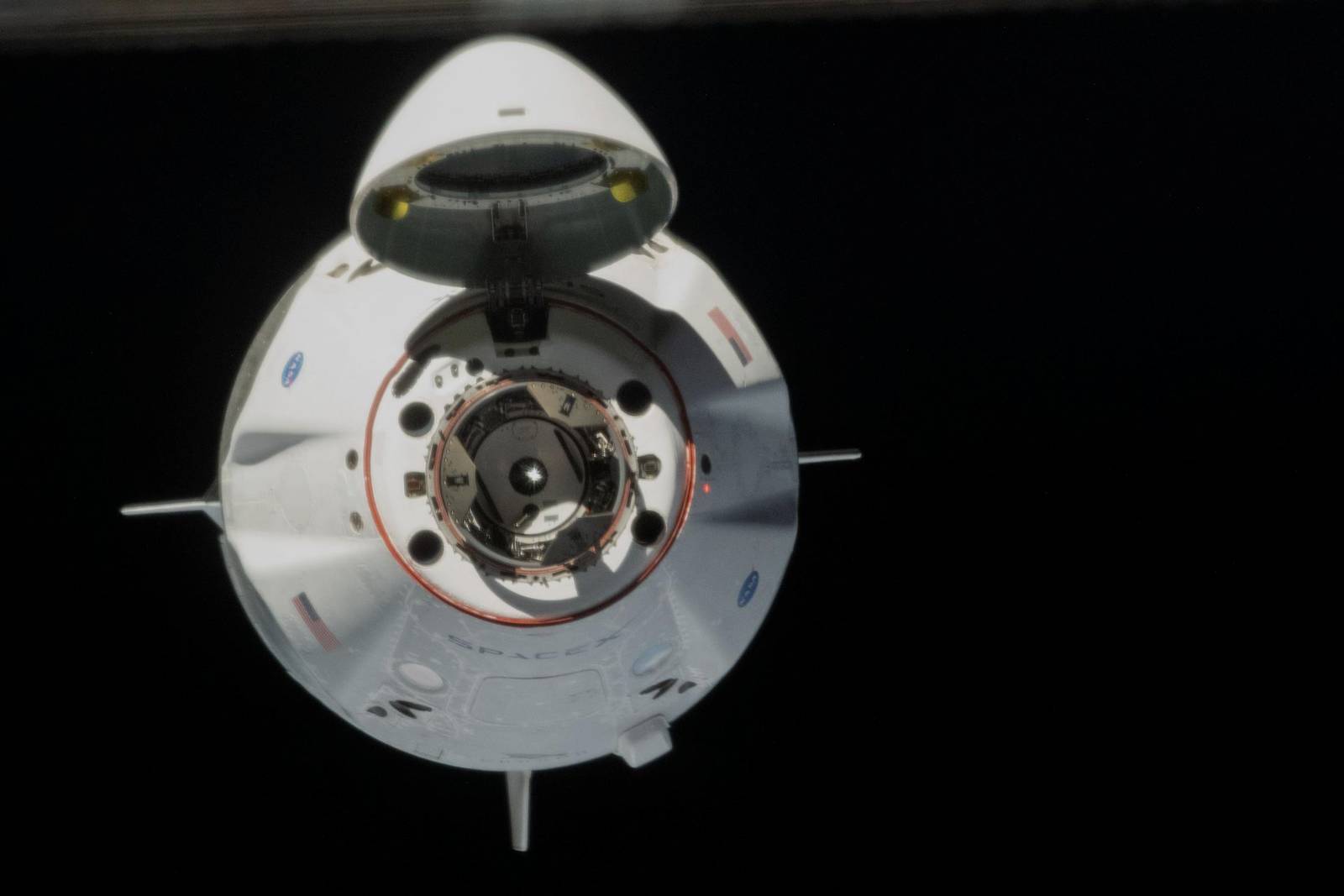
Photos come from the NASA Image Library: NHQ202610010027 (liftoff), KSC-20260927-PH-SPX01_0004 (vertical at SLC-40), NHQ202610010031 (first-stage landing at SLC-40), and iss063e021563, an earlier Crew Dragon approach, not Grace.
Video: NASA's SpaceX Crew-13 Launch on NASA's YouTube channel.
Also: Space.com, Mike Wall, 1 Oct 2026 (earlier U.S. records, Scheiman's quotes and the Soyuz comparison) and Houston Public Media, 2 Oct 2026 (Watkins's quote from the station).

The paper
Comments
No notes on this story yet.
Sign in to comment