
An Australian satellite held station next to a dead Chinese rocket stage and kept taking pictures for days. That is the news Sydney-based HEO put on the public record this week — and it is the cleanest sovereign space story Australia has offered in a while.
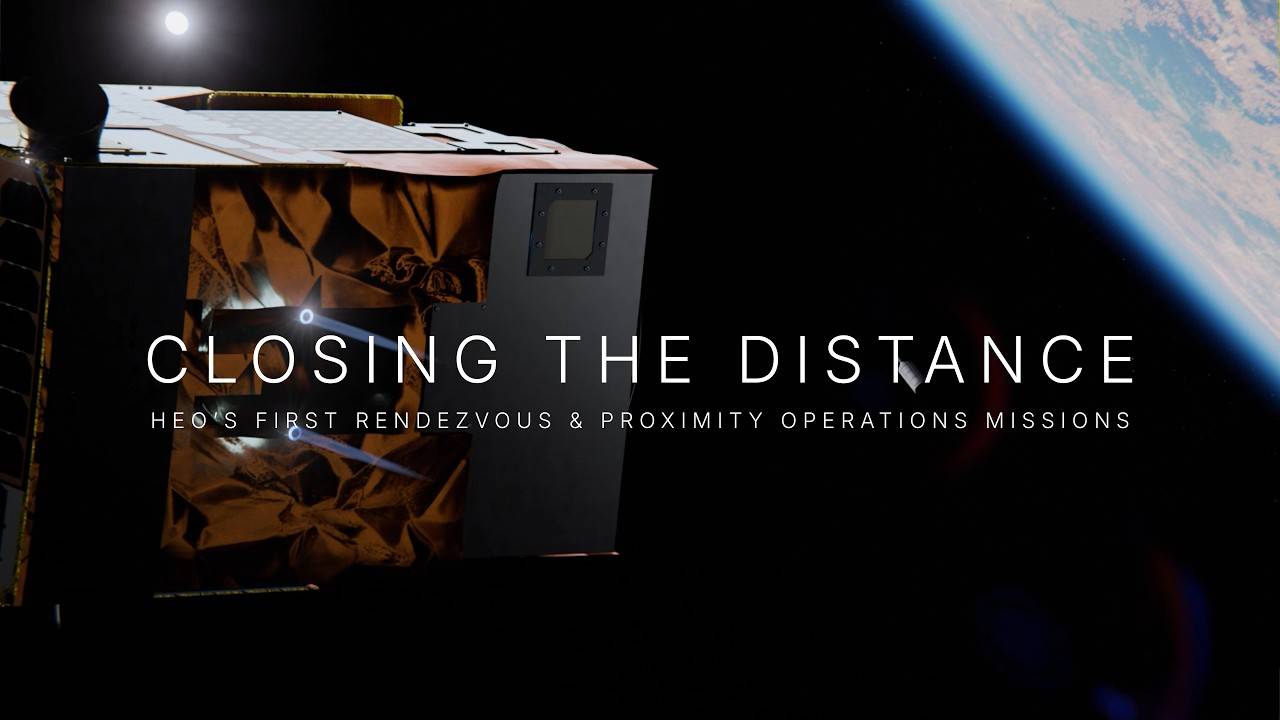
HEO says Continuum-1 — an Earth-observation bird the company already owned — finished a second Rendezvous and Proximity Operations campaign around a non-cooperative CZ-2C rocket body in low Earth orbit. Not a quick flyby. Sustained close-range inspection. Official film for this page is locked on HEO's own channel as 7MMo4X2EY2E — "HEO's First Rendezvous & Proximity Operations Mission."
If you only keep one sentence, keep this: Australia just showed it can turn a satellite built to look at Earth into a spacecraft that parks near junk and reads it in high detail — without launching a purpose-built inspector for that one object.
The partners on the campaign are Satellogic on mission operations and UNSW Canberra Space on manoeuvre planning and ground-based tracking. Money came through Defence Trailblazer's Advanced Innovation Fund, with the Australian Government Department of Education cited through the Defence Trailblazer program. That is the sovereign stack: Australian company, Australian university space shop, Australian defence-innovation funding, flying hardware already under Australian title.
Flyby was the old habit. RPO is the new one.
HEO's public Non-Earth Imaging work has mostly been flybys. A sensor in the network passes near a target, points, snaps, and keeps going. The window is short. Geometry and lighting run the show. You get what the orbit gives you.
Rendezvous and Proximity Operations changes the bargain. Continuum-1 moved into close proximity and stayed in the neighbourhood long enough to observe the same rocket body again and again. HEO says that gave the team more control over imaging geometry, lighting, and relative motion. More time. More angles. Better conditions.
That is not a marketing slogan. It is the difference between glimpsing a tumbling stage as you race past and sitting with it while you tune the picture.
What Continuum-1 actually is
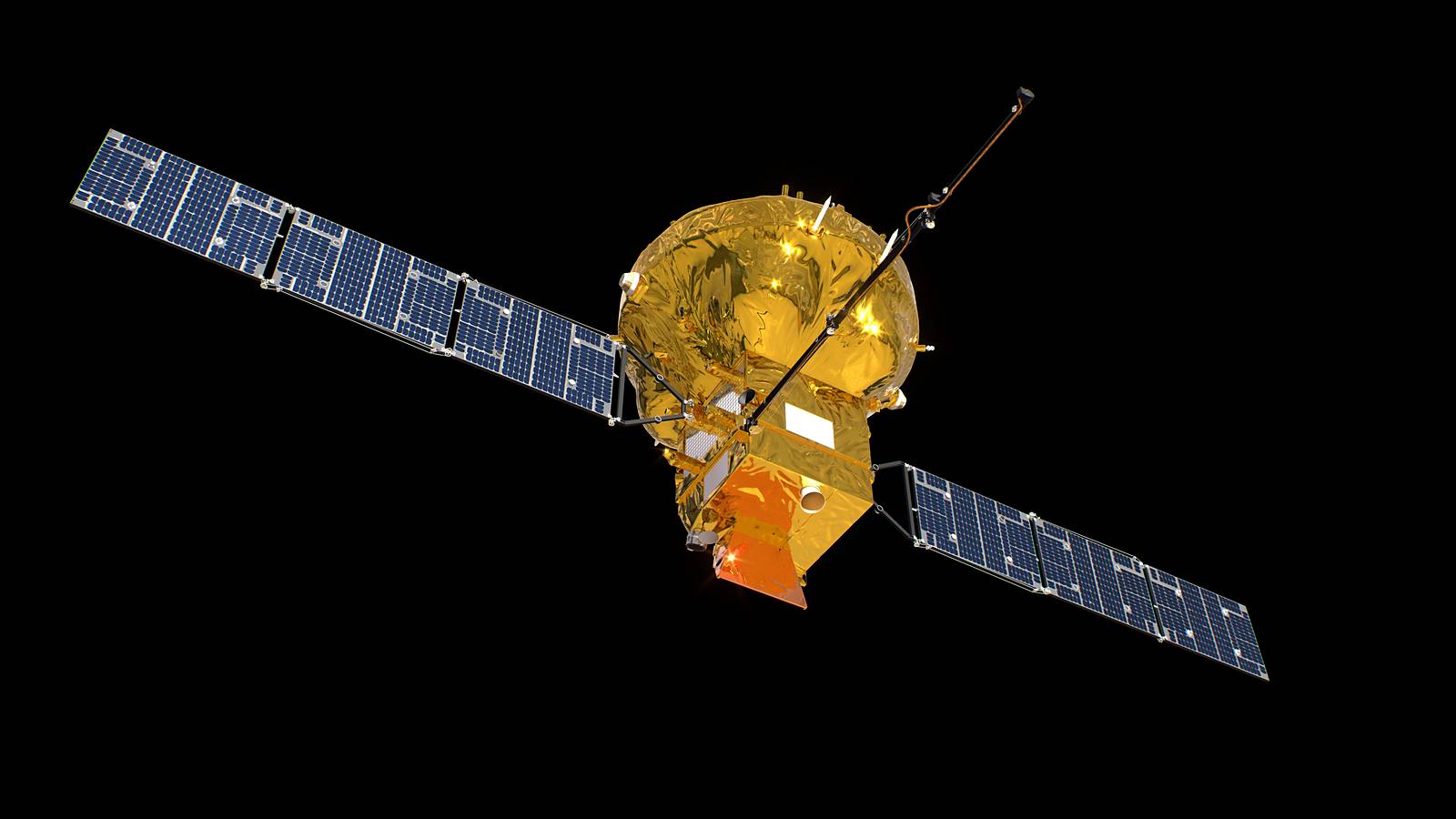
Continuum-1 started life as a Satellogic Earth-observation satellite. HEO acquired it — Satellogic's 14 September note says December 2025 — and HEO's own January 2026 announcement framed the deal as Australia's first sovereign sub-metre remote-sensing satellite under Australian title, previously NewSat-34 in Satellogic's Mark IV-g line.
It was designed to image Earth from several hundred kilometres up. Satellogic's Gonzalo Castillo put the original brief in plain numbers: built to observe Earth from about 500 kilometres away. The camera and the fuel budget were sized for that job, not for hanging around a derelict upper stage.
HEO's point, repeated across the campaign notes, is that software, mission planning, and disciplined fuel management can stretch that platform into proximity inspection without a new dedicated RPO spacecraft. William Crowe, HEO's CEO and co-founder, said it bluntly: nobody is going to launch a purpose-built inspector for every object worth understanding. What matters is how much intelligence you can extract from spacecraft already flying.
Two proximity periods, one campaign
HEO reports two extended proximity windows.
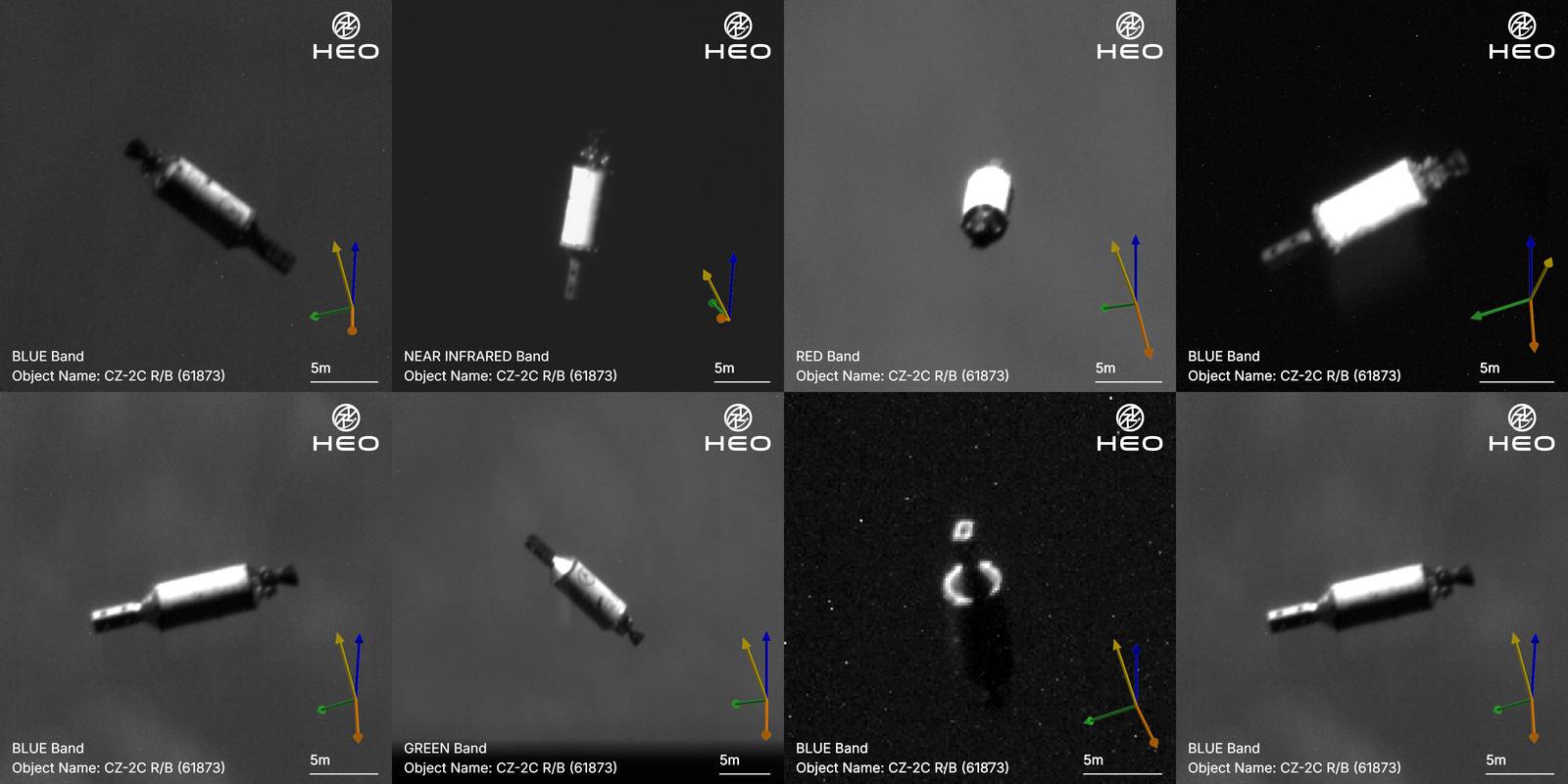
First period: 12 to 16 August 2026. Continuum-1 approached from around 40 kilometres and captured imagery at about 8 centimetres per pixel. Satellogic's mission-ops note adds that after a three-manoeuvre sequence the satellite held position within about 30 kilometres of the target in that first stretch. HEO shared early images from this period in early September.
Second period: 30 August to 4 September 2026. The satellite drifted back toward the object, came within 27 kilometres, and captured imagery at up to 7 centimetres per pixel.
Across both periods, HEO says Continuum-1 spent about 78 hours within 100 kilometres of the rocket body and about 12 hours within 50 kilometres. More than fifty imaging missions. Thousands of individual frames.
Those are company figures. They are the public scorecard. Hold them as HEO's measured claim, not as a tape measure anyone ran in orbit by hand.
What the pictures were for
Asia-Pacific Defence Reporter's write-up of the campaign lists the value HEO claims from sustained proximity: higher-quality views with less motion blur, multiple viewing angles across the campaign, a near-complete view of the object's exterior, data to support accurate sizing, visibility into previously unseen features including the payload adapter, data to characterise tumble rate and profile, and a demonstration of HEO's new focus mode on Continuum-1.
That list is why RPO matters more than a prettier flyer. Before you service a satellite, move it, or try to remove debris, you need confidence in what you are approaching. A tumbling rocket body is a non-cooperative target — no helpful attitude control, no friendly beacon, no operator on the other end saying "hold still." You learn it by watching.
The released mosaics label the object as CZ-2C R/B with catalogue number 61873 on the frame overlays. Satellogic describes it as the spent structural upper stage left behind after a Chinese Long March 2C orbital launch. This piece will not invent a launch name or a date beyond what those primary notes print. The object class is the CZ-2C rocket body. The inspection is of that class of derelict hardware in low Earth orbit.
Retuning a camera that was meant for continents
Castillo's Satellogic quote is the engineering sentence under the sovereignty sentence. Continuum-1 was built to look down at Earth from roughly 500 kilometres. Holding a sharp picture of something 27 kilometres away meant re-tuning the optical payload and the software behind it. Satellogic calls that a demonstration of platform flexibility for Space Domain Awareness applications.
HEO calls the same move a different way to think about what a sensor network can produce. Same satellite. New job. The fuel and the code do the hard work that a brand-new inspector bus would otherwise have to be paid for, built, launched, and insured.
That is the commercial logic Australian readers should hear clearly. Sovereign capability does not only mean "we launched our own rocket." It can also mean "we own a bird already on orbit, we can retask it, and we can prove the manoeuvre under Australian planning and Australian funding."
The Australian stack — HEO, UNSW Canberra, Defence Trailblazer
HEO is headquartered in Sydney — Haymarket address on the company site — with offices abroad. The company's product line is Non-Earth Imaging: pictures of objects in space, on demand, turned into decision-ready intelligence about satellites, debris, and other resident space objects.
UNSW Canberra Space supported manoeuvre planning and ground-based tracking on this campaign. Associate Professor Melrose Brown said the project is an example of a university giving direct support to the Australian space industry, with world-class observational capabilities and team expertise on cutting-edge missions. Brown's group already had heritage in formation flying and proximity work without active propulsion from earlier domestic missions. This campaign is the active-propulsion chapter that the February 2026 partnership announcement promised.
That February note is the prequel. HEO and UNSW Canberra Space announced Australia's first RPO mission with an active propulsion system, funded through Defence Trailblazer's Advanced Innovation Fund, using Continuum-1 as the operational platform. The September completion notes are the receipt on that promise — two proximity periods flown, imagery released, second campaign closed.
Dr Sanjay Mazumdar, Executive Director of Defence Trailblazer, said the campaign advances HEO from flyby imaging to proximity operations and gives real-world validation of tactical RPO manoeuvres. He framed it as commercial innovation drawing on domestic mission expertise, including UNSW Canberra Space's operational capabilities, and as workforce-building for sovereign space capability and security.
Defence Trailblazer itself is the Adelaide University and UNSW partnership supported by the Department of Education and a wide industry network. Adelaide readers get a local institutional thread even when the satellite is somewhere over another ocean: the funding architecture that helped pay for the manoeuvre planning lives in the same national defence-innovation machine that sits partly on South Australian university rails.
Why a dead rocket body is a serious target
Rocket bodies are among the largest pieces of debris in low Earth orbit. They tumble. They carry leftover energy histories that make passivation and fragmentation a long-term worry for everyone who shares the altitude band. They are also honest non-cooperative targets — no attitude-control cooperation, no ground team to help you.
Inspection of that class of object is practice for the harder jobs coming: satellite servicing, orbital logistics, debris removal, and any commercial infrastructure that requires one spacecraft to approach another safely. HEO's campaign notes lean on that sequence. First you understand what you are approaching. Then you talk about docking, relocating, or removing.
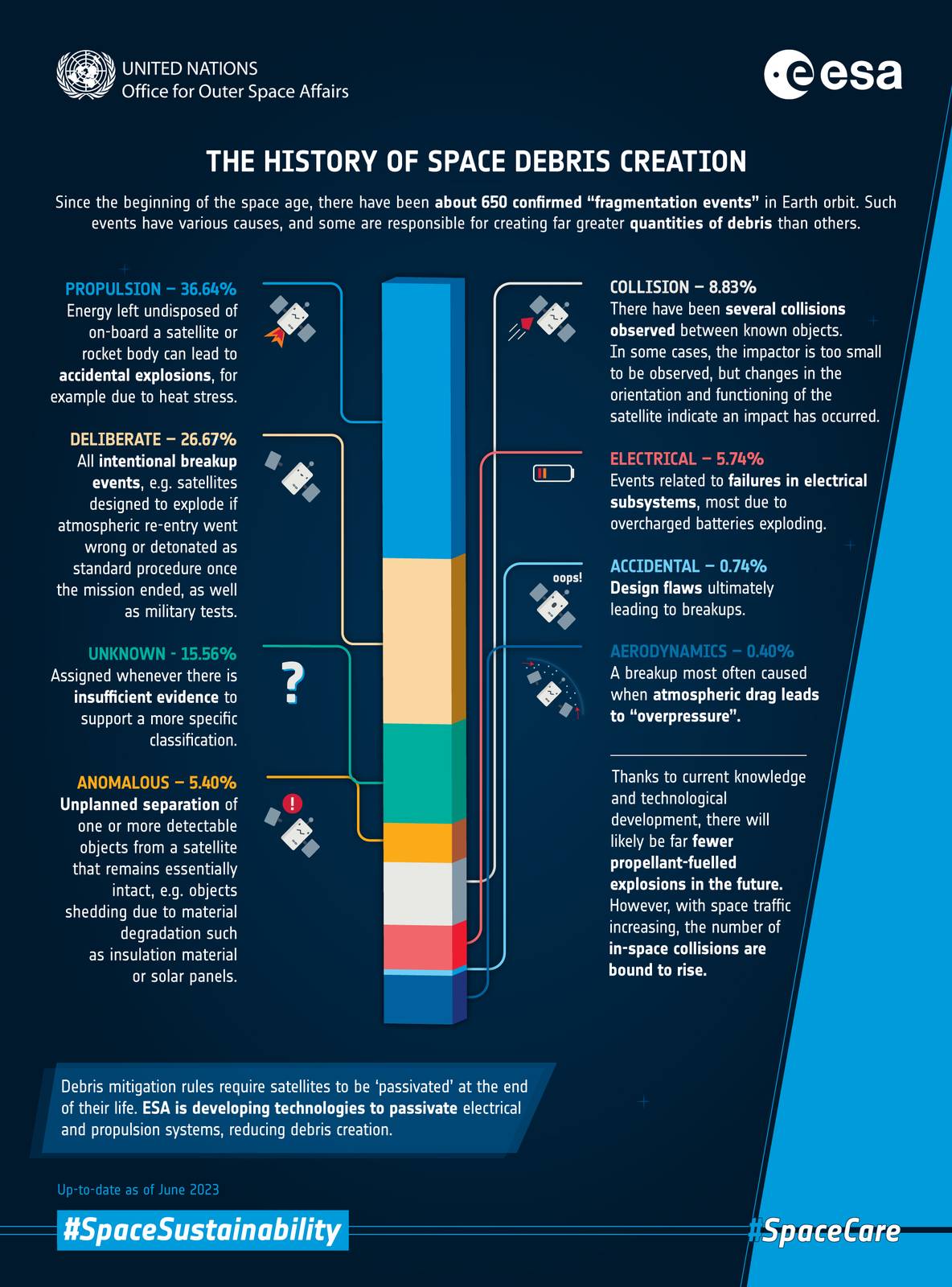
ESA's public debris-creation charts make the same ambient point without a scare headline: propulsion-related fragmentation events have seeded a large share of the debris environment, and traffic growth raises collision risk even as passivation rules try to cut future explosions. This is an Australian inspection story sitting inside that wider debris and domain-awareness problem.
From LEO receipt toward GEO ambition
HEO says the campaign builds on existing Non-Earth Imaging capability, supports future inspection missions in low Earth orbit, and backs the company's path toward proximity operations in geostationary orbit. Read that as a roadmap claim, not as a GEO mission already flown. The receipt in hand is LEO, CZ-2C class, Continuum-1, August–September 2026.
GEO proximity is a different neighbourhood — higher, slower relative dance in some senses, higher stakes for the big communications and missile-warning assets that live there. Getting the LEO playbook right on a non-cooperative rocket body is how you earn the right to talk about GEO without sounding like a slide deck.
What "second RPO campaign" means in plain English
Public notes describe this as a second RPO campaign and as the second public update after early-September imagery. Aviation Week covered Continuum-1 imaging the CZ-2C in early September. SpaceNews dated the close-inspection demonstration story around 14 September. Satellogic's GlobeNewswire note landed 14 September from Paris. Space and Defense and Asia-Pacific Defence Reporter carried the completion framing around 15–16 September.
So this Australian read on 17 September is not inventing a scoop from silence. It is the full pass after the partner and trade press wave: what flew, who paid, who planned, what the centimetres-per-pixel numbers mean, and why a Haymarket company holding station on junk is a sovereignty story rather than a novelty photo dump.
How to watch the official tape
YouTube id 7MMo4X2EY2E on the HEO channel. oEmbed title: HEO's First Rendezvous & Proximity Operations Mission. Author name: HEO. That is the official film lock for this page.
First pass: listen for the difference between flyby and held proximity. If the film sells only "we took a picture in space," you are hearing the old product. The new product is time on target.
Second pass: watch for the non-cooperative framing. A rocket body does not help you. Relative velocity, lighting, and focus are your problem.
Third pass: notice what is not promised. This is not a docking demo. It is not active debris removal. It is inspection intelligence from a retasked Earth-observation satellite.
What this piece is not claiming
This piece does not invent a docking. It does not invent a debris-removal capture. It does not invent a GEO proximity flight already completed. It does not invent masses or fuel budgets HEO did not print. It does not invent people for hero art. It does not mash Continuum-1 into a SpaceX Starship narrative or a Florida pad countdown.
It also does not re-scoop flex-and-sentinel-three-c-flew, mio-gets-the-polar-ellipse, pad-two-holds-flight-fourteen, florida-starlink-waits-on-starship, europe-gets-the-standard-range, zurich-fsd-insurance-discount-australia, the-mail-gateway-went-root, or a-volunteer-the-tribunal-named. Those lanes stay theirs. This one is Australian Non-Earth Imaging holding station on a CZ-2C rocket body.
Numbers a first-time listener needs in order
One. Company: HEO, Australian, Non-Earth Imaging, Sydney headquarters.
Two. Satellite: Continuum-1, Satellogic-built Earth-observation satellite acquired by HEO (Satellogic: December 2025), Australian sovereign title per HEO's January 2026 announcement.
Three. Target: non-cooperative CZ-2C rocket body in low Earth orbit — frame overlays on released imagery name CZ-2C R/B (61873).
Four. Mode: Rendezvous and Proximity Operations — sustained close-range inspection, not a single flyby.
Five. Windows: 12–16 August 2026 and 30 August–4 September 2026.
Six. Ranges and resolution: first period from about 40 kilometres at about 8 cm per pixel, held within about 30 kilometres per Satellogic; second period within 27 kilometres at up to 7 cm per pixel.
Seven. Time on target: about 78 hours within 100 kilometres, about 12 hours within 50 kilometres, more than fifty imaging missions, thousands of frames.
Eight. Partners: Satellogic mission operations; UNSW Canberra Space manoeuvre planning and ground tracking; Defence Trailblazer Advanced Innovation Fund / Department of Education through Defence Trailblazer.
Nine. Quotes to attribute: William Crowe (HEO), Gonzalo Castillo (Satellogic), Dr Sanjay Mazumdar (Defence Trailblazer), Associate Professor Melrose Brown (UNSW Canberra).
Ten. Embed: 7MMo4X2EY2E — HEO official RPO mission film.
Sovereignty without a parade
Australian space coverage too often waits for a launch photograph. This story is quieter and, for domain awareness, more useful. Owning Continuum-1 gave HEO a testbed without waiting years for a clean-sheet inspector. Pairing with UNSW Canberra Space put Australian planning and tracking on the manoeuvre. Defence Trailblazer funding tied the work to national defence-innovation priorities. Satellogic's flight software running the burns shows the commercial partnership that made the Australian-owned bird operable at that tempo.
Crowe's line about extracting intelligence from spacecraft already flying is the doctrine in one breath. Mazumdar's line about workforce and sovereign capability is the policy translation. Brown's line about university support to industry is the campus translation. Castillo's line about retuning a 500-kilometre Earth camera for a 27-kilometre rocket body is the engineering translation.
Put those four voices on one table and you have the story without needing a countdown clock.
How close is close
Twenty-seven kilometres sounds enormous if you think in city blocks. In orbital relative-motion language it is a deliberate neighbourhood. HEO's earlier flyby practice often worked in wider bands. Holding inside 50 kilometres for twelve hours and inside 100 kilometres for seventy-eight hours is the sustained part of "sustained inspection."
Seven centimetres per pixel at that range is how you start talking about payload adapters, tumble profiles, and sizing instead of "bright streak, probably a rocket body." The focus-mode demonstration on Continuum-1 is HEO saying the optical chain can be driven for this job, not only for Earth scenes.
None of that requires you to believe every future servicing brochure. It requires you to accept that Australia now has a public, partnered, funded demonstration of tactical RPO manoeuvres on a non-cooperative target using a satellite it owns.
Timing and the tape
This piece lands Thursday evening, 17 September 2026, Adelaide time — after the second proximity window closed on 4 September and partner press landed mid-September. If someone forwards a random mirror of the mission film, send them to HEO's own upload — 7MMo4X2EY2E — not a mystery-channel reupload.
Non-Earth Imaging without the jargon fog
Non-Earth Imaging sounds like a committee name. Strip it. It means one spacecraft photographing another object in space — a satellite, a rocket body, a piece of debris — instead of photographing Earth. HEO sells that product at cadence: task, capture, analyse, deliver intelligence about what the object is and how it is behaving.
Flyby NEI is the volume product. Your sensor network is already up there. Orbital mechanics hands you opportunities. You take them — cheap relative to a dedicated inspector, limited by when the geometry works.
RPO NEI is the persistence product. You spend propellant and planning attention to stay near one object that matters. You trade breadth for depth. Continuum-1's campaign is HEO proving it can do that depth on a bird that was never sold as an RPO tug.
Both modes sit under the same company roof. The September receipt is the second mode in public, on a non-cooperative target, with Australian partners and funding in the credits.
Space Domain Awareness is the policy name for "know what is up there"
Australia's defence and civil space community has spent years talking about Space Domain Awareness — understanding objects and behaviours in orbit well enough to tell routine operations from something that needs attention. Ground radars and optical telescopes do part of that job. On-orbit imaging does another part: resolved pictures of shape, configuration, and motion that ground sensors struggle to deliver at the same fidelity.
HEO's February partnership note with UNSW Canberra Space was explicit that Continuum-1 RPO work would feed real-world data into sensor-network calibration and intent inference. September's notes do not pretend one rocket-body campaign finishes that national job. They do show a live data path: Australian-owned satellite, Australian university tracking support, imagery good enough to talk about payload adapters and tumble rates.
For readers who only meet space news at launch day, this is the quieter layer. Domain awareness keeps a crowded sky usable. Inspection is how you stop guessing about the big dead things sharing your altitude.
What "non-cooperative" forces you to do
A cooperative target can help. It can hold attitude. It can flash a beacon. It can publish ephemeris you trust. A derelict CZ-2C upper stage does none of that on purpose. It tumbles. Sun angles change. Relative motion never sits still for your convenience.
That is why HEO emphasises reduced relative velocity, controlled imaging geometry, active focusing, and multiple viewing angles across days. You are not photographing a parked car. You are photographing a spinning metal tube while both of you fall around Earth at several kilometres per second, and the only reason the relative picture is calm is because the mission plan made it calm.
APDR's list — exterior coverage, sizing, payload adapter, tumble characterisation, focus mode — is the checklist you run when the object will not cooperate. If those products come out clean, you have a foundation for later decisions about approach, capture, or leave-alone.
Fuel is the silent character
Continuum-1 carries a fuel reserve sized for Earth-observation life, not for a career as a dedicated inspector. Every proximity campaign spends that reserve. HEO's public language about disciplined fuel management is doing real work: the demonstration only counts if you can afford the burns and still have a satellite left afterward.
Satellogic's note that flight software ran the manoeuvres behind the second phase is the operations twin of that fuel story. Someone had to sequence the three-manoeuvre approach, hold the neighbourhood, and keep the optical chain sharp while the relative geometry changed. Software flexibility is how you avoid welding a new propulsion module onto the argument.
Propellant is not free. Australia just spent some of Continuum-1's finite delta-v on a public proof that the spend was worth it.
Catalogue number 61873 — what the frames already say
The released mosaics print Object Name: CZ-2C R/B (61873) on the overlays, with spectral-band labels, five-metre scale bars, and orientation glyphs. That is HEO's own labelling on HEO's own product. This piece repeats the frame text. It does not invent a launch vehicle serial story beyond Satellogic's description of a spent Long March 2C upper stage left in orbit after an orbital launch.
If later HEO notes tie 61873 to a specific launch name and date in a primary post, update then. Until then, object class plus catalogue number plus company imagery is enough.
Who owns what on the industrial map
Owner and mission lead: HEO. Sensor and bus origin: Satellogic Mark IV-g lineage, Continuum-1 under HEO title. Mission operations partner for the campaign: Satellogic. Manoeuvre planning and ground tracking support: UNSW Canberra Space. Funding: Defence Trailblazer Advanced Innovation Fund, Department of Education through Defence Trailblazer. Geography of the company: Haymarket, Sydney, plus overseas offices listed on heospace.com.
That map tells you why this is not a Kourou story and not a Cape story. Different industry, funding, and product — same habit of putting eyes next to the things that can ruin a shared orbit.
What success looks like after the press release
Campaign success in the notes is imagery volume, resolution, time on target, and the engineering proof that Continuum-1 could be adapted. National success would look like repeatable playbooks, trained operators, calibrated ground sensors, and customers — defence and commercial — who trust the product enough to buy the next inspection without a special project every time.
GEO proximity remains a stated path, not a completed flight. Other LEO inspection classes — anomalous active satellites, debris fragments, new launch stacks — wait for primary notes. This piece stops at the CZ-2C campaign HEO and its partners have already printed.
How an Adelaide reader should use this
If you work in defence innovation, university space, or commercial EO: the partner list is your Rolodex check. HEO, UNSW Canberra Space, Defence Trailblazer, Satellogic. Those are the names on the receipt.
If you follow debris and sustainability: treat this as inspection capacity, not as a cleanup. No net closed. No stage deorbited. Knowledge first.
If you only wanted a launch firework: this is not that story. The drama is relative metres and centimetres per pixel, not a plume on a pad.
Public pages live at https://thegoldstandard.news once this draft ships.
Primary sources
YouTube — HEO's First Rendezvous & Proximity Operations Mission (article youtubeId): https://www.youtube.com/watch?v=7MMo4X2EY2E (7MMo4X2EY2E). oEmbed confirmed: author_name HEO, title HEO's First Rendezvous & Proximity Operations Mission.
Space and Defense — HEO completes second RPO campaign to inspect non-cooperative rocket body (15 September 2026): https://spaceanddefense.io/heo-completes-second-rpo-campaign-to-inspect-non-cooperative-rocket-body/
Asia-Pacific Defence Reporter — HEO demos spacecraft inspection with rendezvous and proximity ops (16 September 2026): https://asiapacificdefencereporter.com/heo-demos-spacecraft-inspection-with-rendezvous-and-proximity-ops/
Satellogic — Satellogic Supports HEO RPO Mission Operations (14 September 2026): https://satellogic.com/news/press-releases/satellogic-supports-heo-rpo-mission-operations/
SpaceNews — HEO demonstrates close inspection through rendezvous and proximity operations (14 September 2026): https://spacenews.com/heo-demonstrates-close-inspection-through-rendezvous-and-proximity-operations/
HEO — HEO and UNSW Canberra Space Researchers Partner to Perform Australia's First Rendezvous and Proximity Operations Manoeuvre (23 February 2026): https://www.heospace.com/resources/stories/heo-and-unsw-canberra-space-researchers-partner-to-perform-australias-first-rendezvous-and-proximity-operations-manoeuvre
HEO — HEO and Satellogic Establish Australia's First Sovereign Sub-Meter Capability (27 January 2026): https://www.heospace.com/resources/stories/heo-and-satellogic-establish-australias-first-sovereign-sub-meter-capability
Aviation Week — HEO Demonstrates RPO Satellite Imaging (3 September 2026): https://aviationweek.com/space/satellites/heo-demonstrates-rpo-satellite-imaging
What to carry out
Continuum held the rocket body. HEO finished a second RPO campaign on a non-cooperative CZ-2C stage, with Continuum-1 spending days in the neighbourhood and returning centimetre-class Non-Earth Imaging from tens of kilometres away. Satellogic ran mission ops. UNSW Canberra Space helped plan and track. Defence Trailblazer helped fund. The official film id is 7MMo4X2EY2E.
Flyby was the old habit. Held proximity is the new receipt. Seven centimetres per pixel at twenty-seven kilometres is how a rocket body stops being a rumour and starts being a measured object with a tumble profile and a visible payload adapter.
If you only carry one cluster home, carry that: Australia owns a retasked Earth-observation satellite that just proved sustained proximity inspection on orbital junk — partners named, funding named, tape on HEO's own channel — filed under space, not under someone else's launch countdown.

The paper
Comments
No notes on this story yet.
Sign in to comment