
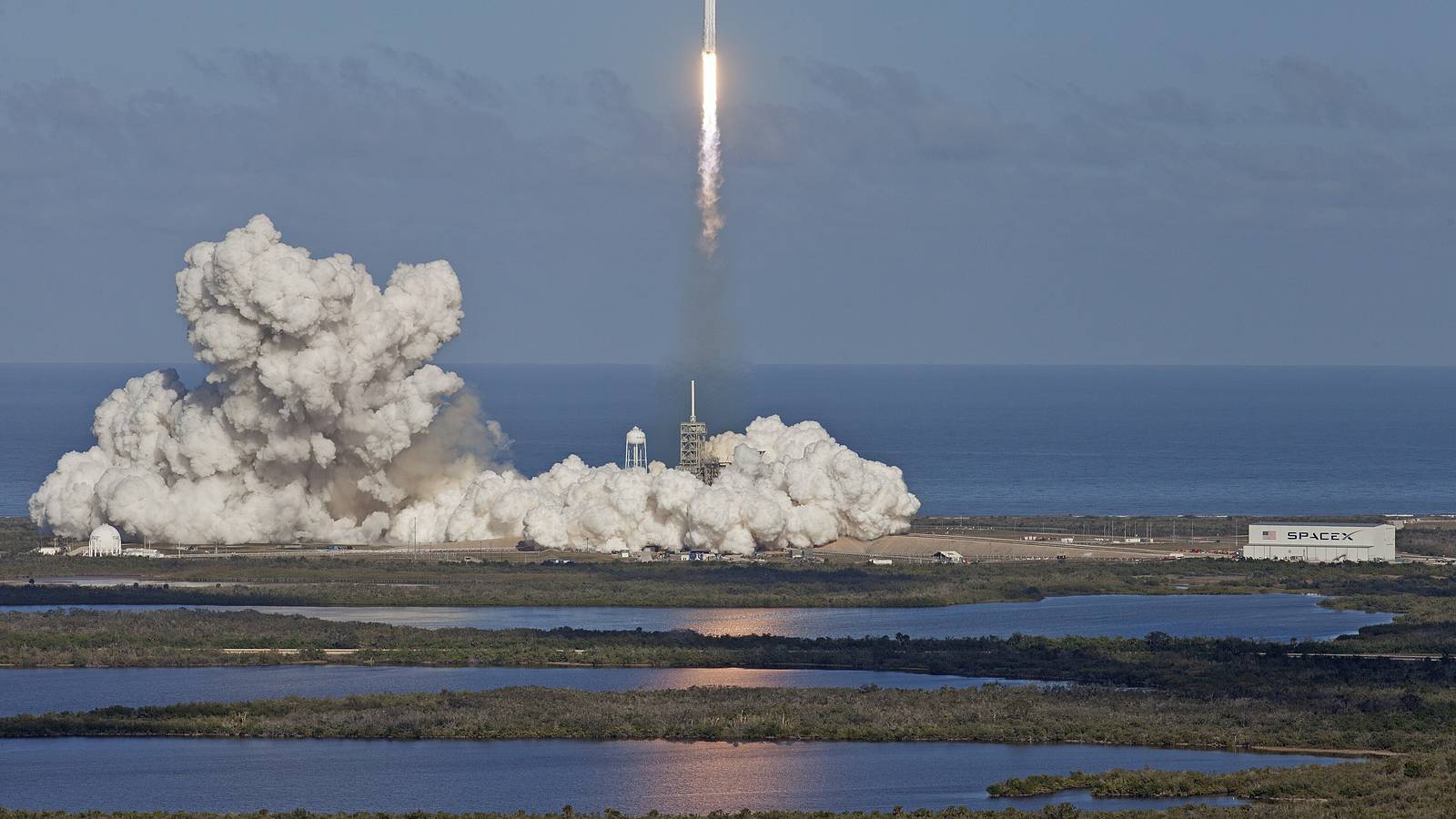
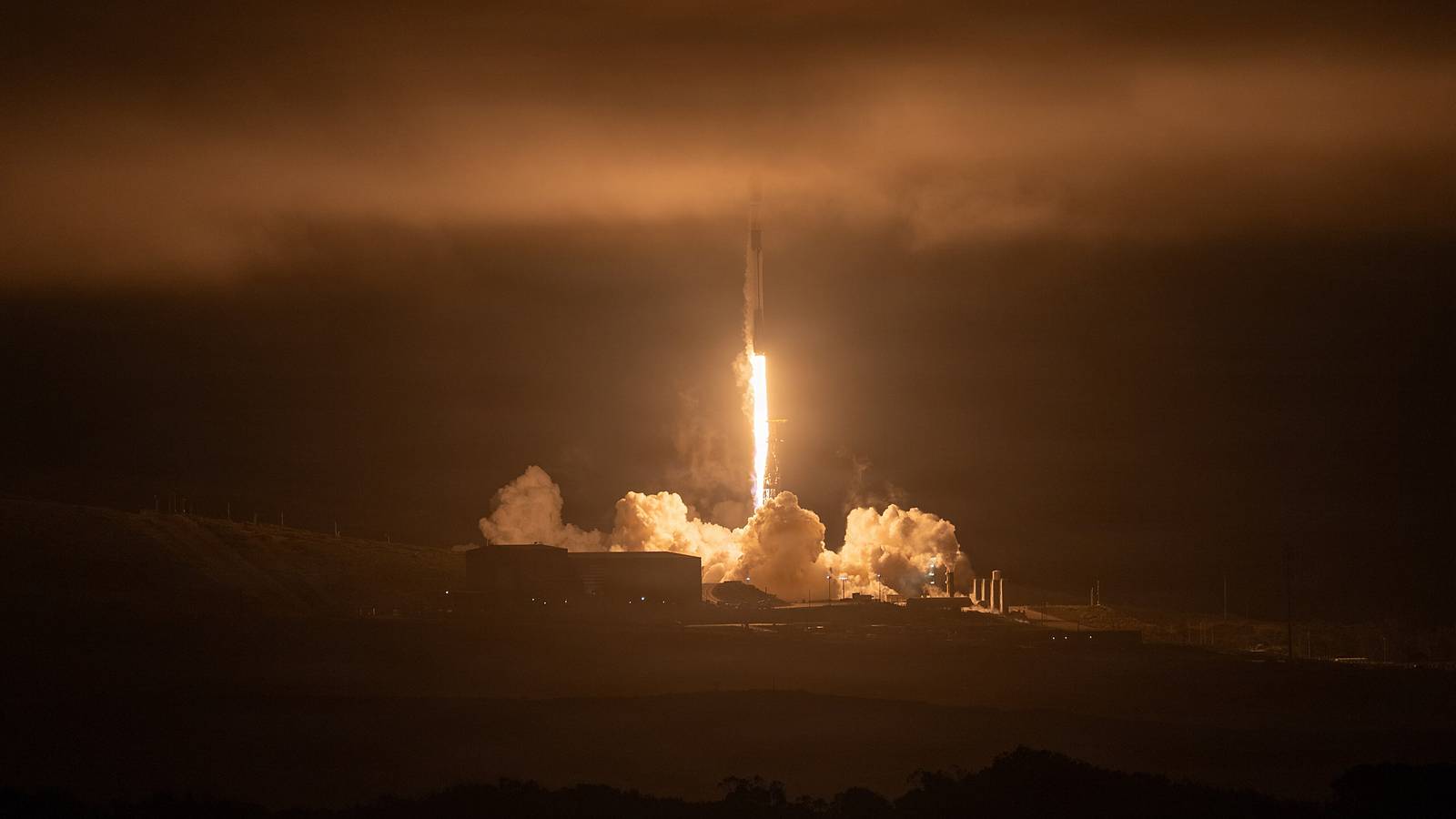
A Falcon 9 booster has flown for the 27th time, this time on a classified US Space Force mission. The rocket left Space Launch Complex 4E at Vandenberg Space Force Base at 8:42 a.m. Pacific Time on Thursday morning, 10 September 2026, carrying USSF-153 for the US Space Force. It's a national security mission, and nobody's said what the payload is.
If you only know Falcon 9 as the rocket that launches batches of Starlink satellites and NASA astronauts, this is its other job on the West Coast. It's the same family of pads, the same reusable first stage and the same landing on a droneship at sea. The difference is a customer who asks for the public video to stop before anyone sees what the cargo does.
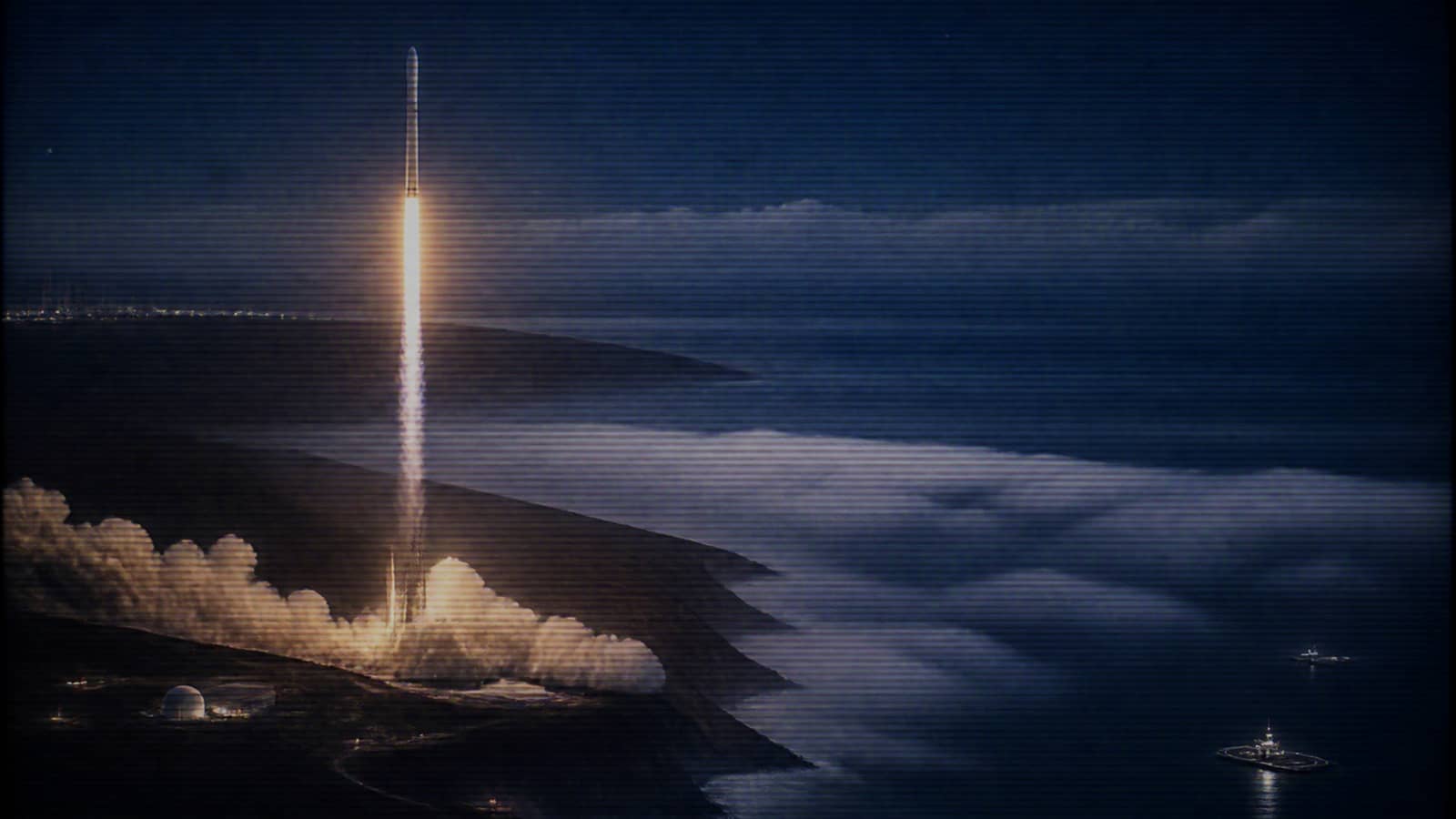
The three-hour launch window opened at 8:37 a.m. PT, and the rocket lifted off five minutes later. There was a backup chance on Friday 11 September at 8:23 a.m. PT, but SpaceX didn't need it. The rocket went on Thursday.
Why start with the exact minute? Because with secret missions, rumours rush in to fill the silence. The best answer is the public timeline SpaceX still publishes. That's when the window opened, when the rocket left the pad, which flight the booster was on, where the first stage was meant to land, and which counties might hear a sonic boom if the weather lined up. Everything else about the cargo is what the customer won't say.
What launched, and what we aren't told
USSF-153 is a US Space Force mission, and the payload is classified. That's not a tease. It's simply the rule. Other outlets, including TeslaNorth in its story the same day, describe the usual pattern for national security launches. SpaceX streams the climb and the planned droneship landing, and the public video usually ends before any work with the payload.
SpaceX streamed the launch on its website and on X. TeslaNorth reports that SpaceX confirmed liftoff on X minutes after the window opened, in a post on the company's account dated 10 September 2026. The public could watch the climb and the landing plan. The part about the cargo goes dark on purpose.
Micah Hanks at The Debrief, writing the same day, published SpaceX's statement about its customer: "SpaceX’s ongoing work with the Department of Defense and other partners demonstrates our ability to provide in-space and on-ground capability at scale." That's company language for a relationship that already shows in the number of launches and contracts. It doesn't tell you what's on board.
Flight 27 for a well-used booster
SpaceX says USSF-153 was the 27th flight for the first-stage booster. Spaceflight Now's live coverage names the booster as B1081 on its 27th flight. That serial number comes from Spaceflight Now and Starlust. SpaceX didn't print it on the mission page.
SpaceX lists the booster's earlier flights for this mission as Crew-7, CRS-29, PACE, Transporter-10, EarthCARE, NROL-186, Transporter-13, TRACERS, NROL-48, COSMO-SkyMED Second Generation FM3 and 16 Starlink missions. Take a moment with that list. There are astronauts, cargo for the space station, Earth science, shared rides for small satellites, US spy satellites, Italian radar satellites and loads of internet satellites. The same booster has already carried things for NASA, for the National Reconnaissance Office, for commercial Earth-watching companies, and for the Starlink network that fills most of Falcon's year. Flight 27 for the Space Force isn't a first. It's one more trip for a rocket that's already proved it can be reused for all kinds of customers.
Starlust's video report from the same day names the booster as B1081 on its 27th flight and says it landed on the droneship roughly 8.5 minutes after liftoff. The B1081 name comes from Starlust.
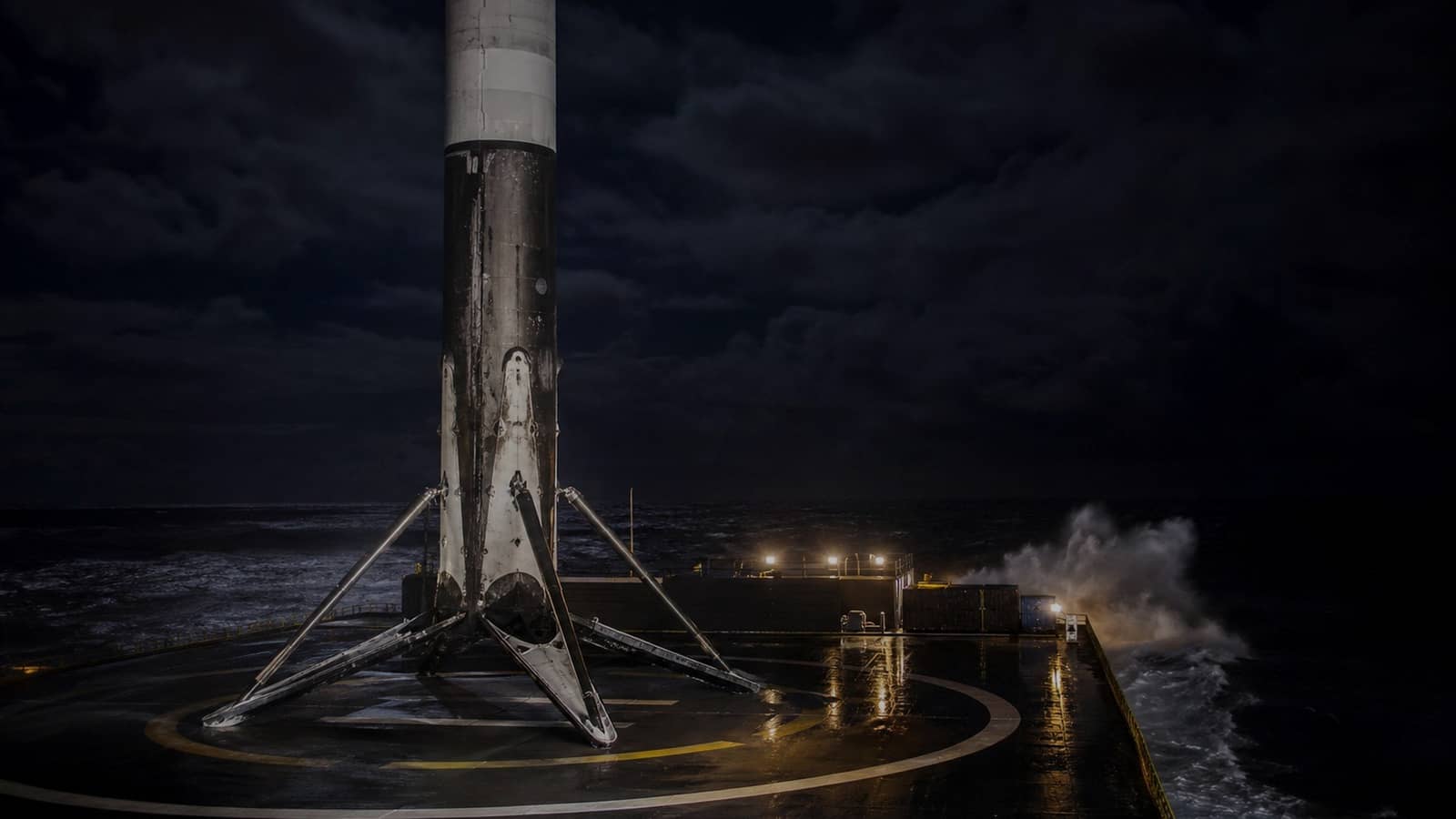
Of Course I Still Love You, and the sonic boom counties
SpaceX said that after the stages separated, the first stage would land on the droneship Of Course I Still Love You, stationed in the Pacific Ocean. That's the landing plan on the mission page, written before the flight in SpaceX's usual way, and it's what the public was told to watch for.
SpaceX also warned that people in Santa Barbara, San Luis Obispo and Ventura counties might hear a sonic boom. What they'd hear, the company said, depends on the weather and other conditions. That's not a promise of a double bang over every coastal town. It's a courtesy warning. If the booster's path home and the weather line up, some people on the Central Coast might hear it come back.
Why mention sonic booms in a story about a secret mission? Because only the cargo is secret, not the physics of a booster coming home. The neighbours get the same reusable rocket show they get on a Starlink morning. The difference is what's inside the nose cone, and how much of the second stage's story stays off the public stream.
The rough timeline SpaceX published
SpaceX published a rough timeline for the flight, counted from liftoff. Here it is in order.
Max Q, the point of maximum air pressure on the rocket, came at around 00:01:07.
MECO, when the first stage's main engines cut off, came at around 00:02:25.
The stages separated at around 00:02:29.
SES-1, when the second stage's engine starts, came at around 00:02:35.
The fairing, the nose cone, came off at around 00:02:55.
The entry burn ran from roughly 00:06:06 to 00:06:29.
The landing burn started at around 00:08:02.
Landing came at around 00:08:24.
That last set of times is why Starlust's "roughly 8.5 minutes" matches SpaceX's own landing time. A bit over eight minutes from the pad to the droneship is the usual rhythm for West Coast Falcon landings, the same as on Starlink flights. This timeline is SpaceX's rough public guide. It doesn't say anything about when any secret satellite release happened.
Keep the cutoff point in mind. The fairing comes off before the entry burn. Public streams for missions like this usually cover the climb and the landing. The customer's secrecy rules kick in when the payload's being handled. If you were watching and the picture went away before you learned what was inside, that's how it's meant to work for a Space Force mission. It's not a glitch.
The 104th Falcon 9 of 2026
The Debrief calls Thursday's flight SpaceX's 104th Falcon 9 mission of 2026. Micah Hanks's story describes it as expected to reach that milestone. Starlust gives the same figure, the 104th Falcon 9 of 2026, in its report that day.
The Debrief also says eighty of those 2026 Falcon 9 launches were for Starlink, and that the network has more than 11,000 active satellites in low Earth orbit. Those are The Debrief's figures. They're useful here only to show scale. Most of Falcon's year is still spent building the internet network, and a secret Space Force flight has to share the same boosters and the same West Coast pads with it.
Does 104 sound routine? It should by now, and that's the point. A national security customer buying a ride on a rocket that flies more than a hundred times a year is buying reliability and regular launches, not a one-off show.
Starshield guesses, not confirmed
Here's where the rumours come in. Read this as a warning sign, not a reveal.
The Debrief notes that some outlets have pointed out the rocket stage drop zones for this mission look like those from past SpaceX Starlink Group 15 missions. From that match, those outlets suggest the cargo might include secret satellites, possibly built on SpaceX's Starshield design. The Debrief is clear that this is reading clues from the flight path and drop zones, not a confirmed list of what was on board.
Starlust is more careful again. It says the payload's exact purpose remains classified, though it may involve satellites built on SpaceX's Starshield platform for a US government agency. Note the words "may" and "possibly."
So what is Starshield? Outlets describe it as a national security version that uses SpaceX's existing satellite and launch technology for government missions. It's the defence side's cousin of the Starlink design. But that's not the same as SpaceX or the Space Force confirming Starshield hardware was on USSF-153.
Part of the point of secrecy is that clever guesses from flight paths don't become official facts. If an official source later names the satellite design or the network, that'll be a new story.
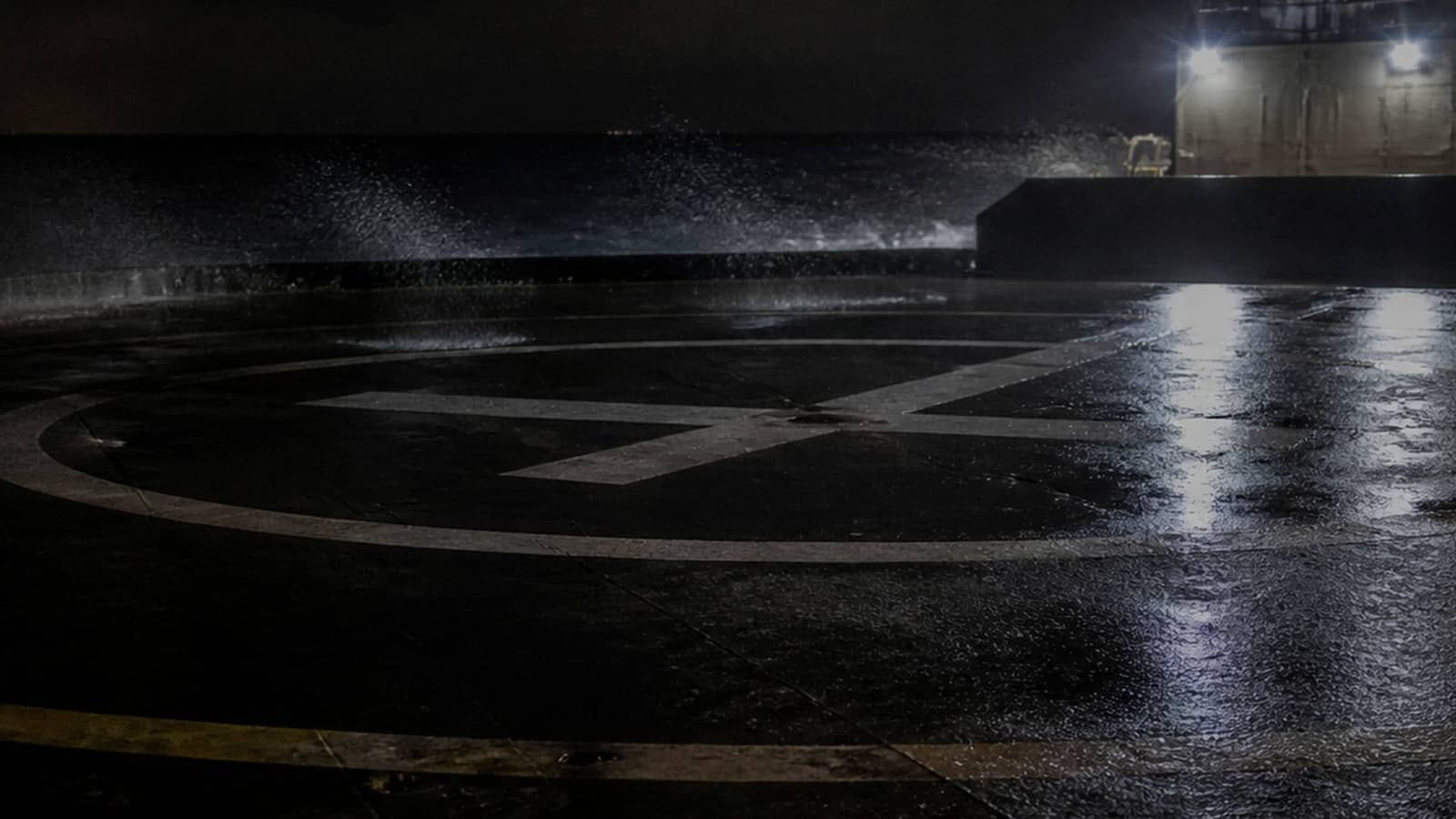
Why Vandenberg, and why SLC-4E
Vandenberg Space Force Base, on the California coast, is where the US has long launched rockets heading into polar and steeply tilted orbits, because they fly out over the ocean. Space Launch Complex 4E is SpaceX's main Falcon pad on the West Coast. Starlink batches, shared rides and national security missions all launch from the same concrete and land on droneships in the same part of the Pacific.
USSF-153 is part of that routine. TeslaNorth's 10 September story puts the secret flight next to the commercial Starlink launches that have been using California's orbit paths this season. Not every Falcon from 4E is the same mission. But the pad does two jobs. In a single week it can launch a Starlink batch and a Space Force mission, without SpaceX needing a different kind of rocket for each.
Falcon 9 launches from the West Coast are carrying a lot of the low Earth orbit work, while Starlink launches from Florida have reportedly been shifting toward Starship. That's background on which pads and rockets do what. It's not a story about Flight 14 or about Starlink V3 satellites.
The bigger Space Force relationship
TeslaNorth mentions SpaceX's wider relationship with the Space Force, including earlier awards like $1.6 billion through the National Security Space Launch program, or NSSL, for 18 Falcon 9 flights.
Reuters reported on 29 July 2026 that SpaceX won $1.6 billion in orders from the US Space Force for 18 Falcon 9 missions through 2027. They'll carry Pentagon satellites that Reuters described as helping detect and target objects in the air. Space Systems Command's own release on the awards says the two task orders, worth $1.6 billion in total, secure 18 Falcon 9 launches for its Space Based Sensing and Targeting program, all from Vandenberg, to be finished by the end of 2027.
Is USSF-153 one of those eighteen? The July awards show the relationship and the capacity. The Space Force is buying Falcon 9 launches from Vandenberg into 2027 for sensing and targeting work, under NSSL Phase 3 Lane 1. Thursday's secret mission has its own public name, USSF-153, and an undisclosed payload. The two are related, but nothing official links that contract to this flight, so we can't say they're the same.
SpaceX's line about working with the Defense Department at scale sits alongside those awards without any need for a conspiracy theory. Regular launches, contracts and secret cargo are how a commercial company becomes part of national security. The hard part is saying that without pretending you've seen inside the nose cone.
The key points
On Thursday 10 September 2026, at 8:42 a.m. PT, a Falcon 9 launched from SLC-4E at Vandenberg. The mission was USSF-153, for the US Space Force, and the payload is classified.
The window opened at 8:37 a.m. PT and lasted three hours. The backup was Friday at 8:23 a.m. PT. The rocket actually lifted off on Thursday at 8:42.
The first stage was on its 27th flight. SpaceX's mission page lists its earlier flights, from Crew-7 through NRO and Starlink missions. Starlust and Spaceflight Now give the serial number as B1081, but SpaceX's mission page doesn't.
The landing plan was the droneship Of Course I Still Love You in the Pacific, with landing at around 00:08:24 on SpaceX's public timeline. Santa Barbara, San Luis Obispo and Ventura counties were warned about a possible sonic boom, depending on the weather.
The public stream showed the climb and the landing. National security launches usually cut the feed before any payload work.
The Debrief and Starlust say it was the 104th Falcon 9 of 2026. The Debrief says eighty of this year's Falcon 9s were for Starlink, and the network has more than 11,000 active satellites in low Earth orbit.
Talk that the payload was Starshield satellites isn't confirmed.
For the bigger picture, Reuters and Space Systems Command reported in July 2026 that SpaceX won $1.6 billion for 18 Falcon 9 launches from Vandenberg through 2027, for the Space Based Sensing and Targeting program.
How secrecy changes what we can say
On a Starlink launch, you can talk about how many satellites went up, which orbit they're going to, and whether they were released, because SpaceX or satellite trackers often make that public. On a Space Force launch, there's less you can honestly say. You get the pad, the time, the booster's history, the landing, the public timeline and the customer, and then a hard stop on the cargo.
That's still worth a long read. Why? Because reusable commercial rockets now carry a big share of America's national security satellites into orbit. The Debrief's point, that commercial reusable rockets are increasingly trusted with national security hardware, is the big industry story. A booster on its 27th flight, which has already carried Crew, CRS, PACE, EarthCARE, NROL missions and sixteen Starlinks, is the proof. You don't need the payload's name to see that the Pentagon is riding a rocket that's carried all sorts of cargo.
People sometimes want the mystery solved by the end of the story. Secrecy means it won't be. The next best thing is being exact about what's known. We know the time, 8:42 a.m. PT. We know the pad, SLC-4E. We know it was the booster's twenty-seventh flight and that it was headed for Of Course I Still Love You. We know the rough minute marks and SpaceX's statement. We don't know the cargo.
Drop zones, Group 15 and why a flight path isn't a cargo list
Experts watch where rocket stages are meant to fall, because the flight path limits which orbits are possible. If a secret mission's public danger zones look like those of the Starlink Group 15 flights, people will ask whether it's heading for a similar orbit, and whether Starshield-type satellites could fit there. That's fair curiosity using public information.
It's also an easy way to read too much into things. Similar drop zones can mean a similar orbit tilt and energy. They don't automatically mean the same kind of satellite. SpaceX can fly different customers along similar West Coast paths, because the Pacific and the launch range are where they are. The honest answer is that we don't know.
Reuse is the quiet national security story
Look at the list of earlier flights again, without hunting for secrets. Crew-7, CRS-29, PACE, Transporter-10, EarthCARE, NROL-186, Transporter-13, TRACERS, NROL-48, COSMO-SkyMED Second Generation FM3, sixteen Starlinks, and then USSF-153.
That's not a special booster kept wrapped up just for national security. It's a booster with lots of flights, moving between helping astronauts, science, shared rides, spy satellites, an ally's radar satellites, Starlink and the Space Force. The secret mission gets the benefit of the whole mixed fleet's reliability record. That's one reason commercial companies were allowed into National Security Space Launch work in the first place.
Twenty-seven flights also means twenty-six landings and turnarounds before this one, on droneships or landing pads. The mission page keeps it simple, though. It's the twenty-seventh flight, with a plan to land on a droneship in the Pacific. That's enough.
Pacific Time, and what it means elsewhere
8:42 a.m. PT on Thursday 10 September 2026 is mid-afternoon UTC and early Friday morning in Adelaide. The facts don't change with the time zone. Only the time on your clock does.
If someone sends you a clip and asks whether it was "yesterday" or "Thursday," start with the Pacific time at the pad. The official launch time is 8:42 a.m. PT on 10 September 2026, from SLC-4E. Other outlets converted that to Eastern time in their stories.
The stream, the cutoff, and the video you can keep
SpaceX streamed the climb and the planned droneship landing on its website and on X. That's the public show TeslaNorth and The Debrief both describe. National security missions usually cut the public feed before any payload work. The stream was for the launch and landing, not a tour of the cargo.
If you were watching live and the picture cut out at an awkward moment, that was the secrecy rule kicking in right on time.
What the list of earlier flights tells us
Crew-7 was a NASA commercial crew trip. CRS-29 took cargo to the International Space Station. PACE is a NASA Earth science satellite. Transporter flights are shared rides, with lots of small satellites on one trip. EarthCARE studies Earth's clouds and aerosols, in a partnership the public knows from European and Japanese space agency coverage of that mission. NROL numbers are National Reconnaissance Office launches. TRACERS is a pair of NASA satellites studying the Sun's effect on Earth, as described in its own mission material. COSMO-SkyMED Second Generation FM3 is an Italian radar satellite for watching Earth. The sixteen Starlink missions built the internet network.
You don't need secret files to see the pattern. The same first stage has already been trusted with people, station supplies, science, an ally's radar satellite, spy agency payloads and the network that takes up most of Falcon's calendar. USSF-153 is just another kind of customer on that list. The booster's no stranger to this work.
Why go through the list one mission at a time? Because "twenty-seventh flight" can sound like the kilometres on a used car. The list makes it real. Each of those flights was a real countdown, a real launch day and a real landing for this booster. SpaceX's USSF-153 page is happy to share that history in public, even while the new cargo stays secret. That's what a modern national security launch looks like. The reuse record is open and the payload is closed.
From Max Q to the landing burn, in plain language
Max Q is when the air pushes hardest against the rocket on the way up. On SpaceX's timeline, the rocket's through the worst of it at around one minute and seven seconds.
MECO is when the first stage's nine engines shut down. Seconds later the stages separate. SES-1 lights the second stage's engine. The two halves of the fairing fall away at around three minutes, so the top of the rocket can carry on without its nose cone. You don't need to know what was inside to follow any of that.
The entry burn and the landing burn are how the first stage slows down through the atmosphere and then onto the droneship. On the timeline, the entry burn runs from roughly six minutes and six seconds to six minutes and twenty-nine seconds. The landing burn starts at around eight minutes and two seconds, and it touches down at around eight minutes and twenty-four seconds. If you've watched a Starlink landing from Vandenberg, you've already seen this routine, just with a different mission patch.
The secret part isn't the landing burn. It's what the second stage is allowed to show, or not show, after the public part ends.
Sonic booms, without the drama
A returning booster can send a sonic boom across several counties when its path and the weather line up. SpaceX named Santa Barbara, San Luis Obispo and Ventura. That's a warning for the Central Coast, not a promise that every kitchen window rattled at 8:50 a.m.
When the company says it depends on weather and other conditions, it means people shouldn't treat a boom forecast like a train timetable. Some mornings are quiet. Other mornings, people ring the local news. Either way, the droneship landing can go perfectly. The boom is a side effect of the booster coming home, not a measure of whether the mission worked.
How other outlets filled the silence
When the cargo's secret, reporters look for nearby facts. TeslaNorth focuses on SpaceX's liftoff post on X and on the stream cutting out before payload work. The Debrief focuses on the size of the industry, the Defense Department statement, its own recent reporting on the competition in orbit, and the guesses based on drop zones. Starlust focuses on the booster's serial number, how quickly it landed, the yearly count and a careful line about Starshield.
Those are all useful if you remember who said what. They turn into nonsense if you mash them into one unsourced claim that the mission carried Starshield, that SpaceX's mission page names B1081, or that USSF-153 is definitely one of the eighteen flights ordered in July. Each claim belongs to the outlet that made it.
The Debrief also sets Thursday against a wider set of worries, including reports on China's spaceplane, close approaches and "dogfighting" displays in orbit, and Russian anti-satellite weapons. Then it rightly says nobody knows whether USSF-153 has anything to do with any of that. World tensions can be real and still be no help in working out what one secret rocket carried.
The July contracts show capacity, not cargo
National Security Space Launch Phase 3 Lane 1 is the system the Space Force uses to hand out launches to approved companies. Reuters and Space Systems Command describe SpaceX's late-July 2026 awards as two task orders worth $1.6 billion in total, for eighteen Falcon 9 missions, all from Vandenberg, for the Space Based Sensing and Targeting program, due by the end of 2027. Space Systems Command's release quotes Col. Eric Zarybnisky on detecting and targeting objects in the air from space and near-real-time communications across the Joint Force, and on a faster buying timeline under the Phase 3 Lane 1 contract.
That's a lot of public detail about a group of future flights. It still isn't a public cargo list for USSF-153. July's talk of sensing and targeting doesn't let anyone declare what flew on Thursday. What we can fairly say is smaller. The Space Force is buying lots of Falcon 9 launches from the same West Coast base that just launched a secret Falcon 9. The number of launches is the story we can tell. What the payload was is the story we can't.
West Coast launches as Florida shifts
Starlink launches from Florida have reportedly been moving toward Starship, while Falcon 9 keeps carrying low Earth orbit work from Vandenberg, including Starlink and national security missions. USSF-153 fits on the Vandenberg side of that split. It was a Space Force mission on a Falcon 9 from SLC-4E, while SpaceX's bigger plans reshuffle which rocket carries which Starlink launches from Florida.
This story sticks to the secret Thursday launch, the booster's twenty-seventh flight, and the public facts that SpaceX and the outlets quoted here actually reported.
The bottom line
A booster on its twenty-seventh flight took a secret payload to space. The Falcon 9 launched USSF-153 from SLC-4E at Vandenberg at 8:42 a.m. PT on Thursday 10 September 2026. The first stage was headed for Of Course I Still Love You, according to the public plan and timeline. The payload hasn't been disclosed. Talk of Starshield is just a guess. The yearly count and the size of the Starlink network come from The Debrief and Starlust. And July's $1.6 billion contract for eighteen flights, reported by Reuters and Space Systems Command, is background, not proof of what this rocket carried.
If you remember one thing, make it the launch time and the hard stop. The launch was at 8:42 a.m. PT, and the cargo's classified. Everything else here is about how a reusable commercial rocket makes that combination look ordinary. And looking ordinary, on a twenty-seventh flight, is the national security story hiding in plain sight.
For more, read about the Falcon 9 booster B1063's 35th flight, SpaceX's eighty Starlink missions this year and a Starlink launch from Vandenberg.
Sources
Video: Spaceflight Now live coverage, SpaceX Falcon 9 USSF-153 from Vandenberg: https://www.youtube.com/watch?v=hHjWLWxhjqk. The description gives liftoff at about 8:42:30 a.m. PDT and the booster as B1081 on its 27th flight.
SpaceX, USSF-153 mission page. Liftoff at 8:42 a.m. PT on 10 Sep 2026, the window opening at 8:37 a.m. PT, the backup on 11 Sep at 8:23 a.m. PT, the 27th flight and earlier flights, the landing on Of Course I Still Love You, the sonic boom counties and the rough timeline.
The Debrief, Micah Hanks, 10 September 2026, SpaceX Just Launched a Mysterious Classified Mission for the U.S. Space Force, Here’s What We Know. The secrecy, SpaceX's Defense Department statement, the drop zone and Starshield guesses, the 104th Falcon 9 of 2026, and the eighty Starlink launches and more than 11,000 active satellites.
Starlust, SpaceX launches classified USSF-153 mission on booster's 27th flight. The B1081 name, about 8.5 minutes to the droneship, the 104th Falcon 9 of 2026, and its careful "may involve" line on Starshield.
TeslaNorth, Alex Diaz, 10 September 2026, SpaceX Lifts USSF-153 Falcon 9 Off Vandenberg on Flight 27. The launch window, the liftoff post on X, the stream on SpaceX's site and X, the feed cutting before payload work, and the $1.6B contract for 18 Falcon 9s.
Reuters, 29 July 2026, SpaceX gets $1.6 billion US Space Force order for 18 Falcon 9 launches: https://www.reuters.com/business/media-telecom/spacex-gets-16-billion-us-space-force-order-18-falcon-9-launches-2026-07-29/
Space Systems Command release, Space Force Awards Task Orders to Launch Space Based Sensing and Targeting Capabilities. $1.6B, 18 Falcon 9 launches, the Space Based Sensing and Targeting program, Vandenberg, and completion by the end of 2027.
The paper
Comments
No notes on this story yet.
Sign in to comment