
SpaceX has put Super Heavy booster B21 on the launch pad for Starship Flight 14. Late on Sunday night, 20 September 2026, it rolled B21 out of its assembly building at Starbase and set it on Pad 2. That's the launch mount meant to hold Flight 14 when the rocket finally flies.
There are three things to know. The booster's on the pad it'll fly from. The earliest launch date has slipped from Tuesday 22 September to no earlier than Monday 28 September. And SpaceX's mission page still calls this the first planned orbital Starship flight, with twenty-six Starlink V3 satellites on board.
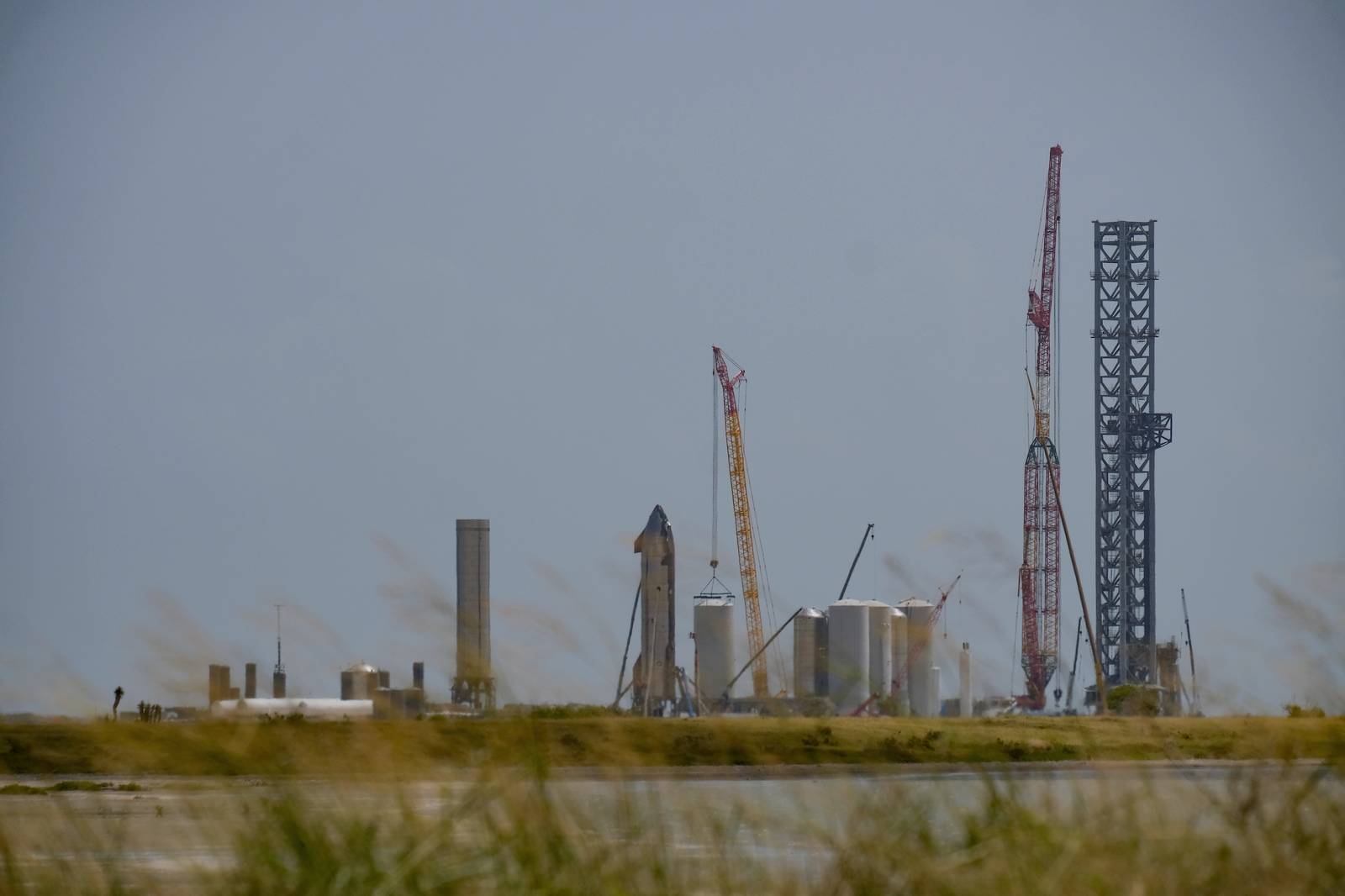
Sunday night into Monday: B21 on Pad 2
SpaceX rolled B21 out to Pad 2 late on Sunday 20 September, ahead of Flight 14 no earlier than 28 September. Spaceflight Now's Will Robinson-Smith says it left the assembly building just before midnight local time and was sitting on the launch mount about two hours later.
That's not a launch. It just means the booster's moved onto the pad. But for a rocket this big, being on the mount is a big step the public can actually see.
According to Spaceflight Now, the stainless-steel booster is 236 feet tall, or 72 metres, and 9 metres wide, about 29.5 feet. A Falcon 9 is 3.7 metres across. Robinson-Smith gives a handy sense of scale if you've never stood next to one. The pipe that carries methane fuel down through the middle of the booster's liquid oxygen tank to the Raptor engines is about as big as a whole Falcon 9.
As of that Monday morning report, SpaceX hadn't said whether it plans a full fuelled practice countdown, called a wet dress rehearsal, once the rocket's stacked. There were no road closures posted for the City of Starbase on Monday morning either. Spaceflight Now took that as a sign it could be at least a day or two before the Starship upper stage, numbered S41, rolls out to join B21.
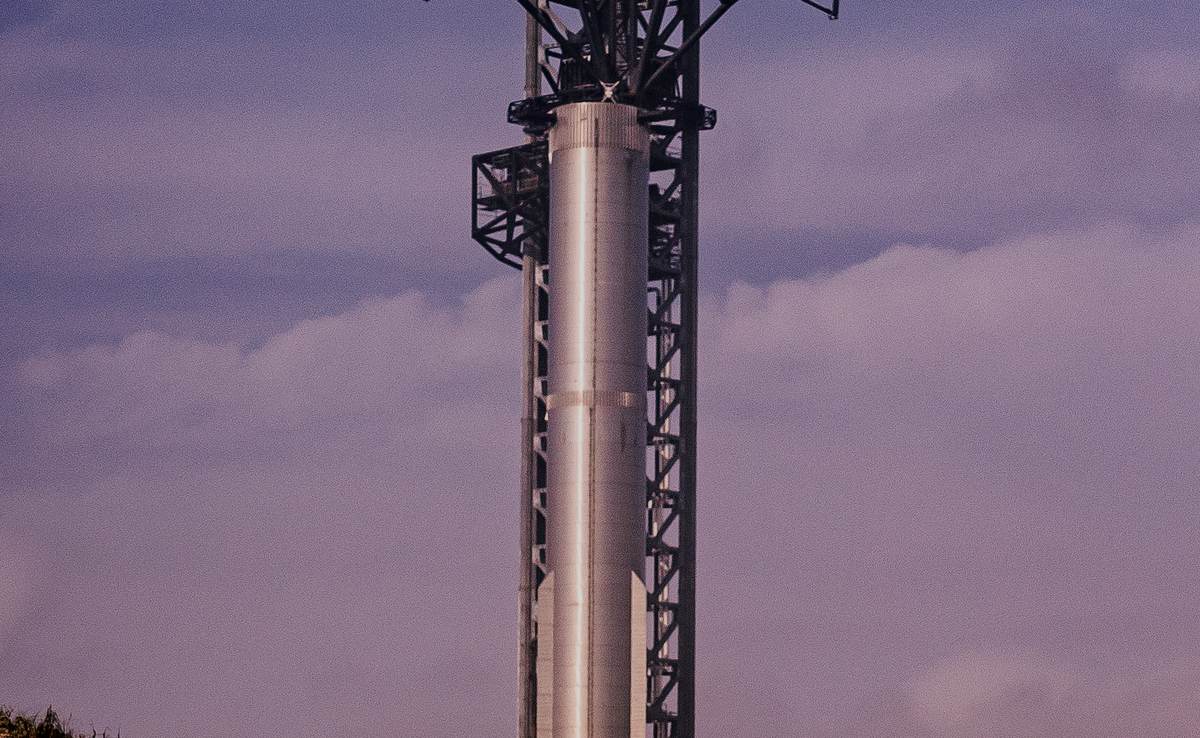
The launch date moved from Tuesday 22 to Monday 28
SpaceX's Flight 14 mission page had been aiming for Tuesday 22 September, with a seventy-five-minute window opening at 7:15 a.m. Central Time. On its launch calendar, that same window showed as 08:15–09:30 Eastern. It's the same start time in a different time zone. That Tuesday target didn't last.
On Thursday 17 September, SpaceX posted on X that it was now aiming for Flight 14 as early as Monday 28 September, pending regulatory approval. Sarah Lee-Jones of TeslaNorth reported the same day, with both the company's new date and the old Tuesday one. Spaceflight Now's Monday story then put the target at 28 September at 7:15 a.m. CDT, or 1215 UTC, still waiting on the FAA.
SpaceX didn't explain in that Thursday post why the date moved. The new Monday date still isn't a locked-in countdown. The licence, getting the rocket ready, weather and the launch range all stand between an earliest date and an actual launch.
Why the FAA matters for the first orbital Starship
Spaceflight Now is clear about the main hurdle. Flight 14 can only go ahead once the FAA approves the change to SpaceX's licence that's needed for an orbital flight. Robinson-Smith points out it'd be the first time the FAA has approved orbit for something as big as a Starship upper stage, which is 171 feet, or 52 metres, tall.
Here's the safety worry, as Spaceflight Now explains it. If something stopped Starship from firing its engine to come back down as planned, a vehicle that big with that heat shield could fall out of orbit uncontrolled, and large pieces of it could reach the ground. The FAA wants the vehicle and SpaceX to be ready for that before it signs off on an orbital licence.
Spaceflight Now carries this statement from the FAA:
"In addition to completing the environmental review, license applications must also meet FAA safety, policy/payload, and financial responsibility requirements to receive authorization for flight."
That's official language, not a yes or a no. As of the Monday report, the licence change was still pending.
What Flight 14 is meant to do
Think of it as a test plan, not as something that's already happened. It hasn't flown yet.
SpaceX calls this Starship's first planned orbital mission, after earlier tests stayed on paths that deliberately fell short of orbit. Roundups quoting SpaceX's September update say that for its first orbital flights, the ship will still start on a passively safe suborbital path and needs a second engine burn to reach orbit.
Here's the ship's side of the plan, in the mission page's own numbers. It'll fly at about 275 kilometres up, go around the Earth roughly six times over a flight of nearly ten hours, and splash down in the Pacific Ocean west of Chile. The main goals for the ship include its first burn into orbit, releasing twenty-six Starlink V3 satellites, firing a single Raptor engine in space to come back down, and a controlled re-entry, descent and splashdown.
One line on that page matters more than most of the hype about "orbit". SpaceX says Starship will only fire its engine to enter orbit after the flight control team has made sure there's enough back-up in the hardware it needs to come back down at the end of the mission. In other words, it only goes to orbit if it can get back down on purpose.
Next Spaceflight's Flight 14 page, which carries the same mission details, adds more on that check. There'll be two health checks, one while the ship's coasting in orbit and one after it releases the satellites. If the ship isn't judged safe enough to stay in orbit, Mission Control could cut the mission to two or five orbits, depending on when that call's made.
As for the booster, its main goals are a successful launch and climb, separating from the ship, flying back and firing its engines to land at a spot offshore in the Gulf. Next Spaceflight is blunt about catches. Neither the ship nor the booster will be caught by the tower on this flight. Both will splash down. SpaceX has made hardware and software changes to fix problems seen on the last flight.
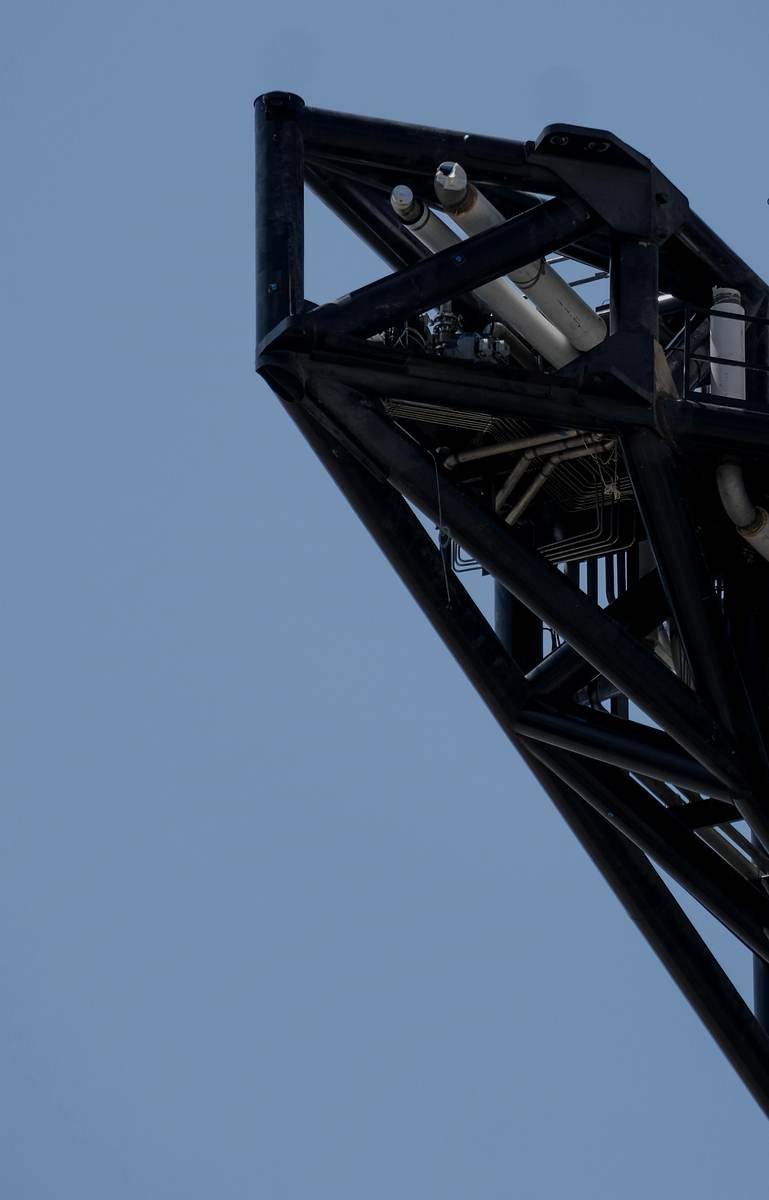
Twenty-six V3s, and why the capacity number matters
Depending on when it flies, Spaceflight Now says Flight 14 might also be SpaceX's next Starlink mission, with the extra name Starlink 31-1. SpaceX has said it's winding down launches of the older, smaller V2 Mini Starlink satellites on Falcon 9 from Florida. Vandenberg in California still flies top-up missions. The bigger V3 satellites need Starship's space.
Spaceflight Now quotes SpaceX's pre-launch mission write-up:
"Each Starlink V3 satellite will add 1 Tbps of capacity to the constellation, for a total of 26 Tbps of capacity added on this mission alone. That's ~10x the capacity compared to a single launch of V2 mini Starlink satellites on Falcon 9."
That's one terabit per second for each satellite, times twenty-six satellites. That's about twenty-six terabits from one launch, or roughly ten times one Falcon 9 V2 Mini mission. That's the real story behind the steel on Pad 2.
Here's what happens after they're released, again in SpaceX's words as quoted by Spaceflight Now:
"After deploying from Starship, the Starlink V3 satellites will unfold their antennas and deploy their solar arrays and make initial contact with the ground and the rest of the Starlink constellation via radio frequency and laser links. The satellites will then begin raising their orbits with their onboard thrusters. Following their on-orbit checkouts, the satellites should begin serving customers as soon as a few weeks after launch."
So they unfold, make contact by radio and laser, raise their orbits, get checked out, and start serving customers within weeks if the checks go well. That's the plan on paper. It doesn't promise a service date for any particular town.
Next Spaceflight adds one more detail. Three of the satellites have been fitted with cameras to scan Starship's heat shield and send the images back to Earth. It continues tests to check whether the heat shield's ready for a later return to the launch site. They're working satellites carrying extra instruments, not a separate science mission.
Flight 13 already practised releasing V3s, but on a suborbital path
You don't need made-up drama to see why Flight 14 is a bigger ask. On the last test flight in July, Flight 13 with Ship 40, SpaceX released several Starlink V3 satellites on the same suborbital path as the ship. Spaceflight Now says those satellites opened their solar panels, took pictures of Starship's heat shield and briefly linked up with the rest of the Starlink network by laser before they burned up as planned.
In a post on X on 31 July, which Spaceflight Now included in its report, SpaceX shared a combined view of Starship in space taken by a Starlink V3 satellite on Flight 13. It used pictures from four cameras on one satellite, and six of the satellites carried cameras to scan the heat shield.
Flight 13 proved the satellite release door worked, and that a V3 could briefly connect, on a path that was never meant to leave the satellites in service. Flight 14 aims to put twenty-six working V3s into a 275-kilometre orbit, and the mission page talks about serving customers within weeks. It's the same kind of satellite with a very different destination.
Ship 41's engine testing came earlier. SpaceX posted on 21 August that the Starship being readied for the fourteenth flight test had finished a full sixty-second static fire with all six Raptor engines. Spaceflight Now mentions that test alongside the pad story.
What's still not on the mount
As of Spaceflight Now's Monday morning report, B21 was on Pad 2. S41 hadn't rolled out yet. No City of Starbase road closures had been posted that morning. And SpaceX hadn't said whether a wet dress rehearsal would come before the launch attempt.
Other people watching Starbase have said Ship 41 could follow in the days after the booster moved.
If the licence, weather and range all clear, Flight 14 will be the booster, the ship and twenty-six V3s. Right now the public can see the booster on the pad. The rest is still being worked on.
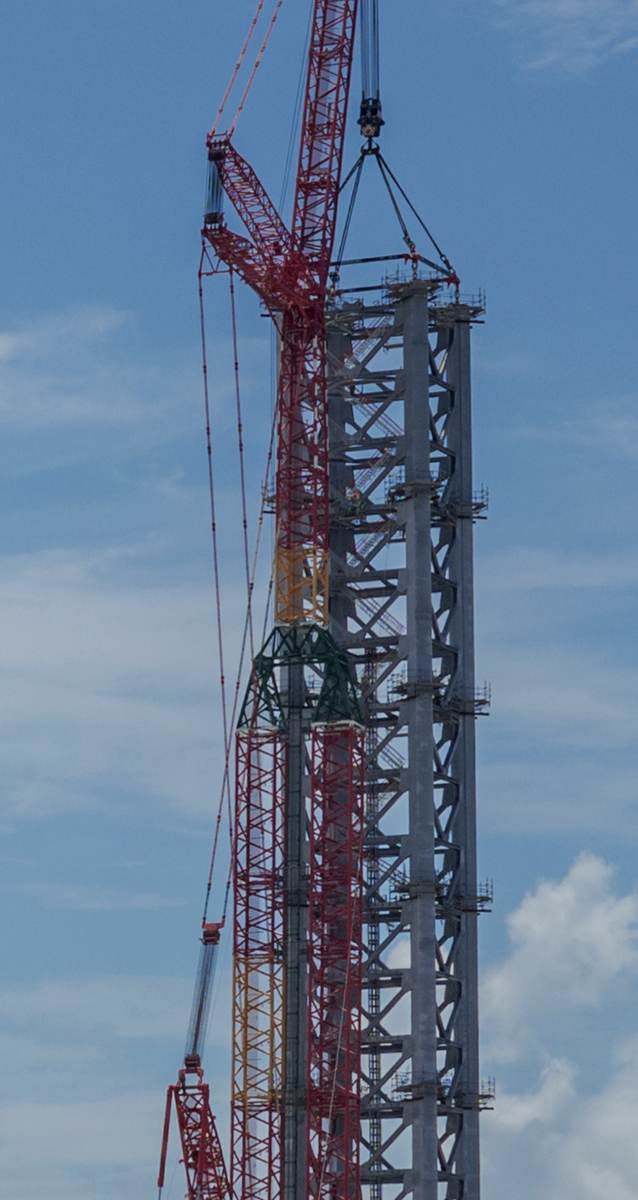
Safe first, then a second burn
If you think of rockets as simply going up and reaching orbit, Starship's first orbital try needs a bit more explaining. SpaceX's September update, as quoted in roundups, says that for its first orbital flights the ship will still start on a passively safe suborbital path and needs a second burn to reach orbit.
Passively safe means that if the second burn never happens, the ship still falls back through the atmosphere in a planned way. It won't leave a Starship-sized object stuck in an uncontrolled orbit for a long time. The second burn is the deliberate step up into the 275-kilometre orbit where the twenty-six V3s are meant to start working. That's why the mission page puts the back-up check on the hardware needed to come home before the burn into orbit. SpaceX is tying going to orbit to being able to steer its way home.
Next Spaceflight's back-up plan fits the same idea. There are health checks while coasting and after releasing the satellites, and the mission could be cut to two or five orbits if the ship isn't safe enough to stay. Those are Mission Control's options once the rocket's flying.
The booster lands in the Gulf, and catches wait
If you've watched the tower catch Super Heavy boosters before, you might look for the chopsticks on Flight 14. Next Spaceflight says not this time. The ship and the booster are both meant to splash down, not be caught. The booster's main goals end at a landing burn offshore in the Gulf. Others following the program have said a ship catch could realistically come on a later flight, and catching both even later than that. For Flight 14, the plan is the booster in the Gulf, the ship in the Pacific and no catch.
SpaceX made hardware and software changes after Flight 13. Canadian Space's roundup, looking at the booster's path on Flight 13 on July 24, says ice blocked the three centre engines near the end of the flight back. Only eight of the thirteen planned engines relit before the booster hit the Gulf hard. SpaceX's mission page says the changes fix problems seen on the last flight.
V2 Mini versus V3: a bigger truck
There are three facts to keep in mind.
First, batches of V2 Mini Starlink satellites have been the Falcon 9's bread and butter. Spaceflight Now says SpaceX has stopped launching V2 Minis from Florida, while Vandenberg keeps flying top-ups on Falcon 9.
Second, V3 satellites are bigger and do more, and SpaceX needs Starship to start launching them as working parts of the network. Flight 13's release in July was practice on a suborbital path. Flight 14's twenty-six are meant to be the first working V3s to join the network.
Third, the capacity maths is public. It's one terabit per second for each V3, and twenty-six on this mission. That adds about twenty-six terabits if they all check out, which is about ten times one Falcon 9 V2 Mini launch.
Once the door opens, the steps are mechanical. The satellites unfold their antennas, open their solar panels, make radio and laser contact with the ground and the network, raise their orbits with thrusters, get checked out, then serve customers "as soon as a few weeks after launch," in SpaceX's words. That's a company estimate, not a promise to any particular city.
What the licence change means
SpaceX already flies Starship under an existing licence. Flying something as big as Ship 41 into orbit means changing that licence, not getting a whole new one from scratch. Spaceflight Now's FAA statement is the key public detail. Before the FAA approves that flight plan, there's an environmental review, plus safety, policy and payload, and financial responsibility requirements.
The size matters because earlier Starship flights stayed on suborbital paths that didn't need the same orbital licence step for a 52-metre upper stage. Robinson-Smith says Flight 14 is the first time something that big has asked the FAA for orbit. Pending means pending.
Airspace notices once listed 22 September as the main launch window and 23 September as the backup. They're planning tools for aircraft. TeslaNorth's story about the delay is careful to say those notices aren't a locked-in countdown, and SpaceX's Monday 28 September date still depends on regulatory approval.
The key points
First, late on Sunday 20 September 2026, Super Heavy B21 rolled out of the Starbase assembly building just before midnight local time and was on Pad 2 about two hours later, Spaceflight Now reported on 21 September.
Second, on 17 September SpaceX posted on X that it was aiming for Flight 14 as early as Monday 28 September, pending regulatory approval. That replaced the earlier window of Tuesday 22 September at 7:15 a.m. CT.
Third, SpaceX still needs the FAA to approve a licence change for the orbital plan. Spaceflight Now says it's the first time a Starship-sized upper stage has asked for an orbital licence.
Fourth, SpaceX's mission page plans about 275 km up, about six orbits, about ten hours and a Pacific splashdown west of Chile, with twenty-six Starlink V3s. The booster will make a landing burn offshore in the Gulf. Next Spaceflight says there's no tower catch on this flight.
Fifth, the burn into orbit only happens after a back-up check on the hardware needed to come home.
Sixth, SpaceX says each V3 adds about 1 Tbps, so this mission adds about 26 Tbps, roughly 10× one Falcon 9 V2 Mini launch.
Seventh, after they're released, the satellites unfold their antennas and solar panels, make radio and laser contact, raise their orbits, and serve customers within weeks after checks, SpaceX says.
Eighth, Ship 41 wasn't on the mount yet as of Spaceflight Now's Monday morning report.
Why a booster on a pad is about internet capacity
Photos of a pad look like construction. The V3 satellites turn them into a story about the internet. Launching V2 Mini Starlinks on Falcon 9 from Florida isn't how SpaceX wants to launch this new generation. Starship is the truck big enough for the larger satellites. Twenty-six terabits on one flight is SpaceX comparing the new truck to the old one with public maths anyone can check.
Orbit is the other big step. Thirteen flights stayed on paths that didn't need a Starship-sized orbital licence from the FAA. Flight 14 does. The back-up check before the burn into orbit is how SpaceX is telling regulators, and the rest of us, that orbit on this vehicle depends on a controlled way home.
B21 on Pad 2 doesn't settle either of those. It puts the first stage where the launch is meant to start. S41, the licence, a possible wet dress rehearsal, the range and the weather all stand between Sunday night's rollout and a Monday launch date that's already a week later than the Tuesday that used to be planned.
So, on Sunday night B21 went onto Pad 2. The Thursday before, SpaceX pushed the earliest date back to Monday 28 September, pending the FAA. The mission page describes the first planned orbital Starship, with twenty-six V3s adding about 26 Tbps, a booster splashdown in the Gulf and a ship splashdown in the Pacific west of Chile. The burn into orbit only happens after the check on the hardware needed to come home. As of Spaceflight Now's Monday morning report, the ship still wasn't on the mount.
More from The Gold Standard: Pad Two Holds Flight Fourteen, The B21 Static Fire Tape and Florida Starlink Waits on Starship.
Sources
SpaceX, Starship Flight 14 mission page (flight plan, V3 capacity, the back-up check before the orbit burn, and launch window).
SpaceX on X, 17 Sep 2026, "Now targeting to launch Starship Flight 14 as early as Monday, September 28, pending regulatory approval" (as reported by TeslaNorth and Spaceflight Now).
Next Spaceflight, Starship Flight 14 / Starlink Group 31-1 details (same mission details as SpaceX, plus splashdown, catch and health-check notes).
Video: SpaceX, Starship - The Holy Grail of Rocketry.
Update: Starship Flight 14 launched from Starbase on Monday 28 September, US time. It reached orbit, released its 26 Starlink V3 satellites and splashed down north of Hawaii about three hours after liftoff.
The paper
Comments
No notes on this story yet.
Sign in to comment