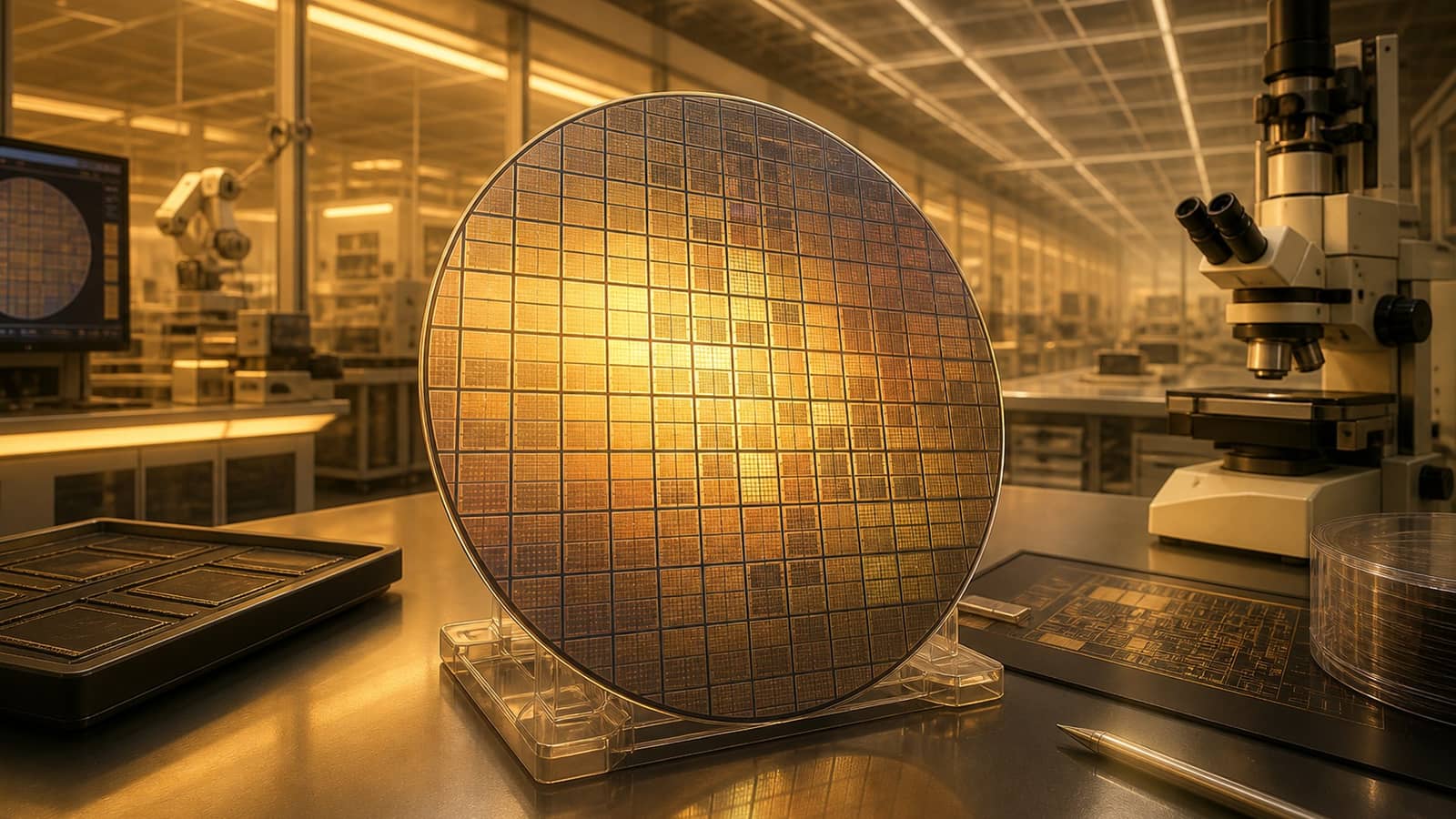
Anthropic confirmed in August 2026 that it's assembling an in-house custom silicon team to co-design chips for Claude — and it's keeping a multi-chip approach that still leans on external hardware from partners including AWS, Google, Nvidia and AMD.
Hiring's active for engineers who've shipped semiconductor designs. Clive Chan, previously on OpenAI's custom chip programme, has joined Anthropic. Business Insider, Ars Technica and related August reporting carry the confirmation.
The confirmation matters because it moves Anthropic from exploration talk to a named internal team. A spokesperson told Business Insider the company is building an in-house silicon team to design custom chips for Claude — described there as the first public confirmation of the plans. The same spokesperson line, repeated to TechCrunch and carried by Ars Technica, says Anthropic will co-design hardware and models so Claude can run faster and more efficiently at the scale customers need.
Multi-chip is the restraint sentence. Anthropic says it has taken and will continue to take a multi-chip approach. AWS, Google, Nvidia and AMD remain in that partner set on the attributed spokesperson comments. Custom silicon inside Anthropic doesn't, on the company's own words, mean an overnight exit from merchant accelerators or cloud TPUs and Trainium-class capacity. It means another design centre beside the purchase orders.
Job listings made the scoop visible before the quote landed. Business Insider noticed a senior engineer posting seeking semiconductor design experience. Anthropic's board still shows silicon engineer and technical programme manager roles in contemporaneous coverage. The Next Web cites a salary band in the listings around US$320,000 to US$485,000 and language that the role is for someone who's shipped silicon, keeps a realistic relationship with schedules and can make consequential calls without a large organisation behind them. Those are listing words. They tell you the hiring bar. They're not a chip datasheet.
Clive Chan is the named hire most secondary outlets attach to the build-out. Times of India and other technology desks carried Chan's own announcement that he left OpenAI's custom chip programme to join Anthropic. Chan's public note describes roughly two and a half years on OpenAI's hardware effort, from an early hardware hire to watching that team's chips mature, and says he joined Anthropic the week of the post because of the team's talent, values and ambition. Beckmann's August summary places Chan's Anthropic start in June 2026 and notes prior Tesla Autopilot accelerator experience before OpenAI. Biography details stay with those named summaries — Anthropic hasn't published a masthead title for him.
Further compute hires appear in the same August conversation. Beckmann reports Amir Salek, formerly associated with Google's TPU programme, joining Anthropic's compute team in August 2026 to work on chip matters. That's attributed secondary reporting unless Anthropic issues its own biography note. The pattern you can defend is clear: Anthropic is staffing silicon and compute experience from labs that already shipped accelerators.
Manufacturing talk is still early. Tom's Hardware and Beckmann describe early conversations involving Samsung and advanced process nodes — 2-nanometre language appears in that secondary layer. Server configuration, final chip purpose and performance figures remain undecided in those same write-ups. That undecided clause matters. Co-design intent isn't a tape-out date. Readers shouldn't walk away thinking Claude already runs on an Anthropic ASIC in production racks.
Why companies in this tier design silicon at all is the cost and control story, not a mystery. Inference spend scales with demand. Custom parts can cut joules per token and ease supply contention when merchant GPUs are allocation-constrained. Anthropic's spokesperson framing emphasises speed and efficiency at customer scale. Some secondary pieces float large percentage cuts to inference cost; unless Anthropic's own confirmation states a percentage, keep those as outlet claims, not company gospel.
Reuters' earlier 2026 reporting that Anthropic was exploring custom chips as Claude's run-rate revenue climbed sits as the prelude. The Information's reporting on manufacturing-partner talks sits as another. August's spokesperson confirmation is the turn from exploration to team. Steinbeis and other executive summaries that name Chan in the OpenAI-to-Anthropic move are useful for biography, not for inventing Anthropic org charts.
Dates worth keeping straight. Chan's public leave-and-join note circulated in the mid-2026 window. Anthropic's silicon-team confirmation hit Business Insider and Ars Technica in early August 2026 — Ars timestamps 6 August on its explainer. Beckmann's update through late August folds in Salek and manufacturing colour. September's status is straightforward: team confirmed, hiring on, external hardware still in the mix.
There's no public chip name, no transistor count, no foundry purchase order, no production quarter, and no claim that Anthropic will stop buying Nvidia or cloud accelerators. The company said the opposite on multi-chip. What stands is a co-design team, Claude as the model target, a shipped-silicon hiring bar, Chan aboard from OpenAI's programme per his announcement and summaries, and external hardware continuing.
Custom AI silicon is already an industry race Anthropic is joining late relative to hyperscalers, not inventing from zero. Broadcom's September 2026 earnings coverage puts Anthropic on track to be Broadcom's largest XPU customer across 2027 and 2028. The gigawatt ladder Broadcom presented is concrete: about one gigawatt of Ironwood (TPU v7) capacity for Anthropic in 2026, another five gigawatts of TPU v8i in 2027, and an incremental ten gigawatts in 2028. Broadcom also said it delivered Ironwood in volume to Anthropic and Google and began production shipments of inference-oriented TPU v8i for Google. That partner silicon path sits beside Anthropic's new in-house co-design team rather than replacing it. Hold both facts: Anthropic is hiring to design its own parts, and Anthropic remains a named Broadcom XPU customer on a multi-gigawatt schedule.
Co-design framing is why the hiring bar reads the way the listings do. Anthropic's spokesperson line emphasises designing hardware and models together so Claude runs faster and more efficiently at customer scale. That's a systems sentence, not a foundry purchase order. Engineers who've shipped semiconductor designs are the people who can keep a realistic schedule when model teams change shapes mid-cycle. Clive Chan's public move from OpenAI's custom chip programme into Anthropic fits that co-design story without requiring Anthropic to publish a chip codename. Secondary August summaries that place Chan's start in June 2026 and note prior Tesla Autopilot accelerator work before OpenAI are biography colour already on the record. The pattern is staffing from labs that already shipped accelerators, while the multi-chip partner mix — AWS, Google, Nvidia and AMD on the attributed comments — keeps merchant and cloud capacity in the purchase plan.
Put the Broadcom gigawatts next to the hiring confirmation and the story gets clearer for readers who only see "custom silicon" as a slogan. One gigawatt of Ironwood in 2026 is near-term partner capacity. Five gigawatts of v8i-class silicon in 2027 and ten incremental gigawatts in 2028 are the slope Broadcom attached to Anthropic's name. An in-house team co-designing for Claude is Anthropic's attempt to own more of the efficiency curve on top of that purchased envelope. Neither fact cancels the other. Multi-chip is still the restraint sentence Anthropic chose to publish in August. September's status: team confirmed, Chan aboard per his announcement and summaries, Broadcom still counting Anthropic on the XPU customer ladder, and no public Anthropic ASIC datasheet yet.
Competitive context without scorekeeping theatre. OpenAI, Google, Amazon and Microsoft all sit on custom-or-semi-custom accelerator paths of their own. Anthropic joining that club is industry structure news. It doesn't require a league table of FLOPs nobody measured side by side this week.
Salary bands sit in dollars as the listings state them. Process nodes sit in nanometres as secondary manufacturing talk states them. No fake die sizes. Team, hire, co-design, multi-chip — because that's what the sources actually gave.
Anthropic hires for silicon. Custom team for Claude. Clive Chan aboard. External hardware still welcome. August 2026 confirmation, September status. That's the piece.
One closing fence. Benefits for users will take time precisely because the team is still being hired. Ars Technica makes that timing point explicitly. Co-design is a multi-year craft. The news is the decision and the recruiting, not a midnight swap of every rack in the fleet.
The paper
Comments
No notes on this story yet.
Sign in to comment