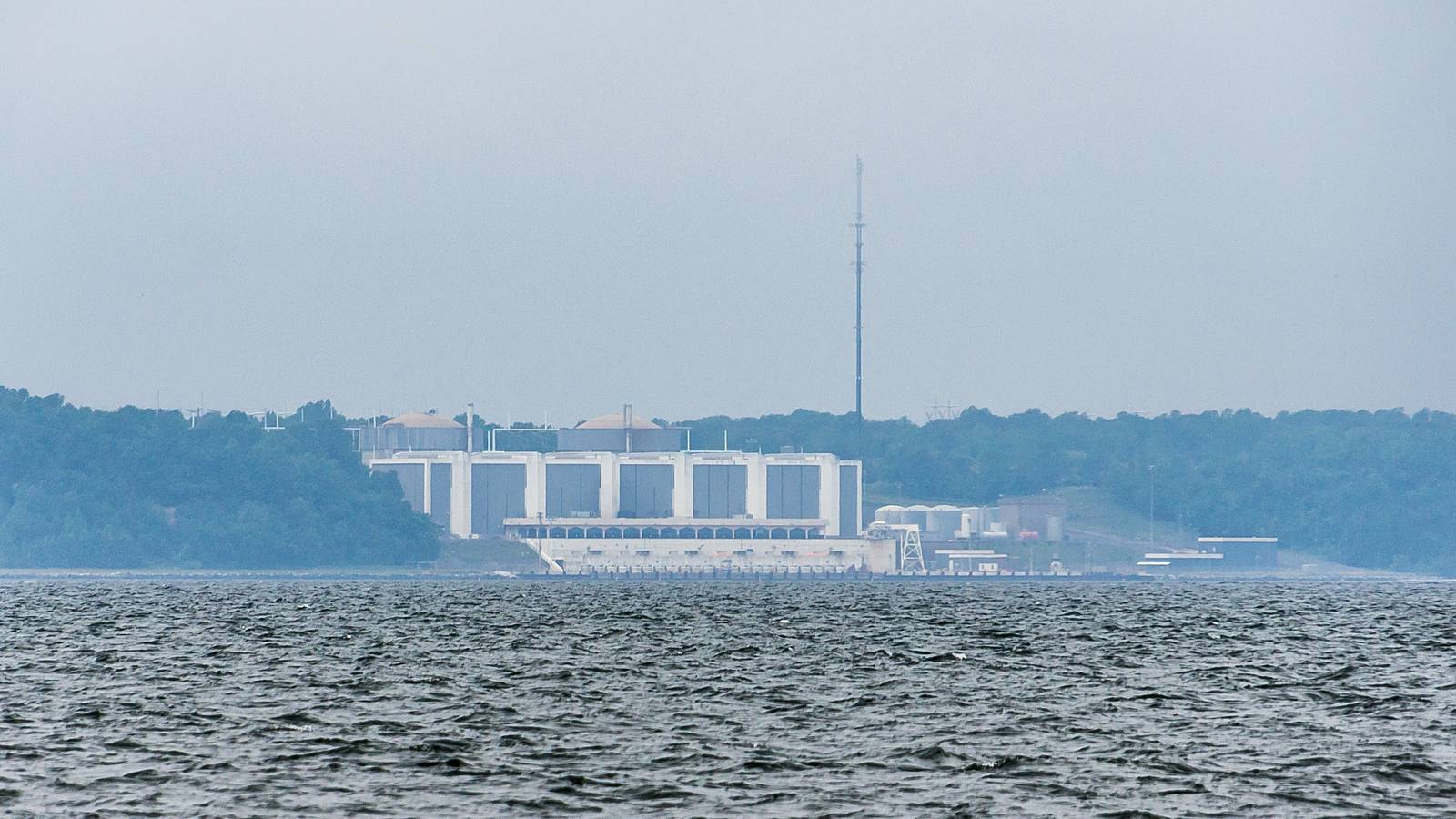

Amazon has signed a 20-year power deal with Constellation that'll pay for a 190-megawatt boost at the Calvert Cliffs nuclear plant in Maryland, and help keep the plant running for another two decades. The two companies announced it on Wednesday 30 September. It covers 690 megawatts of power, and that includes the new capacity.
Constellation says the deal will support more than US$3 billion of investment in Maryland, including upgrades across the whole 1,790-megawatt plant. The extra 190 megawatts are due to come online between 2030 and 2032. Calvert Cliffs is Maryland's only nuclear plant. By Constellation's count, it makes about 80% of the state's clean electricity.
What Amazon is actually buying
This isn't a deal that pulls a nuclear plant off the grid to feed a data centre, and Constellation went out of its way to say so. "All the electricity generated by Calvert Cliffs will continue flowing to the PJM regional grid just as it does now," the company said. PJM is the grid operator that runs the wholesale power market across 13 US states, from New Jersey to Illinois, plus Washington, DC.
What Amazon gets is a long-term contract for 690 megawatts at a known price. It also gets a separate retail supply deal to support its operations across that 13-state market. Constellation said that'll help Amazon manage energy costs for its sites right across the region.
What Constellation gets is certainty. The company said Amazon's commitment makes the uprate possible and "will help provide Constellation with the revenue certainty to relicense the plant for another 20 years and make progress toward the development of new clean energy power plants at the site."
"This agreement demonstrates how private investment can strengthen critical energy infrastructure," said Joe Dominguez, Constellation's chairman and chief executive. "Amazon's commitment supports the long-term operation of Calvert Cliffs for generations to come and creates a strong foundation for future investment in both the facility and in advanced nuclear technologies."
Kerry Person, vice president of AWS Global Operations and Data Center Delivery, said the agreement "sustains the continued operation and expansion of Maryland's largest source of carbon-free energy, supports hundreds of jobs, and brings significant new generation to the regional grid."
Getting more out of an old plant
Calvert Cliffs sits at Lusby, on the western shore of Chesapeake Bay. Its two pressurised water reactors were connected to the grid in 1975 and 1976, World Nuclear News reported. Constellation says the plant makes enough electricity for the equivalent of more than 1.3 million homes. It employs more than 800 people and pays about US$21 million a year in taxes, the company says.
An uprate means squeezing more power out of reactors that already exist. Usually that means swapping out gear like turbines, pumps and instruments so the plant can safely run harder. It's often one of the cheapest ways to add carbon-free power, because the site, the licence and the workers are already there.
Calvert Cliffs has done this before. NRC spokesman Scott Burnell told Engineering News-Record that it was the first US nuclear plant approved for a power uprate, back in 1977. It got a second, smaller one in 2009. It was also the first US plant to get a renewed operating licence, in 2000.
The groundwork for this one started before Amazon showed up. ENR reported that Constellation announced about US$100 million in electrical and plant equipment upgrades in February 2025. That covered pumps, motors, valves, control-rod systems and a transformer. At the time, the company said further upgrades could lift output by roughly 10%. In November 2025 it put a number on it, 190 megawatts.
The licence clock
The bigger prize may be time. Calvert Cliffs Unit 1 is licensed to run until 31 July 2034, and Unit 2 until 13 August 2036, according to ENR. Without new licences, both reactors would have to shut within about a decade.
Constellation now plans to seek a second 20-year renewal, which would carry the units into the mid-2050s. In November 2024 the NRC granted the company exemptions that let it keep running past its current expiry dates while a renewal is being reviewed. The catch is it has to file at least three years early. ENR reported that means by 31 July 2031 for Unit 1, and 13 August 2033 for Unit 2.
Washington has been leaning on the regulator to move faster on calls like these. The Trump administration has told the NRC to stop taking a decade to rule on nuclear projects. And the House Energy and Commerce Committee has cleared six nuclear permitting bills without a single vote against.
The NRC held a closed meeting with Constellation on Thursday 1 October about upcoming licence amendment requests for both Calvert Cliffs units, ENR reported. The agency didn't say whether those requests involve the uprate. Burnell told the magazine that plant owners file uprate and renewal requests publicly, and the agency can only set a review timetable once it accepts an application.
What's still unknown
A fair bit is still missing from the public record. Constellation hasn't said exactly what equipment it'll replace, which engineering or construction firms will do the work, or how the US$3 billion splits between the uprate, wider modernisation and work to keep the plant running longer. It also hasn't said when it'll file the uprate or renewal applications. ENR asked, and Constellation didn't immediately respond.
Constellation has floated something much bigger for the site, too. Last year it said it would explore building 2,000 megawatts of new, next-generation nuclear at Calvert Cliffs, which would roughly double the site's output. That's still an idea, not a project. But the company now says the Amazon deal helps it "make progress" on new plants there.
The deal is the latest in a run of power contracts between tech companies and nuclear plant owners, as data centres hunt for steady, low-carbon electricity around the clock. World Nuclear News noted that Amazon was one of the big energy users that signed a pledge last year backing the goal of at least tripling global nuclear capacity by 2050.
For Maryland, the plain result is more power from a plant that's already there, and a better shot at it still running in 2050.

The paper
Comments
No notes on this story yet.
Sign in to comment