Amplified · Christian heavy
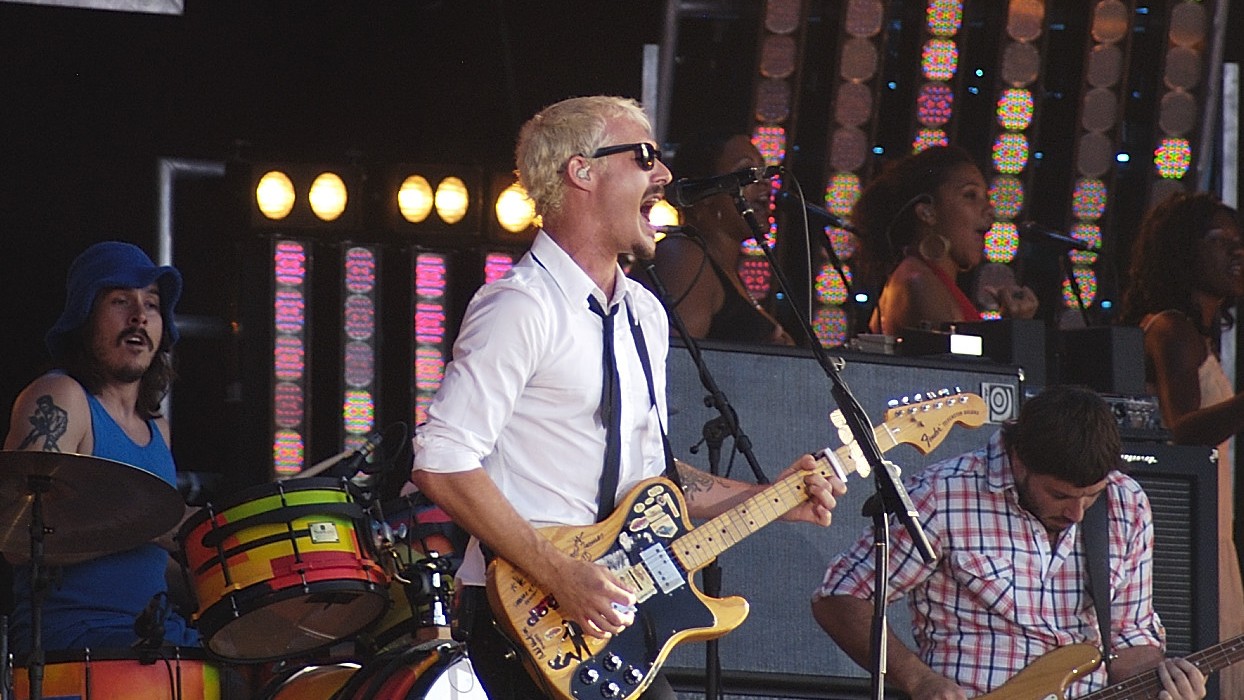
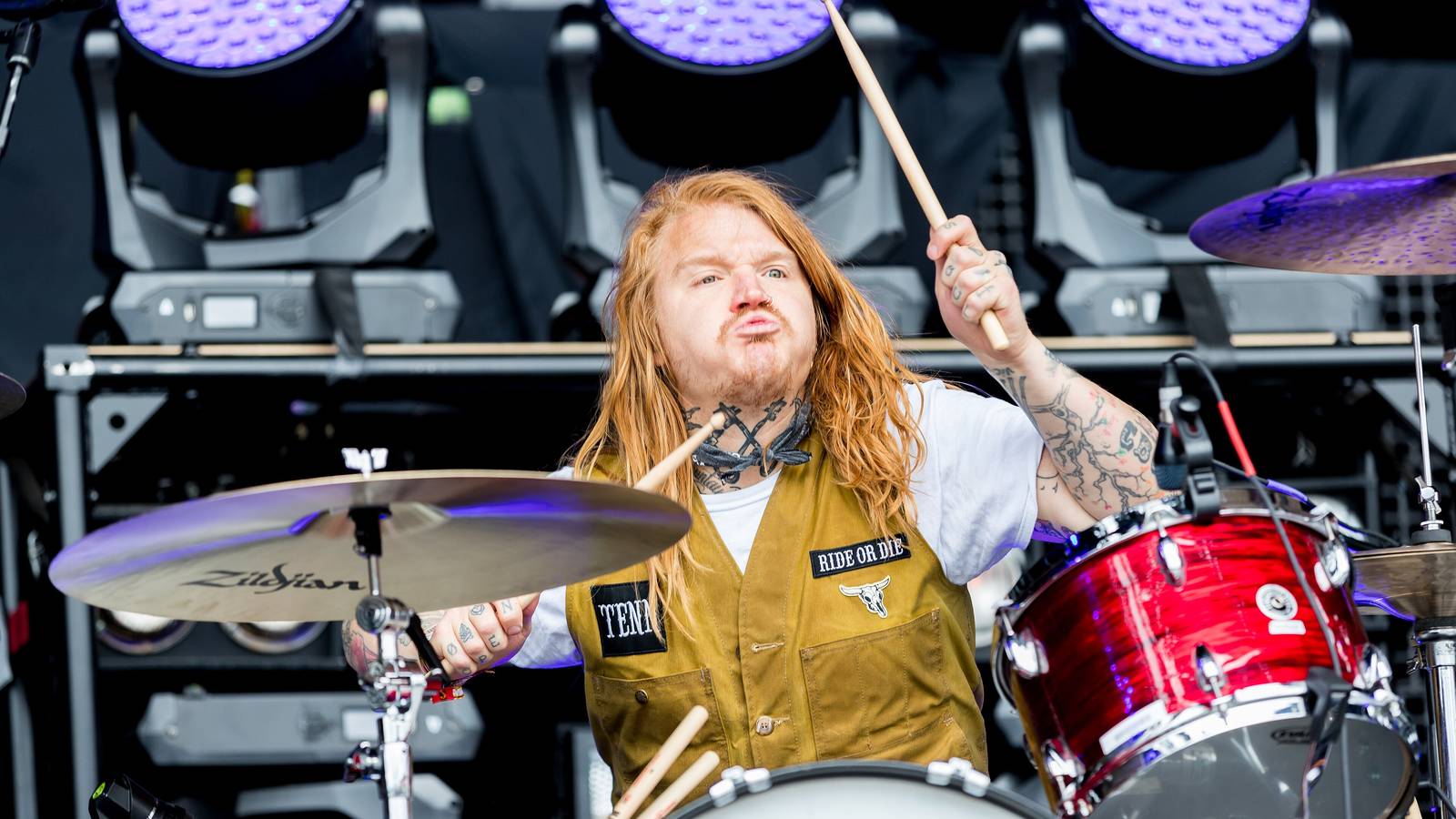
Silverchair at the Big Day Out in Melbourne in January 2008.
Photo: deep ghosh / Wikimedia Commons (CC BY 2.0)
Silverchair
Silverchair were three Newcastle teenagers who won a demo contest with Tomorrow, won a record 21 ARIA Awards and went quiet in 2011.
Silverchair were three school friends from Newcastle, New South Wales, who became one of the biggest Australian rock bands of the 1990s while they were still teenagers. Singer and guitarist Daniel Johns, drummer Ben Gillies and bassist Chris Joannou made five studio albums, and their first four all went to number one in Australia. They won a record 21 ARIA Awards. In 2011 they put the band into what they called "indefinite hibernation."
Innocent Criminals
All three were born in 1979 and grew up in the Newcastle surf suburb of Merewether. Johns and Gillies started making music together at primary school, and their schoolmate Joannou later joined on bass. They called themselves Innocent Criminals.
The song that changed everything was born out of a jam in Gillies' bedroom. The three of them wrote the music together, and Johns came up with the melody and lyrics. "It felt like an electric spark," Gillies later recalled.
In mid-1994 they heard about Pick Me, a demo competition run by Nomad, a music show on SBS TV, with a prize recording day at Triple J. Producer Tracee Hutchison set it up partly to save her show while SBS screened the World Cup, and partly so an unsigned band could own its own recordings. Entrants had to explain in 25 words or less why they should be picked. The Newcastle teenagers wrote, in green texta on yellow cardboard, "We're not hip-hop or rap. We're rock! And we love to play."
They sent in a six-and-a-half-minute version of "Tomorrow," recorded for $75 at Platinum Sound Studios in Cardiff, just outside Newcastle. It beat about 800 entries. The win was announced on Nomad on 16 June 1994. The next day Hutchison's phone was full of messages from record labels. Then her boss called to tell her the show was axed.
Tomorrow and Frogstomp
After a bidding war between Mushroom and Sony, the band signed with Murmur, a new offshoot of Sony, and changed its name to Silverchair. The label hoped to sell 6,000 copies of the Tomorrow EP. It came out in September 1994, spent six weeks at number one and sold 200,000 copies in three months. In 1995 "Tomorrow" became the most played song of the year on US modern rock radio.
Their debut album, Frogstomp, was recorded in just nine days in early 1995. The official band biography calls it "a raw sounding slab of alternative rock." It went to number one in Australia and New Zealand and reached number 9 in the US, the first Australian album in the US top 10 since INXS. The band played on the roof of Radio City Music Hall and toured with Red Hot Chili Peppers while still going to school full time back in Newcastle.
Success brought a backlash. Critics called them "Nirvana in Pyjamas" and "Silver Highchair." A comedian released a parody called "(I Turn Four) Tomorrow" under the name Silverpram.
Freak Show and Neon Ballroom
Freak Show came out in February 1997, produced by Nick Launay. It gave the band three top 10 singles in Australia, "Freak," "Abuse Me" and "Cemetery," and sold more than 1.5 million copies around the world while the band juggled world tours with their final year of high school. Johns later summed up the records this way: "the first album was naivety, the second one was anger, the third one was depression and the last one was escapism."
After they finished school, they had more time for Neon Ballroom, released in March 1999 and again produced by Launay. Johns had been struggling to cope with the band's sudden fame and put those feelings into the songs. The album mixed heavy rock with orchestral touches, and critics saw it as a big creative leap. "Ana's Song," about Johns' eating disorder, made it the band's most successful album yet in Europe and South America. "Miss You Love" became another favourite.
After a year of touring Europe and the US, the band took 2000 off. Their first record deal was finished, and labels chased them for most of that year. At the end of 2000 they announced new deals. On 21 January 2001 they played the biggest show of their lives, to 250,000 people at Rock in Rio.
Diorama
Work on Diorama began in June 2001 with producer David Bottrill. Johns wanted to explore new musical ground, with brighter lyrics and more melody. Van Dyke Parks, who had worked with the Beach Boys, wrote orchestral arrangements for three songs, including "Luv Your Life."
Johns spent 2002 battling a severe case of reactive arthritis, so the band could not tour or promote the album. Diorama still entered the Australian chart at number one in April 2002 and gave them the top 10 singles "The Greatest View" and "Without You." Rolling Stone called it "one of the boldest musical statements ever made by an Australian rock band." In October 2002 it won six ARIA Awards, including Best Group and Best Rock Album. It went on to be certified five times platinum in Australia.
They finally toured it from March to June 2003. The Across the Night tour sold out around Australia in minutes and was the biggest of their career. Then the band went on an open ended break.
Time apart and Young Modern
During the break, Johns made an album with Paul Mac as The Dissociatives, Joannou was nominated for an ARIA for producing The Mess Hall, and Gillies recorded an album with friends as Tambalane. The band kept denying reports that they had split.
On 29 January 2005, Silverchair and their management helped put together WaveAid at the Sydney Cricket Ground. It drew 55,000 people and raised more than $2.5 million for victims of the Asian tsunami. Playing together again rekindled their wish to make another album.
They decided to "remove all the pressure" and paid for the next album themselves. Young Modern was recorded in a backyard studio in Los Angeles, with Johns and Launay producing. Parks again wrote orchestral parts for three songs, and they were recorded in Prague. It came out in Australia on 31 March 2007, led by the single "Straight Lines." Johns said, "Young Modern is all about acceptance."
Indefinite hibernation
The band began work on a sixth album and played shows in 2010 "to maintain creative momentum." Their last gigs included Groovin the Moo in 2010. But in the studio, they said, it became clear they were "moving in different directions." On 25 May 2011 they announced on their website that they were putting Silverchair into "indefinite hibernation."
"We formed Silverchair nearly 20 years ago when we were just 12 years old," the statement said. "Today we stand by the same rules now as we did back then... if the band stops being fun and if it's no longer fulfilling creatively, then we need to stop." It added that "the spark simply isn't there between the three of us at the moment."
In 2024, The Music reported that relations between Johns and his two bandmates remain strained. Gillies has said the band made it "because of the three of us," and "the magic spark between us in my bedroom when we all wrote Tomorrow." The Living End's Scott Owen called "Tomorrow" the most influential Australian music release, "because it taught kids that if you give it a go, you have the chance to take on the world."
Watch
Five official videos trace the band from start to finish. "Tomorrow" is the Australian version of the clip. "Freak" is from Freak Show, "Anthem for the Year 2000" from Neon Ballroom, "The Greatest View" from Diorama and "Straight Lines" from Young Modern.
Silverchair on Amplified
No album or song reviews for this band yet.
Notes
Notes
No notes on this story yet.
Sign in to comment